Slab Foundation Gravel: Compacted Base Depth & Volume
A durable slab foundation ensures long-term stability for any structure you build on it. This guide explains what a slab foundation is, which materials you need, how to prepare the ground, how to install it step by step, and how to estimate the amount of gravel required. Whether you are constructing a new garage foundation or reinforcing an existing patio base, use the sections below to find what you need.
See How to Build a Slab Foundation
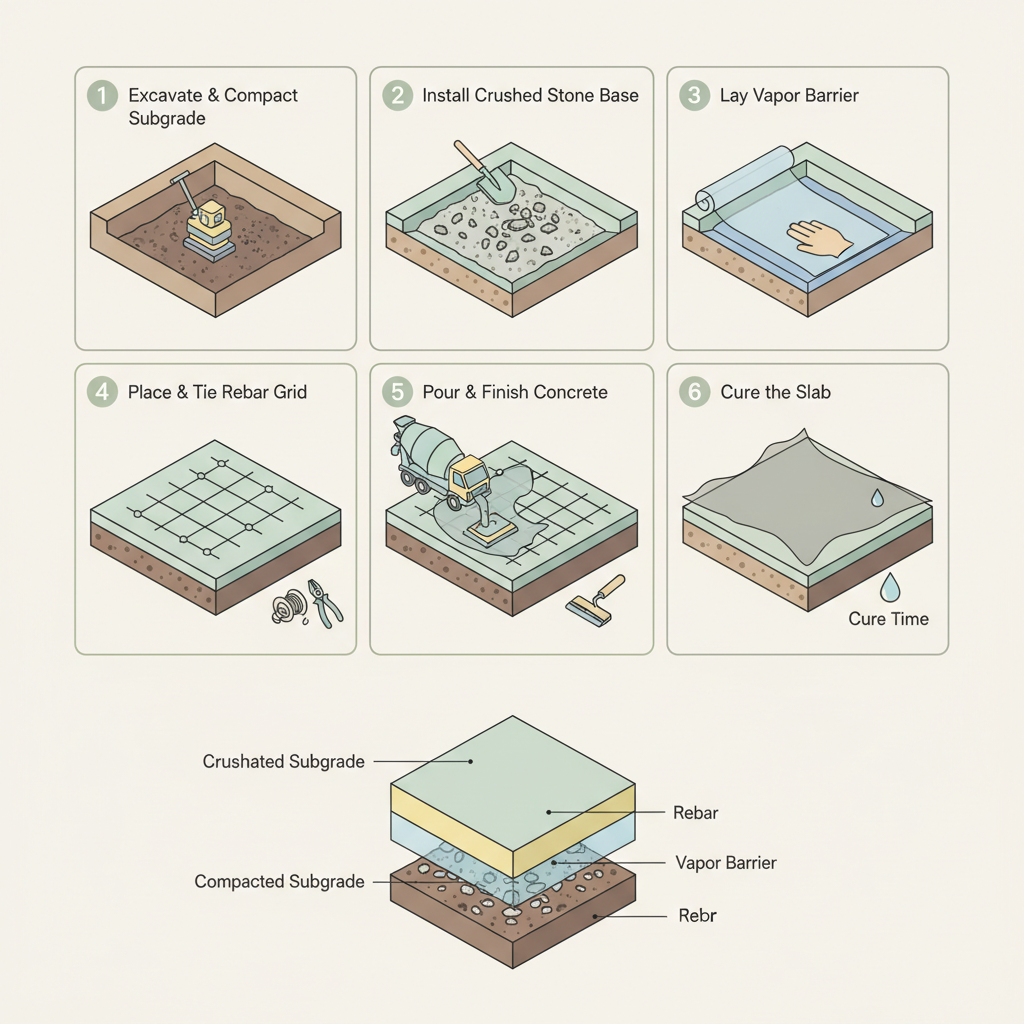
This visual guide illustrates the complete installation sequence for a slab foundation, showing each numbered step from excavation to curing. It helps clarify the proper layer-by-layer construction process, from the compacted subgrade up through the finished concrete slab, so you can visualize how each component contributes to a stable, long-lasting foundation.
Gravel for Slab Foundations: Best Base Materials, Depth, Cost & How to Build
A concrete slab foundation requires a stable, well-draining base to support structures and prevent moisture issues. We recommend a 4-6 inch compacted layer of 3/4 inch crushed stone with fines for optimal compaction and load distribution. This base provides critical drainage and prevents frost heave while creating a solid platform for the concrete pour. Proper base preparation with quality crushed stone is essential for long-term foundation stability and crack prevention.
How This Slab Foundation Is Built (Layer-by-Layer System)
A concrete slab foundation is built as a layered system designed to provide a stable, level base for structures while preventing moisture issues. The system starts with compacted subgrade soil, followed by a crushed stone base that provides drainage and load distribution, and a vapor barrier that blocks moisture migration. Reinforcing steel (rebar) is placed within the concrete pour to add tensile strength, and the concrete slab itself forms the finished structural surface that supports the building above.
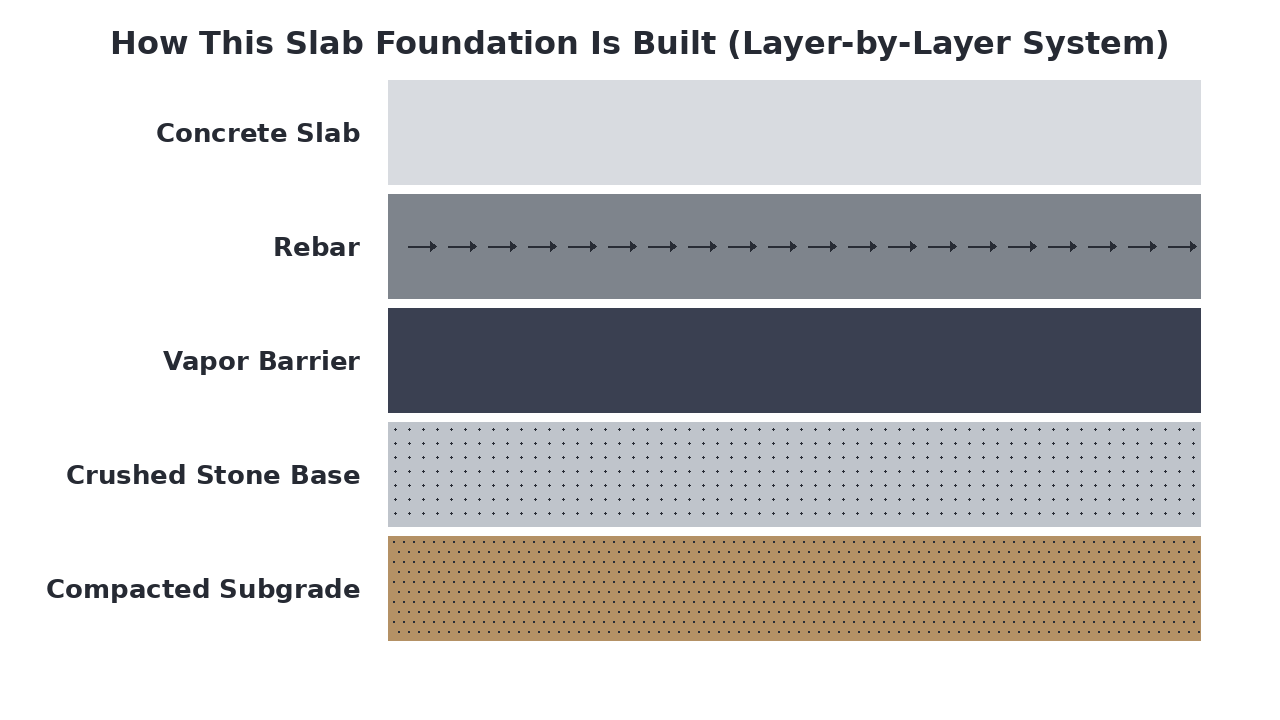
Materials Breakdown: What Each Layer Does
A concrete slab foundation is a layered system where each material performs a critical structural or protective function. The layers work together to create a stable, level, and moisture-resistant base that supports the entire structure above. Choosing the right product for each layer ensures long-term durability and prevents cracking or settling.
Native Soil
The underlying soil that is excavated, leveled, and compacted to provide a firm, stable base for the foundation layers above.
Crushed Stone
A layer of angular, compacted stone that provides drainage, prevents frost heave, and creates a level surface for the vapor barrier.
View Crushed Stone →Vapor Barrier
A plastic sheet that blocks moisture from rising up from the ground into the concrete slab, preventing dampness and mold.
Rebar
Steel reinforcement bars placed in a grid pattern to add tensile strength to the concrete and prevent cracking under load.
Concrete
The poured concrete surface that forms the finished floor, providing a solid, durable, and level foundation for the structure.
View Concrete →What Is a Slab Foundation and Why Does It Matter?
A slab foundation is a layered concrete system built directly on the ground to support a building's weight and provide a level floor surface. It matters because it offers cost-effective, durable support for many structures while preventing moisture intrusion through proper drainage and vapor barriers. Unlike basement or crawlspace foundations, slab-on-grade foundations are faster to construct, have lower excavation costs, and eliminate the need for below-grade living spaces, making them ideal for warmer climates and simpler structures.
Common Types of Slab Foundation Systems
Slab foundations come in several common types, each suited to different soil conditions and structural needs. A basic slab-on-grade is a single layer of concrete poured directly on prepared ground, while a thickened-edge slab adds extra reinforcement at the perimeter for load-bearing walls. For colder climates, a frost-protected shallow foundation (FPSF) uses insulation to prevent freezing, and a post-tensioned slab incorporates steel cables to reduce cracking and allow thinner concrete. The choice depends on climate, soil stability, and the building's weight requirements.
- Cost-effective drainage layer
- Compacts well for stability
- Reduces soil moisture issues
- Easy to install and level
Best for:Standard residential foundations in stable soils
- Excellent load-bearing capacity
- Superior drainage properties
- Minimal settling over time
- Ideal for heavy structures
Best for:Commercial buildings or heavy loads
- Provides smooth, level surface
- Easy to compact uniformly
- Good for precise finishing
- Less expensive than stone
Best for:Light structures with minimal weight
- Maximum structural integrity
- Rebar prevents cracking
- Handles seismic activity
- Longest lifespan option
Best for:Earthquake zones or unstable soils
When a Slab Foundation Is the Best Solution
A gravel-based slab foundation is ideal when you need a cost-effective, durable solution for residential construction in stable soil conditions. It's perfect for warmer climates where frost heave isn't a concern, and for homeowners prioritizing straightforward installation with good drainage. This approach works well for single-story homes, garages, and sheds where you want to avoid the expense of basements while ensuring reliable moisture management. Choose this option when budget is important but you still need solid, long-lasting support for your structure.
Everything You Need to Build a Slab Foundation
Building a slab foundation requires specific materials for each structural layer and essential tools for proper installation. You'll need foundational materials like compacted subgrade soil, a crushed stone base for drainage, and a vapor barrier to block moisture. The surface layer involves rebar for reinforcement and concrete mix to form the final slab, along with tools for excavation, grading, and finishing.
- Compacted subgrade soil, Crushed stone base, Vapor barrier, Rebar, Concrete mix
- Excavator or shovel, Plate compactor, Concrete mixer, Concrete trowel, Laser level
- Sunbelt Rentals (equipment rental), Hello Gravel (materials), A contractor supply store
What to Consider Before You Start
Before you begin, carefully consider these key factors to ensure your slab foundation is built correctly and lasts for years.
- Soil conditions and stability
Test the soil for load-bearing capacity and drainage to prevent future settling or cracking.
- Local building codes and permits
Check with your local municipality for required permits and any specific foundation regulations.
- Site preparation and grading
Plan for proper excavation, grading, and compaction to create a level, stable base.
- Concrete mix and reinforcement
Decide on the appropriate concrete strength and rebar spacing based on your structure's load requirements.
- Weather and timing
Schedule the pour during favorable weather conditions to ensure proper concrete curing.
How to Prepare the Ground for a Slab Foundation
Start by clearing the site of all vegetation, debris, and topsoil to reach stable subsoil. Mark the perimeter of the slab using stakes and string lines, then grade the area to ensure proper slope for drainage away from the future structure. Excavate to the required depth, removing any soft or organic material, and finally compact the subgrade thoroughly to create a firm, unyielding base.
How a Slab Foundation Works
A slab foundation distributes structural loads evenly across the compacted subgrade through a layered system. The crushed stone base provides drainage and prevents frost heave, while the vapor barrier blocks moisture from wicking up into the concrete. Reinforcing rebar within the slab resists tensile stresses, and the monolithic concrete pour creates a rigid, level platform that supports walls and floors above.
How to Install a Slab Foundation
Excavate & Compact Subgrade
⚠️ Licensed-trade notice: This project is code-regulated in most jurisdictions and typically requires a licensed contractor and local permits. The steps below are provided to help plan your aggregate order, not as a substitute for professional design, permits, or inspections. Dig out the area to the specified depth and use a plate compactor to create a solid, level base of native soil.
Install Crushed Stone Base
Spread a layer of crushed stone evenly across the compacted subgrade and compact it to the required thickness for drainage and stability.
Lay Vapor Barrier
Roll out a polyethylene vapor barrier over the crushed stone base, overlapping seams and sealing edges to prevent moisture migration.
Place & Tie Rebar Grid
Set reinforcing rebar on chairs to create a grid at the specified height, then tie intersections securely with wire.
Pour & Finish Concrete
Pour concrete into the formed area, vibrate to remove air pockets, then screed, float, and trowel the surface to a smooth finish.
Cure the Slab
Keep the concrete moist and covered for several days to ensure proper hydration and strength development.
Alternative Gravel Options for Slab Foundations
For a slab foundation, the base layer typically requires a well-graded, compactable aggregate that provides stability and drainage. While several gravel options exist, crushed stone is generally the best choice due to its angular shape that interlocks for superior compaction and load-bearing capacity. Pea gravel and river rock are decorative but lack structural integrity, while sand can shift under pressure. The ideal material balances drainage with the ability to form a solid, non-settling base.
The best overall option for its angular shape that locks together for a stable, compactable base.
View Product →A cost-effective, engineered mix of gravel and fines that compacts well for heavy loads.
View Product →Provides a smooth, leveling layer but can shift or wash away without proper containment.
View Product →A recycled, economical alternative that compacts decently but may contain inconsistent debris.
View Product →A poor structural choice as its round shape prevents compaction and leads to settling.
View Product →Common Slab Foundation Mistakes (And How to Avoid Them)
A successful slab foundation relies on proper preparation and material selection. Avoiding these common mistakes will prevent costly cracking, settling, and moisture issues down the line.
- Inadequate base compaction
- Poor site drainage
- Insufficient gravel depth
- Wrong aggregate type
- Missing vapor barrier
- No expansion joints
How to Maintain a Slab Foundation
Regularly inspect the perimeter of your slab for signs of settling, cracking, or water pooling. Ensure gutters and downspouts direct water away from the foundation to prevent erosion of the base material. Fill any gaps or voids with compactable gravel and re-grade the surrounding soil if necessary to maintain positive drainage away from the structure.
Calculate How Much Gravel You Need
Enter Your Dimensions
Measure your project area and we'll calculate how much material you need.