Concrete Slab Sub-Base: Crushed Stone Depth & Quantities
A durable concrete slab depends on proper preparation and the right materials underneath. This guide explains what a concrete slab is, which materials you need, how to prepare the ground, how to build it step by step, and how to estimate the amount of gravel required. Whether you are pouring a new patio foundation or replacing an old driveway base, use the sections below to find what you need.
See How to Build a Concrete Slab
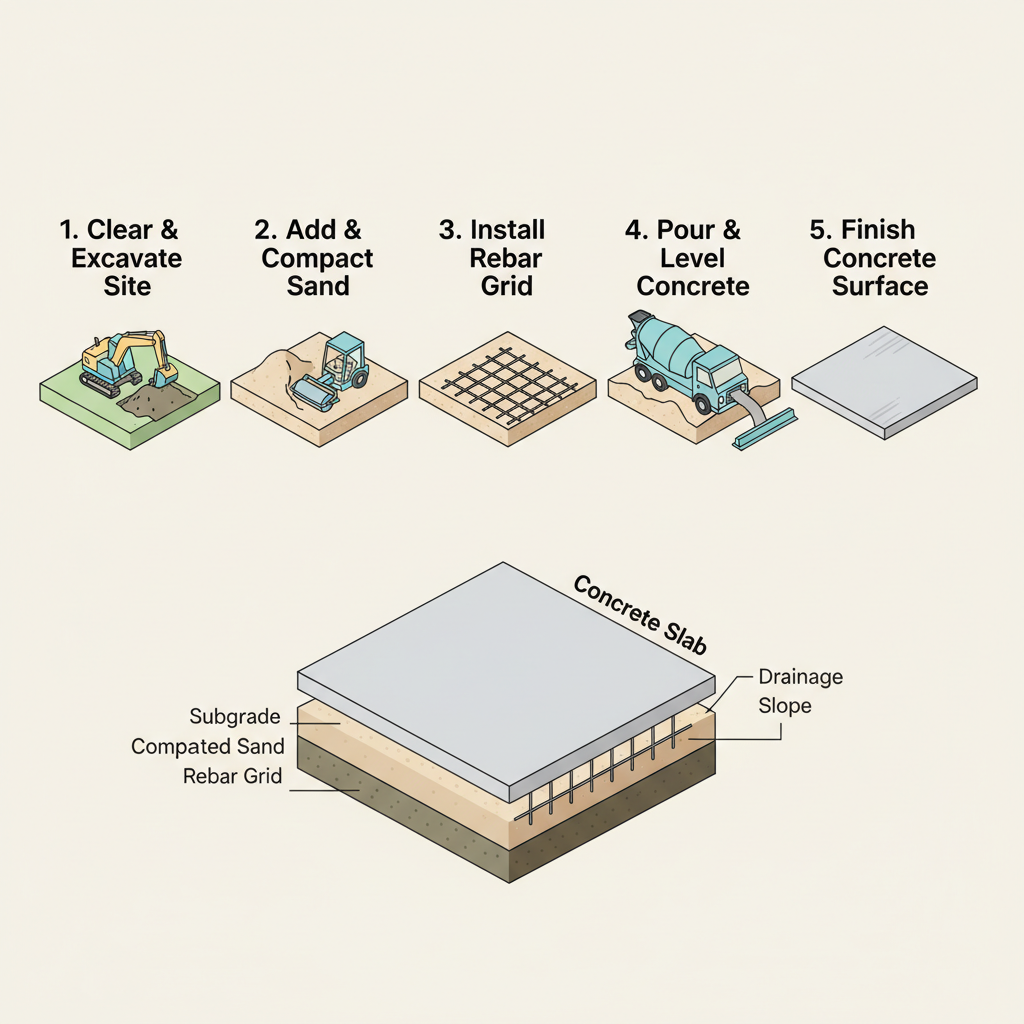
This visual guide shows the complete installation sequence for building a concrete slab, from site preparation to finishing. The numbered steps clarify the proper order of operations, while the layered cross-section helps you understand how each material contributes to a durable, stable foundation.
Gravel for Concrete Slabs: Best Base Materials, Depth, Cost & How to Build
A concrete slab requires a stable, well-draining base to prevent cracking and ensure long-term durability. We recommend using 4-6 inches of compacted road base with 3/4 inch down to fines grading for optimal support. This foundation layer distributes weight evenly and allows for proper water drainage away from the slab. Proper installation with the right materials prevents settling and structural issues over time.
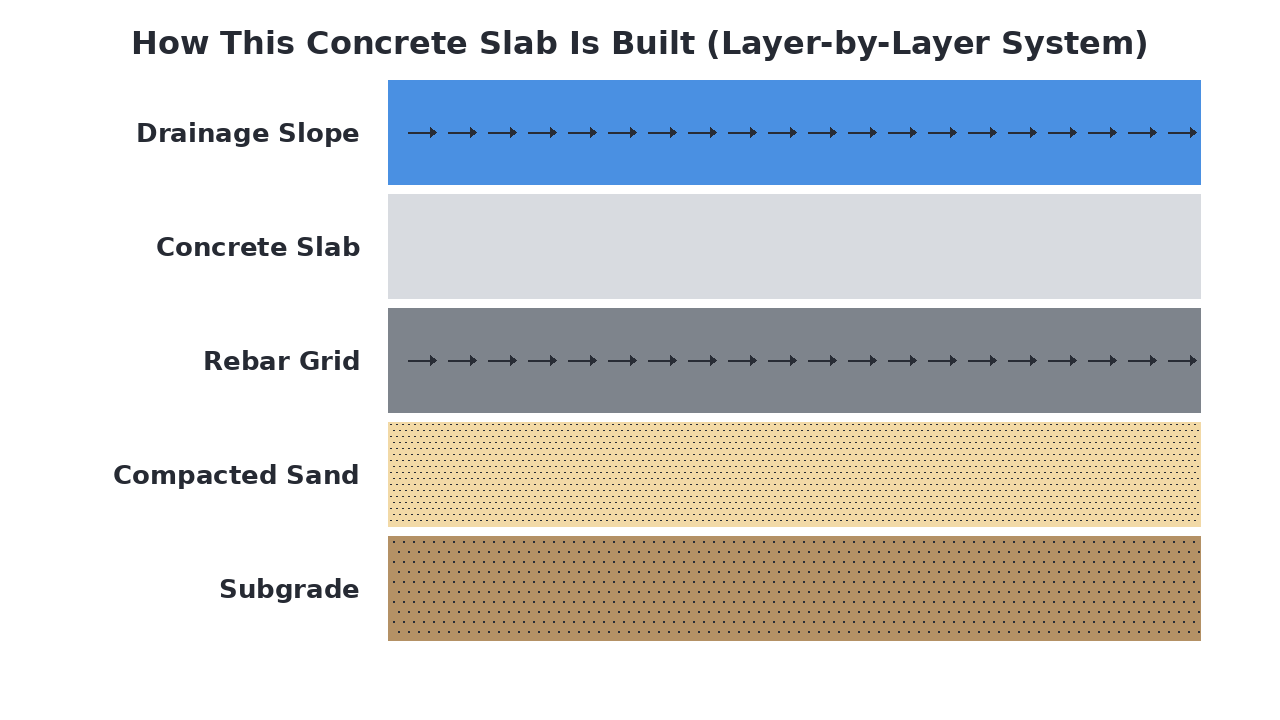
How This Concrete Slab Is Built (Layer-by-Layer System)
A concrete slab is built as a multi-layer system designed to provide a stable, level foundation for structures. The construction starts with a prepared subgrade, followed by a compacted base layer that provides drainage and prevents settling, and a top layer of poured concrete reinforced with rebar. Proper installation includes a slight slope or pitch to ensure water drains away from the slab surface, preventing cracking and moisture damage. The layered approach ensures long-term durability and structural integrity for the finished concrete surface.
Materials Breakdown: What Each Layer Does
A concrete slab is a layered system where each material serves a critical structural or drainage purpose, working together to create a stable, durable, and level foundation. The subgrade provides a firm base, while the sand layer ensures proper compaction and drainage before the concrete is poured. The rebar grid reinforces the slab to prevent cracking, and the final concrete layer forms the solid, usable surface, all designed with a slight slope to manage water runoff.
Native Soil or Compacted Earth
The existing ground that is excavated, leveled, and compacted to provide a stable, load-bearing foundation for the entire slab system.
Sharp Sand or Concrete Sand
A thin layer of sand that is evenly spread and compacted to create a smooth, level, and well-draining base for the concrete pour.
Steel Rebar
A grid of steel reinforcing bars placed within the concrete to add tensile strength and prevent cracking under load or temperature changes.
Concrete
The main structural layer, poured over the sand and rebar, that hardens into a solid, durable, and level surface for patios, driveways, or floors.
View Concrete →Surface Slope
A slight, consistent grade built into the top of the slab to direct rainwater away from structures and prevent pooling or water damage.
What Is a Concrete Slab and Why Does It Matter?
A concrete slab is a multi-layer foundation system that provides a stable, level surface for structures like patios, garages, and house foundations. It matters because proper slab construction prevents cracking, settling, and moisture damage that can compromise structural integrity. Unlike simple poured concrete on unprepared ground, a properly built slab includes a compacted base layer for drainage and rebar reinforcement for strength. This layered approach ensures the slab can support heavy loads and withstand environmental stresses for decades.
Common Types of Concrete Slab Systems
Concrete slabs come in several common types that vary in construction method and reinforcement. Monolithic slabs are poured in one continuous pour with thickened edges, making them economical for simple structures. Post-tensioned slabs use steel cables that are tensioned after pouring, providing superior crack resistance for expansive soils. Frost-protected shallow foundations use insulation to allow shallower depth in cold climates, reducing excavation costs. The choice depends on soil conditions, climate, and structural requirements.
- Single continuous pour
- Thickened edge footings
- Economical construction
- Good for stable soils
Best for:Simple garages and sheds in mild climates
- Steel cable reinforcement
- Excellent crack resistance
- Handles expansive soils
- Higher initial cost
Best for:Areas with problematic soil conditions
- Insulated perimeter
- Shallow excavation depth
- Cold climate solution
- Energy efficient design
Best for:Northern regions with frost concerns
- Compacted gravel subbase
- Proper drainage layer
- Rebar reinforcement grid
- Cost-effective foundation
Best for:Most residential applications and patios
When a Concrete Slab Is the Best Solution
A concrete slab with a proper gravel base is ideal when you need a durable, permanent foundation that handles moderate to heavy loads like garages, workshops, or patio foundations. It's the best choice for areas with good drainage where you want to prevent moisture damage and frost heave. This system works well for homeowners who value long-term stability over initial cost savings, providing decades of reliable service with proper construction.
Everything You Need to Build a Concrete Slab
Building a concrete slab requires specific materials for each structural layer and the right tools for proper installation. You'll need foundational materials like crushed stone or road base for the subgrade, sand for leveling and drainage, and rebar for reinforcement before pouring the concrete. Essential tools include excavation equipment, compaction tools, and concrete finishing tools to ensure a durable, level slab.
- Crushed stone or road base, Sand, Rebar, Concrete mix
- Shovel, Wheelbarrow, Plate compactor, Rebar cutter/bender, Concrete mixer, Trowel and float
- Hello Gravel (materials), Your local hardware store, Equipment rental store (compactor, mixer)
What to Consider Before You Start
Before breaking ground on your concrete slab project, consider these key planning factors to ensure success.
- Site evaluation and preparation
Check soil conditions, drainage patterns, and clear the area of vegetation and debris before excavation.
- Permit requirements and regulations
Verify if your project requires building permits and complies with local zoning and setback regulations.
- Concrete delivery and timing
Plan concrete delivery logistics and timing to ensure you have adequate help and equipment ready for pouring.
- Weather considerations
Check the weather forecast to avoid pouring concrete during extreme temperatures, rain, or freezing conditions.
- Formwork and slope planning
Design and build proper formwork with appropriate drainage slope (typically 1/4 inch per foot away from structures).
How to Prepare the Ground for a Concrete Slab
Start by clearing the site of all vegetation, debris, and topsoil to reach stable subsoil. Mark the slab's perimeter with stakes and string, then excavate to the required depth, ensuring the bottom is level and properly graded for drainage. Finally, thoroughly compact the exposed subgrade with a plate compactor to create a firm, unyielding base that prevents future settling.
How a Concrete Slab Works
Once installed, the concrete slab functions as a unified structural system that distributes loads evenly across the compacted subgrade. The integrated rebar grid provides tensile strength to resist cracking from shrinkage or ground movement. A slight, consistent slope built into the slab surface directs water runoff away, preventing pooling and protecting the foundation from moisture damage.
How to Install a Concrete Slab
Clear & Excavate Site
Remove all organic material and excavate the area to the specified depth, creating a level subgrade.
Add & Compact Sand
Spread a layer of coarse sand over the subgrade and compact it thoroughly to create a stable, well-draining base.
Install Rebar Grid
Place a grid of reinforcing steel bars (rebar) on chairs over the compacted sand to strengthen the concrete slab.
Pour & Level Concrete
Pour concrete into the formwork, screed it level, and create a slight slope for water drainage.
Finish Concrete Surface
Float and trowel the concrete surface to achieve a smooth, durable finish, then cure it properly.
Alternative Gravel Options for Concrete Slabs
While concrete is the final surface, the aggregate base layer is critical for stability and drainage. Homeowners often consider different types of gravel, crushed stone, or specialized base materials for this foundational layer. For concrete slabs, a well-graded crushed stone or road base that compacts tightly tends to be the winning choice because it provides superior load-bearing capacity and prevents settling that could crack the concrete above.
The best overall choice for a stable, compactable base under concrete slabs.
View Product →Excellent for drainage layers beneath slabs where water management is critical.
View Product →A poor choice for structural bases as it doesn't compact well and shifts easily.
View Product →A sustainable option that compacts well for base layers when properly graded.
Common Concrete Slab Mistakes (And How to Avoid Them)
Concrete slabs fail more often from preparation errors than from the concrete itself. Avoiding these common mistakes during the base and pour stages ensures a durable, crack-free surface that lasts for decades.
- Inadequate base compaction
- Poor drainage planning
- Insufficient rebar reinforcement
- Improper concrete mix
- No control joints
How to Maintain a Concrete Slab
Regular maintenance of a concrete slab involves clearing debris and checking for proper water drainage away from the surface. Inspect for cracks annually and seal them promptly with concrete caulk to prevent water infiltration and freeze-thaw damage. For slabs with embedded drains or expansion joints, keep these clear of dirt and vegetation to maintain functionality.
Calculate How Much Gravel You Need
Enter Your Dimensions
Measure your project area and we'll calculate how much material you need.