Deck Footing Gravel: Road Base Volume per Footing
A strong deck begins with properly built footings that provide a stable, lasting foundation. This guide explains what a deck footing is, which materials you need, how to design the layout, how to install footings step by step, and how to estimate the amount of gravel required. Whether you are tackling your first DIY deck or replacing old, failing supports, use the sections below to navigate through the process.
See How to Build a Deck Footings
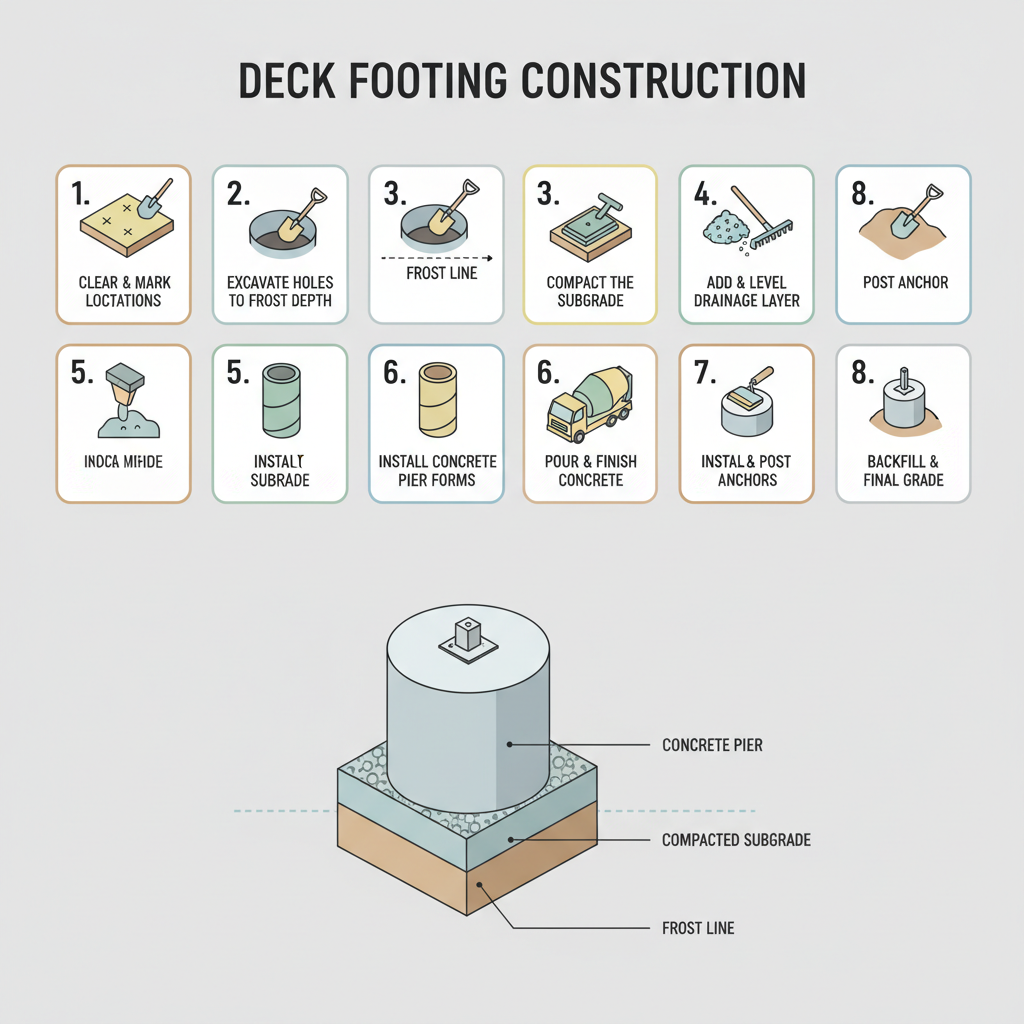
This visual guide walks through the complete deck footing installation sequence, showing each numbered step from site preparation to final grading. The layered cross-section diagram clarifies how the compacted subgrade, gravel drainage, and concrete pier work together below the frost line to create a stable foundation. Following this clear visual sequence helps ensure proper construction and long-lasting deck support.
Gravel for Deck Footings: Best Materials, Depth, Cost & How to Build
Deck footings transfer your deck's weight to stable ground while preventing frost damage. Use 3/4-inch gravel for a well-draining, compactable base that supports the concrete piers. Install 6-8 inches of gravel under each footing to ensure proper load distribution and prevent settling. This layered system creates a durable foundation that keeps your deck level and secure for years.
How This Deck Footings Is Built (Layer-by-Layer System)
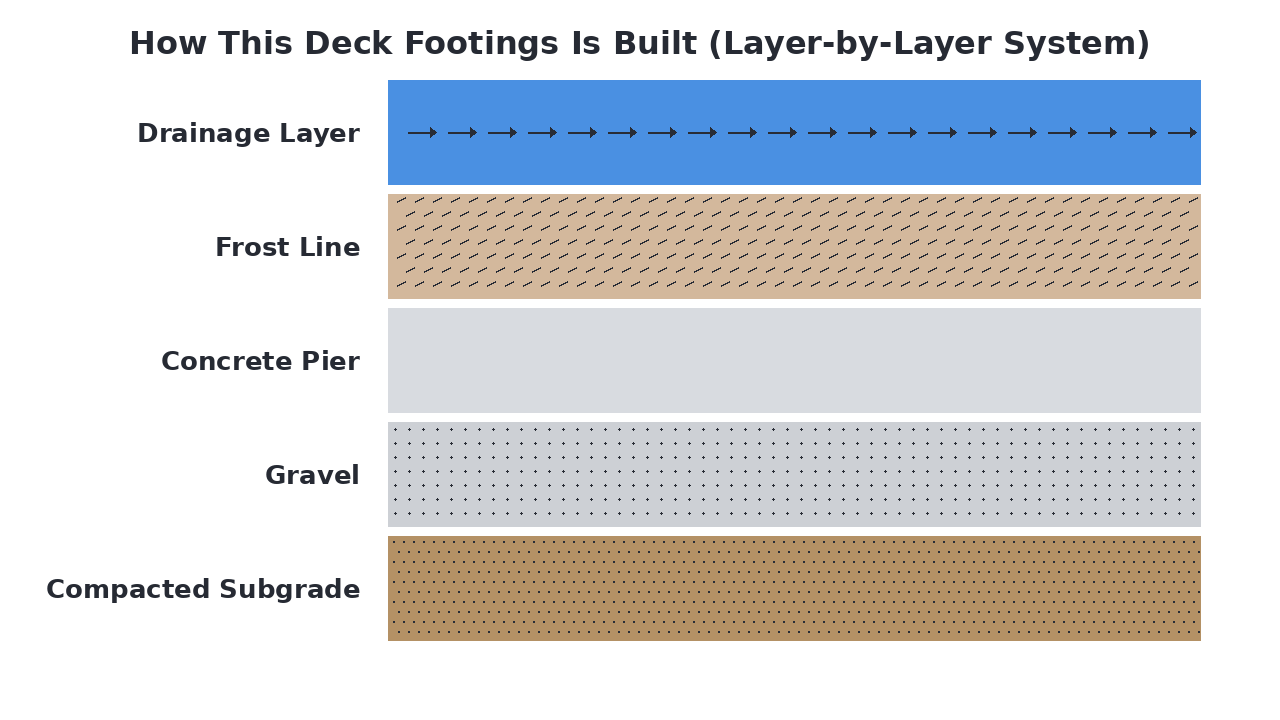
A deck footing system is built as a layered structure designed to transfer the deck's load to stable ground while preventing frost heave. The system starts with a compacted subgrade, followed by a gravel layer that provides drainage and a stable base, and a concrete pier that creates the load-bearing column. Proper construction includes ensuring the gravel layer is well-drained to prevent water accumulation that could weaken the footing. This layered approach ensures long-term stability and prevents settling or shifting of the deck structure.
Materials Breakdown: What Each Layer Does
A deck footing system is constructed in distinct layers, each serving a specific structural and drainage purpose. The materials work together to create a stable foundation that resists frost heave and distributes the deck's load evenly into the ground. Proper layering ensures the footing remains solid through seasonal changes while preventing water accumulation that could compromise stability.
Native Soil
The existing ground that is compacted to provide a firm, stable base for the entire footing system.
Crushed Stone
A layer of compacted gravel that creates a stable platform for the concrete and provides drainage beneath the footing.
View Crushed Stone →Concrete
The structural column that transfers the deck's load down to the stable layers below and resists uplift forces.
View Concrete →Frost Depth
The maximum depth that ground freezes in winter, which determines how deep the footing must be placed to prevent frost heave.
Drainage Gravel
A layer of clean stone that allows water to drain away from the footing, preventing saturation and frost damage.
What Is a Deck Footings and Why Does It Matter?
A deck footing is a layered foundation system that transfers the deck's load to stable soil and prevents frost heave. It matters because proper footings prevent deck settling, shifting, and structural failure over time. Unlike simple concrete blocks placed on soil, a proper footing includes a gravel drainage layer and extends below the frost line to resist seasonal ground movement. This engineered approach ensures long-term stability and safety for your deck structure.
Common Types of Deck Footings Systems
Deck footings come in several common systems, each with different materials and installation approaches. Traditional concrete footings involve pouring concrete into forms below the frost line, providing excellent strength but requiring precise formwork. Precast concrete piers offer faster installation but may have less frost protection. Gravel-based footings use compacted gravel layers for drainage and stability, working well with helical piers or concrete tubes. The choice depends on soil conditions, frost depth, and whether you prioritize drainage or maximum load capacity.
- Poured in place below frost line
- Excellent load-bearing capacity
- Requires forms and curing time
- Permanent solid foundation
Best for:Maximum structural strength requirements
- Pre-manufactured concrete blocks
- Quick installation without curing
- Limited frost protection depth
- Easy to level and adjust
Best for:Fast installation on stable soil
- Gravel drainage base layer
- Concrete tube for vertical support
- Excellent frost heave resistance
- Combines drainage with strength
Best for:Areas with frost or drainage issues
- Screw-in metal piers
- Gravel for drainage and leveling
- No concrete or curing required
- Works in poor soil conditions
Best for:Soft or unstable soil sites
When a Deck Footings Is the Best Solution
A gravel-based deck footing system is ideal when you need both structural support and proper drainage. Choose this approach if your area experiences frost heave, as the gravel layer prevents water accumulation that causes ground movement. It's also perfect for sites with poor drainage or clay soils where water management is crucial. This system balances cost-effectiveness with long-term stability, making it suitable for most residential deck projects.
Everything You Need to Build a Deck Footings
Constructing deck footings requires a combination of foundational materials and essential tools to ensure a solid, long-lasting base. You'll need concrete and gravel for the main structural layers, along with tools for excavation and compaction. Proper sourcing of these materials and equipment is key to a successful DIY installation.
- Gravel, Crushed stone, Sand, Concrete mix
- Post hole digger or auger, Shovel, Level, Tape measure, Concrete mixing tools
- Hello Gravel (materials), Your local hardware store, Equipment rental store (auger)
What to Consider Before You Start
Before digging your first hole, consider these essential planning steps to ensure your deck footings meet local requirements and site conditions.
- Local building codes
Check with your local building department for required footing depth, diameter, and setback regulations.
- Frost line depth
Determine your area's frost line depth to ensure footings extend below this level to prevent heaving.
- Soil type and drainage
Assess your soil composition and drainage patterns to determine if additional gravel or drainage layers are needed.
- Deck layout and load
Plan the exact placement of footings based on your deck design and anticipated load requirements.
- Utility line locations
Call 811 or your local utility marking service to identify underground lines before digging.
How to Prepare the Ground for a Deck Footings
Start by clearing the area of all vegetation, debris, and topsoil to reach stable subsoil. Mark the exact locations of each footing according to your deck plan, then use a level and string lines to ensure the entire area is properly graded for water runoff away from the house. Excavate each footing hole to the required depth below the local frost line, and thoroughly compact the soil at the bottom to create a solid, level subgrade.
How a Deck Footings Works
The footing system distributes the deck's load through multiple layers: the compacted subgrade provides a firm base, the gravel layer enhances drainage and prevents frost heave, and the concrete pier transfers the weight deep into stable soil. Water from rain or melting snow percolates down through the gravel drainage layer, moving away from the concrete to prevent saturation and freeze-thaw damage. This layered structure ensures long-term stability by combining load-bearing capacity with effective water management.
How to Install a Deck Footings
Clear & Mark Footing Locations
Remove all vegetation and debris from the work area, then mark the center of each footing hole according to your deck plan.
Excavate Holes to Frost Depth
Dig each footing hole to the required diameter and depth, ensuring the bottom extends below the local frost line.
Compact the Subgrade
Use a hand tamper or mechanical compactor to firmly compact the soil at the bottom of each hole, creating a level and solid base.
Add & Level Gravel Drainage Layer
Pour a layer of coarse gravel into each hole, then level and compact it to create a stable, well-draining base for the concrete.
Install Concrete Pier Forms
Place and secure cylindrical concrete tube forms in each hole, ensuring they are plumb and extend to the proper height above grade.
Pour & Finish Concrete
Fill each form with concrete, using a shovel or rod to eliminate air pockets, then level and smooth the top surface.
Install Post Anchors
Set metal post anchors into the wet concrete at each footing, ensuring they are properly aligned and embedded at the correct height.
Alternative Gravel Options for Deck Footingss
For deck footings, the primary aggregate layer must provide excellent compaction, drainage, and stability to support the concrete pier. While several gravel types can be used, crushed stone with angular edges locks together to form a solid, non-shifting base that resists settling. Pea gravel and sand are generally not recommended for structural layers due to poor compaction, while road base offers a good middle ground for budget-conscious projects. Ultimately, a well-graded crushed stone is the best choice as it creates a dense, load-bearing foundation that prevents frost heave and ensures long-term deck stability.
The best choice for structural support due to its angular shape and excellent compaction.
View Product →A cost-effective option that provides decent compaction and drainage for footings.
View Product →Used for the footing itself but requires a proper gravel base underneath.
Decorative only; rolls under pressure and provides no structural stability.
View Product →Common Deck Footings Mistakes (And How to Avoid Them)
Proper deck footings are crucial for safety and longevity, but several common errors can compromise their integrity. Avoiding these mistakes ensures your deck remains level and secure for years to come.
- Insufficient footing depth
- Poor drainage around footings
- Using wrong base material
- Inadequate compaction
- Improper concrete mixing
How to Maintain a Deck Footings
Regular maintenance of deck footings involves inspecting for settling or shifting each season, especially after freeze-thaw cycles. Ensure proper drainage by keeping the area around footings clear of soil buildup and vegetation. If minor settling occurs, consult a professional to assess whether adjustments or repairs to the footing system are needed.
Calculate How Much Gravel You Need
Enter Your Dimensions
Measure your project area and we'll calculate how much material you need.