Backyard Putting Green Sand: Mason Sand Depth & Tonnage
A backyard putting green transforms ordinary lawns into a golfer's personal practice sanctuary, and its success depends on proper base materials and precise installation. This guide explains what a putting green is, which materials you need, how to prepare the ground, how to build a putting green step by step, and how to estimate the amount of gravel required. Whether you are creating a simple DIY practice green or planning a professional-grade installation, use the sections below to find what you need.
See How to Build a Putting Green
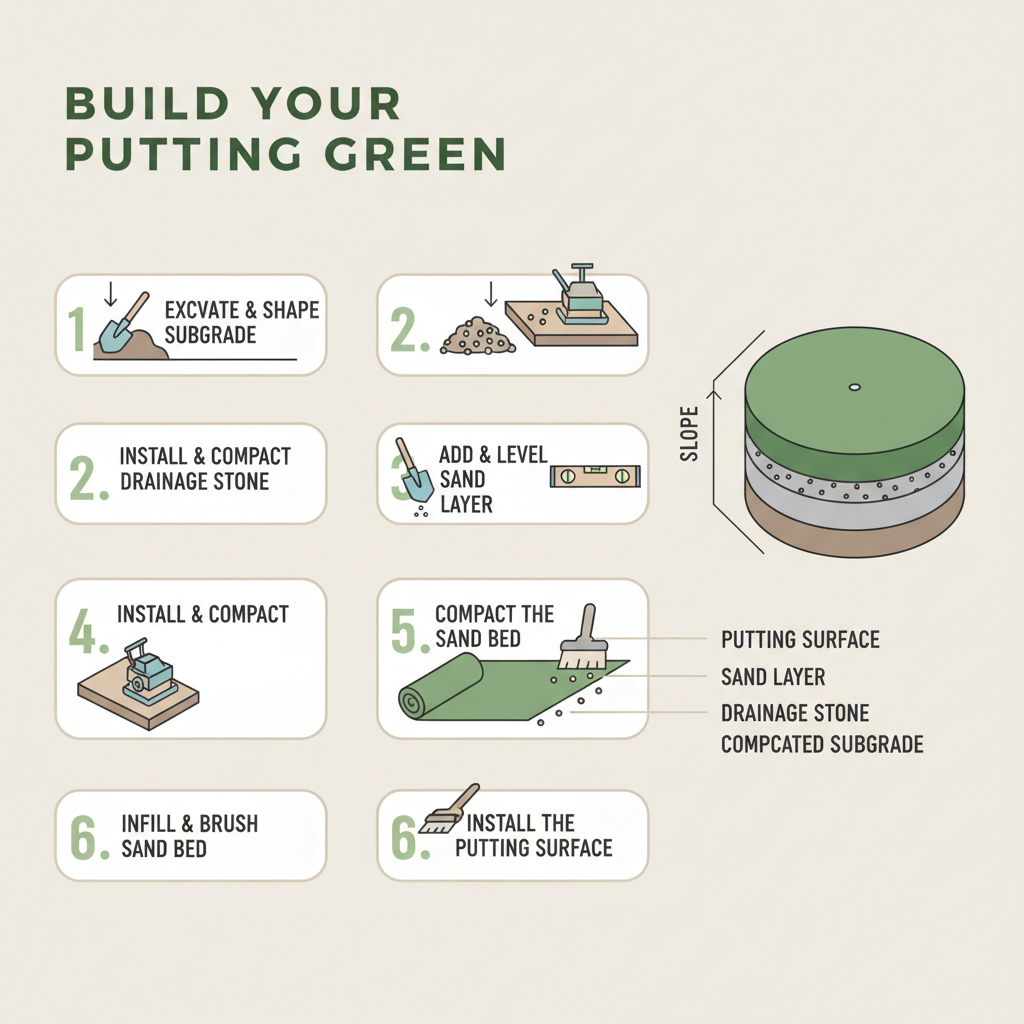
This visual guide illustrates the key steps and layered structure for building a backyard putting green, helping you understand the proper installation sequence from excavation to final turf placement. It clarifies how each layer—compacted subgrade, drainage stone, sand bed, and putting surface—works together to create a stable, well-draining foundation. Following this diagram ensures your green maintains proper slope and durability for years of smooth putting.
Gravel for Putting Greens: Best Materials, Depth, Cost & How to Build
A backyard putting green requires a carefully layered system that combines playability with proper drainage. We recommend using fine to medium sand as the base material, installed at 4-6 inches total depth with a drainage stone layer beneath. This creates a smooth, consistent putting surface that drains effectively to prevent soggy conditions. The sand base allows for proper ball roll while being firm enough for realistic putting practice.
How This Putting Green Is Built (Layer-by-Layer System)
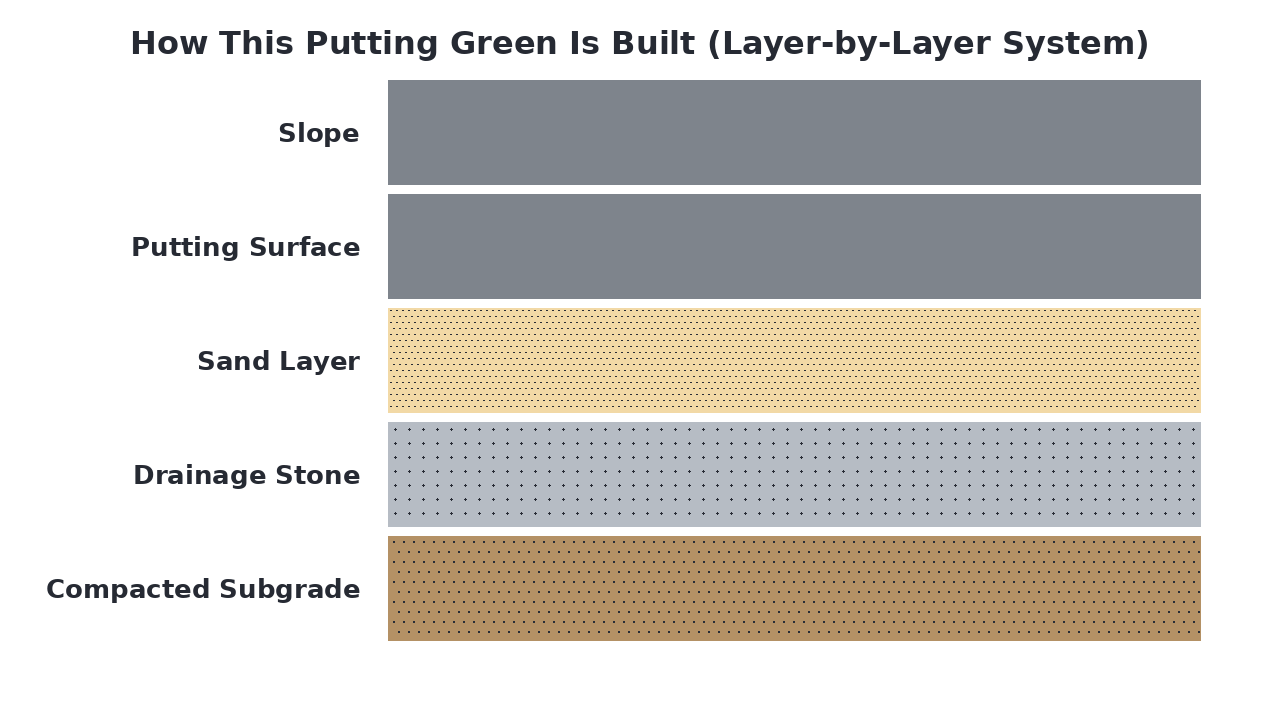
A backyard putting green is built as a layered system that combines stability for putting with effective subsurface drainage. The construction starts with a compacted subgrade, followed by a drainage layer that whisks away excess water, then a sand layer that provides a firm yet forgiving base. The final surface layer creates the smooth, consistent putting surface, while proper slope ensures water drains efficiently to prevent soggy conditions and maintain playability.
Materials Breakdown: What Each Layer Does
A backyard putting green is a layered system where each material serves a specific function to create a stable, smooth, and fast-rolling surface. The layers work together to provide proper drainage, a firm base, and a consistent playing texture that mimics a professional green. Choosing the right products for each layer ensures the green performs well and lasts for years.
Compacted Soil
The existing soil that is compacted to create a solid, stable foundation that prevents settling and provides structural support for the layers above.
Crushed Stone
A layer of clean, angular stone that creates voids for rapid water drainage, preventing waterlogging and protecting the putting surface from moisture damage.
View Crushed Stone →Sand
A leveling and cushioning layer that provides a smooth, consistent surface for the putting turf and helps with minor drainage.
View Sand →Artificial Turf
The synthetic grass surface that provides the consistent ball roll and appearance of a professional putting green, designed for putting practice.
Surface Slope
The subtle grade built into the green to ensure proper surface drainage and to add putting challenge by creating breaks in the ball's path.
What Is a Putting Green and Why Does It Matter?
A backyard putting green is a specialized landscaping feature designed for golf practice and entertainment, featuring a smooth, consistent surface that mimics professional putting conditions. It matters because it provides convenient at-home golf practice, enhances outdoor entertainment value, and adds unique functionality to your landscape. Unlike regular lawns or artificial turf, putting greens require specific layered construction with proper drainage to maintain consistent ball roll and prevent water damage to the playing surface.
Common Types of Putting Green Systems
Backyard putting greens come in several construction approaches, each with different maintenance requirements and playing characteristics. Traditional sand-based greens use a specialized sand mixture as the root zone, offering excellent drainage but requiring regular topdressing. Synthetic turf greens provide consistent play year-round with minimal maintenance but lack the authentic feel of natural grass. Hybrid systems combine natural grass with synthetic components for durability while maintaining some organic characteristics.
- Excellent drainage properties
- Authentic grass playing surface
- Requires regular maintenance
- Needs proper irrigation
Best for:Traditional golf enthusiasts
- Consistent year-round play
- Very low maintenance
- No watering needed
- Durable artificial surface
Best for:Low-maintenance convenience seekers
- Combines natural and artificial
- Enhanced durability
- Reduced maintenance needs
- Good drainage characteristics
Best for:Balancing authenticity with practicality
When a Putting Green Is the Best Solution
A sand-based putting green is ideal when you want an authentic golf experience with proper drainage and are willing to maintain it regularly. It's perfect for serious golf enthusiasts who practice frequently and value the feel of real grass. This option works well in climates with adequate rainfall where drainage is crucial, and for homeowners who enjoy the gardening aspect of turf care. Consider this if you prioritize authenticity over convenience and have time for maintenance.
Everything You Need to Build a Putting Green
Building a backyard putting green requires specific materials to create the layered foundation and smooth playing surface. You'll need drainage stone for the base, sand for the middle layer, and a specialized putting surface material for the top. Essential tools include excavation equipment, grading tools, and a compactor to properly install each layer.
- Compacted subgrade soil, Drainage stone, Sand, Putting surface material, Edging
- Shovel, Rake, Compactor, Grading tools, Level
- Hello Gravel (materials), A contractor supply store, Equipment rental store (compactor)
What to Consider Before You Start
Before breaking ground on your putting green, consider these key planning factors to ensure a successful build.
- Site selection and slope
Choose a level area with proper drainage and plan for a slight slope (1-2%) to prevent water pooling.
- Soil assessment and preparation
Test your soil's compaction and drainage capabilities before excavating to ensure proper subgrade stability.
- Material quantity calculations
Measure your green's dimensions to calculate exact amounts of drainage stone, sand, and surface material needed.
- Drainage system planning
Determine if additional drainage pipes or channels are needed based on your soil type and local rainfall patterns.
- Edging and containment
Decide on edging material and installation method to keep the putting surface contained and prevent material migration.
How to Prepare the Ground for a Putting Green
Begin by clearing the area of all vegetation, roots, and debris to create a clean, level site. Mark the exact perimeter of your putting green using stakes and string, ensuring the shape and dimensions are correct. Grade the ground to establish a gentle slope (about 1-2% grade) away from any structures to promote water runoff. Finally, thoroughly compact the exposed subgrade with a plate compactor to create a firm, stable foundation for the layered construction.
How a Putting Green Works
The layered structure of a putting green distributes weight evenly and channels water efficiently. The compacted subgrade provides a solid base, while the drainage stone layer creates voids for rapid water movement. A leveling sand layer offers a smooth, adjustable bed for the final putting surface, which is installed on top. The entire system's gentle slope ensures surface water flows off the green, preventing puddling and maintaining ideal playing conditions.
How to Install a Putting Green
Excavate & Shape Subgrade
Dig out the marked area to the required depth, shaping the soil to create the predetermined slope for drainage.
Install & Compact Drainage Stone
Spread a layer of crushed stone across the excavated area and compact it thoroughly to form a stable, permeable base.
Add & Level Sand Layer
Place a precise layer of coarse sand over the stone, screeding it level to create a perfectly flat bed for the putting surface.
Compact the Sand Bed
Use a plate compactor to firmly compact the sand layer, ensuring it is dense and will not settle over time.
Install the Putting Surface
Roll out and secure your chosen artificial turf or install a specialized putting green carpet over the prepared sand base.
Infill & Brush Surface
Apply an appropriate infill material across the turf and brush it in to support the fibers and achieve the desired ball roll speed.
Alternative Gravel Options for Putting Greens
For a backyard putting green, the primary aggregate layer needs to provide a stable, well-draining base that supports a smooth, consistent surface. While options like crushed stone, sand, and decomposed granite are commonly considered for drainage and stability, each has different performance characteristics. The best choice is typically a specific type of crushed stone that compacts firmly while allowing excellent water movement, creating the ideal foundation for a fast-rolling green.
Provides excellent compaction and drainage for a stable, fast-draining base layer.
View Product →Offers good drainage but requires careful compaction to prevent shifting over time.
Compacts well but may retain more moisture than ideal for optimal green speed.
View Product →Too rounded and unstable for a putting green base, leading to uneven surfaces.
View Product →Not suitable for base layers but may be used in minimal amounts for turf establishment.
View Product →Common Putting Green Mistakes (And How to Avoid Them)
Building a backyard putting green requires careful attention to construction details that are often overlooked by DIY enthusiasts. These common mistakes can compromise drainage, playing surface quality, and long-term durability.
- Insufficient base depth
- Poor drainage planning
- Inadequate compaction
- Wrong aggregate choice
- No surface crown
- Improper turf installation
How to Maintain a Putting Green
Regular maintenance ensures your putting green remains smooth and fast-rolling. Weekly rolling with a lawn roller helps maintain surface firmness and consistency, while monthly brushing with a stiff-bristle broom keeps the turf fibers upright for true ball roll. Annually, top-dress with a thin layer of specialized sand to fill minor depressions and maintain proper surface texture, and check drainage systems to prevent water accumulation that could damage the base layers.
Calculate How Much Gravel You Need
Enter Your Dimensions
Measure your project area and we'll calculate how much material you need.