Build a Bocce Court: Best Surface Material & Base Layers
A perfect bocce ball court depends on the right surface materials and proper construction. This guide explains what a bocce ball court is, which materials you need, how to design the layout, how to build it step by step, and how to estimate the amount of gravel required. Whether you are creating a backyard entertainment space or installing a competition-level court, use the sections below to jump to the information you need.
See How to Build a Bocce Ball Court
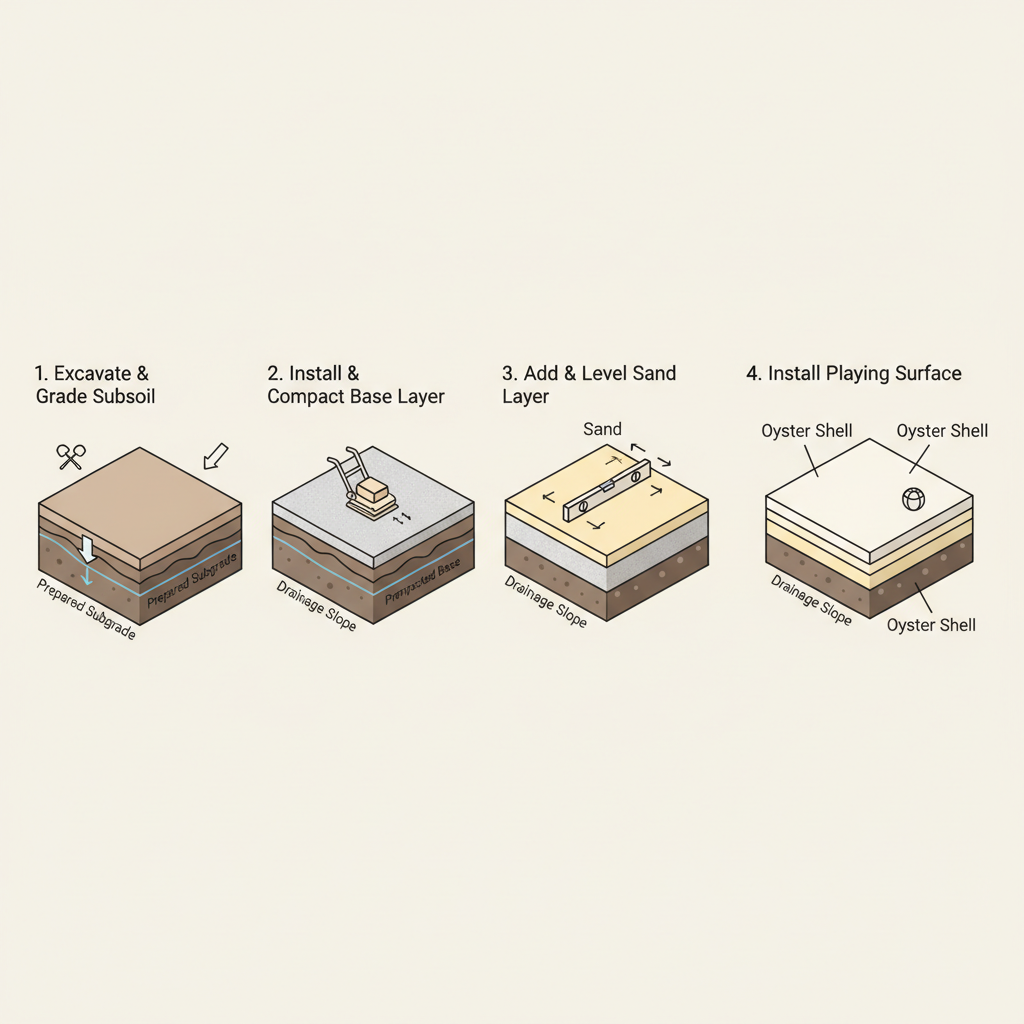
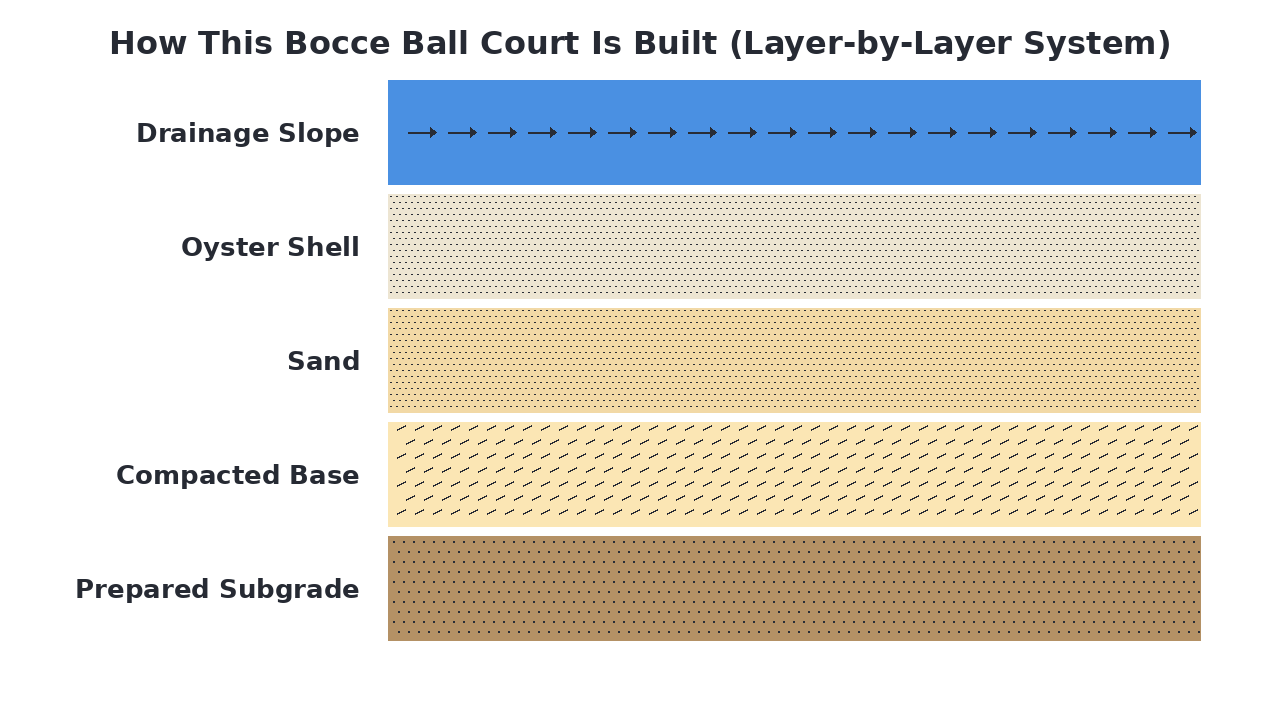
This visual guide walks you through the step-by-step sequence of building a bocce ball court, clarifying the exact order of excavation, compaction, and surfacing. It also illustrates the layered cross-section of the court, from the prepared subgrade up to the final playing surface, helping you visualize the proper depth and materials for each stage. Seeing the numbered steps alongside the labeled blueprint ensures you understand both the process and the structural foundation.
Gravel for Bocce Ball Courts: Best Materials, Depth, Cost & How to Build
A bocce ball court requires a stable, level playing surface with proper drainage for consistent gameplay. We recommend decomposed granite crushed to 1/4 inch fines as the top layer, installed 2–3 inches deep over a compacted base. Decomposed granite is HG-stocked and delivers a fast, smooth, tournament-style ball-roll without needing to source oyster shell from specialty suppliers. The court should include a slight slope or crown to prevent puddles and maintain optimal playing conditions.
How This Bocce Ball Court Is Built (Layer-by-Layer System)
A bocce ball court is built as a layered system designed to provide a stable, level playing surface with proper drainage. The system starts with a prepared subgrade, followed by a compacted base layer that prevents settling, and a top layer that creates the smooth playing surface. The court includes a slight slope or crown to ensure water drains off the playing area, preventing puddles and maintaining consistent playing conditions. Each layer works together to create a durable court that will provide years of recreational enjoyment.
Materials Breakdown: What Each Layer Does
A bocce ball court is constructed as a layered system where each material serves a distinct structural or playing-surface purpose. The layers work together to create a firm, stable, and well-draining base that supports the loose, fast-playing surface on top. Choosing the correct product for each layer ensures the court remains level, drains properly, and provides a consistent roll for years of play.
Compacted Native Soil
The existing soil that is excavated, leveled, and compacted to form a stable foundation, preventing future settling or shifting of the court.
Crushed Stone
A dense, compacted layer of crushed stone that provides a solid, load-bearing base and enhances drainage away from the playing surface.
View Crushed Stone →Mason Sand
A fine, leveling layer of sand that creates a smooth, flat surface for the final playing material and allows for minor adjustments.
View Mason Sand →Decomposed Granite
The compacted top playing surface; decomposed granite delivers a fast, level court bed and is supplied by Hello Gravel.
View Decomposed Granite →Surface Slope
A slight slope built into the court's surface to direct rainwater off the playing area, preventing puddles and maintaining a dry, playable surface.
What Is a Bocce Ball Court and Why Does It Matter?
A bocce ball court is a specialized recreational surface designed for the traditional Italian lawn bowling game, providing a level, consistent playing field for accurate ball rolling. It matters because proper court construction ensures fair gameplay, prevents water accumulation that could damage the surface, and creates a durable recreational space that lasts for years. Unlike simple grass or dirt surfaces, a properly built bocce court uses layered materials with drainage features to maintain consistent playing conditions regardless of weather.
Common Types of Bocce Ball Court Systems
Bocce ball courts come in several material systems, each offering different playing characteristics and maintenance requirements. Decomposed granite provides a traditional, firm surface that compacts well for consistent ball roll. Crushed stone offers excellent drainage and durability but can be less consistent. Oyster shell creates a distinctive coastal aesthetic but requires more frequent replenishment.
- Traditional bocce court surface
- Compacts to firm consistency
- Good drainage when layered
- Natural earth-tone appearance
- Moderate maintenance required
Best for:Traditional bocce gameplay with consistent roll
- Excellent drainage properties
- Very durable and long-lasting
- Can be less consistent surface
- Various color options available
- Low maintenance needs
Best for:High-drainage areas with heavy use
- Distinctive coastal aesthetic
- Natural bright white color
- Requires frequent replenishment
- Good drainage properties
- Traditional in some regions
Best for:Coastal properties seeking unique look
- Very soft playing surface
- Minimal ball bounce
- Requires frequent leveling
- Poor drainage when wet
- Lowest initial cost
Best for:Casual play with minimal investment
When a Bocce Ball Court Is the Best Solution
A decomposed granite bocce court is ideal when you want traditional gameplay with consistent ball roll and moderate maintenance. It works well in areas with decent drainage where you can install proper base layers. Choose this option for a durable recreational space that balances authentic bocce characteristics with reasonable long-term upkeep costs.
Everything You Need to Build a Bocce Ball Court
Building a bocce ball court requires a layered approach with specific materials for each structural and playing surface component. You'll need foundational materials like road base or crushed stone for the subgrade, sand for leveling, and oyster shell or decomposed granite for the top playing surface. Essential tools include excavation and grading equipment to prepare the site, compaction tools to stabilize layers, and finishing tools to achieve a smooth, consistent playing surface.
- Road base or crushed stone, Sand or decomposed granite, Landscape fabric (optional)
- Shovel, Rake, Plate compactor, String lines and stakes, Level, Wheelbarrow
- Hello Gravel (materials), A contractor supply store, Local equipment rental (compactor)
What to Consider Before You Start
Before breaking ground on your bocce court, carefully consider these key planning factors to ensure a successful build.
- Site selection and dimensions
Choose a level, well-draining location and determine your court's official dimensions (typically 13x91 feet) or scaled-down backyard size.
- Drainage planning
Plan for a 1-2% slope across the court's width to ensure proper water runoff and prevent pooling.
- Material quantity calculations
Calculate the cubic yards needed for each layer (subgrade, sand, playing surface) based on your court dimensions and depth requirements.
- Local regulations and permits
Check with your municipality about any permits required for excavation or permanent landscape structures.
- Access and equipment logistics
Ensure you have adequate access for material delivery and equipment like compactors to reach the construction site.
How to Prepare the Ground for a Bocce Ball Court
Start by clearing the entire area of all vegetation, roots, and debris to create a clean, level site. Mark the court's perimeter with stakes and string, then grade the subsoil to establish a consistent 1-2% slope for drainage, ensuring water will flow away from the playing surface. Finally, thoroughly compact the prepared subgrade with a plate compactor to create a firm, stable foundation that prevents future settling.
How a Bocce Ball Court Works
The court functions as a multi-layered system where each material has a specific role: the compacted base distributes load and prevents shifting, while the sand layer provides a smooth, leveling bed. The top layer of oyster shell or decomposed granite creates a fast, consistent playing surface that allows balls to roll true. Water drains efficiently through the permeable top layer and sand, then follows the pre-graded slope in the subgrade to prevent puddling and maintain court integrity.
How to Install a Bocce Ball Court
Excavate & Grade Subsoil
Remove soil to the required depth, typically 6-8 inches, and grade the subgrade to create a consistent 1-2% slope for drainage.
Install & Compact Base Layer
Add a 4-inch layer of crushed stone or road base, then compact it thoroughly with a plate compactor to create a stable, load-bearing foundation.
Add & Level Sand Layer
Spread a 2-inch layer of coarse sand over the compacted base, then screed it perfectly level to provide a smooth bedding surface.
Install Playing Surface
Apply the final 1-2 inch layer of oyster shell, decomposed granite, or crushed stone, then rake and roll it to create a consistent, fast-playing surface.
Alternative Gravel Options for Bocce Ball Courts
While several aggregates can create a bocce ball court surface, the ideal material balances firmness for a stable base with a loose, fast-rolling top layer. Decomposed granite is the top recommendation because it compacts into a hard, smooth surface that drains well while still allowing for a true, consistent ball roll. Other materials like crushed stone or oyster shell can work but may require more maintenance or offer a different playing characteristic, and purely decorative options like pea gravel are unsuitable for serious play.
Compacts to a hard, smooth, and fast-draining surface ideal for a true bocce roll.
View Product →Provides a stable and durable surface but can be too coarse for a perfectly smooth roll.
View Product →Offers a traditional, fast-draining surface but can break down and require frequent replenishment.
Creates a very loose, slow surface that holds moisture and is difficult to keep level.
View Product →A decorative, rounded stone that rolls unpredictably and provides no stable playing surface.
View Product →Common Bocce Ball Court Mistakes (And How to Avoid Them)
A well-built bocce court requires careful planning and execution. Avoiding these common mistakes will ensure your court is level, drains properly, and provides years of consistent play.
- Insufficient base preparation
- Poor drainage design
- Wrong surface material
- Inadequate compaction
- No surface crown
How to Maintain a Bocce Ball Court
Regular maintenance keeps your bocce court in top playing condition. Use a drag mat or leveling board to redistribute the surface material and eliminate footprints or ball tracks, adding fresh material as needed to maintain depth. Rake and re-compact any low spots or potholes that form, and ensure perimeter drains remain clear of debris to prevent water from pooling on the court surface.
Calculate How Much Gravel You Need
Enter Your Dimensions
Measure your project area and we'll calculate how much material you need.