Gravel Patio Build: Decomposed Granite vs. Pea Gravel
A gravel patio offers a stylish and low-maintenance outdoor space that depends on selecting the right materials and proper installation. This guide explains what a gravel patio is, which materials you need, how to prepare the ground, how to build a gravel patio step by step, and how to estimate the amount of gravel required. Whether you are creating a new patio from scratch or replacing an existing paved area, use the sections below to jump to the information you need.
See How to Build a Gravel Patio
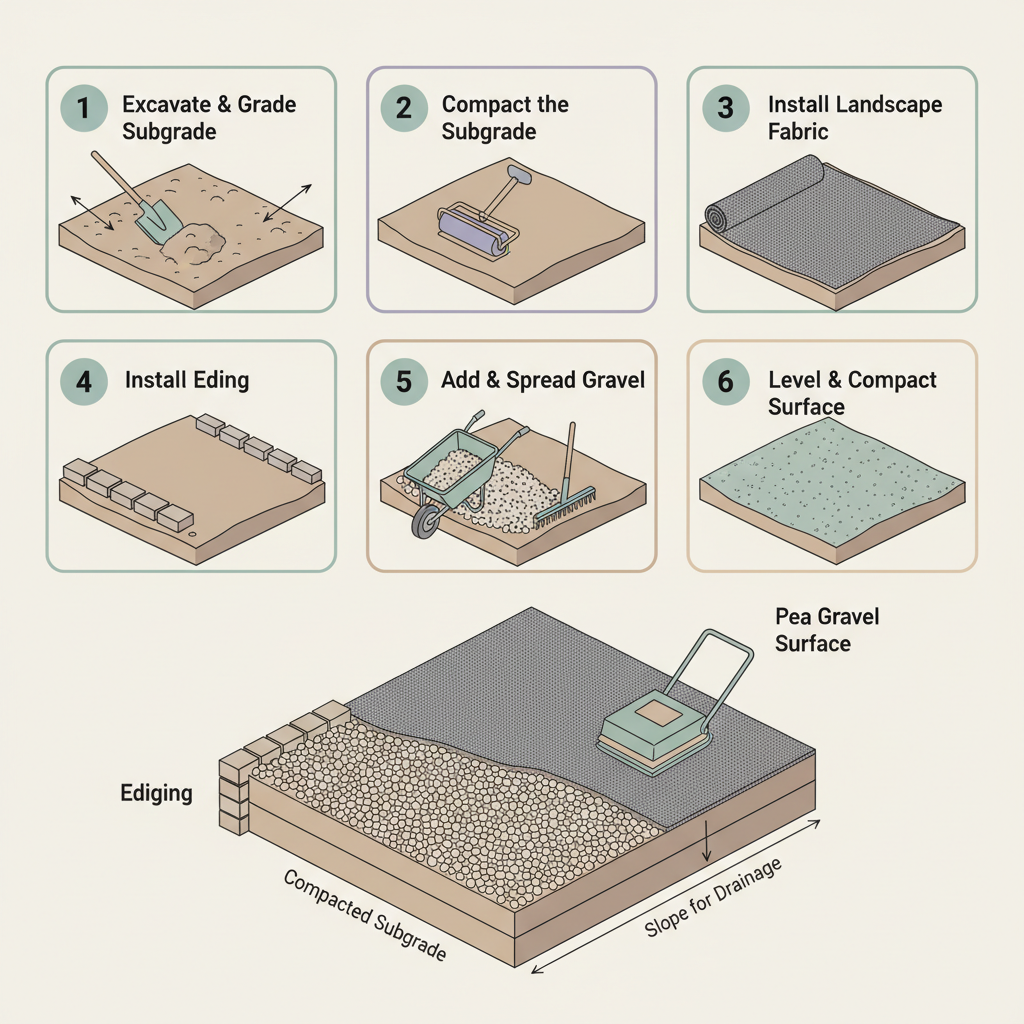
This visual guide shows the step-by-step sequence for building a gravel patio, from excavation to final compaction. It clarifies the proper layer structure—compacted subgrade, landscape fabric, and gravel surface—ensuring a stable, weed-free, and well-drained installation. Seeing the numbered steps and labeled cross-section helps you visualize the entire process before you begin.
Gravel for Patios: Best Materials, Depth, Cost & How to Build
A gravel patio creates an attractive, low-maintenance outdoor living space with natural drainage. We recommend pea gravel in the 3/8 to 5/8 inch size range at a 2-3 inch depth over a properly prepared base with landscape fabric. This combination provides a comfortable walking surface that drains well and resists weed growth. Proper installation with compacted subgrade and slight slope ensures long-term stability and prevents water pooling.
How This Gravel Patio Is Built (Layer-by-Layer System)
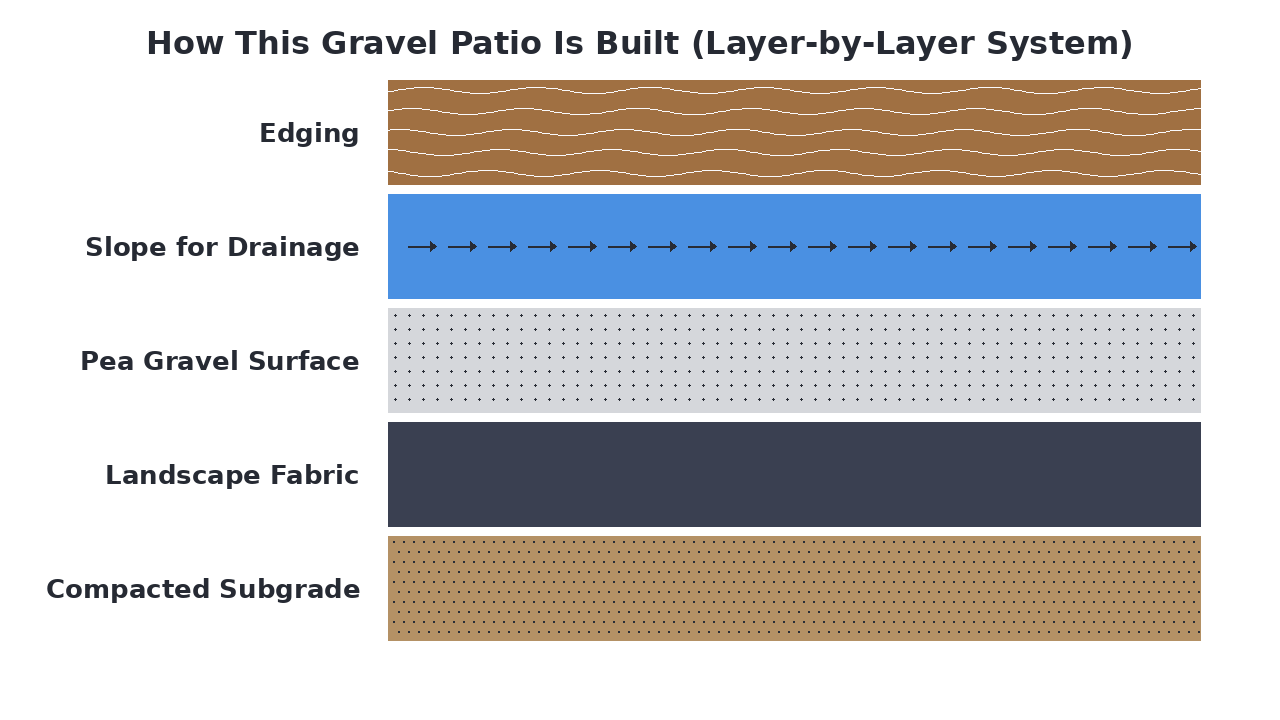
A gravel patio is built as a stable, permeable surface that requires proper preparation to prevent settling and weed growth. The system begins with a compacted subgrade, followed by a landscape fabric layer that suppresses weeds while allowing drainage. The pea gravel surface layer provides the finished look and comfortable walking surface, while a slight slope ensures rainwater drains away from adjacent structures.
Materials Breakdown: What Each Layer Does
A gravel patio is constructed as a layered system where each component serves a distinct purpose in creating a stable, durable, and well-draining surface. The layers work together to distribute weight, suppress weeds, allow proper drainage, and provide a comfortable walking area. Choosing the correct materials for each layer ensures the patio remains functional and attractive over time.
Compacted Native Soil
The existing soil that is leveled and compacted to create a firm, stable base for the patio, preventing settling and shifting.
Landscape Fabric
A permeable geotextile layer that prevents weeds from growing up through the gravel while still allowing water to drain.
Pea Gravel
The top decorative layer of small, rounded stones that provides a comfortable, permeable walking surface for the patio.
View Pea Gravel →Drainage Slope
A gentle grade built into the patio surface that directs water away from structures, preventing pooling and water damage.
Patio Edging
A border material, often metal or plastic, that contains the gravel and maintains the patio's shape and edges over time.
What Is a Gravel Patio and Why Does It Matter?
A gravel patio is a permeable, low-maintenance outdoor surface made from compacted gravel over a prepared base with landscape fabric. It matters because it provides an affordable, eco-friendly alternative to concrete or pavers that allows rainwater to drain naturally into the ground. Unlike solid surfaces, gravel patios prevent runoff issues and offer better drainage while requiring less installation complexity than interlocking pavers. This makes them ideal for DIY projects and environmentally conscious landscaping solutions.
Common Types of Gravel Patio Systems
Gravel patios come in several common systems, each using different materials that affect appearance, durability, and maintenance. Pea gravel creates a smooth, decorative surface but can shift underfoot, while decomposed granite compacts into a firmer, more stable finish. Crushed stone offers excellent drainage and stability with angular edges that lock together, and river rock provides a natural aesthetic but moves more easily. Sand is sometimes used as a leveling base beneath other gravel types.
- Smooth, rounded stones
- Natural decorative appearance
- Easy to install and spread
- Can shift under furniture
- Requires occasional raking
Best for:Decorative, low-traffic seating areas
- Compacts to firm surface
- Natural earthy colors
- Good drainage and stability
- Minimal shifting once compacted
- May need occasional topping
Best for:Firm, stable outdoor living spaces
- Angular edges lock together
- Excellent drainage and stability
- Minimal shifting over time
- Available in various colors
- Durable for moderate traffic
Best for:Durable, stable patio with good drainage
- Smooth, rounded natural stones
- Attractive water-worn appearance
- Good drainage properties
- Stones can roll underfoot
- Requires edging containment
Best for:Natural water feature or garden accents
When a Gravel Patio Is the Best Solution
A crushed stone patio is ideal when you need a stable, permeable surface that handles moderate foot traffic while staying within budget. It's perfect for areas with drainage concerns, as the angular stones lock together to prevent shifting while allowing rainwater to filter through. This system works well for DIY installations where you want durability without the complexity of concrete or pavers, and it complements both modern and rustic landscaping styles with its natural appearance.
Everything You Need to Build a Gravel Patio
Building a gravel patio requires foundational materials to create a stable base and surface materials for the finished look. You'll need a compactable sub-base like road base or crushed stone, landscape fabric to suppress weeds, and your chosen decorative gravel. Essential tools include digging and grading implements, a compactor for firming layers, and edging to contain the gravel.
- Road base or crushed stone (sub-base), Landscape fabric, Pea gravel, Decomposed granite, Or river rock (surface material), Edging (metal, plastic, or stone)
- Shovel, Rake, Hand tamper or plate compactor, Wheelbarrow, Level, Mallet
- Home Depot or Your local hardware store,Hello Gravel (materials), Equipment rental store (compactor)
What to Consider Before You Start
Proper planning ensures your gravel patio is durable, well-drained, and meets your needs. Consider these key factors before you begin digging.
- Site location and size
Determine the exact patio dimensions and placement, considering proximity to your house, sun exposure, and existing landscaping.
- Drainage requirements
Plan for a slight slope (about 1-2% away from structures) to ensure water runs off and doesn't pool on the surface.
- Material selection and quantity
Choose your surface gravel type and calculate the volume needed based on your patio's area and the recommended depth of each layer.
- Edging and border installation
Decide on edging material and method to contain the gravel and prevent it from spreading into surrounding areas.
- Local regulations and utilities
Check for any permits required and call 811 to have underground utilities marked before any excavation.
How to Prepare the Ground for a Gravel Patio
Begin by clearing the area of all vegetation, rocks, and debris to create a clean workspace. Mark the patio's perimeter with stakes and string, then excavate the soil to a depth that accommodates all planned layers. Grade the subsoil to create a gentle slope away from any structures for drainage, and thoroughly compact the exposed earth to form a stable, level base.
How a Gravel Patio Works
The patio functions as a multi-layered system where the compacted subgrade provides foundational support, distributing weight from foot traffic and furniture. A permeable landscape fabric layer suppresses weed growth while allowing water to pass through. The top layer of loose aggregate, like pea gravel, offers a comfortable walking surface and facilitates rapid surface drainage, directing water through the slope and into the surrounding soil.
How to Install a Gravel Patio
Excavate & Grade Subgrade
Dig out the marked area to the required depth and shape the soil to create a consistent slope for drainage.
Compact the Subgrade
Use a plate compactor to firmly compress the excavated soil, creating a solid and stable foundation for the patio.
Install Landscape Fabric
Roll out a permeable geotextile fabric over the compacted subgrade to suppress weeds while allowing water drainage.
Install Edging
Secure rigid plastic or metal edging around the perimeter to contain the gravel and define the patio shape.
Add & Spread Gravel
Pour the chosen surface aggregate, such as pea gravel, into the prepared area and spread it evenly to the desired depth.
Level & Compact Surface
Rake the gravel to a smooth, level finish and lightly compact it to create a firm, walkable surface.
Alternative Gravel Options for Gravel Patios
Homeowners have several aggregate options for constructing a gravel patio, each with unique characteristics. Pea gravel offers a smooth, decorative look but shifts underfoot, while crushed stone provides excellent stability and compaction. Decomposed granite packs firmly for a stable surface, river rock is primarily decorative and difficult to walk on, and sand can be used as a leveling layer but lacks structural integrity. For most patio applications, crushed stone is the recommended choice due to its superior interlocking ability, stability, and comfortable walking surface.
Angular aggregate that locks together for a stable, durable patio surface.
View Product →Fine, compactable material that creates a firm, natural-looking patio surface.
View Product →Large, smooth stones best suited for decorative borders rather than walking surfaces.
View Product →Common Gravel Patio Mistakes (And How to Avoid Them)
Even with proper materials, gravel patios can fail due to common installation and planning errors. Avoiding these mistakes ensures your patio remains level, stable, and attractive for years to come.
- Insufficient base depth
- Poor drainage planning
- Wrong gravel type
- No edge restraint
- Inadequate compaction
How to Maintain a Gravel Patio
Regular maintenance keeps your gravel patio looking great and functioning properly. Rake the surface periodically to redistribute displaced gravel and maintain an even grade. Top up the gravel layer every 1-2 years as it naturally settles and compacts. Remove weeds promptly and repair any low spots or potholes to prevent water pooling and surface deterioration.
Calculate How Much Gravel You Need
Enter Your Dimensions
Measure your project area and we'll calculate how much material you need.