Pool Deck Gravel: Compacted Base & Drainage Layer Specs
A well-built pool deck provides a safe, comfortable, and stylish transition from your pool to your landscape. This guide explains what a pool deck is, which materials you need, how to design the layout, how to build it step by step, and how to estimate the amount of gravel required. Whether you are planning a simple DIY installation or comparing materials like pea gravel and decomposed granite, use the sections below to find what you need.
See How to Build a Pool Deck
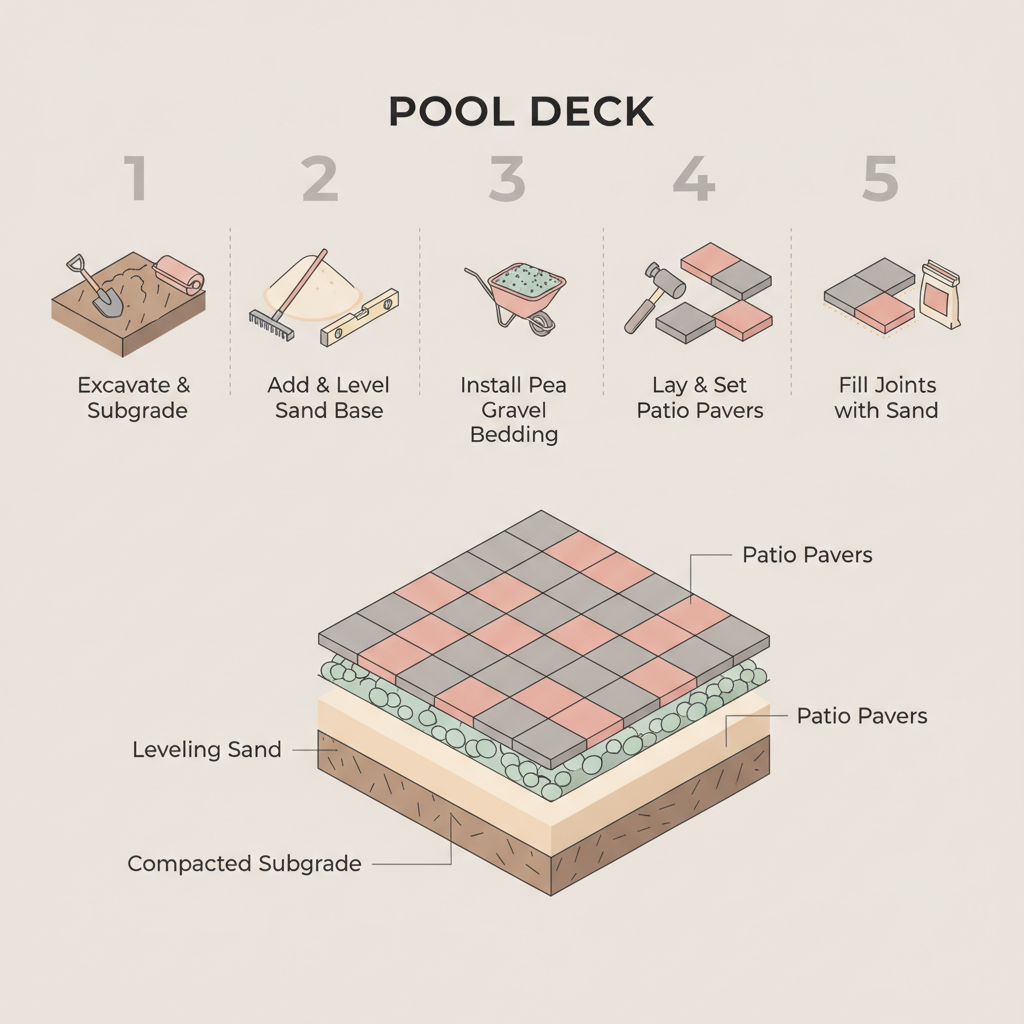
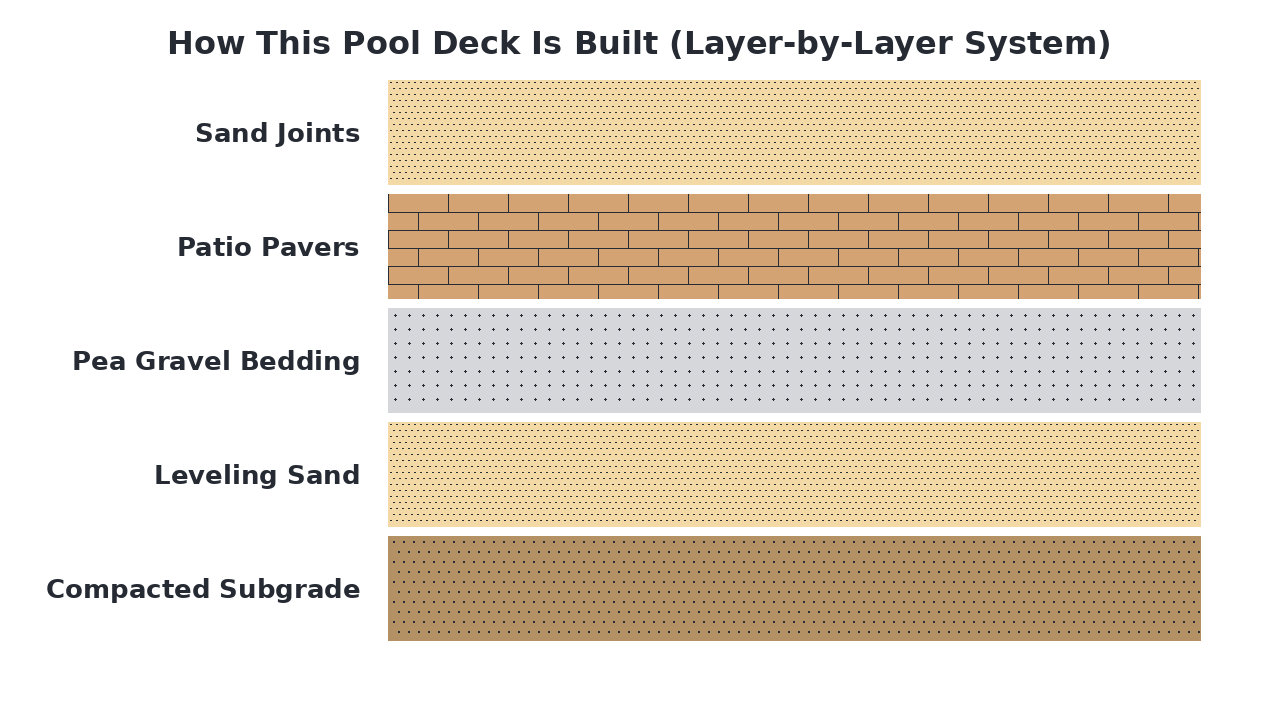
This visual guide shows the layered construction sequence for building a pool deck, clarifying how each material—from the compacted subgrade up to the sand joints—contributes to a stable, level, and durable surface. By illustrating the numbered installation steps alongside a labeled cross-section, it helps you visualize the entire process before you begin, ensuring you understand the purpose of each layer and the correct order of operations.
Gravel for Pool Decks: Best Materials, Depth, Cost & How to Build
A well-built pool deck requires proper materials and construction to create a stable, slip-resistant surface that drains water away from the pool. For the bedding layer, pea gravel is recommended due to its excellent drainage properties and comfortable texture underfoot. A 2-3 inch layer of 3/8 to 3/4 inch pea gravel provides optimal support for patio pavers while ensuring proper water management. Maintaining proper slope and using quality materials prevents water pooling and extends the deck's lifespan.
How This Pool Deck Is Built (Layer-by-Layer System)
A pool deck is built as a layered system that provides a stable, level surface while ensuring proper drainage away from the pool area. The system starts with a compacted subgrade, followed by a sand layer for leveling and a bedding layer of pea gravel that creates a firm foundation for the patio pavers. The pavers are laid on top, with gaps filled with sand to lock them in place and create a smooth, slip-resistant walking surface. Proper slope is maintained to direct water runoff away from the pool structure and prevent pooling on the deck surface.
Materials Breakdown: What Each Layer Does
A pool deck is built as a layered system, each material serving a specific purpose to create a stable, level, and attractive surface. The components work together to ensure proper drainage, prevent shifting, and provide a comfortable walking area around the pool. Using the right product for each layer is key to a durable and low-maintenance installation.
Compacted Soil
The existing soil that is compacted to form a solid, stable base for the entire deck structure, preventing future settling.
Sand
A screeded layer of sand that creates a perfectly level surface on which to place the gravel bedding, ensuring even support.
View Sand →Pea Gravel
A layer of small, rounded gravel that provides drainage beneath the pavers, preventing water from pooling and causing frost heave.
View Pea Gravel →Patio Pavers
Interlocking concrete or stone pavers that form the visible walking surface, offering durability, a non-slip texture, and aesthetic appeal.
Polymeric Sand
Sand brushed into the joints between pavers that locks them in place, prevents weed growth, and allows for minor drainage.
What Is a Pool Deck and Why Does It Matter?
A pool deck is a specifically engineered surface surrounding a swimming pool, designed to provide safe, stable footing while managing water drainage away from the pool structure. It matters because proper construction prevents water damage to the pool, reduces slip hazards, and creates a durable, low-maintenance surface for poolside activities. Unlike simple concrete slabs or bare ground, a properly designed pool deck uses layered materials including compacted subgrade, leveling sand, gravel bedding, and interlocking pavers to create a system that accommodates drainage, thermal expansion, and foot traffic.
Common Types of Pool Deck Systems
Pool deck systems vary primarily in their surface materials and construction methods. Traditional poured concrete decks offer seamless durability but can crack with ground movement. Paver systems using interlocking stones provide flexibility and drainage but require proper base preparation. Gravel-based systems create natural drainage and rustic aesthetics but need regular maintenance to stay level. Each approach balances cost, drainage needs, and desired look around the pool.
- Seamless, durable surface
- Low maintenance once cured
- Can develop cracks over time
- Requires professional installation
- Limited drainage options
Best for:Modern pools needing clean lines
- Flexible, accommodates ground movement
- Excellent natural drainage
- Wide style and color choices
- DIY-friendly with proper base
- Can shift and require resetting
Best for:High-drainage areas with soil movement
- Natural drainage through gravel
- Rustic, natural aesthetic appeal
- Cost-effective material solution
- Easy to repair and adjust
- Requires periodic leveling
Best for:Budget-friendly, natural-looking pool surrounds
- Wood-like appearance without rot
- Splinter-free, comfortable surface
- Higher initial material cost
- Low maintenance requirements
- Limited drainage capabilities
Best for:Wood aesthetic with low maintenance
When a Pool Deck Is the Best Solution
A gravel-based pool deck is ideal when you need excellent drainage around the pool area on a limited budget. It works well for rustic or natural landscape designs where you want a permeable surface that complements garden surroundings. Choose this option if you're comfortable with occasional leveling maintenance and prefer a DIY-friendly installation process over permanent concrete. It's particularly suitable for areas with heavy rainfall where water management is a priority.
Everything You Need to Build a Pool Deck
Building a pool deck requires foundational materials to create a stable base and surface materials for the finished look. You'll need a compacted subgrade, leveling sand, pea gravel for drainage and bedding, and patio pavers with sand for the joints. Essential tools include excavation and leveling equipment to prepare the site and compact the layers.
- Compacted subgrade, Leveling sand, Pea gravel bedding, Patio pavers, Sand joints
- Shovel, Rake, Hand tamper or plate compactor, Level, Rubber mallet
- Hello Gravel (pea gravel, sand), Home Depot (patio pavers, tools), Equipment Rental Store (plate compactor)
What to Consider Before You Start
Before digging in, consider these key planning steps to ensure your pool deck is safe, stable, and built to last.
- Local building codes and permits
Check with your local municipality for any required permits or specific regulations regarding pool deck construction and setbacks.
- Pool edge and equipment clearance
Plan the deck layout to maintain safe clearance around the pool edge and ensure access to pool equipment for maintenance.
- Drainage and slope
Determine the necessary slope (typically 1/4 inch per foot) to direct water away from the pool and house for proper drainage.
- Material quantities and delivery
Calculate the square footage and depth for each material layer to order the correct amounts and arrange for delivery.
How to Prepare the Ground for a Pool Deck
Begin by clearing the area of all vegetation, debris, and any existing surface materials. Mark the perimeter of the deck with stakes and string, then excavate to a consistent depth that accounts for all planned layers. Grade the subgrade to create a slight slope away from the pool for drainage, and thoroughly compact the soil to create a stable, unyielding base.
How a Pool Deck Works
The pool deck functions as a multi-layered system designed for stability and drainage. The compacted subgrade provides foundational support, while the leveling sand creates a flat, adjustable base for the gravel bedding. The pea gravel bedding layer allows for water to percolate down and away, preventing pooling and frost heave, while the patio pavers on top distribute load and create the finished walking surface, with sand joints locking them in place.
How to Install a Pool Deck
Excavate & Compact Subgrade
Dig out the marked area to the required depth and use a plate compactor to create a firm, stable foundation.
Add & Level Sand Base
Spread a uniform layer of leveling sand over the compacted subgrade and screed it to a flat, sloped surface.
Install Pea Gravel Bedding
Place a layer of pea gravel over the leveled sand to serve as a drainage bed and stable base for the pavers.
Lay & Set Patio Pavers
Arrange the patio pavers on top of the gravel bedding in your chosen pattern, ensuring they are level and tightly spaced.
Fill Joints with Sand
Spread polymeric or jointing sand over the pavers and sweep it into the gaps to lock the pavers in place.
Alternative Gravel Options for Pool Decks
Homeowners have several aggregate options for pool deck construction, each with different characteristics that affect durability, drainage, and comfort. Pea gravel provides a smooth, decorative surface but can shift underfoot, while decomposed granite offers better compaction but may create dust. Crushed stone provides excellent drainage and stability, making it ideal for the base layer. Ultimately, crushed stone tends to win for pool decks because it creates a stable, permeable foundation that prevents shifting while allowing proper water drainage away from the pool area.
Angular aggregate that provides excellent drainage and stability for base layers.
View Product →Solid interlocking units that create a rigid surface but require different installation.
Common Pool Deck Mistakes (And How to Avoid Them)
Avoiding common installation errors is crucial for a durable, safe pool deck that lasts for years. These mistakes can lead to shifting, poor drainage, and increased maintenance needs.
- Inadequate base preparation
- Poor drainage planning
- Insufficient compaction
- Wrong aggregate selection
- Inadequate edge restraint
How to Maintain a Pool Deck
Regular pool deck maintenance involves raking the surface to redistribute displaced gravel and maintain an even grade. Check drainage channels monthly to ensure water flows away from the pool area, and refill low spots with fresh aggregate as needed. Periodically inspect edge restraints and borders for stability, and remove any weeds or vegetation that may compromise the deck's integrity. With proper care, a gravel pool deck can remain functional and attractive for many seasons.
Calculate How Much Gravel You Need
Enter Your Dimensions
Measure your project area and we'll calculate how much material you need.