Outdoor Kitchen Pad: Road Base Depth & Tonnage Guide
An outdoor kitchen transforms your backyard into an entertainment hub, and its success hinges on smart material selection and solid construction. This guide explains what an outdoor kitchen is, which materials you need, how to design a functional layout, how to build it step by step, and how to estimate the amount of gravel required. Whether you are planning a full-scale grilling station or a simple patio cooking area, use the sections below to find what you need.
See How to Build an Outdoor Kitchen
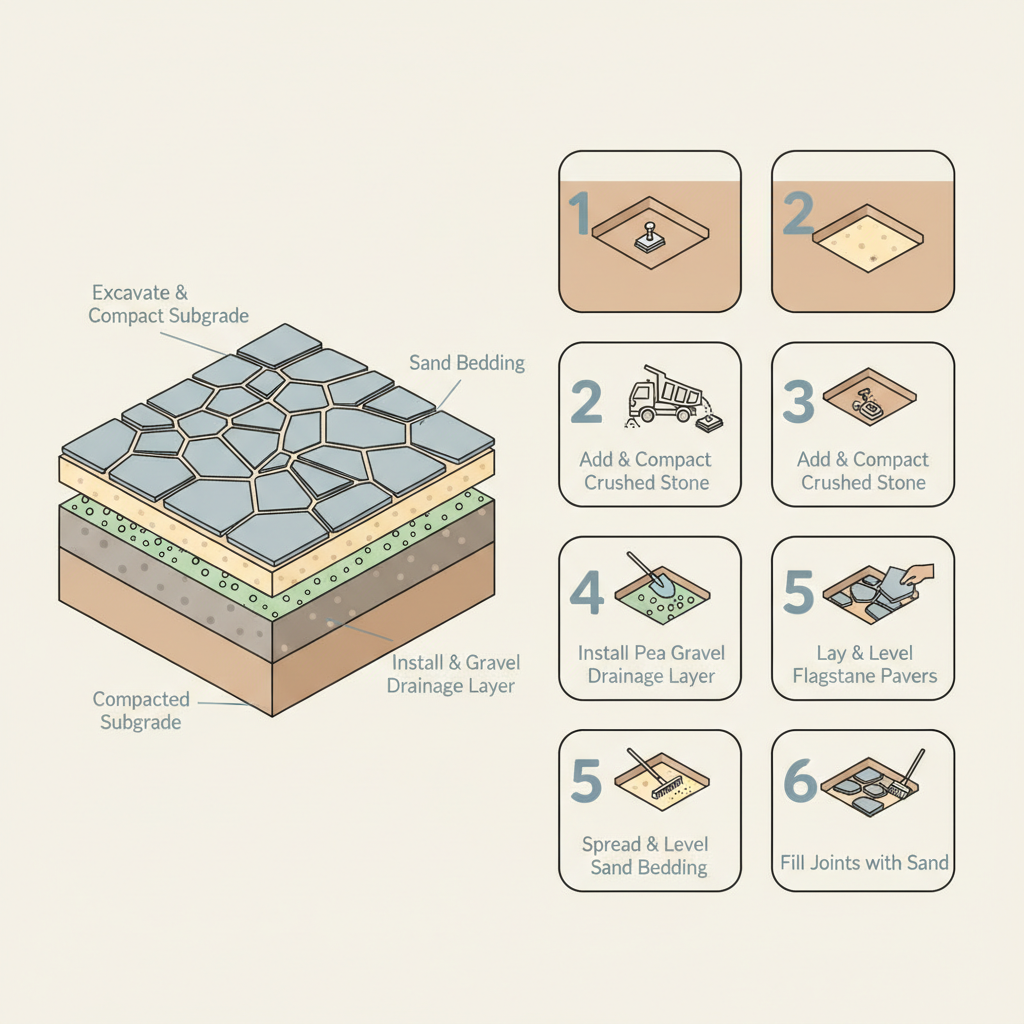
This visual guide shows the step-by-step sequence and layered structure for building a durable outdoor kitchen foundation. It clarifies how each material—from compacted subgrade to flagstone pavers—contributes to stability and drainage. Following this infographic ensures proper installation that prevents shifting and water pooling.
Gravel for Outdoor Kitchens: Best Materials, Depth, Cost & How to Build
Building an outdoor kitchen requires a stable foundation that can support heavy appliances while ensuring proper drainage. We recommend a 6-8 inch base of 3/4 inch crushed stone for structural integrity, topped with pea gravel for drainage and sand for leveling flagstone pavers. This layered system prevents settling and frost damage, directing water away from your kitchen structure for long-term durability. The foundation's slight slope ensures moisture doesn't accumulate under your cooking area.
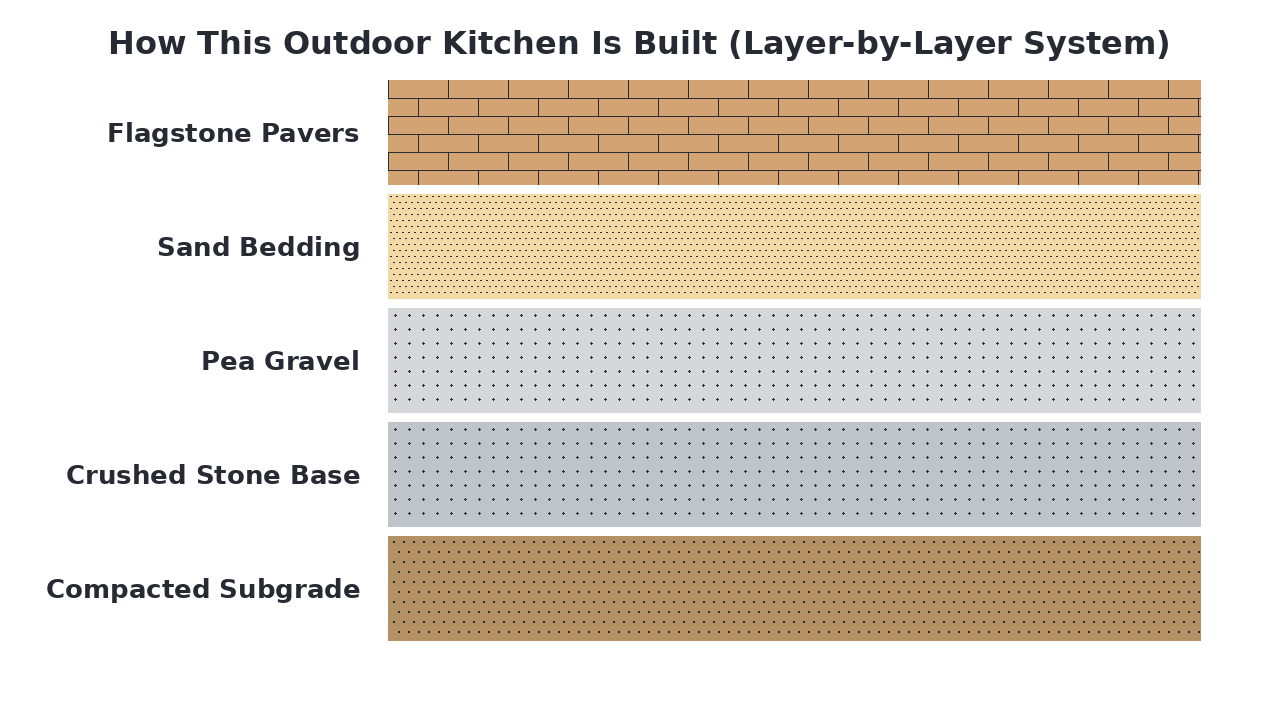
How This Outdoor Kitchen Is Built (Layer-by-Layer System)
An outdoor kitchen foundation is built as a layered system designed to support heavy appliances while ensuring proper drainage and stability. The system starts with a compacted subgrade, followed by a structural base layer that prevents settling and frost heave, and a bedding layer that provides a level surface for pavers or flagstone. The pea gravel layer serves as a free-draining base that allows water to pass through, preventing moisture buildup and frost damage under the cooking area. A slight slope is built into the foundation to direct water away from the kitchen structure, protecting the investment and ensuring long-term durability.
Materials Breakdown: What Each Layer Does
An outdoor kitchen patio is built as a layered system where each material serves a distinct structural and functional purpose. The layers work together to create a stable, level, and durable surface that can support heavy appliances and furniture while allowing proper drainage. Choosing the right product for each layer prevents settling, cracking, and water damage over time.
Native Soil
The existing ground that is excavated and compacted to form a solid, stable foundation that resists settling and frost heave.
Crushed Stone
A load-bearing layer of angular, compactable stone that provides structural support and drainage for the patio above.
View Crushed Stone →Pea Gravel
A free-draining layer of smooth, rounded gravel that helps with drainage and prevents the sand bedding from mixing with the base.
View Pea Gravel →Sand
A leveling layer of sand that creates a smooth, even surface for setting the pavers and allows for minor adjustments during installation.
View Sand →Flagstone Pavers
The finished surface layer of natural stone that provides a durable, attractive walking and cooking area for the outdoor kitchen.
What Is an Outdoor Kitchen and Why Does It Matter?
An outdoor kitchen is a permanent cooking and entertaining space built outside your home, typically featuring appliances like grills, refrigerators, and countertops. It matters because it extends your living area, increases property value, and creates a dedicated space for outdoor entertaining. Unlike temporary grilling stations, a properly built outdoor kitchen requires a structural foundation that can support heavy appliances while managing drainage to prevent water damage and frost heave.
Common Types of Outdoor Kitchen Systems
Outdoor kitchens typically involve three main foundation approaches: gravel bases, concrete slabs, and paver patios. Gravel bases use compacted crushed stone to create a stable, well-draining foundation that's easy to install and modify. Concrete slabs offer a permanent, solid surface but require professional pouring and can crack over time. Paver patios provide a decorative, interlocking surface but need careful base preparation to prevent shifting.
- Excellent drainage and frost resistance
- Cost-effective and DIY-friendly
- Easy to modify or expand later
- Natural, rustic aesthetic
Best for:Budget-conscious homeowners with good drainage
- Permanent, solid foundation
- Professional installation required
- Can crack with ground movement
- Modern, clean appearance
Best for:Permanent, high-traffic outdoor kitchens
- Decorative, customizable patterns
- Interlocking design resists shifting
- Requires precise base preparation
- Easier to repair than concrete
Best for:Aesthetic-focused, moderate-budget projects
When an Outdoor Kitchen Is the Best Solution
A gravel-based outdoor kitchen foundation is ideal when you need excellent drainage to prevent water damage, especially in areas with heavy rainfall or frost. It's perfect for homeowners on a budget who want a DIY-friendly option that can be easily expanded or modified later. This approach works well for rustic or natural aesthetic preferences and suits properties with good natural drainage where permanent concrete might be overkill.
Everything You Need to Build an Outdoor Kitchen
Building an outdoor kitchen requires a layered foundation system starting with a compacted subgrade, followed by a crushed stone base for stability, then a pea gravel drainage layer, sand bedding for leveling, and finally flagstone pavers as the finished surface. You will need basic excavation and grading tools, compaction equipment, and leveling tools to ensure proper installation. The right materials and tools will create a durable, level patio that can support heavy appliances and withstand the elements.
- Crushed stone base, Pea gravel, Sand bedding, Flagstone pavers
- Shovel, Rake, Plate compactor, Level, Rubber mallet
- Hello Gravel (materials), A contractor supply store, Equipment rental (compactor)
What to Consider Before You Start
Before breaking ground on your outdoor kitchen patio, consider these key planning factors to ensure a successful, long-lasting installation.
- Site layout and dimensions
Measure and mark the exact footprint of your outdoor kitchen, including appliance placement and traffic flow areas.
- Local building codes
Check municipal regulations for patio construction, including setbacks, drainage requirements, and permits.
- Utility line locations
Locate and mark all underground utilities (gas, water, electrical) to avoid damaging them during excavation.
- Drainage slope planning
Determine the necessary slope (typically 1-2% away from the house) to ensure proper water runoff from the patio surface.
- Material quantity calculation
Calculate the exact amounts of crushed stone, pea gravel, sand, and pavers needed based on your patio dimensions.
How to Prepare the Ground for an Outdoor Kitchen
Start by clearing the site of all vegetation, debris, and any existing surface materials. Mark the precise perimeter of your outdoor kitchen patio using stakes and string lines. Then, excavate the area to a depth that accommodates all planned layers, and grade the subsoil to create a slight slope away from your house for drainage. Finally, thoroughly compact the exposed subgrade with a plate compactor to create a firm, stable foundation.
How an Outdoor Kitchen Works
The layered patio system distributes the weight of appliances and traffic down through the flagstone pavers, sand bedding, and pea gravel into the compacted crushed stone base. This base acts as a load-bearing layer, preventing settling, while the permeable pea gravel layer beneath it facilitates crucial subsurface drainage. Water from rain or spills flows through the sand joints and gravel, away from the surface, preventing pooling and frost heave damage to the hardscape.
How to Install an Outdoor Kitchen
Excavate & Compact Subgrade
Dig out the marked area to the required total depth and compact the soil subgrade to create a solid foundation.
Add & Compact Crushed Stone
Spread and compact a layer of crushed stone to form a stable, load-bearing base for the patio.
Install Pea Gravel Drainage Layer
Add a layer of pea gravel over the crushed stone to create a permeable sub-base that promotes water drainage.
Spread & Level Sand Bedding
Apply a layer of coarse sand, screed it level, and compact it lightly to create a smooth bed for the pavers.
Lay & Level Flagstone Pavers
Place the flagstone pavers onto the sand bed, setting them tightly together and checking for level across the surface.
Fill Joints with Sand
Sweep polymeric or coarse sand into the joints between the pavers to lock them in place and prevent shifting.
Alternative Gravel Options for Outdoor Kitchens
Outdoor kitchen patios require a stable base layer that provides both drainage and load-bearing support. While pea gravel and sand offer some benefits for leveling or joint filling, they lack the compaction needed for structural integrity. Crushed stone and patio pavers create a solid foundation, with crushed stone being the most cost-effective and reliable option for supporting heavy appliances while preventing settling.
Decorative surface layer that shifts under weight and compromises stability.
View Product →Surface finish option that requires a proper crushed stone base for installation.
Natural stone surface that needs a stable crushed stone foundation for level placement.
Ideal base material that compacts well and provides drainage for outdoor kitchen foundations.
View Product →Common Outdoor Kitchen Mistakes (And How to Avoid Them)
Building an outdoor kitchen requires careful planning to avoid structural issues that can compromise safety and longevity. These common mistakes often stem from cutting corners on foundation preparation or material selection.
- Insufficient base depth
- Poor drainage planning
- Wrong material selection
- Inadequate compaction
- No edge restraint
How to Maintain an Outdoor Kitchen
Regular maintenance ensures your outdoor kitchen patio remains level and functional. Annually inspect for settling areas and add fresh crushed stone to low spots, then compact to restore proper drainage. Clear debris from drainage channels and joints between pavers to prevent water pooling, and check edge restraints for stability to maintain structural integrity.
Calculate How Much Gravel You Need
Enter Your Dimensions
Measure your project area and we'll calculate how much material you need.