Best Gravel for a Dog Run: Pea Gravel vs. Crushed Stone
Creating a durable and comfortable dog run starts with choosing the right materials and proper installation. This guide explains what a dog run is, which materials you need, how to prepare the ground, how to build it step by step, and how to estimate the amount of gravel required. Whether you are planning a simple backyard enclosure or a professional-grade pet area, use the sections below to navigate through the process.
See How to Build a Dog Run
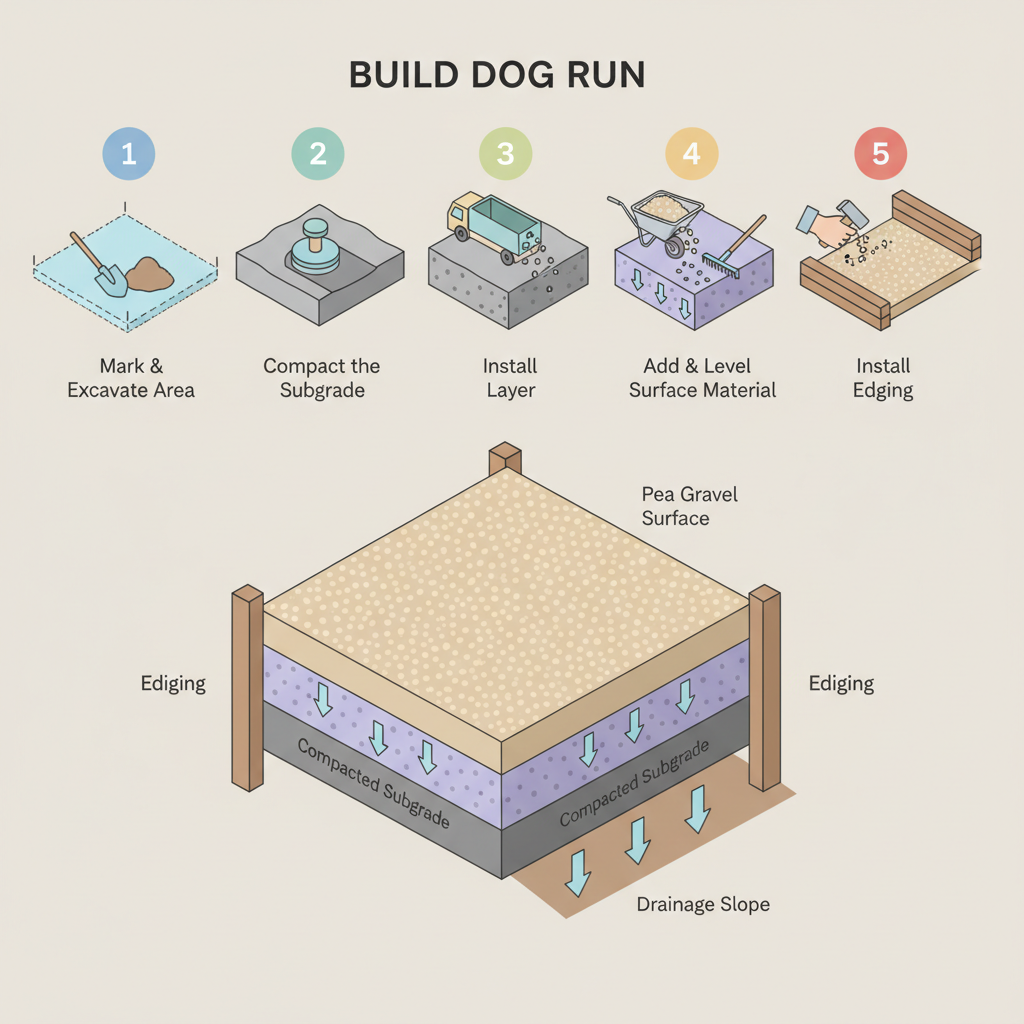
This visual guide illustrates the five key steps to building a dog run, from marking the area to installing the final edging. It clarifies the proper installation sequence and shows the essential layered structure—compacted subgrade, drainage layer, and pea gravel surface—ensuring a stable and well-drained space for your pet.
Gravel for Dog Runs: Best Materials, Depth, Drainage & How to Build
A dog run uses 4–6 inches of smooth 3/8 inch pea gravel — drainage-friendly, paw-friendly, and easy to spot-clean. For a standard 10 ft × 20 ft run, plan on 3–5 tons of pea gravel. A compacted base under the gravel keeps the surface even, and a thin geotextile layer keeps the gravel from sinking into the dirt over time.
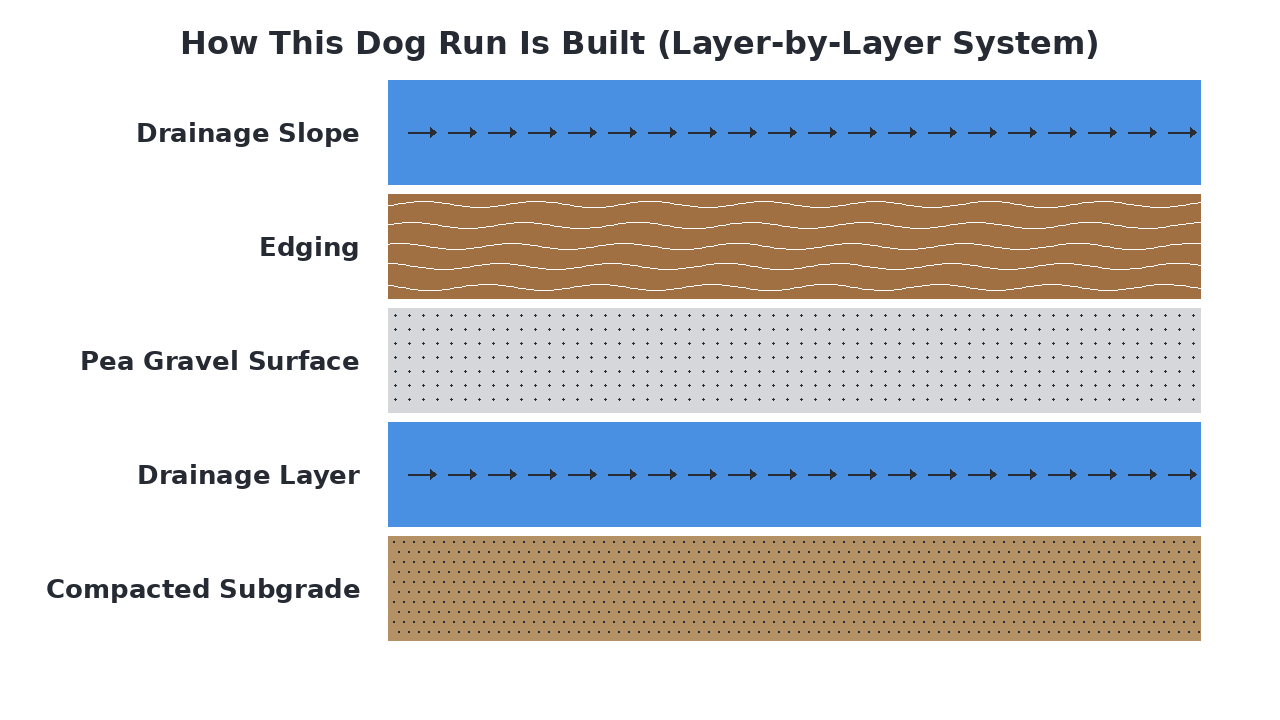
How This Dog Run Is Built (Layer-by-Layer System)
A dog run is constructed as a multi-layered system that provides a comfortable, durable surface for pets while ensuring proper drainage. The project begins with a compacted subgrade, followed by a drainage layer that prevents pooling and maintains a stable base. The surface is then filled with Pea Gravel, which offers a soft, paw-friendly texture that is easy to clean and maintain. A slight slope is incorporated to direct rainwater away, keeping the area dry and mud-free.
Materials Breakdown: What Each Layer Does
A dog run is constructed as a layered system where each component serves a specific purpose to ensure proper drainage, stability, and comfort. The materials are chosen to work together, allowing water to drain efficiently, preventing muddy conditions, and providing a safe, clean surface for your pet. Using the right products for each layer helps maintain a durable and low-maintenance dog run for years.
Compacted Native Soil
The existing ground that is leveled and firmly compacted to create a stable, solid base for the entire dog run.
Coarse Sand or Crushed Stone
A free-draining material placed above the subgrade to quickly move water away from the surface and prevent pooling.
Pea Gravel
The top layer of small, smooth stones that provides a comfortable, permeable surface for dogs to walk and play on.
View Pea Gravel →Landscape Edging
A border material, such as plastic or metal, that keeps the pea gravel contained and defines the shape of the dog run.
Surface Slope
A gentle grade built into the dog run to direct water runoff away from the area, keeping the surface dry and mud-free.
What Is a Dog Run and Why Does It Matter?
A dog run is a 4–6 inch deep bed of smooth 3/8 inch pea gravel inside a fenced area where your dog spends time. For a 10 ft × 20 ft run, plan on 3–5 tons of stone. The gravel drains rainwater fast (no more muddy paws in the kitchen), is gentle on paws, and rinses clean with a hose — three things that grass and bare dirt simply can't deliver.
Common Types of Dog Run Systems
Dog runs typically use one of several surface materials, each with different trade-offs. Pea gravel and decomposed granite are popular for their drainage and paw-friendliness, while sand and mulch offer softer surfaces but can be messier. Rubber mulch is a synthetic option that's very soft but doesn't drain as well as mineral-based materials.
- Excellent natural drainage
- Gentle on paws
- Easy to clean waste
- Low maintenance
- Natural appearance
Best for:Drainage-focused yards with active dogs
- Firm, stable surface
- Good drainage
- Compacts well
- Minimal tracking indoors
- Natural earthy color
Best for:Areas needing firm footing
- Very soft on paws
- Easy to dig in
- Can get muddy
- Tracks indoors easily
- Requires frequent raking
Best for:Play-focused runs for digging dogs
- Extremely soft cushioning
- No splinters or sharp edges
- Poor drainage
- Can retain odors
- Higher initial cost
Best for:Safety-focused runs for elderly dogs
When a Dog Run Is the Best Solution
A pea gravel dog run is ideal when you need reliable drainage in rainy climates or have soil that stays wet. It's perfect for active dogs who need a clean, low-maintenance surface that won't turn to mud. Choose pea gravel if you want natural aesthetics without the maintenance of grass or the mess of mulch. It's also budget-friendly compared to synthetic options while providing excellent durability.
Everything You Need to Build a Dog Run
Building a dog run requires specific materials for each layer of the system and basic landscaping tools. You'll need foundational materials for drainage and stability, surface materials for comfort and safety, and edging to contain everything. The right tools will help you properly excavate, grade, and compact each layer for a durable installation.
- Compacted subgrade soil, Drainage layer stone or gravel, Pea gravel surface material, Landscape edging, Landscape fabric (optional)
- Shovel, Rake, Hand tamper or plate compactor, Wheelbarrow, Level or string line, Measuring tape
- Hello Gravel (materials), A contractor supply store, Local equipment rental (compactor)
What to Consider Before You Start
Before you start building your dog run, consider these key planning factors to ensure a successful project.
- Location and drainage
Choose a well-drained area away from structures and ensure the site has proper slope for water runoff.
- Size and layout
Measure your available space and plan the run's dimensions based on your dog's size and exercise needs.
- Local regulations
Check with your municipality for any permits or restrictions on pet enclosures or landscaping projects.
- Material selection
Decide which surface material best suits your dog's needs, considering comfort, drainage, and maintenance requirements.
- Access and containment
Plan how you'll access the run for cleaning and ensure proper fencing or barriers to keep your dog secure.
How to Prepare the Ground for a Dog Run
Begin by clearing the area of all vegetation, debris, and large rocks, ensuring a clean, level base. Mark the perimeter of the dog run with stakes and string, then grade the soil to create a gentle slope of about 1-2% away from structures for proper drainage. Excavate the marked area to a depth of 4-6 inches and compact the subgrade thoroughly using a plate compactor to create a stable, firm foundation.
How a Dog Run Works
The layered system of a dog run works by distributing your dog's weight across a compacted subgrade, preventing sinking and ruts. A drainage layer of coarse gravel or sand beneath the surface material allows rainwater to percolate down and flow away along the graded slope, keeping the surface dry and mud-free. The top layer of pea gravel or similar material provides a comfortable, permeable surface that is easy on paws and simple to maintain.
How to Install a Dog Run
Mark & Excavate Area
Stake out the dog run boundaries and excavate the soil to a depth of 4-6 inches, ensuring the base is level with a slight slope for drainage.
Compact the Subgrade
Use a plate compactor to firmly compact the excavated soil, creating a stable and solid foundation for the layers above.
Install Drainage Layer
Add a 2-3 inch layer of coarse gravel or sand and compact it to form a permeable base that promotes water drainage.
Add & Level Surface Material
Spread a 2-3 inch layer of pea gravel or decomposed granite evenly across the drainage layer, raking it smooth and level.
Install Edging
Place landscape edging around the perimeter to contain the gravel and create a clean, defined border for the dog run.
Alternative Gravel Options for Dog Runs
Choosing the right surface material for a dog run involves balancing comfort, drainage, durability, and ease of cleaning. Homeowners often consider pea gravel for its softness, decomposed granite for its firmness, sand for its drainage, mulch for affordability, and rubber mulch for cushioning. For most dog runs, pea gravel emerges as the top choice because its smooth, rounded stones are gentle on paws, drain well, and are easy to rake clean.
A soft, rounded gravel that is gentle on paws and provides excellent drainage.
View Product →A compact, stable surface that resists digging and provides good drainage.
View Product →A soft material that drains well but can become muddy and track indoors easily.
View Product →A cushioned, recycled material that is durable but can retain heat and odors.
Common Dog Run Mistakes (And How to Avoid Them)
Building a dog run that lasts requires careful planning to avoid common pitfalls that lead to maintenance headaches and unsafe conditions. Many homeowners overlook key factors like drainage, material choice, and proper installation, resulting in muddy messes or uncomfortable surfaces for their pets.
- Poor drainage planning
- Insufficient base layer
- Wrong surface material
- Inadequate fencing
- No shade or shelter
- Neglecting regular cleaning
How to Maintain a Dog Run
Regular maintenance keeps your dog run clean, safe, and functional. Rake the surface weekly to remove waste and redistribute gravel, and top up material as needed to maintain a consistent depth. Check drainage channels for blockages after heavy rain, and inspect fencing for any damage or escape points to ensure your pet's security.
Calculate How Much Gravel You Need
Enter Your Dimensions
Measure your project area and we'll calculate how much material you need.