Flagstone Patio Bedding Sand & Base Stone Quantities
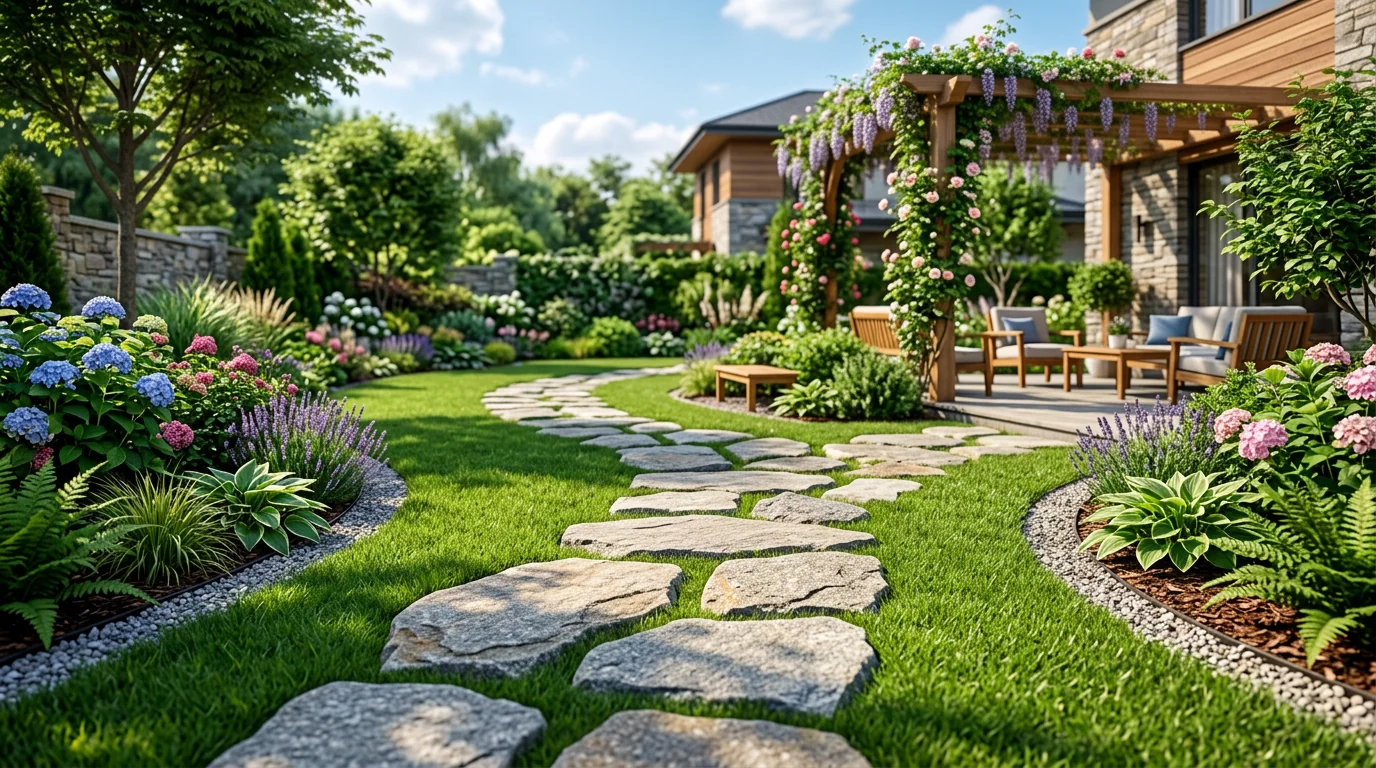
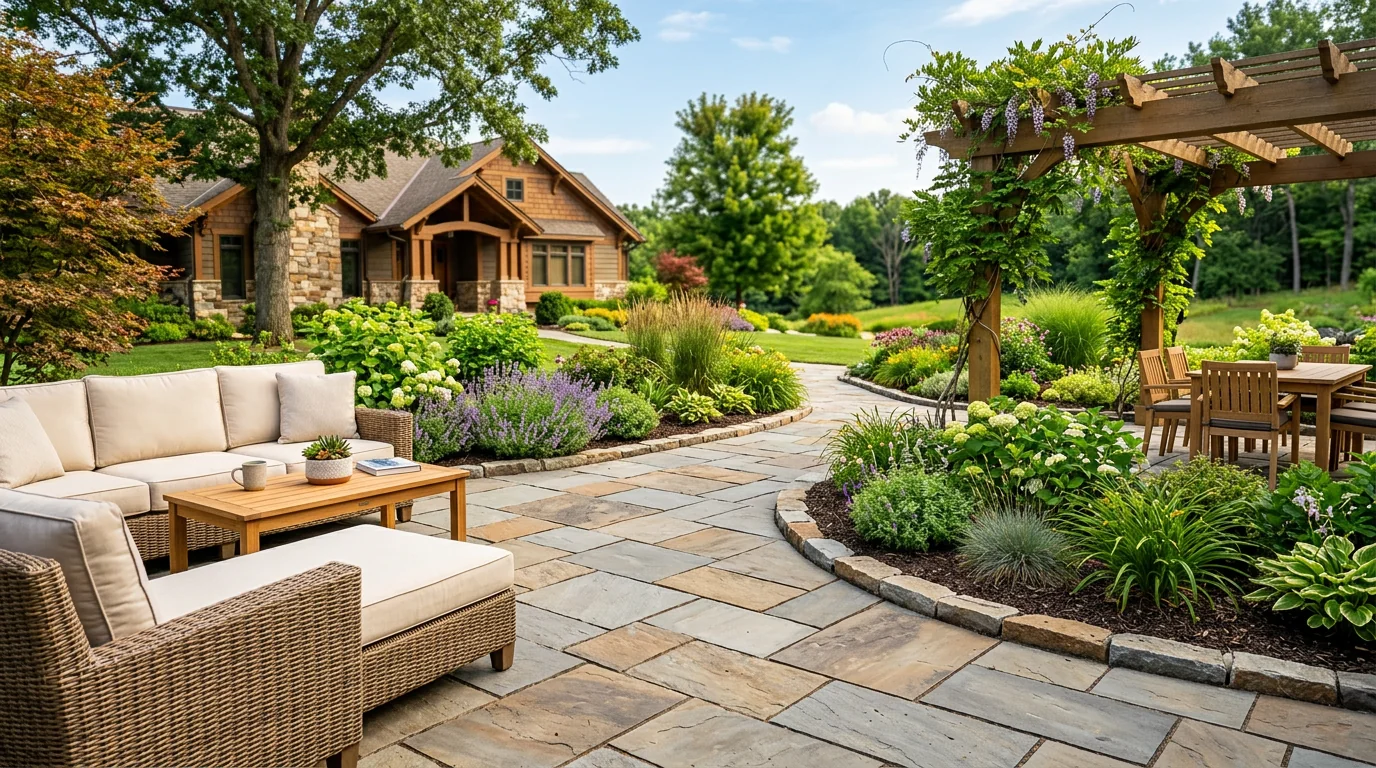
A flagstone patio creates a durable and beautiful outdoor living space that lasts for decades with proper base preparation. This guide explains what a flagstone patio is, which materials you need, how to prepare the ground, how to install flagstone step by step, and how to estimate the amount of gravel required. Whether you are planning a new patio from scratch or updating an existing outdoor area, use the sections below to navigate through the process.
See How to Build a Flagstone Patio
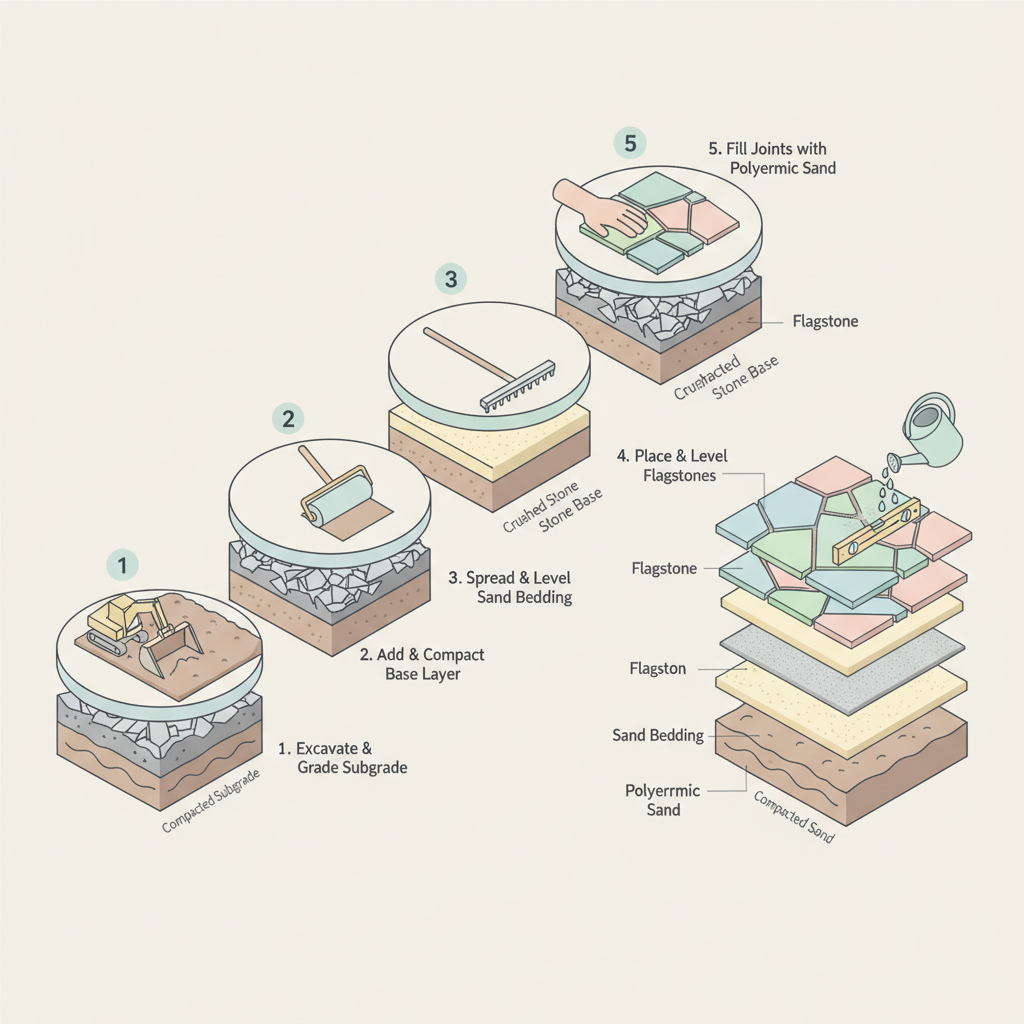
This visual guide breaks down the step-by-step process of building a flagstone patio, showing the numbered installation sequence from excavation to joint filling. It also illustrates the layered structure of the patio with clear labels for each material layer, helping you understand both the workflow and the cross-section of your finished project.
Flagstone Patio: Best Materials, Depth, Cost & How to Build
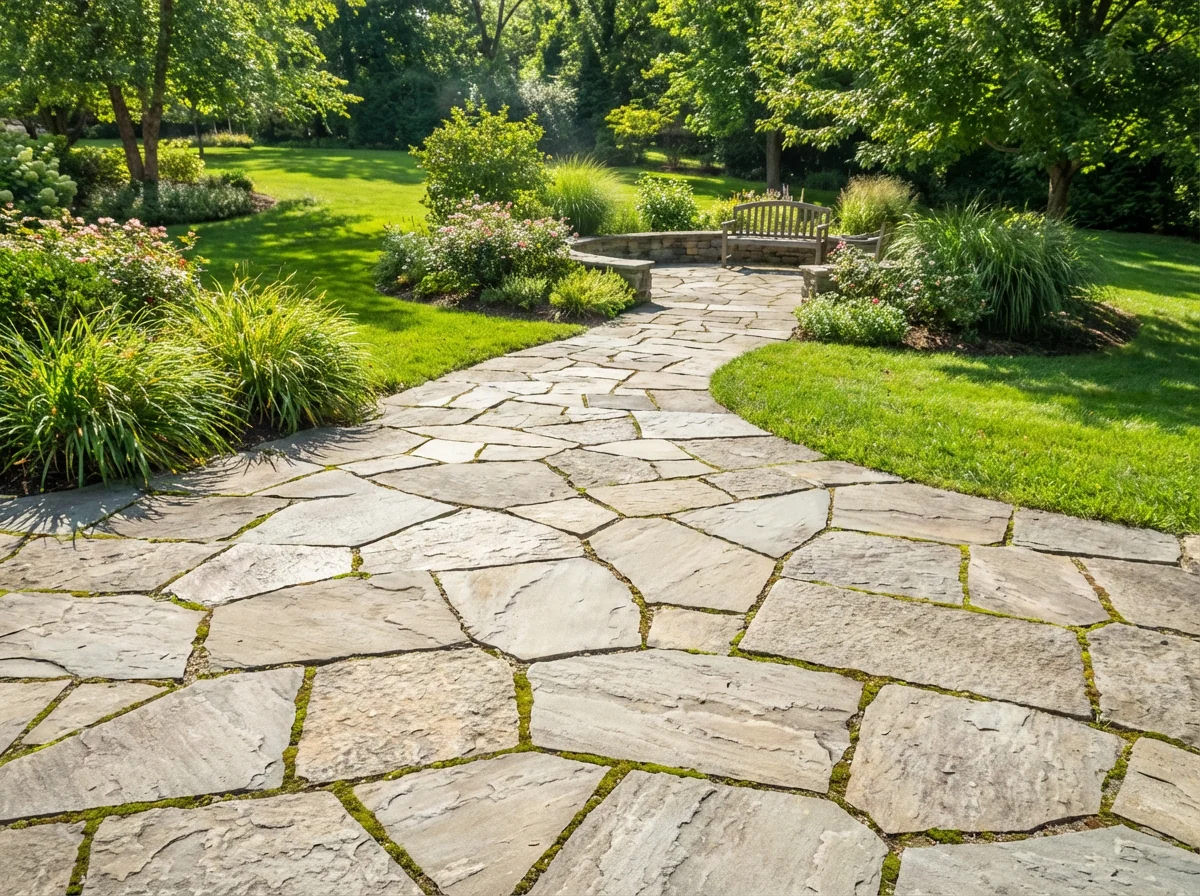
A flagstone patio creates a beautiful, durable outdoor living space using natural stone slabs. We recommend decomposed granite as the base material, with 1/4 inch to fines grading compacted to 4-6 inches total depth for optimal stability. This system ensures proper drainage through the base layers while preventing shifting and settling over time. The final patio will feature flagstones set in a sand bedding layer with polymeric sand joints for a clean, weed-resistant finish.
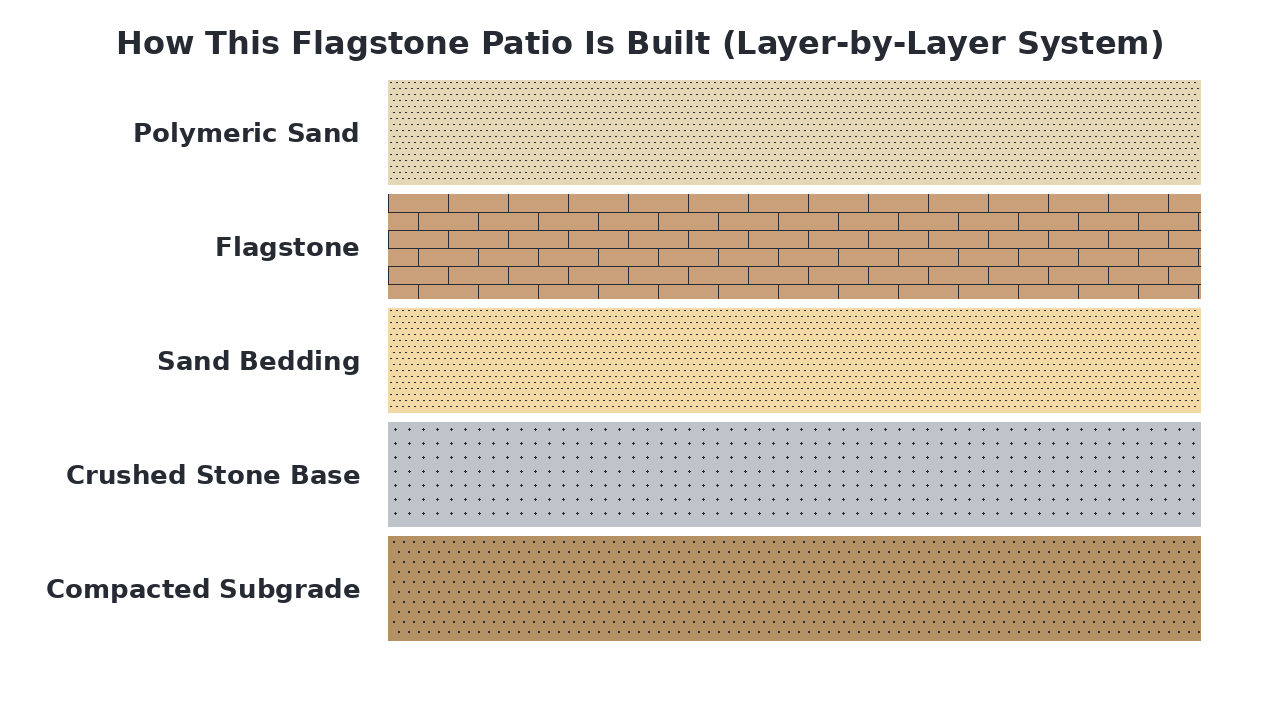
How This Flagstone Patio Is Built (Layer-by-Layer System)
A flagstone patio is built as a stable, level surface that allows for water drainage and prevents shifting over time. The system starts with a compacted subgrade, followed by a base layer that provides structural support, and a bedding layer that allows for precise leveling of the flagstones. A slight slope away from the house is incorporated into the base layer to direct water runoff and prevent pooling beneath the stones. Finally, polymeric sand is swept into the joints to lock the flagstones in place and inhibit weed growth.
Materials Breakdown: What Each Layer Does
A flagstone patio is constructed as a layered system where each material serves a distinct structural and functional purpose. The layers work in sequence to create a stable, level, and durable surface that can withstand weather and foot traffic while keeping the stones securely in place. Proper selection and installation of each component ensure the patio remains attractive and functional for years.
Native Soil
The existing ground that is excavated, leveled, and compacted to form a solid and stable foundation for the patio, preventing future settling.
Crushed Stone
A layer of angular, compactable stone that provides a strong, load-bearing base and promotes drainage beneath the patio.
View Crushed Stone →Concrete Sand
A level bed of sand that allows for precise placement and adjustment of the flagstones, creating a smooth, even surface.
View Concrete Sand →Flagstone
The decorative, flat natural stones that form the visible walking surface of the patio, chosen for their color, texture, and durability.
Polymeric Sand
A special sand with polymer additives that, when activated with water, hardens to lock the flagstones in place and prevent weed growth.
What Is a Flagstone Patio and Why Does It Matter?
A flagstone patio is a permanent outdoor surface constructed from natural stone slabs laid over a carefully prepared base system. It matters because it creates a stable, level area for outdoor living that enhances property value while providing proper drainage to prevent water damage. Unlike poured concrete or pavers, flagstone patios offer a more natural, irregular appearance with individual stones that can be arranged in unique patterns. The multi-layer construction with compacted base and drainage slope ensures long-term durability that withstands freeze-thaw cycles and heavy use.
Common Types of Flagstone Patio Systems
Flagstone patio systems vary primarily in the base material that supports the stone slabs. The most common types include gravel or crushed stone bases, sand-set installations, and concrete foundations. Gravel bases offer excellent drainage and flexibility, sand provides a softer bed for easier leveling, and concrete creates a permanent, rigid foundation but requires more complex installation.
- Excellent drainage and stability
- Easy to install and adjust
- Cost-effective material choice
- Allows for natural movement
- Works with all stone types
Best for:Most residential patio installations
- Softer bed for easier leveling
- Quick installation process
- Less material required
- Good for dry climates
- Easy to repair and modify
Best for:Temporary or low-budget patios
- Permanent, rigid foundation
- Maximum stability and durability
- Highest installation cost
- Professional installation required
- Limited drainage capability
Best for:Commercial or high-traffic areas
- Prevents weed growth
- Stabilizes stone placement
- Water-permeable but solid
- Reduces maintenance needs
- Professional application recommended
Best for:Areas with heavy weed pressure
When a Flagstone Patio Is the Best Solution
A flagstone patio with a gravel or stone dust base is ideal when you need excellent drainage in rainy climates or areas with freeze-thaw cycles. It's perfect for homeowners wanting a natural, irregular stone appearance that complements garden landscapes while providing a stable surface for outdoor furniture and gatherings. This system works well for moderate budgets and DIY-friendly installations where proper drainage and long-term durability are priorities over a perfectly rigid surface.
Everything You Need to Build a Flagstone Patio
Building a flagstone patio requires foundational materials like crushed stone and sand for a stable base, the flagstone pavers themselves for the surface, and polymeric sand to lock everything in place. You'll need basic excavation and landscaping tools to prepare the site, level the layers, and set the stones. Having the right tools on hand makes the installation process smoother and ensures a professional-looking, long-lasting result.
- Crushed stone base, Sand bedding, Flagstone pavers, Polymeric sand
- Shovel, Rake, Hand tamper or plate compactor, Rubber mallet, Level
- Hello Gravel (materials), Equipment Rental Store (compactor)
What to Consider Before You Start
Before you start digging, take time to plan these key aspects of your patio project to avoid common pitfalls.
- Site selection and layout
Determine the exact location, size, and shape of your patio, considering sun exposure, drainage, and proximity to your house.
- Local utility clearance
Call 811 or your local utility locating service to mark any underground lines before you excavate.
- Material quantity estimation
Calculate the square footage of your patio to determine how much crushed stone, sand, and flagstone you'll need to purchase.
- Drainage planning
Ensure your patio site slopes gently away from your house (about 1/4 inch per foot) to prevent water pooling.
- Access and staging area
Plan where to store and stage heavy materials like stone and sand for easy access during construction.
How to Prepare the Ground for a Flagstone Patio
Start by clearing the area of any vegetation, debris, or existing hardscape. Use stakes and string to mark the patio's perimeter, then excavate to a uniform depth that accounts for all material layers and a slight slope for drainage. Grade the subsoil to create a stable, level base with the desired slope, and thoroughly compact it with a plate compactor to prevent future settling.
How a Flagstone Patio Works
The layered system distributes weight from the flagstones down through the sand and crushed stone base, preventing cracking and shifting. The compacted subgrade and base provide stability and facilitate subsurface drainage, while the polymeric sand locks the stones together and resists weed growth and erosion. This structure ensures the patio remains level, durable, and able to handle weather and foot traffic over time.
How to Install a Flagstone Patio
Excavate & Grade Subgrade
Dig out the marked area to the required depth, then grade and compact the soil to create a stable, sloped base.
Add & Compact Base Layer
Spread a layer of crushed stone over the subgrade, level it, and compact it thoroughly to form a solid foundation.
Spread & Level Sand Bedding
Lay a consistent layer of sand over the compacted base, screed it level to create a smooth bed for the flagstones.
Place & Level Flagstones
Set the flagstones into the sand bed, arranging them with tight joints and using a rubber mallet to level them.
Fill Joints with Polymeric Sand
Sweep polymeric sand into the gaps between the flagstones, then mist with water to activate and lock it in place.
Alternative Gravel Options for Flagstone Patios
While flagstone patios typically use sand or decomposed granite as the setting bed, several alternative aggregates can be used depending on budget, drainage needs, and desired stability. Crushed stone base provides excellent compaction and load-bearing capacity, while pea gravel offers superior drainage but less stability. For most flagstone patio installations, polymeric sand emerges as the winning option because it hardens to lock stones in place while still allowing for minor movement and weed prevention.
Best for locking flagstones together while preventing weeds and insects.
Excellent natural setting bed that compacts well and provides good drainage.
View Product →Ideal for the foundational layer to ensure stability and prevent settling.
Provides excellent drainage but offers less stability for the flagstone surface.
View Product →Easily washes away and provides minimal long-term stability for flagstones.
View Product →Common Flagstone Patio Mistakes (And How to Avoid Them)
Even with quality materials, flagstone patio installations can fail due to common oversights. These mistakes often lead to uneven surfaces, drainage problems, and premature deterioration that require costly repairs.
- Insufficient base depth
- Poor drainage planning
- Uneven stone leveling
- Wrong joint material
- No edge restraint
How to Maintain a Flagstone Patio
Regular maintenance keeps your flagstone patio looking great and functioning properly. Sweep debris regularly and refill joint material as needed to prevent weed growth and maintain stability. Inspect for settling or shifting stones annually, and re-level any uneven areas to prevent tripping hazards. For polymeric sand joints, avoid pressure washing which can damage the binding agents, and reapply joint sand every few years as needed.
Calculate How Much Gravel You Need
Enter Your Dimensions
Measure your project area and we'll calculate how much material you need.