Garden Path Gravel: Walkway Stone Sizes & Depth Guide
A well-designed garden path can transform your outdoor space from purely functional to beautifully inviting. This guide explains what a garden path is, which materials you need, how to design and lay out the path, how to install it step by step, and how to estimate the amount of gravel required. Whether you are creating a simple walkway for utility or designing an elaborate landscape feature, use the sections below to jump to the information you need.
See How to Build a Garden Path
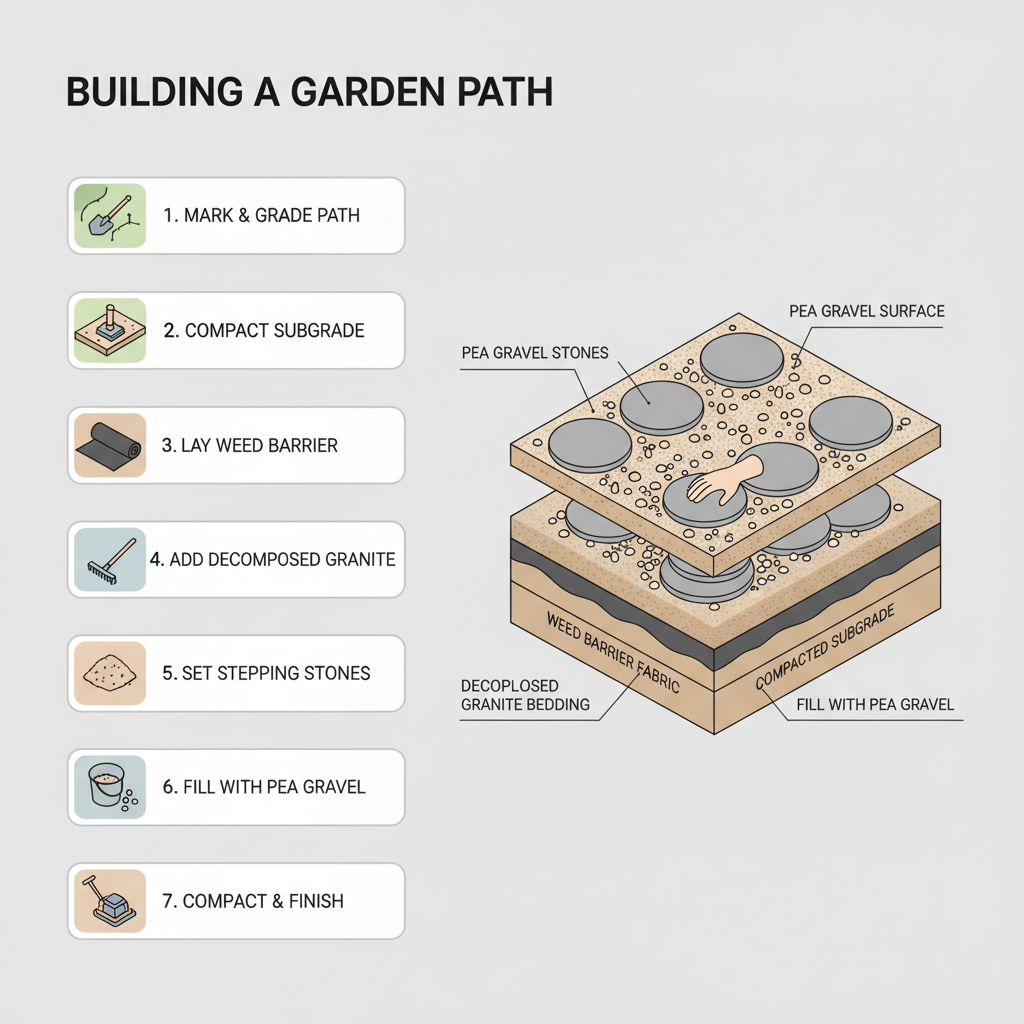
This visual guide shows the complete installation sequence for building a garden path, from ground preparation to final compaction. The numbered steps clarify the proper order of operations, while the layered cross-section reveals how each material—from weed barrier to pea gravel surface—creates a stable, durable path structure.
Gravel for Garden Paths: Best Materials, Depth, Cost & How to Build
A garden path is a strip of pea gravel between stepping stones, 2–3 inches deep — typically 1–2 inches of compacted bedding under 1 inch of pea gravel surface. For a 50-foot path, plan on 1–2 cubic yards. Gravel between stones drains, stays put, and lets the path follow curves through a yard the way concrete simply can't.
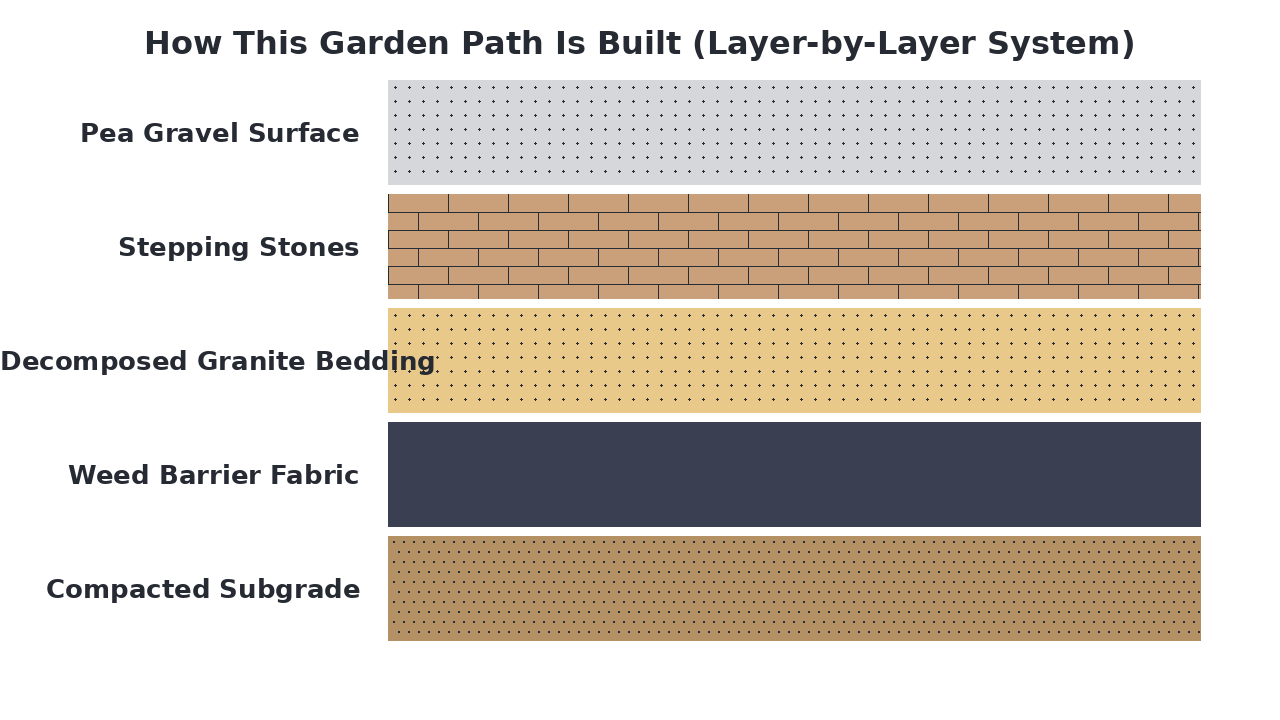
How This Garden Path Is Built (Layer-by-Layer System)
A garden path is built as a layered system that provides a stable walking surface while ensuring proper drainage. The system starts with a compacted subgrade, followed by a fabric layer that prevents weed growth and soil mixing, then a bedding layer that creates a firm base for the stepping stones. The final surface layer of pea gravel fills between the stones, providing a decorative and permeable finish that allows water to drain freely.
Materials Breakdown: What Each Layer Does
A garden path is constructed as a layered system where each material serves a specific purpose in creating a stable, functional, and attractive walkway. The layers work together to provide proper drainage, prevent weed growth, support stepping stones, and create an appealing surface. Selecting the right product for each layer ensures the path remains durable and low-maintenance for years to come.
Native Soil
The existing ground that is leveled and compacted to create a stable foundation for the entire path system.
Landscape Fabric
A geotextile layer that prevents weeds from growing up through the path while still allowing water drainage.
Decomposed Granite
A compactable base material that provides a stable, level surface for setting the stepping stones in place.
View Decomposed Granite →Concrete Stepping Stones
Flat stones that create stable stepping points and define the walking path through the gravel surface.
Pea Gravel
Small, rounded gravel that fills between stepping stones, providing an attractive surface and allowing water to drain through.
View Pea Gravel →What Is a Garden Path and Why Does It Matter?
A garden path is a strip of stepping stones with 3/8 to 3/4 inch pea gravel filling the gaps, set on a thin compacted bedding layer. For a 50-foot path, plan on 1–2 cubic yards of pea gravel. The gravel keeps the stones from rocking, drains rainwater so the path isn't muddy, and lets the path follow curves through your yard — none of which a poured concrete walkway does well.
Common Types of Garden Path Systems
Garden paths typically come in three main styles: loose materials like pea gravel or decomposed granite that provide natural drainage and flexibility, structured options like stepping stones or flagstones that create defined stepping points while allowing plants to grow between them, and solid surfaces like concrete or asphalt that offer maximum durability but limit permeability. Loose materials are easiest to install and modify, while stepping stones blend well with garden beds and solid surfaces handle heavier foot traffic. The choice depends on your desired aesthetic, maintenance preferences, and drainage needs.
- Natural drainage and permeability
- Easy DIY installation
- Budget-friendly material cost
- Soft, comfortable walking surface
- Blends with garden aesthetics
Best for:Casual garden strolls and flexible layouts
- Firm, stable walking surface
- Compacts well for durability
- Natural earth-tone appearance
- Good drainage properties
- Low maintenance once established
Best for:Frequently used paths needing stability
- Defined stepping points
- Plants grow between stones
- Visually integrated with garden
- Easy to adjust placement
- Minimal ground disturbance
Best for:Winding through dense planting beds
- Excellent moisture retention
- Soft, natural feel underfoot
- Weed suppression properties
- Blends with garden beds
- Requires regular replenishment
Best for:Moisture-loving garden areas
When a Garden Path Is the Best Solution
A gravel garden path is ideal when you need an affordable, permeable solution that can be installed quickly without professional help. It's perfect for gardens with drainage concerns, as the loose material allows water to infiltrate naturally rather than creating runoff. This option works well for light to moderate foot traffic areas like side paths, vegetable garden access, or informal stroll routes where you want a natural look that complements plantings rather than competing with them.
Everything You Need to Build a Garden Path
Building a garden path requires several key materials to create a stable, layered foundation and an attractive surface. You'll need foundational materials like decomposed granite for bedding and pea gravel for the top layer, along with a weed barrier to prevent growth. Essential tools include digging and compacting equipment to prepare the site and level the materials properly.
- Compacted subgrade soil, Weed barrier fabric, Decomposed granite bedding, Stepping stones, Pea gravel surface
- Shovel, Rake, Hand tamper or plate compactor, Wheelbarrow, Level, Garden hose or sprayer
- A contractor supply store, Hello Gravel (materials), Local equipment rental (compactor)
What to Consider Before You Start
Before you begin digging, consider these key planning factors to ensure your garden path is properly located, sized, and designed for long-term success.
- Path layout and dimensions
Determine the exact route, width, and length of your path to calculate material quantities and ensure proper fit in your landscape.
- Drainage and slope
Check that your path area has adequate slope (1-2% grade) away from structures to prevent water pooling and erosion.
- Material selection and quantities
Choose appropriate gravel types for each layer and calculate cubic yardage needed based on your path dimensions.
- Access and site preparation
Plan how you'll transport materials to the site and clear vegetation/obstacles before beginning construction.
- Edging and containment
Decide whether to install landscape edging to keep gravel in place and maintain clean path boundaries over time.
How to Prepare the Ground for a Garden Path
Start by clearing the area of all vegetation, roots, and debris to create a clean base. Mark the path's outline with stakes and string, then excavate to a depth of 4–6 inches to accommodate the layered materials. Grade the excavated trench to ensure a slight slope (about 1–2%) away from structures for proper drainage. Finally, compact the subgrade thoroughly with a plate compactor to create a stable, level foundation.
How a Garden Path Works
A garden path functions as a multi‑layer system that manages load and water. The compacted subgrade provides a firm base, while the weed barrier prevents unwanted growth. The decomposed granite bedding stabilizes stepping stones and allows water to percolate downward, and the pea gravel surface offers a permeable, attractive finish that sheds rain and resists compaction.
How to Install a Garden Path
Mark & Grade Path
Outline the path with stakes and string, then excavate to a uniform depth of 4–6 inches and slope the trench for drainage.
Compact Subgrade
Use a plate compactor to firmly compact the excavated soil, creating a stable, level base for the layers above.
Lay Weed Barrier
Roll out a geotextile weed‑barrier fabric over the compacted subgrade, overlapping seams by 6 inches and securing with landscape staples.
Add Decomposed Granite
Spread a 2‑inch layer of decomposed granite over the fabric, then compact it to create a firm, stable bedding for the stepping stones.
Set Stepping Stones
Place stepping stones evenly along the path, pressing each into the decomposed granite bedding and checking for level and spacing.
Fill with Pea Gravel
Pour pea gravel around and between the stepping stones, raking it smooth to create a uniform surface that is flush with the stone tops.
Compact & Finish
Gently compact the pea gravel with a plate compactor or tamper, then add a final layer of gravel to top up any settled areas.
Alternative Gravel Options for Garden Paths
When building a garden path, homeowners have several attractive aggregate options, each with different characteristics for stability, drainage, and visual appeal. Pea gravel offers a classic look but shifts underfoot, while decomposed granite compacts well for a stable walking surface. River rock provides excellent drainage and a polished appearance but can be slippery, and mulch offers an organic, budget-friendly option that decomposes over time. For most garden paths, decomposed granite emerges as the top choice due to its excellent compaction, natural appearance, and resistance to displacement, creating a durable walking surface that withstands foot traffic while maintaining its form.
Compacts into a stable, natural-looking surface perfect for primary walking areas.
View Product →Provides a classic, rounded appearance but shifts easily underfoot without proper edging.
View Product →Offers excellent drainage and polished aesthetics but can be slippery when wet.
View Product →An organic, budget-friendly option that decomposes quickly and requires frequent replacement.
View Product →Provides excellent stability and drainage with angular pieces that lock together well.
View Product →Common Garden Path Mistakes (And How to Avoid Them)
Even with quality materials, garden paths can fail due to avoidable installation errors that compromise longevity and function. These common mistakes often lead to uneven surfaces, poor drainage, and excessive maintenance. Understanding these pitfalls helps ensure your path remains stable and attractive for years.
- Insufficient base preparation
- Poor drainage planning
- Inadequate edging
- Wrong aggregate selection
- Inconsistent depth
How to Maintain a Garden Path
Regular maintenance keeps your garden path looking its best and functioning properly. Rake the surface periodically to redistribute displaced gravel and smooth out uneven areas, especially after heavy rain or frequent use. Inspect and reinforce edging annually to prevent aggregate migration, and top up the gravel layer every 1-2 years as needed to maintain proper depth and coverage. Address any drainage issues promptly by clearing debris from path edges and ensuring water flows away from the walking surface to prevent erosion and potholes.
Calculate How Much Gravel You Need
Enter Your Dimensions
Measure your project area and we'll calculate how much material you need.