Gravel Driveway Tonnage Calculator: Road Base & Top Layer
A well-constructed gravel driveway provides durable, low-maintenance access that depends on proper material selection and installation. This guide explains what a gravel driveway is, which materials you need, how to prepare the ground, how to build it step by step, and how to estimate the amount of gravel required. Whether you are planning a new driveway installation or replacing an existing surface, use the sections below to navigate through the process.
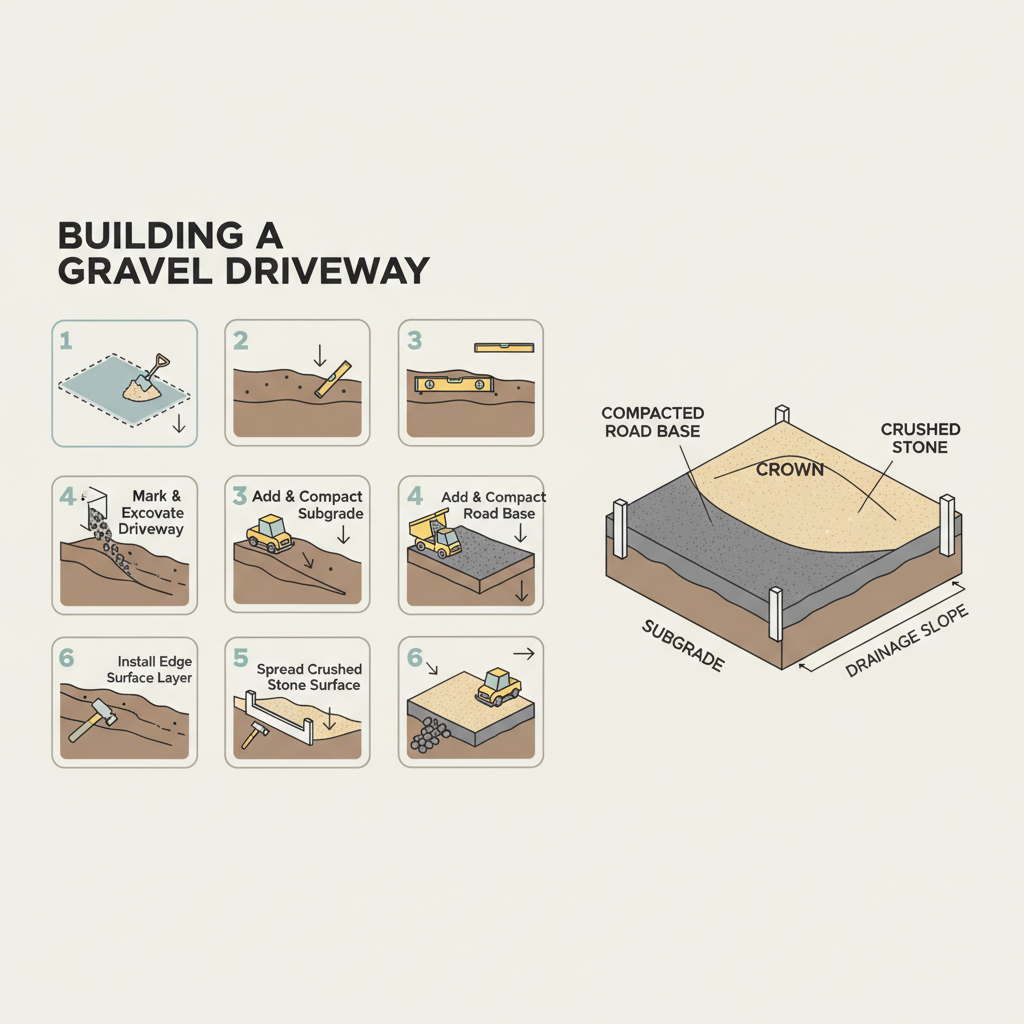
See How to Build a Gravel Driveway
This visual guide shows the complete installation sequence for building a gravel driveway, from excavation to final compaction. It clarifies the proper layering structure—subgrade, compacted base, and surface gravel—so you understand how each step contributes to a stable, long-lasting driveway that drains properly.
Gravel for Driveways: Best Materials, Depth, Cost & How to Build
A gravel driveway provides an affordable, durable, and permeable alternative to paved surfaces. We recommend using crushed stone in a 3/4-inch-down-to-fines grading, installed at 8-12 inches total depth with proper compaction. The layered system with road base and crushed stone surface ensures structural stability while the crown and drainage slope prevent water pooling and erosion. This approach creates a driveway that withstands vehicle traffic and weather conditions while maintaining proper drainage.
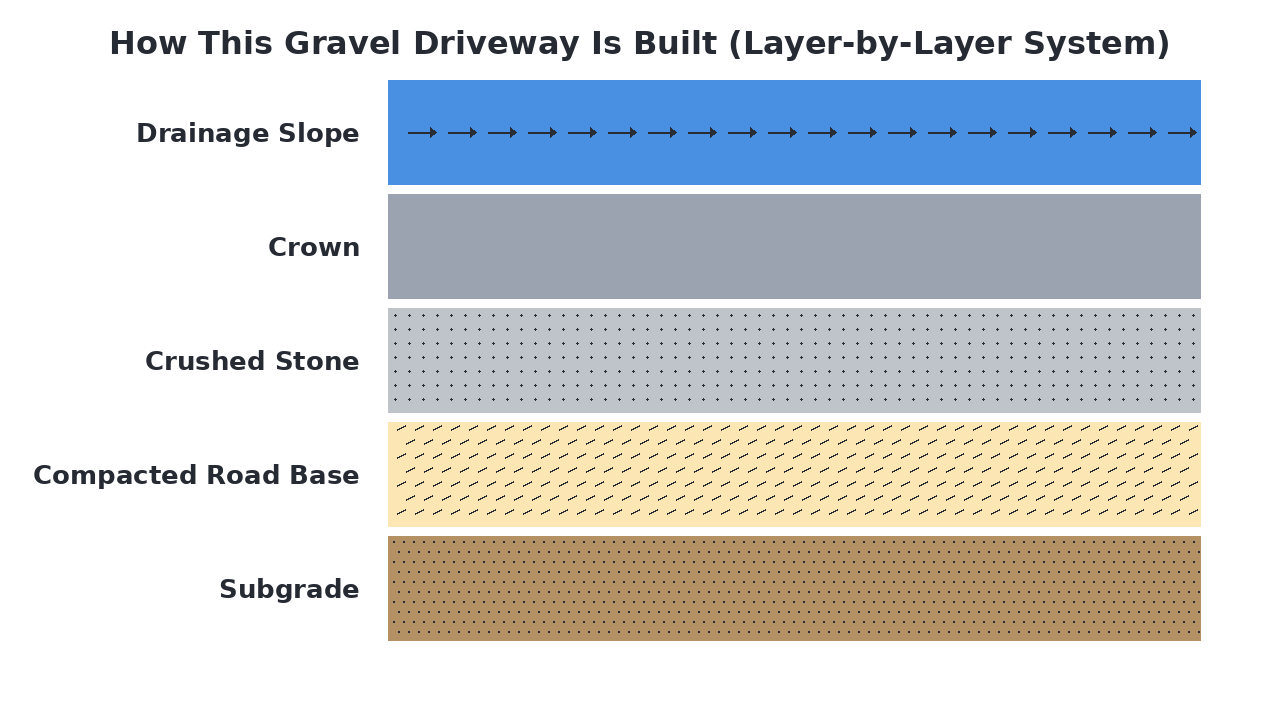
How This Gravel Driveway Is Built (Layer-by-Layer System)
This gravel driveway uses a layered system designed to support vehicle weight while allowing proper drainage. It begins with a prepared subgrade, followed by a compacted road base that provides structural stability, and is topped with a surface layer of crushed stone for a durable driving surface. A slight crown or slope is incorporated to direct water away, preventing erosion and rutting while ensuring the driveway remains functional in various weather conditions.
Materials Breakdown: What Each Layer Does
A gravel driveway is constructed as a layered system, where each component serves a distinct structural or drainage purpose. The subgrade provides a stable foundation, the base layers distribute load and shed water, and the surface crown ensures proper runoff. Using the right material for each layer prevents rutting, potholes, and water damage over time.
Native Soil
The existing, compacted soil that forms the foundation of the driveway; it must be stable and properly graded to support the layers above.
Road Base
A densely compacted layer of aggregate that creates a strong, stable platform to support vehicle weight and prevent settling.
View Road Base →Crushed Stone
A layer of angular, interlocking stone that provides excellent load-bearing capacity and drainage for the surface layer.
View Crushed Stone →Surface Crown
The slight upward curve in the center of the driveway that directs water to the sides, preventing puddles and erosion.
Discharge Slope
The overall grade of the driveway, which ensures water runs off the surface and away from structures, preventing standing water.
What Is a Gravel Driveway and Why Does It Matter?
A gravel driveway is a layered system of compacted aggregate materials designed to support vehicle traffic while allowing water drainage. It matters because it provides a cost-effective, permeable alternative to concrete or asphalt that can be installed by homeowners and maintained with minimal effort. Unlike simple loose gravel surfaces, a properly constructed gravel driveway uses multiple compacted layers with proper drainage slopes to prevent rutting, erosion, and water damage. This makes it a durable, functional solution that balances affordability with long-term performance.
Common Types of Gravel Driveway Systems
Gravel driveways come in several common types based on the aggregate material used. Pea gravel offers a smooth, rounded appearance but can shift under vehicle tires. Crushed stone provides better compaction and stability with its angular edges. Decomposed granite creates a firm, natural surface that compacts well but may require more maintenance in wet climates. Road base and crusher run are engineered mixes designed specifically for load-bearing applications.
- Smooth, rounded stones
- Natural appearance
- Easy to walk on
- Can shift under tires
Best for:Decorative, low-traffic areas
- Angular edges lock together
- Excellent compaction
- Durable under vehicles
- Good drainage
Best for:Most residential driveway applications
- Fine, sandy texture
- Compacts to firm surface
- Natural earth-tone colors
- May require frequent grading
Best for:Dry climates with minimal rain
- Engineered aggregate mix
- Maximum load-bearing capacity
- Professional construction required
- Highest durability
Best for:Heavy vehicle traffic areas
When a Gravel Driveway Is the Best Solution
A gravel driveway is ideal when you need a cost-effective, permeable surface that handles moderate vehicle traffic while allowing rainwater to drain naturally. It's perfect for rural properties, long driveways, or locations where concrete would be prohibitively expensive. Choose gravel when you want a natural-looking surface that can be installed by homeowners and maintained with periodic grading. It works well in areas with good drainage where you value affordability over a perfectly smooth surface.
Everything You Need to Build a Gravel Driveway
A gravel driveway requires a layered approach with specific materials for each structural component. You'll need foundational materials like road base and crushed stone for stability, plus surface gravel for the final layer. Essential tools include excavation and grading equipment to prepare the site and compact the materials properly.
- Road base, Crushed stone (e.g., #57 or crusher run), Surface gravel (pea gravel or decomposed granite), Landscape fabric (optional), Edging material (optional)
- Shovel, Rake, Plate compactor or hand tamper, Grading tools (string level or laser level), Wheelbarrow, Garden hose or sprayer
- Home Depot or Your local hardware store, Hello Gravel (bulk aggregates), Equipment rental store (compactor, grading tools)
What to Consider Before You Start
Before digging your first shovel, consider these key planning factors to ensure a successful gravel driveway installation.
- Local regulations and permits
Check with your municipality about driveway construction permits, setback requirements, and any drainage regulations.
- Soil drainage assessment
Evaluate your site's natural drainage patterns and soil composition to determine if additional drainage solutions are needed.
- Driveway dimensions and layout
Measure and mark the exact driveway boundaries, accounting for vehicle turning radius and proper width for your vehicles.
- Material quantity calculation
Calculate the cubic yards of each material layer needed based on your driveway's dimensions and depth requirements.
- Equipment access and staging
Plan how delivery trucks and equipment will access the site and where materials will be stored during construction.
How to Prepare the Ground for a Gravel Driveway
Start by clearing the area of all vegetation, debris, and topsoil to expose the stable subgrade. Mark the driveway boundaries with stakes and string, then grade the subgrade to create a slight crown in the center and a consistent drainage slope of about 1-2% toward the sides. Finally, compact the exposed subgrade thoroughly with a plate compactor to create a firm, stable foundation that prevents future settling.
How a Gravel Driveway Works
A gravel driveway functions as a layered system where the compacted road base distributes vehicle loads evenly across the subgrade, preventing rutting. The crushed stone surface layer provides traction and allows water to infiltrate, while the crowned profile and side slopes direct runoff away from the driveway surface. This multi-layer design ensures proper drainage and structural stability, minimizing potholes and washouts over time.
How to Install a Gravel Driveway
Mark & Excavate Driveway
Outline the driveway perimeter with stakes and string, then excavate the area to the required depth, typically 8-12 inches, removing all organic material.
Grade & Compact Subgrade
Shape the excavated subgrade to create a center crown and side slopes for drainage, then compact it thoroughly with a plate compactor.
Add & Compact Road Base
Spread a 4-6 inch layer of road base or crusher run across the subgrade, then compact it in layers to create a stable load-bearing foundation.
Install Edge Restraints
Place plastic or metal edge restraints along the driveway sides to contain the gravel and maintain a clean boundary.
Spread Crushed Stone Surface
Add a 2-3 inch top layer of crushed stone or pea gravel, raking it evenly to maintain the crowned profile and drainage slope.
Compact Surface Layer
Use a vibratory plate compactor to lightly compact the surface gravel, locking the stones together for a firm, stable driving surface.
Alternative Gravel Options for Gravel Driveways
Homeowners have several aggregate options for gravel driveways, each with different characteristics for stability, drainage, and aesthetics. Crushed stone and road base offer excellent compaction and load-bearing capacity, while pea gravel and decomposed granite provide a more decorative appearance but less structural integrity. Crusher run is a versatile blend that combines angular stone with fines for good compaction. For most driveway applications, crushed stone is the recommended choice due to its angular interlock that resists displacement under vehicle traffic.
A graded mix of crushed stone and fines that compacts into a solid foundation.
View Product →A blend of angular stone and stone dust that compacts well for driveways.
A natural, fine-grained material that compacts but can shift over time.
View Product →Smooth, rounded stones that are decorative but roll under vehicle tires.
View Product →Common Gravel Driveway Mistakes (And How to Avoid Them)
Even with quality materials, a gravel driveway can fail if installed incorrectly. Avoiding these common mistakes ensures your driveway remains functional and attractive for years.
- Inadequate base layer
- Poor drainage planning
- Missing crown
- Wrong gravel type
- Insufficient depth
How to Maintain a Gravel Driveway
Regular maintenance keeps your gravel driveway smooth and functional. Annually rake and regrade the surface to maintain proper crown and fill in low spots or potholes. Add fresh gravel every 1-2 years to replace material lost to erosion and traffic. Keep drainage ditches and edges clear of debris to prevent water from pooling on the driveway surface.
Calculate How Much Gravel You Need
Enter Your Dimensions
Measure your project area and we'll calculate how much material you need.