Patio Pavers Base: Road Base & Bedding Sand Quantities
A well-planned paver patio creates a durable, attractive outdoor living space for years to come. This guide explains what a patio pavers is, which materials you need, how to prepare the ground, how to build a paver patio step by step, and how to estimate the amount of gravel required. Whether you are installing a new patio from scratch or replacing an old walkway, use the sections below to find what you need.
See How to Build a Patio Pavers
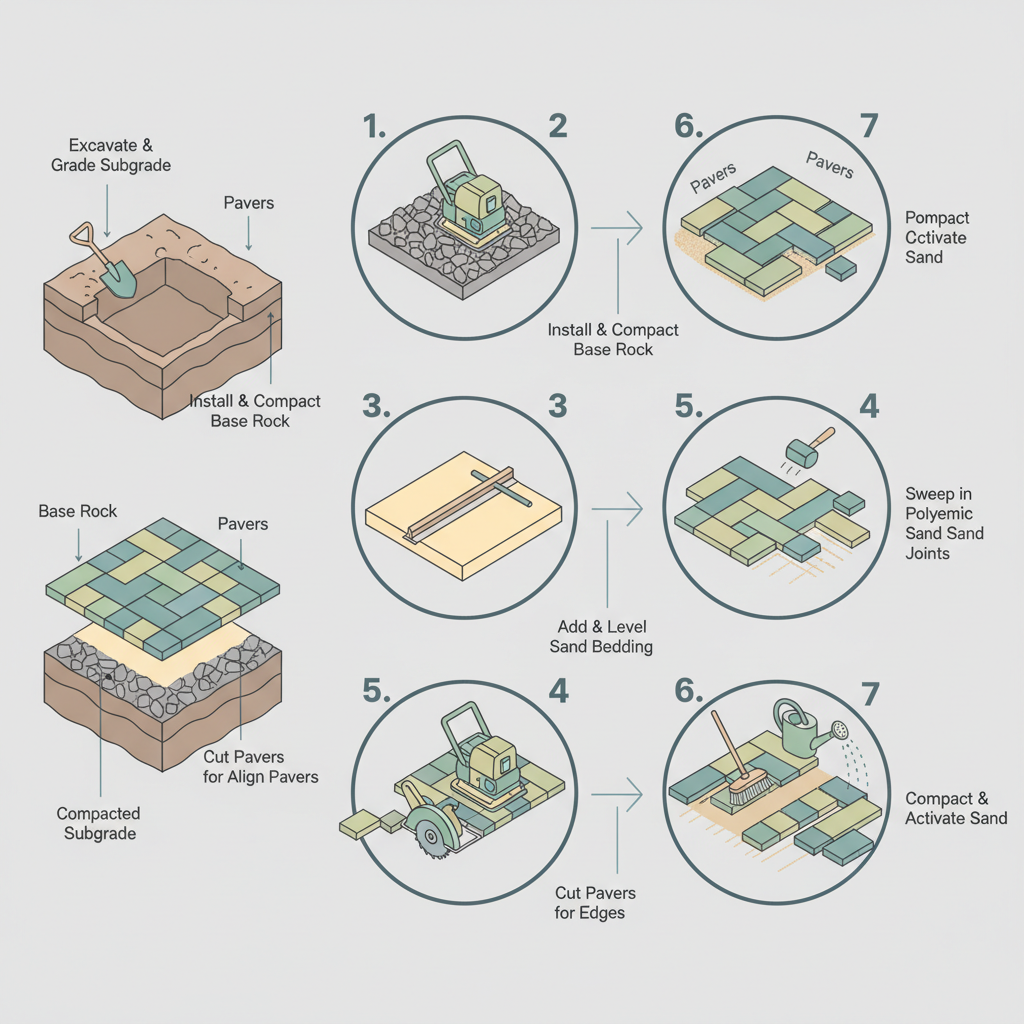
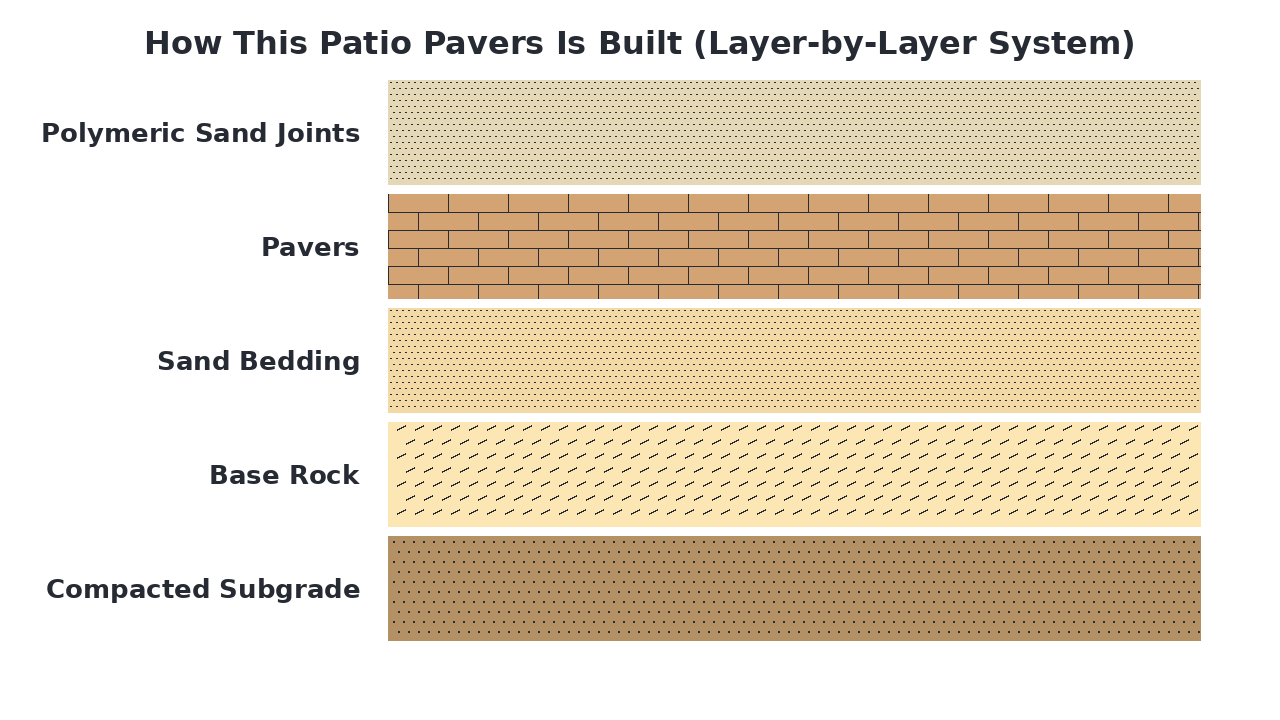
This visual guide illustrates the step-by-step installation sequence for building a patio with pavers, showing each numbered stage from excavation to final sand activation. It also clarifies the layered cross-section structure—compacted subgrade, base rock, sand bedding, pavers, and polymeric sand joints—so you can see exactly how each material contributes to a stable, long-lasting patio.
Patio Pavers: Best Materials, Depth, Cost & How to Install
A patio paver installation creates a durable, attractive outdoor surface built on a layered foundation. We recommend using 3/4 inch base rock at a 4-6 inch total depth for optimal stability and drainage. The compacted base rock provides essential load-bearing support, while the sand bedding ensures a level surface for the pavers. Proper installation with polymeric sand joints prevents weed growth and maintains paver alignment.
How This Patio Pavers Is Built (Layer-by-Layer System)
A patio paver system is built as a stable, layered foundation that supports the pavers while allowing proper drainage. The structure begins with a compacted subgrade, followed by a base rock layer for load-bearing strength, and a sand bedding that provides a level surface for the pavers. The pavers are then installed and secured with polymeric sand in the joints to lock them in place and prevent weed growth. A slight slope is built into the system to direct water away from the patio surface and prevent pooling.
Materials Breakdown: What Each Layer Does
A successful paver patio relies on a layered foundation system where each material has a distinct, critical function. The subgrade provides a stable base, the rock and sand layers create a level, load-bearing bed, and the pavers and jointing sand form the durable, finished surface. Together, these layers ensure the patio is flat, strong, and resistant to shifting or weed growth.
Native Soil
The existing ground that is excavated and firmly compacted to create a stable, unyielding base for the entire patio structure.
Crushed Stone
A layer of angular, compactable stone that provides a strong, load-bearing foundation and allows for drainage away from the pavers.
View Crushed Stone →Concrete Sand
A smooth, level layer of sand that the pavers are set into, allowing for precise placement and minor adjustments during installation.
View Concrete Sand →Concrete Pavers
The interlocking surface units that form the visible patio floor, providing a durable and aesthetically pleasing walking area.
Polymeric Sand
A special sand brushed into the gaps between pavers that hardens when wet, locking them in place and preventing weed growth.
What Is a Patio Pavers and Why Does It Matter?
A patio paver system is a modular hardscape installation consisting of individual paving stones set on a sand and gravel foundation, secured with polymeric sand in the joints. This matters because it creates a durable, permeable surface that can withstand freeze-thaw cycles and heavy use while allowing proper drainage. Unlike poured concrete, patio pavers offer design flexibility, easier repairs, and better drainage performance through their joint system.
Common Types of Patio Pavers Systems
Patio paver systems come in several common types, each with different materials and installation approaches. The most popular options include concrete pavers, natural stone pavers, and permeable pavers, which vary in cost, durability, and aesthetic appeal. Concrete pavers are affordable and versatile, while natural stone offers premium looks at a higher price point. Permeable pavers provide superior drainage but require more specialized installation.
- Most affordable option
- Wide variety of shapes/colors
- Easy to install and replace
- Good durability for moderate use
Best for:Budget-friendly, high-traffic patios
- Premium, high-end appearance
- Unique natural variations
- Excellent longevity
- Higher material cost
Best for:Luxury outdoor living spaces
- Superior drainage performance
- Reduces runoff and flooding
- Uses gravel base layer
- Eco-friendly, sustainable option
- Ideal for wet climates
Best for:Areas with poor drainage
When a Patio Pavers Is the Best Solution
A permeable paver system with a gravel base is the best solution when you need excellent drainage in wet climates or areas with heavy rainfall. This option works well for homeowners who want to reduce stormwater runoff and prevent pooling on their patio surface. It's also ideal for those prioritizing environmental sustainability while maintaining a durable, attractive outdoor space. Choose this system if you're willing to invest in proper installation for long-term performance benefits.
Everything You Need to Build a Patio Pavers
Building a paver patio requires a range of materials to create a stable, layered foundation and the tools to properly install them. You'll need foundational materials like base rock and sand, the pavers themselves, and jointing sand to finish the surface. Essential tools include excavation and leveling equipment, a compactor to settle the base, and cutting tools for fitting pavers.
- Base rock, Sand bedding, Pavers, Polymeric sand
- Shovel, Rake, Hand tamper or plate compactor, Level, Rubber mallet, Masonry saw or chisel
- Hello Gravel (materials), Your local hardware store, Sunbelt Rentals (equipment rental)
What to Consider Before You Start
Proper planning ensures your patio is built correctly and lasts for years. Consider these key factors before you begin digging.
- Site layout and dimensions
Mark the exact perimeter of your patio, accounting for slopes and any obstacles like trees or utilities.
- Local regulations and permits
Check with your local building department to see if a permit is required for your patio project.
- Drainage and slope
Plan for a slight slope (about 1/4 inch per foot) away from your house to ensure proper water runoff.
- Paver pattern and cuts
Decide on your paver layout and pattern, anticipating where cuts will be needed for edges and obstacles.
- Material quantities
Calculate the amount of base rock, sand, and pavers needed based on your patio's square footage and depth requirements.
How to Prepare the Ground for a Patio Pavers
Start by clearing the area of all vegetation, roots, and debris to create a clean workspace. Mark the patio perimeter with stakes and string, then excavate to a uniform depth that accounts for the thickness of all layers plus the pavers. Grade the subgrade to ensure a slight slope away from any structures for drainage, then thoroughly compact the soil to create a stable, unyielding base.
How a Patio Pavers Works
Once installed, the patio functions as a cohesive, interlocking system that distributes weight evenly across the layered foundation. The compacted subgrade and base rock provide a solid, load-bearing platform that prevents settling, while the sand bedding allows for minor adjustments and a perfectly level surface. Water drains through the permeable polymeric sand joints and the gaps between pavers, preventing pooling and reducing hydrostatic pressure that could cause shifting.
How to Install a Patio Pavers
Excavate & Grade Subgrade
Dig out the marked area to the required depth, ensuring a consistent slope for drainage, then compact the exposed soil.
Install & Compact Base Rock
Spread a layer of crushed base rock over the compacted subgrade, then use a plate compactor to create a solid, stable foundation.
Add & Level Sand Bedding
Apply a uniform layer of coarse sand over the base rock, screeding it to a perfectly flat and level surface.
Lay & Align Pavers
Place the pavers onto the sand bed, starting from a corner and working outwards, maintaining tight, consistent joints.
Cut Pavers for Edges
Measure and cut any pavers as needed to fit the perimeter and around obstacles using a masonry saw.
Sweep in Polymeric Sand
Spread polymeric sand over the entire patio surface, sweeping it thoroughly into all the joints between pavers.
Compact & Activate Sand
Use a plate compactor with a protective mat to settle the pavers and sand, then lightly mist the surface with water to activate the polymeric binder.
Alternative Gravel Options for Patio Paverss
While a traditional paver patio uses a gravel base and sand setting bed, several alternative aggregates can serve similar functions with different trade-offs. Crushed stone offers superior drainage and compaction, while pea gravel provides a decorative look but lacks stability for a structural base. For most patio paver projects, a well-graded crushed stone base is the winning choice because it provides the essential load-bearing support and drainage that prevents shifting and settling over time.
The optimal base material for its excellent compaction and drainage properties.
View Product →A solid choice for the foundational layer that provides stability and load distribution.
Used for jointing between pavers to prevent weed growth and insect infiltration.
Decorative only, too unstable for structural support in paver bases.
View Product →Common Patio Pavers Mistakes (And How to Avoid Them)
Even with the right materials, patio paver installations can fail due to preventable errors. Understanding these common pitfalls helps ensure your patio remains level, stable, and beautiful for years to come.
- Inadequate base compaction
- Poor drainage planning
- Insufficient sand depth
- Improper edge restraint
- Wrong jointing material
How to Maintain a Patio Pavers
Regular maintenance keeps your paver patio looking great and functioning properly. Sweep polymeric sand into joints annually to prevent weed growth and maintain stability. Use a pressure washer sparingly to clean surface stains, being careful not to displace the joint sand. Periodically check for settling pavers and relevel them by adding sand beneath, and reapply edge restraint if it becomes loose.
Calculate How Much Gravel You Need
Enter Your Dimensions
Measure your project area and we'll calculate how much material you need.