Best Gravel for a Chicken Coop Run: Drainage & Depth
A successful chicken coop relies on a well-planned layout and proper foundation materials. This guide explains what a chicken coop is, which materials you need, how to design the layout, how to build the structure step by step, and how to estimate the amount of gravel required. Whether you are building your first backyard coop or expanding an existing setup, use the sections below to find what you need.
See How to Build a Chicken Coop
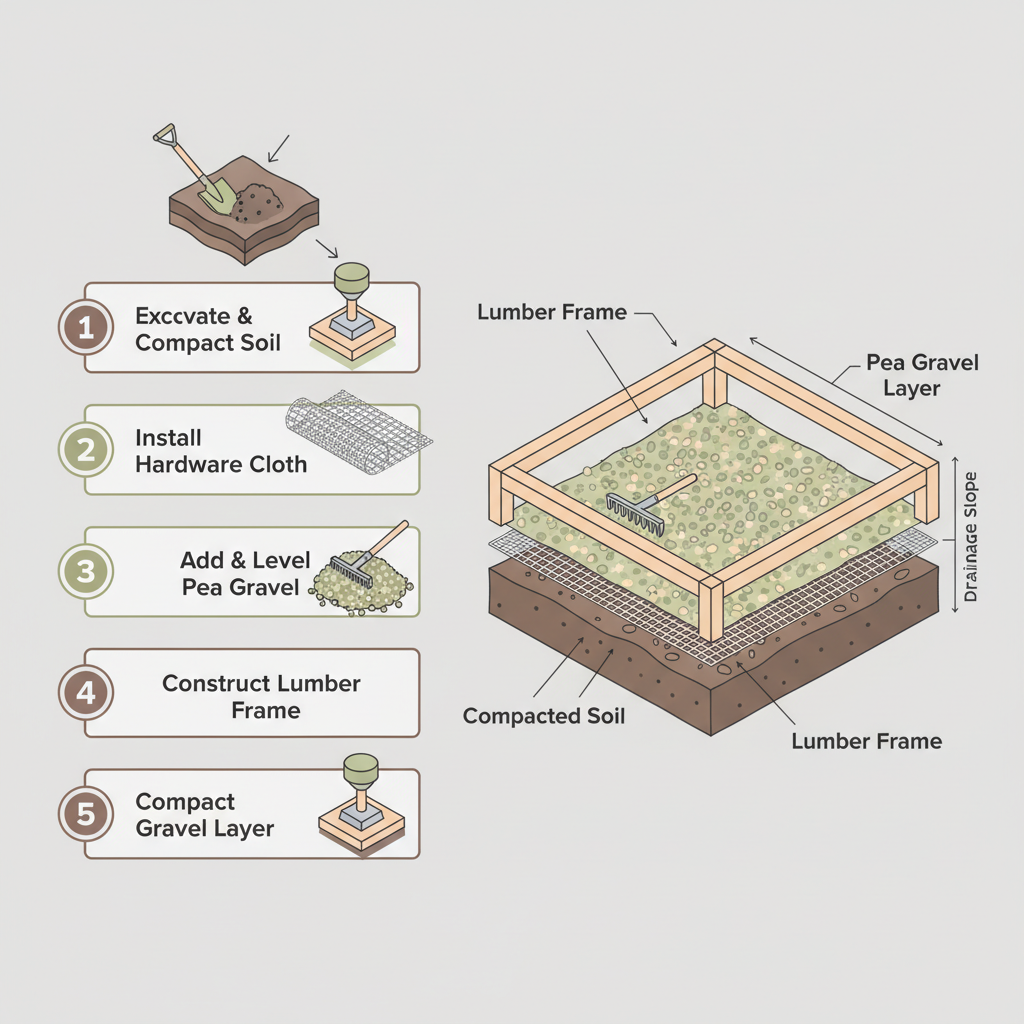
This visual guide illustrates the complete installation sequence for building a chicken coop, showing each numbered step from excavation to final compaction. It also reveals the layered structure of the foundation with a clear cross-section diagram, helping you understand how each material contributes to a stable, predator-resistant coop base.
Gravel for Chicken Coops: Best Materials, Depth, Cost & How to Build
A chicken coop floor keeps your birds dry and predators out. We recommend a 2–4 inch layer of 3/8 to 1/2 inch pea gravel on top of hardware cloth — the gravel drains rainwater and the wire mesh stops digging predators from coming up through the floor. For a standard 8 ft × 10 ft coop, plan on 1–2 tons of pea gravel.
How This Chicken Coop Is Built (Layer-by-Layer System)
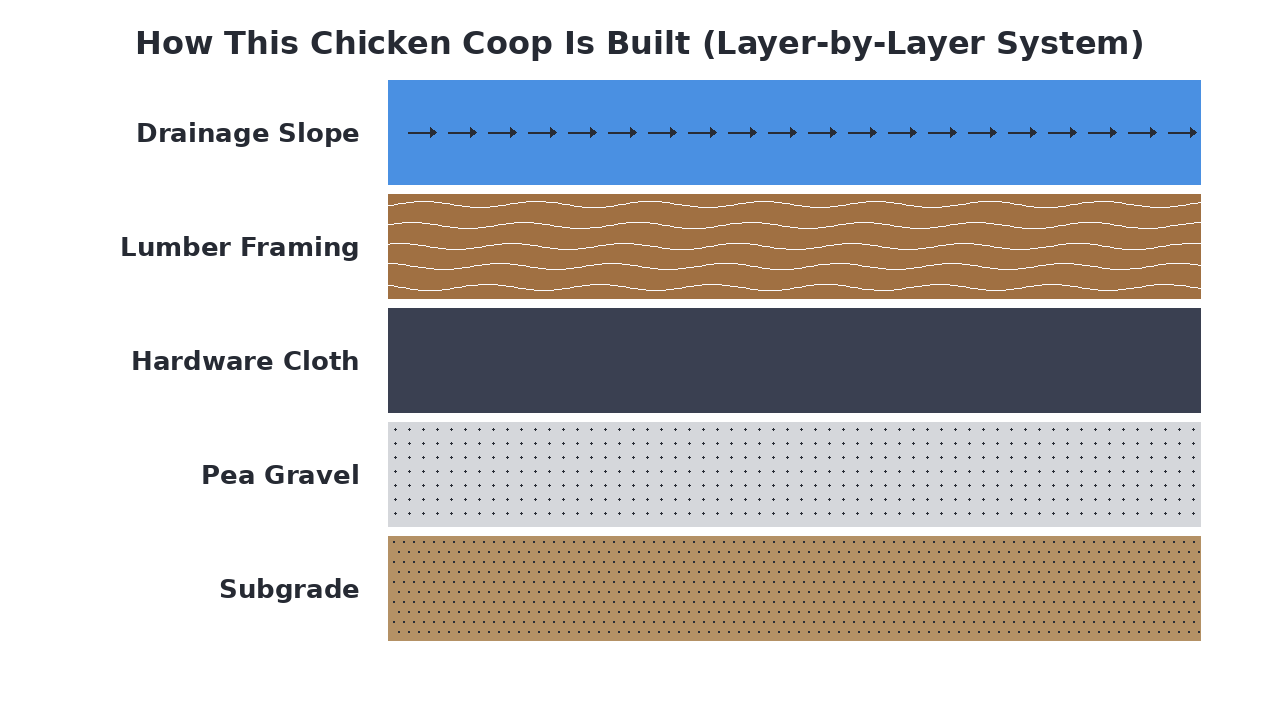
The chicken coop's foundation uses a layered system that provides drainage, stability, and predator protection. It begins with a compacted soil subgrade, then a hardware cloth apron that prevents digging animals from entering, and a bedding layer of pea gravel that creates a dry, well-drained surface. A slight outward slope in the gravel layer ensures water drains away from the coop, keeping the interior dry and sanitary for the chickens.
Materials Breakdown: What Each Layer Does
A chicken coop floor is built as a layered system, each component serving a distinct purpose to create a durable, hygienic, and predator-resistant foundation. The materials work together to provide drainage, discourage pests from digging in, and offer a comfortable, dry surface for the birds. Selecting the right product for each layer ensures the structure is effective and long-lasting.
Compacted Soil
This is the stable, level base for the entire structure. Proper compaction prevents future settling and ensures the frame and gravel layers remain even.
Hardware Cloth
A sturdy metal mesh that acts as a physical barrier. It prevents predators like raccoons and foxes from digging their way into the coop from below.
Pea Gravel
A layer of small, rounded stones that provides excellent drainage. It allows moisture from droppings and rain to percolate down, keeping the surface dry and sanitary.
View Pea Gravel →Lumber Frame
A wooden frame, typically made of pressure-treated lumber, that contains all the other layers. It defines the coop's footprint and provides structural support for the walls.
Drainage Slope
A gentle grade built into the base layers. This slope directs water away from the coop, preventing puddles and moisture buildup inside.
What Is a Chicken Coop and Why Does It Matter?
A chicken coop floor is the layer of pea gravel laid on hardware cloth under your coop and run. The gravel drains rainwater so the floor doesn't turn into muck, and the wire underneath stops digging predators (foxes, raccoons, dogs) from coming up through the dirt. For a standard 8 ft × 10 ft coop, a 2–4 inch pea gravel layer takes 1–2 tons of stone — and it's the difference between a dry coop and a smelly, sick-bird-prone one.
Common Types of Chicken Coop Systems
Chicken coops come in several common types, each with different trade-offs. Stationary coops provide permanent shelter and predator protection but limit grazing areas, while mobile coops (chicken tractors) allow rotation across your yard for fresh forage but require regular moving. Walk-in coops offer easy access for cleaning and egg collection, whereas small prefab units are quick to install but may lack durability and ventilation customization.
- Permanent predator-proof foundation
- Excellent drainage with gravel base
- Easy to clean and maintain
- Long-lasting and durable
- Good ventilation customization
Best for:Backyards needing permanent, low-maintenance housing
- Portable for fresh grazing
- Lightweight construction
- Minimal ground preparation
- Limited predator protection
- Seasonal use only
Best for:Small flocks with rotational grazing needs
- Full human access for cleaning
- Integrated secure outdoor run
- More complex construction
- Higher material costs
- Requires more space
Best for:Larger flocks with dedicated yard space
- Quick assembly and installation
- Compact footprint
- Limited customization options
- Less durable materials
- Basic ventilation only
Best for:First-time owners with minimal space
When a Chicken Coop Is the Best Solution
A stationary gravel-floor chicken coop is ideal when you need a permanent, low-maintenance solution that provides excellent drainage and predator protection. It's perfect for homeowners with a dedicated backyard space who want durable housing that lasts for years with minimal upkeep. This option works well in areas with heavy rainfall or poor soil drainage, as the gravel foundation prevents mud and moisture buildup. It's also the best choice for those prioritizing chicken health and hygiene over portability or temporary setups.
Everything You Need to Build a Chicken Coop
Building a chicken coop floor requires specific materials arranged in a layered system for proper drainage, predator protection, and bird comfort. You'll need foundational materials like gravel and sand, plus lumber and hardware cloth for the frame and barrier. Essential tools include digging and leveling implements, along with fastening and cutting tools for assembly.
- Compacted soil, Gravel, Sand, Hardware cloth, Pea gravel, Lumber
- Shovel, Rake, Level, Measuring tape, Drill, Circular saw
- Hello Gravel (gravel, sand, pea gravel), Home Depot (lumber, hardware cloth), A contractor supply store
What to Consider Before You Start
Before breaking ground, consider these key factors to ensure your coop is properly located, sized, and compliant.
- Local zoning and permits
Check municipal regulations for coop size, placement, and whether permits are required.
- Coop size and flock capacity
Determine the appropriate coop dimensions based on your planned number of chickens.
- Site drainage and slope
Select a location with natural drainage or plan to create the recommended slope away from the coop.
- Predator threats in your area
Identify common predators to ensure your hardware cloth and foundation provide adequate protection.
How to Prepare the Ground for a Chicken Coop
Start by clearing the area of all vegetation, rocks, and debris. Mark the coop's perimeter using stakes and string, ensuring the layout is square. Grade the site to create a slight slope away from the coop's center for drainage, then compact the soil thoroughly to create a stable, level base.
How a Chicken Coop Works
The layered floor system distributes the coop's weight and chicken activity across the compacted soil base. Water from rain and cleaning flows through the pea gravel layer, guided by the drainage slope to prevent pooling. The hardware cloth acts as a barrier against digging predators, while the lumber frame contains the gravel and supports the coop walls.
How to Install a Chicken Coop
Excavate & Compact Soil
Dig out the marked area to a depth of several inches and compact the soil firmly to create a solid foundation.
Install Hardware Cloth
Lay a sheet of hardware cloth over the compacted soil, extending it up the sides of the excavation to deter burrowing predators.
Add & Level Pea Gravel
Pour a layer of pea gravel over the hardware cloth, raking it level and ensuring it follows the pre-graded drainage slope.
Construct Lumber Frame
Build a rectangular frame from pressure-treated lumber around the gravel perimeter to contain the material and support the coop walls.
Compact Gravel Layer
Use a hand tamper or plate compactor to firmly settle the pea gravel within the frame, creating a stable and even surface.
Alternative Gravel Options for Chicken Coops
For a chicken coop floor, homeowners can choose from several aggregate options, each with different properties affecting drainage, comfort, and predator resistance. Pea gravel is a popular choice for the top layer because it's smooth, easy on chicken feet, and allows for good drainage, while larger crushed stone provides a more stable base. Ultimately, pea gravel tends to win for its balance of functionality, affordability, and chicken-friendly texture, making it the top recommendation for most coops.
Best for the top layer due to its smooth texture and excellent drainage.
View Product →Poor choice as it compacts heavily and retains moisture, promoting bacteria.
View Product →Common Chicken Coop Mistakes (And How to Avoid Them)
Building a chicken coop involves several layers and materials that must work together. Avoiding these common mistakes will ensure a durable, hygienic, and predator-resistant foundation.
- Poor drainage planning
- Insufficient predator protection
- Wrong gravel size
- No base layer
- Inadequate cleaning access
How to Maintain a Chicken Coop
Regular maintenance of your chicken coop floor involves raking the top gravel layer weekly to break up waste and prevent compaction. Periodically check for puddles or low spots and add fresh gravel as needed to maintain proper drainage. Deep clean the coop seasonally by removing all gravel, sanitizing the base, and replacing with fresh material to keep the environment healthy for your birds.
Calculate How Much Gravel You Need
Enter Your Dimensions
Measure your project area and we'll calculate how much material you need.