Walkway Gravel: Crushed Stone & Pea Gravel Sizes Compared
A well-designed walkway creates the first impression for your home and requires careful planning. This guide explains what a walkway is, which materials you need, how to prepare the ground, how to build a gravel walkway step by step, and how to estimate the amount of gravel required. Whether you are creating a new garden path or replacing an existing walkway, use the sections below to find what you need.
See How to Build a Walkway
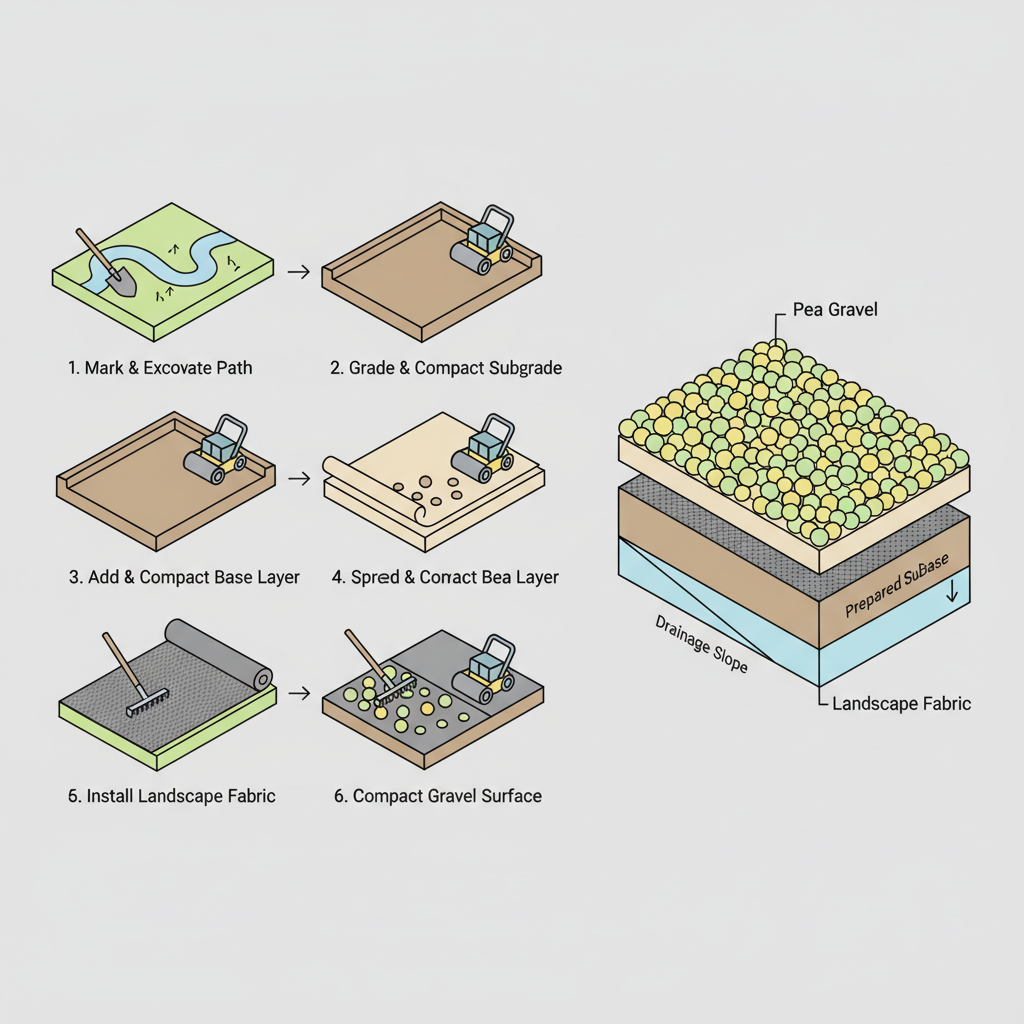
This visual guide walks you through the six key steps to install a durable gravel walkway, from marking the path to compacting the final surface. It clarifies the installation sequence and shows the layered structure—prepared subgrade, compacted base, landscape fabric, and pea gravel—so you can see exactly how each stage contributes to a stable, long-lasting result.
Gravel for Walkways: Best Materials, Depth, Cost & How to Build
A well-constructed gravel walkway provides an attractive, low-maintenance path that enhances your landscape while directing foot traffic. For most residential applications, we recommend 3/8 to 5/8 inch pea gravel installed 2-3 inches deep over a compacted base. This combination creates a stable walking surface that drains effectively and resists weed growth. The layered construction with landscape fabric ensures long-term durability with minimal maintenance required.
How This Walkway Is Built (Layer-by-Layer System)
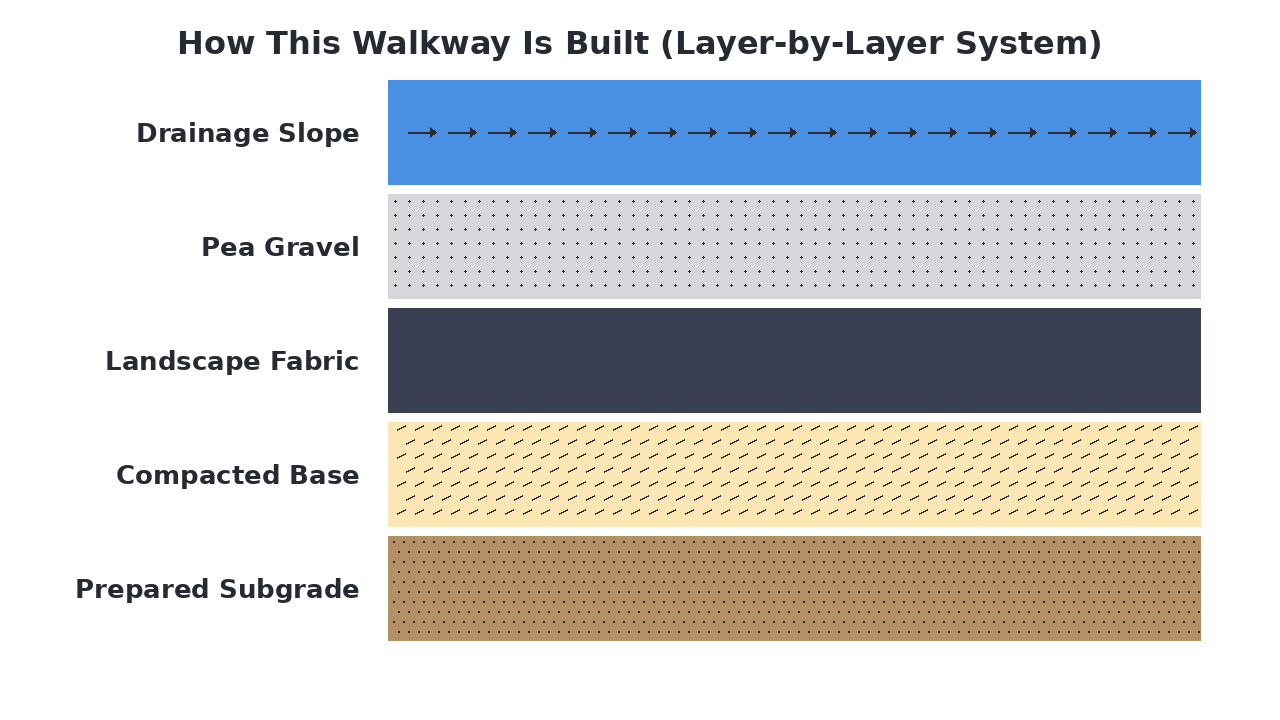
A walkway is constructed as a layered system that provides a stable, well-drained surface for foot traffic. The system begins with a prepared subgrade, followed by a compacted base layer for structure, and landscape fabric to prevent weed growth. The decorative surface layer creates the finished appearance while allowing water to drain through to the base. A slight slope away from structures ensures proper water runoff and prevents pooling.
Materials Breakdown: What Each Layer Does
A gravel walkway is constructed as a layered system, with each material serving a distinct structural or drainage function. The prepared subgrade provides a stable foundation, the compacted base ensures load-bearing support, and the landscape fabric prevents weed growth while allowing water to pass through. The pea gravel surface offers a comfortable walking texture, and the drainage slope directs water away to prevent erosion and maintain the walkway's integrity over time.
Native Soil
The existing ground that is graded and leveled to create a stable, even foundation for the walkway layers above.
Crushed Stone
A compacted layer of crushed stone that provides structural support and prevents settling under foot traffic.
View Crushed Stone →Landscape Fabric
A geotextile barrier that suppresses weed growth while allowing water to drain through to the subgrade.
Pea Gravel
Small, rounded stones that create a smooth, attractive walking surface while allowing water infiltration.
View Pea Gravel →Surface Slope
A gentle slope built into the walkway surface that directs rainwater away to prevent pooling and erosion.
What Is a Walkway and Why Does It Matter?
A walkway is a purpose-built path designed to guide foot traffic through your landscape while protecting lawns and gardens from wear. It matters because it creates safe, defined routes between different areas of your property, improves accessibility, and enhances curb appeal. Unlike simple stepping stones or informal dirt paths, a properly constructed gravel walkway provides a stable, well-drained surface that withstands weather and regular use while requiring minimal upkeep compared to paved alternatives.
Common Types of Walkway Systems
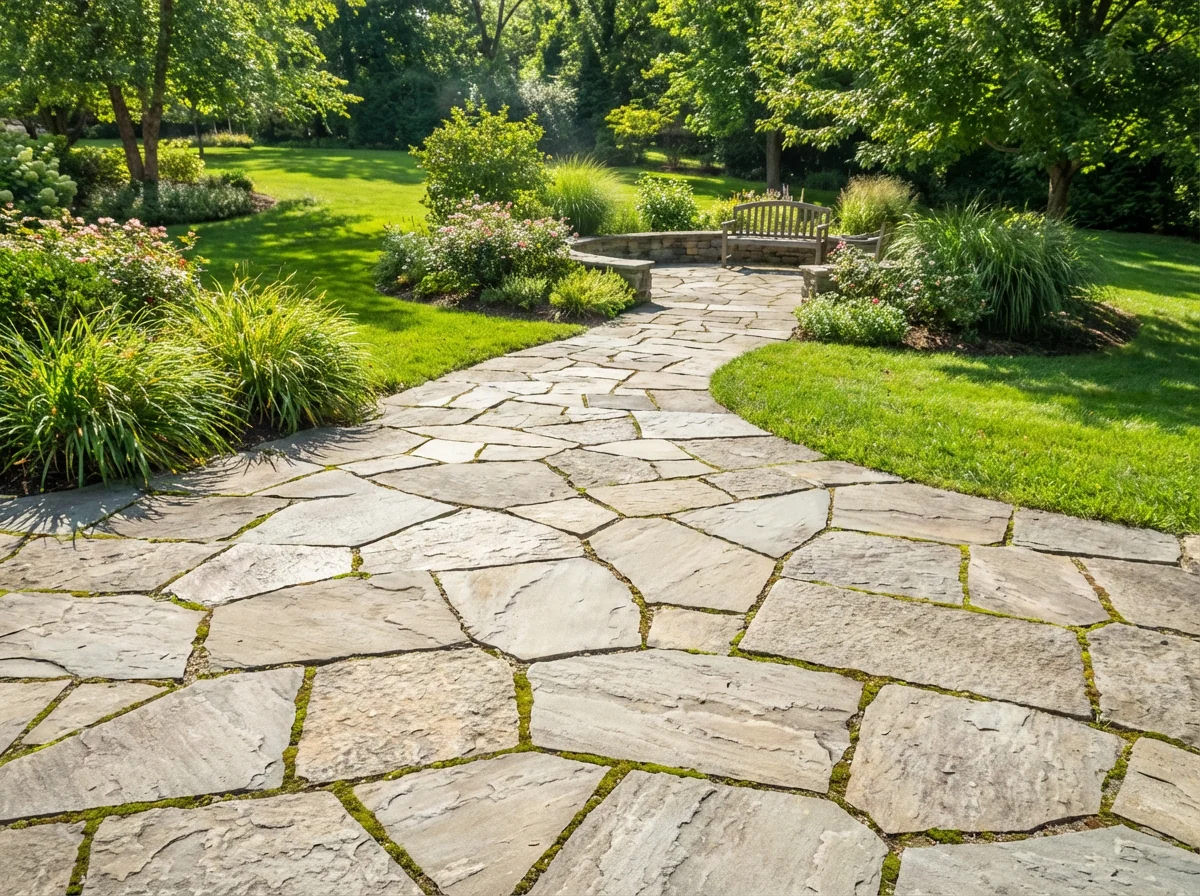
Walkway systems vary based on materials and construction methods. Gravel-based options like pea gravel and decomposed granite offer natural drainage and easy installation, while stone-based systems like flagstone provide a more formal, permanent appearance. The choice depends on your budget, desired maintenance level, and aesthetic preferences for your landscape.
- Excellent natural drainage
- Easy DIY installation
- Budget-friendly material
- Soft, natural appearance
- Low maintenance required
Best for:Budget-friendly, well-drained paths
- Compacts to firm surface
- Natural earth-tone colors
- Good for moderate traffic
- Weed-resistant when compacted
Best for:Firmer surface than loose gravel
- Formal, permanent appearance
- Higher installation cost
- Excellent for high traffic
- Custom layout patterns
Best for:Formal, high-traffic walkways
- Minimal material needed
- Preserves surrounding grass
- Simple weekend project
- Informal, natural look
Best for:Informal paths through lawns
When a Walkway Is the Best Solution
A pea gravel walkway is ideal when you need an affordable, well-drained path that's easy to install yourself. Choose this option for moderate foot traffic areas, where you want natural drainage without puddling, and when you prefer a rustic aesthetic that blends with garden landscapes. It's perfect for connecting garden beds, creating side yard access, or establishing informal routes between outdoor living spaces.
Everything You Need to Build a Walkway
Building a gravel walkway requires foundational materials like compactable base rock and landscape fabric, plus surface gravel for the walking layer. Essential tools include excavation and grading equipment, a compactor for stability, and edging to contain the gravel. You'll also need measuring and marking tools to lay out the path accurately before starting construction.
- Crushed stone or road base, Landscape fabric, Pea gravel or decomposed granite, Edging material
- Shovel, Rake, Hand tamper or plate compactor, Wheelbarrow, Measuring tape and stakes, Garden hose or spray paint for layout
- Home Depot or Your local hardware store, Hello Gravel (bulk gravel), Equipment rental store (compactor)
What to Consider Before You Start
Before digging your first shovel, take time to plan these key aspects of your walkway project to ensure success.
- Path layout and dimensions
Determine the walkway's exact route, width, and length to calculate material quantities and avoid obstacles.
- Local utility locations
Call 811 to have underground utilities marked before any excavation to prevent dangerous and costly damage.
- Drainage requirements
Assess the site's natural drainage patterns and plan a slight slope (1-2% away from structures) for proper water runoff.
- Material selection and quantities
Choose appropriate gravel types for base and surface layers, then calculate cubic yards needed based on your dimensions.
- Edging installation plan
Decide on edging material (metal, plastic, or stone) and how it will be secured to contain the gravel effectively.
How to Prepare the Ground for a Walkway
Begin by clearing the area of all vegetation, rocks, and debris to create a clean work surface. Mark the desired walkway path using stakes and string, then use a shovel to excavate to a consistent depth of 4-6 inches below the final surface level. Grade the excavated subgrade to establish a gentle slope (about 1-2%) away from any structures to ensure proper drainage. Finally, use a hand tamper or plate compactor to thoroughly compact the subgrade, creating a firm and stable foundation for the subsequent layers.
How a Walkway Works
A gravel walkway functions as a layered, permeable system designed for stability and drainage. The compacted base layer distributes foot traffic loads evenly, preventing sinking and rutting. Water from rain or irrigation percolates down through the pea gravel and landscape fabric, while the underlying drainage slope channels it away from the walkway's edges. This structure minimizes erosion, suppresses weed growth, and maintains a level, durable walking surface over time.
How to Install a Walkway
Mark & Excavate Path
Outline the walkway's edges with stakes and string, then excavate the entire area to the required depth.
Grade & Compact Subgrade
Shape the excavated soil to create a smooth, sloped base and compact it firmly with a tamper.
Add & Compact Base Layer
Spread a 2-3 inch layer of crushed stone or decomposed granite and compact it thoroughly to form a solid foundation.
Install Landscape Fabric
Roll out weed barrier fabric over the compacted base, overlapping seams and trimming to fit the path.
Spread & Level Pea Gravel
Pour pea gravel onto the fabric and rake it to an even depth, maintaining the established drainage slope.
Compact Gravel Surface
Use a plate compactor or hand tamper to settle the pea gravel, creating a firm and stable walking surface.
Alternative Gravel Options for Walkways
Walkways offer several gravel and aggregate options, each with distinct characteristics for aesthetics, stability, and comfort underfoot. Pea gravel provides a smooth, decorative surface but can shift easily, while decomposed granite compacts into a firm, natural-looking path. Crushed stone offers excellent drainage and stability, making it a top choice for high-traffic areas. Among these, crushed stone often wins for walkways due to its superior compaction, reliable drainage, and ability to stay in place without constant raking.
An excellent all-around choice for stable, well-draining walkways that require minimal maintenance.
View Product →Ideal for creating a natural, rustic path that compacts firmly and resists erosion.
View Product →Best for decorative, low-traffic walkways where a smooth, rounded surface is desired.
View Product →Perfect for creating elegant, flat stepping stones set within a gravel or ground cover border.
Primarily decorative elements that require a separate base material and offer minimal walking surface.
Common Walkway Mistakes (And How to Avoid Them)
Even a well-planned walkway can fail if common installation errors aren't avoided. These mistakes typically compromise drainage, stability, or long-term maintenance, leading to erosion, weed problems, or an uneven surface. Understanding these pitfalls helps ensure your walkway remains functional and attractive for years.
- Insufficient base depth
- Poor drainage slope
- Missing landscape fabric
- Wrong gravel type
- Inadequate compaction
- No edge restraint
How to Maintain a Walkway
Regular maintenance keeps your walkway safe and visually appealing. Annually rake the surface to redistribute gravel and fill any low spots or potholes with fresh material. Ensure the drainage slope remains intact by checking for erosion and adding gravel where needed to maintain proper water flow. Periodically inspect and tighten any edge restraints, and remove weeds promptly before they establish deep roots.
Calculate How Much Gravel You Need
Enter Your Dimensions
Measure your project area and we'll calculate how much material you need.