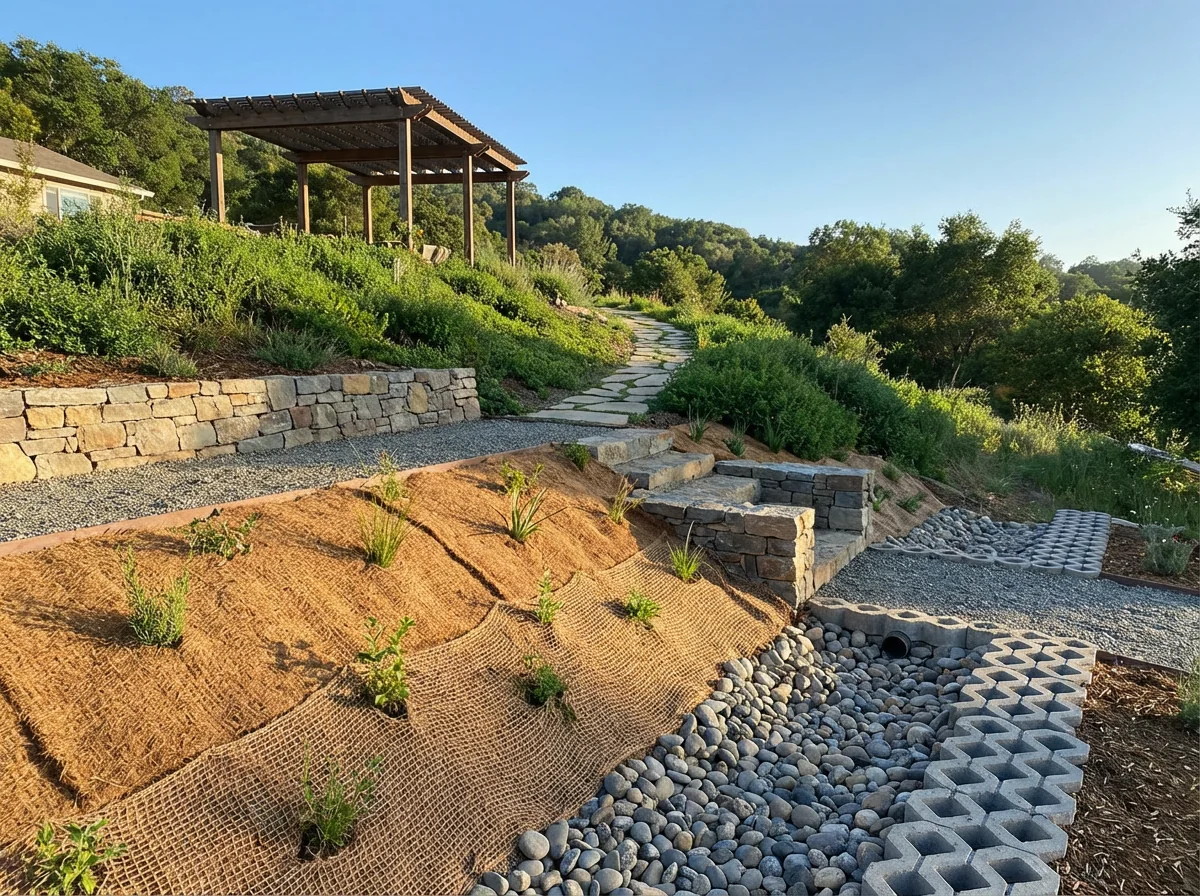
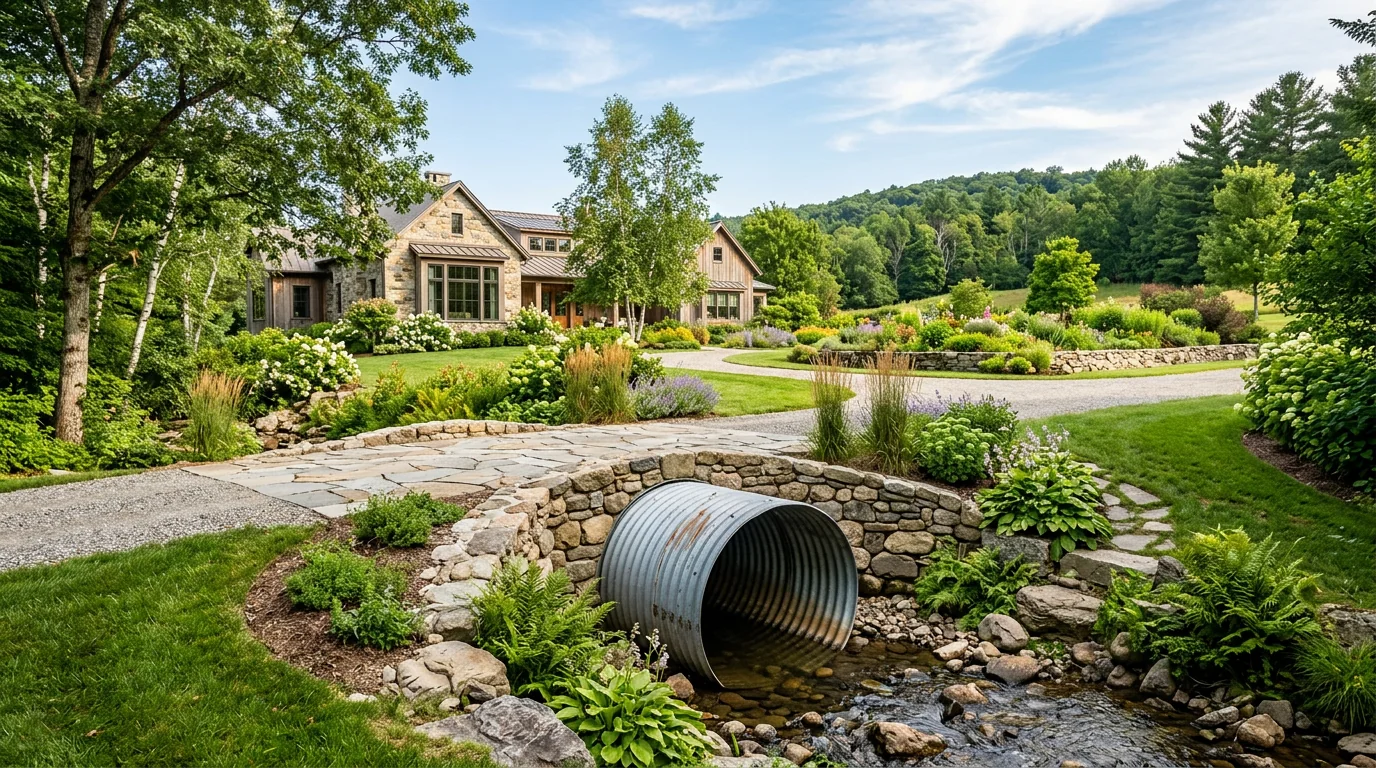
Drainage Swale Stones: Riprap Size & Tonnage Guide
A properly designed swale is the key to effective landscape drainage and erosion control. This guide explains what a swale is, how it works, which materials you need, how to design and install it step by step, and how to estimate the amount of gravel required. Whether you are redirecting runoff from your yard or preventing soil erosion on a slope, use the sections below to find what you need.
See How to Build a Swale
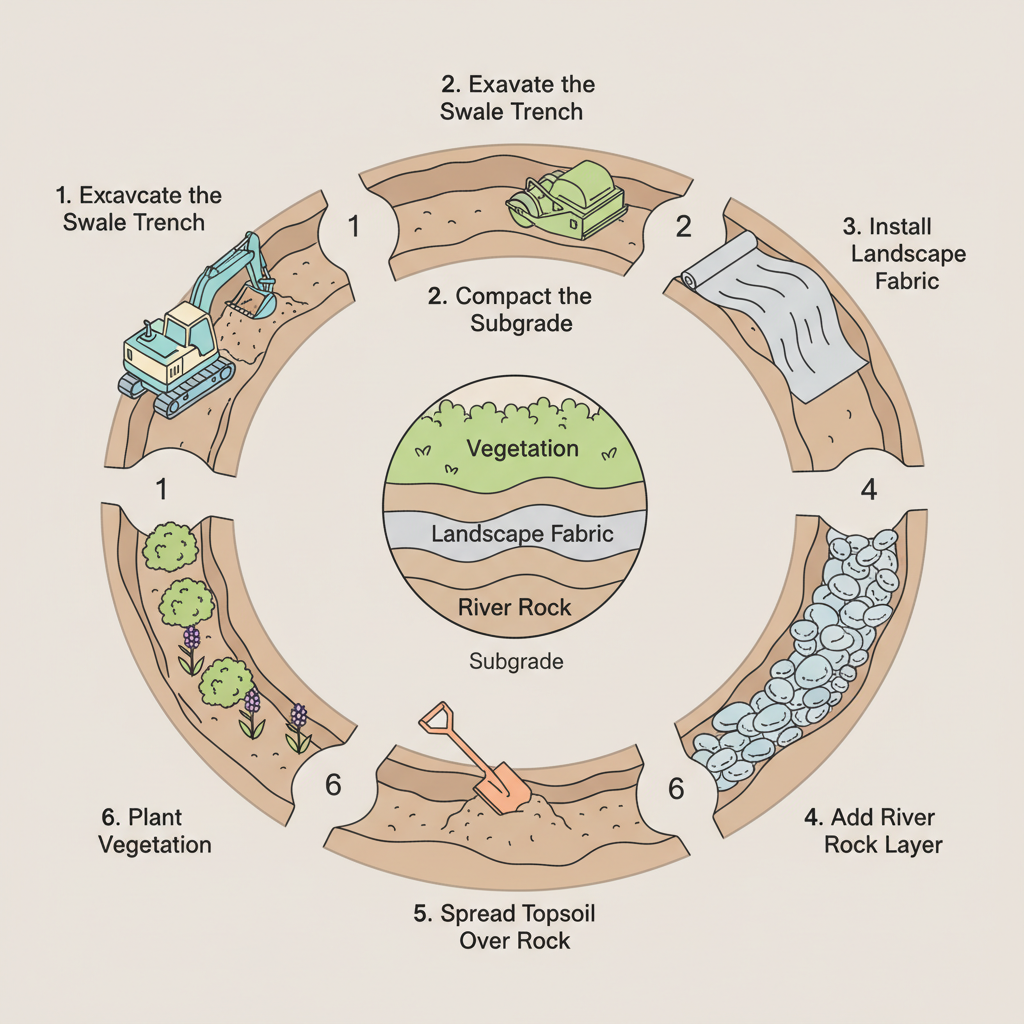
This visual guide shows the sequential installation steps and layered cross-section of a swale, clarifying the proper order from excavation to planting and the distinct material layers that ensure effective drainage and stability.
Gravel for Swales: Best Drainage Rock, Depth & Slope Guide for Water Management
A swale is a shallow drainage channel designed to collect and redirect surface water runoff while preventing soil erosion. For optimal performance, use 1 to 3-inch river rock installed at a depth of 6-12 inches to ensure proper water flow and filtration. The system requires a gentle slope to guide water toward safe discharge areas without creating standing water. Proper construction with landscape fabric beneath the rock layer prevents soil mixing and maintains long-term drainage efficiency.
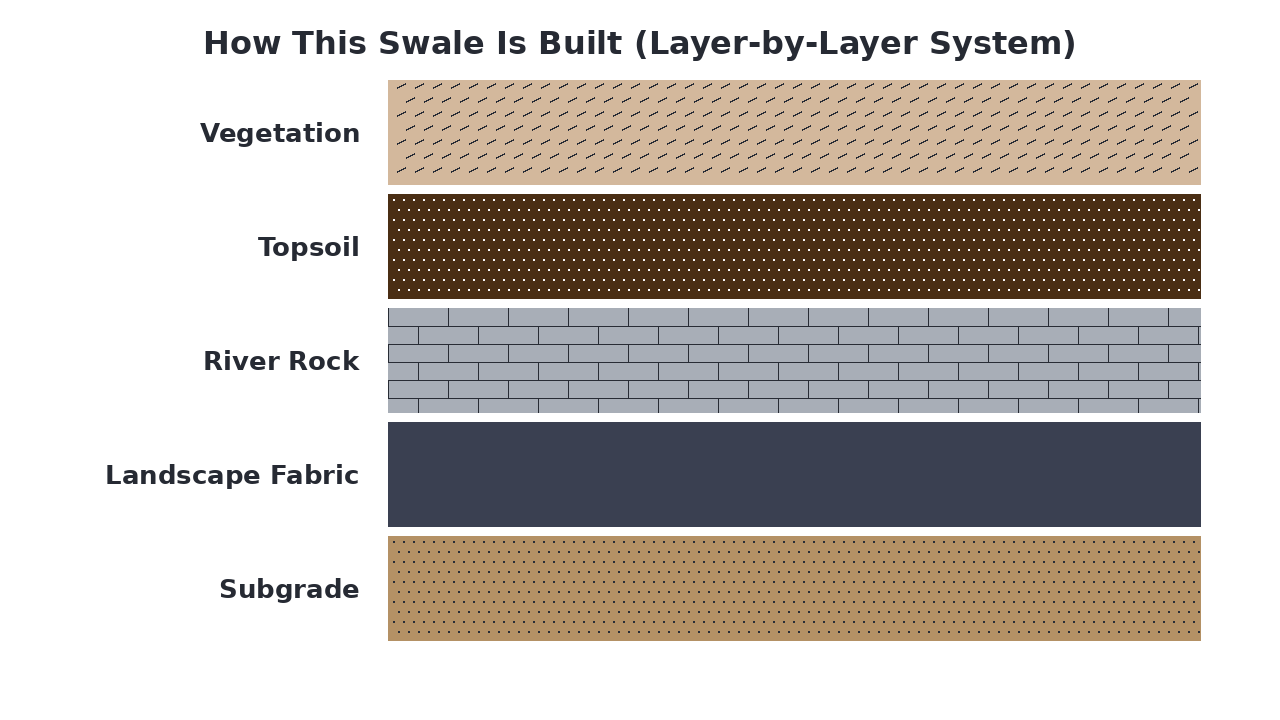
How This Swale Is Built (Layer-by-Layer System)
A swale is a shallow drainage channel built to collect and redirect surface water runoff while preventing erosion. The system consists of a gently sloped trench lined with landscape fabric, filled with river rock for water flow and filtration, and topped with topsoil and vegetation to blend into the landscape. Proper construction ensures water moves slowly through the rock layer, allowing sediment to settle and preventing gully formation. The slight longitudinal slope guides water toward a safe discharge area, managing runoff without creating standing water.
Materials Breakdown: What Each Layer Does
A swale is constructed as a layered system where each material serves a distinct purpose in managing surface water. The components work together to slow runoff, filter sediment, and promote infiltration while supporting vegetation growth. Using the right product for each layer ensures the swale functions effectively for drainage and erosion control.
Compacted Subgrade
The excavated and compacted soil base that establishes the swale's shape and provides a stable foundation for the drainage layers.
Landscape Fabric
A geotextile barrier that prevents soil from mixing with the drainage rock while allowing water to pass through freely.
River Rock
Smooth, rounded stones that create voids for water storage and slow water flow while filtering sediment from runoff.
View River Rock →Topsoil
Nutrient-rich soil that supports vegetation growth while allowing water to infiltrate into the drainage layers below.
View Topsoil →Native Grasses and Plants
Deep-rooted plants that stabilize the soil, absorb excess water, and enhance the swale's natural filtration capacity.
What Is a Swale and Why Does It Matter?
A swale is a shallow drainage channel built to collect and redirect surface water runoff while preventing erosion. It matters because it provides an effective, natural-looking solution for managing stormwater on residential properties without creating standing water or erosion problems. Unlike French drains that use perforated pipes underground, swales work with surface water flow through rock layers, making them ideal for gentle slopes and areas where you want vegetation to blend with the landscape. Properly constructed swales filter sediment and guide water to safe discharge points, protecting your property from water damage.
Common Types of Swale Systems
Swale systems vary primarily in their construction materials and design focus. A simple grass swale uses seeded or sodded turf to filter water, while a rock-lined swale employs river rock or rip rap for durability and erosion control. A vegetated rock swale combines both approaches, using rock for the channel bottom and plants along the sides for enhanced filtration and aesthetics. The choice depends on your water volume, desired maintenance level, and landscape integration goals.
- Lowest material cost
- Blends naturally with lawn
- Requires regular mowing
- Can erode with heavy flow
Best for:Gentle slopes with low runoff
- Excellent erosion control
- Low maintenance once installed
- Uses gravel or river rock
- Handles moderate water volume
- Natural drainage filtration
Best for:Managing moderate stormwater runoff
- Combines rock and plants
- Superior water filtration
- Enhanced aesthetic appeal
- Higher installation complexity
Best for:Ecological landscaping with visual appeal
- Handles subsurface water
- Uses perforated pipe underground
- More expensive to install
- Invisible when completed
Best for:Soggy yards with poor drainage
When a Swale Is the Best Solution
A rock-lined swale is ideal when you need to manage moderate stormwater runoff on a gentle slope while maintaining a natural landscape appearance. It's perfect for homeowners who want durable erosion control without the high cost and complexity of underground drainage systems. This option works well where you have visible water flow during rains but don't want standing water or muddy areas. The gravel or river rock construction provides effective filtration while blending seamlessly with most yard designs.
Everything You Need to Build a Swale
Building a swale requires specific materials to create its layered drainage structure and basic tools for excavation and grading. You'll need foundational materials like drainage rock, followed by landscape fabric, river rock for the main channel, topsoil for the upper layer, and vegetation to stabilize the surface. Essential tools include excavation equipment, grading tools, and compaction devices to properly shape and stabilize the water channel.
- Drainage rock, Landscape fabric, River rock, Topsoil, Vegetation
- Shovel, Rake, Grading tools, Compactor, Wheelbarrow
- Hello Gravel (materials), Equipment rental store (compactor)
What to Consider Before You Start
Proper planning ensures your swale functions effectively for drainage and erosion control. Consider these key factors before beginning construction.
- Site assessment and water flow
Determine the natural water flow patterns and identify where runoff collects to place your swale effectively.
- Local regulations and permits
Check with local authorities about drainage regulations and whether permits are required for swale construction.
- Soil composition and infiltration
Test your soil's drainage capacity to ensure it can properly absorb water from the swale.
- Swale dimensions and slope
Calculate the appropriate length, width, depth, and slope (typically 1-2% grade) for your specific drainage needs.
- Downstream discharge location
Identify where the swale will safely discharge water without causing erosion or flooding elsewhere on your property.
How to Prepare the Ground for a Swale
Start by clearing the area of any vegetation, debris, or obstacles that could interfere with the swale's shape and function. Mark the intended path and width of the swale using stakes and string, ensuring it follows the natural slope for optimal water flow. Excavate the marked trench to the desired depth and shape, typically a shallow, gently sloping channel, and grade the bottom to maintain a consistent, gradual slope toward the outlet. Finally, compact the subgrade soil to create a stable base and prevent future settling that could disrupt drainage.
How a Swale Works
Once installed, the swale functions as a shallow, vegetated channel that intercepts and redirects surface runoff, slowing its velocity to reduce erosion. The layered materials—river rock at the base, landscape fabric, topsoil, and vegetation—work together to filter sediment, promote water infiltration into the soil, and manage excess flow. The system effectively captures and conveys stormwater away from vulnerable areas, enhancing drainage and minimizing waterlogging while supporting plant growth that stabilizes the soil.
How to Install a Swale
Excavate the Swale Trench
Dig a shallow, gently sloping channel along the marked path to the required depth and width, ensuring the bottom is graded consistently toward the outlet.
Compact the Subgrade
Firmly compact the soil at the bottom of the trench to create a stable, non-erodible base for the swale layers.
Install Landscape Fabric
Line the entire excavated trench with a permeable landscape fabric to separate soil from aggregate and prevent weed growth.
Add River Rock Layer
Place a layer of river rock over the fabric to serve as a drainage bed that facilitates water flow and infiltration.
Spread Topsoil Over Rock
Cover the river rock with a generous layer of topsoil to provide a growing medium for vegetation and further filter runoff.
Plant Vegetation
Seed or plant appropriate grasses or native plants in the topsoil to stabilize the swale and enhance water absorption.
Alternative Gravel Options for Swales
Homeowners have several aggregate options for constructing swales, each with different drainage and structural properties. While decorative stones like river rock can be used for surface layers, they lack the angularity needed for stable infiltration beds. For the primary drainage layer, crushed drainage rock is typically the best choice due to its angular shape that creates void spaces for water flow while resisting compaction and movement.
The optimal choice for the drainage layer due to angular edges that create water-holding voids.
Works well for surface layers where aesthetics matter but water needs to flow over.
View Product →Suitable for high-flow areas where erosion protection is the primary concern.
Poor choice for drainage layers as round stones compact easily and reduce infiltration.
View Product →A cost-effective alternative for drainage layers with good angularity and permeability.
View Product →Common Swale Mistakes (And How to Avoid Them)
Swale construction seems straightforward but often fails due to preventable errors. Avoiding these common mistakes ensures your swale effectively manages water for years.
- Insufficient slope
- Wrong aggregate choice
- Inadequate depth
- Poor vegetation establishment
- Clogged inlet/outlet
How to Maintain a Swale
Regular swale maintenance begins with annual inspections after heavy rains to check for sediment buildup and erosion. Remove accumulated debris from inlets and outlets, and regrade any areas where water pools instead of flowing. Replenish vegetation in bare spots to prevent erosion, and add fresh aggregate if the drainage layer becomes compacted or clogged.
Calculate How Much Gravel You Need
Enter Your Dimensions
Measure your project area and we'll calculate how much material you need.