Erosion Control Gravel: Riprap & Stone Sizing for Slopes
Effective erosion control requires more than just placing rocks; it demands understanding the right materials and techniques for your specific landscape. This guide explains what erosion control is, which materials work best for various scenarios, how to prepare the site, how to install erosion control measures step by step, and how to estimate the amount of gravel required. Whether you are protecting a steep slope from runoff or reinforcing a stream bank, use the sections below to navigate through the process.
See How to Build an Erosion Control
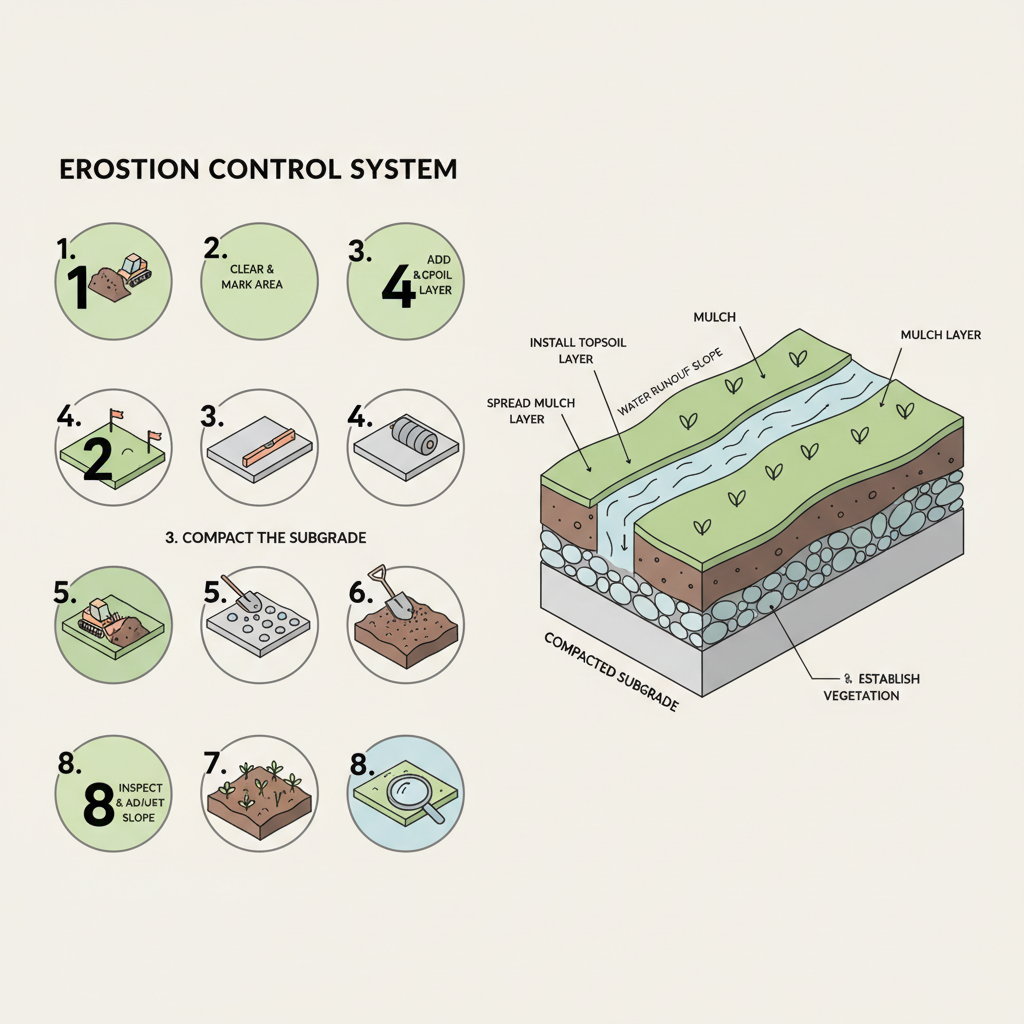
This visual guide shows the complete installation sequence for building an effective erosion control system. It clarifies the step-by-step process from site preparation through final vegetation establishment, while also illustrating the critical layered structure that provides drainage and stability.
Gravel for Erosion Control: Best Materials, Depth, Cost & How to Build
Erosion control systems stabilize vulnerable slopes using layered materials that prevent soil loss while allowing natural drainage. River rock in 3-8 inch sizes forms the core layer, providing weight and permeability when installed 6-12 inches deep. Above this, mulch and topsoil support vegetation growth for additional stabilization. Proper installation includes a slight slope to direct water runoff away from erosion-prone areas.
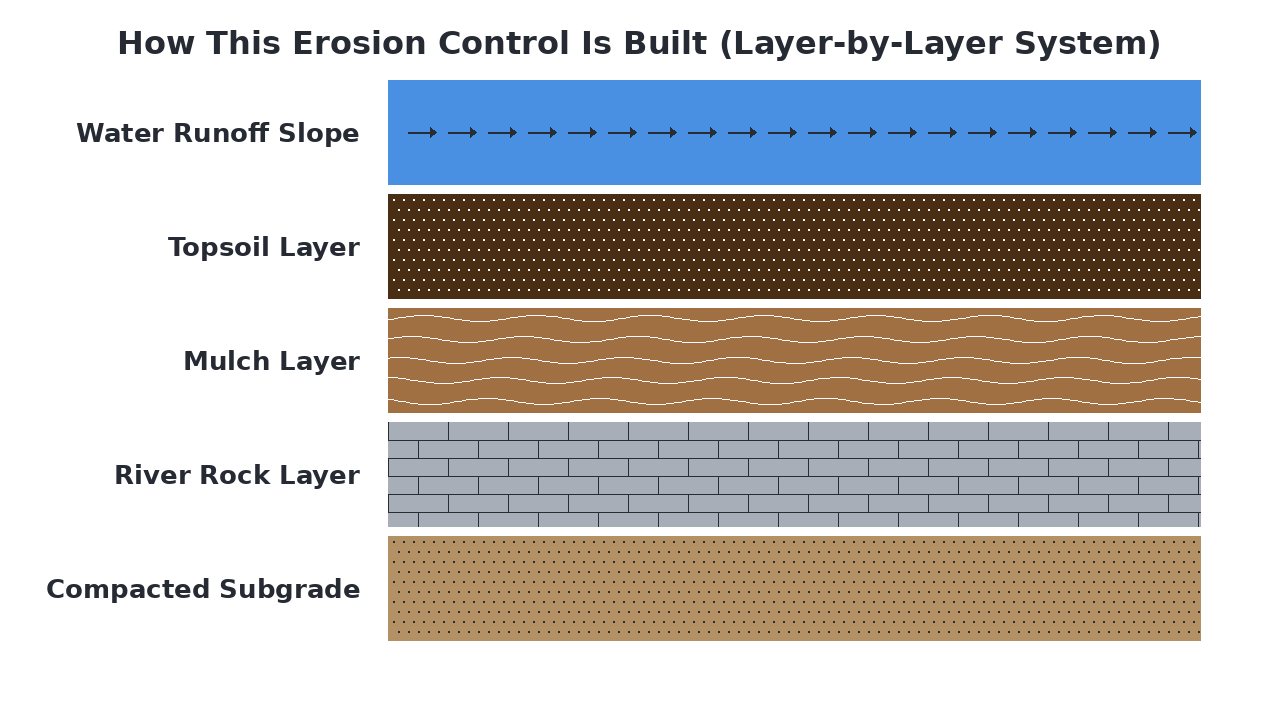
How This Erosion Control Is Built (Layer-by-Layer System)
An erosion control system is built as a multi-layer barrier that stabilizes slopes and prevents soil loss while allowing natural drainage. The system starts with the compacted subgrade, followed by a layer of river rock that provides weight and permeability to resist water flow. Above this, mulch and topsoil layers help retain moisture and support vegetation growth, creating a natural stabilizing effect. Proper installation includes a slight slope to direct surface water runoff away from vulnerable areas, protecting the landscape from further erosion.
Materials Breakdown: What Each Layer Does
An effective erosion control system relies on carefully layered materials that work together to stabilize soil and manage water flow. Each layer serves a specific purpose, from creating a stable foundation to promoting proper drainage and vegetation growth. The combination of these materials prevents soil loss while directing runoff away from vulnerable areas.
Compacted Subgrade
The firm, compressed base layer that provides structural stability and prevents settling of the entire system.
River Rock
Large, rounded stones that create a permeable drainage layer to allow water to pass through while stabilizing the soil.
View River Rock →Mulch
Organic material that retains moisture, suppresses weeds, and protects the topsoil layer from erosion.
View Mulch →Topsoil
Nutrient-rich soil that supports plant growth and vegetation that will anchor the entire system with roots.
View Topsoil →Surface Slope
The graded surface that directs water runoff away from the protected area to prevent erosion.
What Is an Erosion Control and Why Does It Matter?
Erosion control is a multi-layer barrier system designed to stabilize slopes and prevent soil loss while allowing natural drainage. It matters because uncontrolled erosion can damage landscapes, compromise structural foundations, and contribute to environmental degradation. Unlike simple gravel beds or basic landscaping, erosion control uses strategically layered materials including river rock, mulch, and topsoil to create a comprehensive solution that addresses both surface water management and soil stabilization.
Common Types of Erosion Control Systems
Erosion control systems vary in complexity and material composition, from simple surface covers to engineered multi-layer solutions. Basic approaches like mulch blankets provide temporary stabilization, while more permanent systems incorporate geotextiles, rip rap, and drainage layers. The choice depends on slope severity, water flow, and whether you need immediate protection or long-term structural integrity.
- Quick temporary solution
- Low cost and easy to install
- Biodegradable and adds organic matter
- Needs frequent replacement
Best for:Gentle slopes needing temporary cover
- Large rocks prevent soil displacement
- Excellent for high water flow areas
- Long-lasting with minimal maintenance
- Allows natural drainage while stabilizing
- Works with geotextile underlayment
Best for:Steep slopes with heavy water flow
- Combines soil reinforcement with plants
- Promotes root-based stabilization
- More environmentally integrated approach
- Requires time for vegetation establishment
Best for:Areas where natural aesthetics are priority
- Provides immediate surface protection
- Good drainage and moderate stability
- Versatile for various slope angles
- Can be combined with other materials
Best for:Moderate slopes needing drainage and durability
When an Erosion Control Is the Best Solution
A comprehensive erosion control system is the best solution when you have significant slope erosion threatening your property's foundation or landscape integrity. It's ideal for areas with heavy rainfall or water runoff where simple gravel or mulch would wash away. This approach works well for homeowners needing long-term stabilization without constant maintenance, and when environmental protection and proper drainage are equally important considerations.
Everything You Need to Build an Erosion Control
Building an erosion control system requires specific materials to create stable layers that manage water flow and prevent soil loss. You'll need foundational materials like rip rap or river rock for drainage, along with topsoil and mulch for surface stabilization. Essential tools include grading equipment, compactors, and basic digging implements to properly install each layer. Proper preparation ensures the system effectively directs runoff away from vulnerable areas.
- Rip rap or river rock, Landscape fabric (optional), Topsoil, Mulch
- Shovel, Rake, Grading tools, Compactor, Wheelbarrow
- A contractor supply store, Hello Gravel (materials), Local equipment rental (compactor)
What to Consider Before You Start
Before beginning your erosion control project, consider these key planning factors to ensure success.
- Water flow assessment
Identify the direction and intensity of water runoff to determine where erosion control is most needed.
- Soil stability evaluation
Check soil composition and compaction to ensure proper foundation for layered materials.
- Slope gradient measurement
Measure the slope angle to calculate the proper water runoff design and material quantities needed.
- Drainage system planning
Determine if additional drainage features like French drains or swales are necessary for your site.
- Vegetation considerations
Decide whether to incorporate plants or grass to enhance erosion control and improve aesthetics.
How to Prepare the Ground for an Erosion Control
Start by clearing the area of all vegetation, debris, and loose soil to expose a stable subgrade. Mark the boundaries of the erosion control zone and establish the desired water runoff slope using stakes and string lines. Grade the subgrade to create a consistent slope that directs water away from vulnerable areas, then thoroughly compact the soil to form a solid, stable foundation that prevents future settling.
How an Erosion Control Works
The system functions by layering materials to create a stable, permeable structure that manages water flow and prevents soil loss. The compacted subgrade provides a solid base, while the river rock layer acts as a drainage medium that disperses water and reduces flow velocity. The topsoil layer supports vegetation growth to anchor the soil, and the mulch layer protects the surface from direct rainfall impact. Together, these layers work in sequence to intercept, slow, and redirect runoff while stabilizing the slope against erosion.
How to Install an Erosion Control
Clear & Mark Area
Remove all vegetation and debris from the project zone and mark its boundaries with stakes and string.
Grade & Slope Subgrade
Excavate and shape the exposed soil to create a consistent slope that directs water runoff away from vulnerable areas.
Compact the Subgrade
Use a plate compactor to thoroughly compact the soil, creating a dense, stable foundation that resists settling.
Add River Rock Layer
Spread a layer of river rock over the compacted subgrade to provide drainage and reduce water flow velocity.
Install Topsoil Layer
Apply a layer of topsoil over the river rock to support vegetation growth and further stabilize the soil.
Spread Mulch Layer
Cover the topsoil with a protective layer of mulch to shield the surface from rainfall impact and retain moisture.
Establish Vegetation
Plant grass seed, ground cover, or other vegetation in the topsoil layer to anchor the soil and enhance erosion control.
Alternative Gravel Options for Erosion Controls
Homeowners have several aggregate options for erosion control, each with different strengths in stability, drainage, and vegetation support. Rip rap provides excellent slope stabilization for high-flow areas, while river rock offers a more decorative yet functional solution. Gravel is a versatile, cost-effective choice for moderate drainage needs, but mulch and topsoil are better suited for supporting plant growth rather than structural erosion prevention. For most erosion control projects, rip rap is the top recommendation due to its superior weight, interlocking ability, and proven performance in redirecting water flow.
Large, angular stones ideal for stabilizing steep slopes and high-velocity water channels.
Smooth, rounded stones that provide moderate erosion control with a natural aesthetic.
View Product →Versatile crushed stone suitable for creating permeable drainage layers and surface protection.
View Product →Organic material that helps retain moisture and support vegetation on gentle slopes.
View Product →Primarily for planting and vegetation growth, offering minimal erosion protection alone.
View Product →Common Erosion Control Mistakes (And How to Avoid Them)
Even with quality materials, erosion control projects can fail due to common installation and planning errors. Understanding these pitfalls helps ensure your system remains effective long-term.
- Insufficient slope preparation
- Poor drainage planning
- Wrong material selection
- Inadequate layer depth
- Neglecting vegetation support
- Ignoring maintenance needs
How to Maintain an Erosion Control
Regular inspection and maintenance are crucial for effective erosion control. Check for signs of material displacement after heavy rains and replenish gravel or rip rap as needed to maintain coverage. Clear any debris from drainage channels and ensure vegetation remains healthy to provide additional soil stabilization. Address minor erosion spots promptly before they expand into larger problems.
Calculate How Much Gravel You Need
Enter Your Dimensions
Measure your project area and we'll calculate how much material you need.