Culvert Driveway Gravel: Backfill Materials & Slope Specs
A properly installed culvert is essential for managing water flow and preventing erosion on your property. This guide explains what a culvert is, which materials you need, how to plan the installation, how to build and maintain it step by step, and how to estimate the amount of gravel required. Whether you are addressing drainage issues on a rural road or installing a new culvert for a residential driveway, use the sections below to navigate through the process.
See How to Build a Culvert
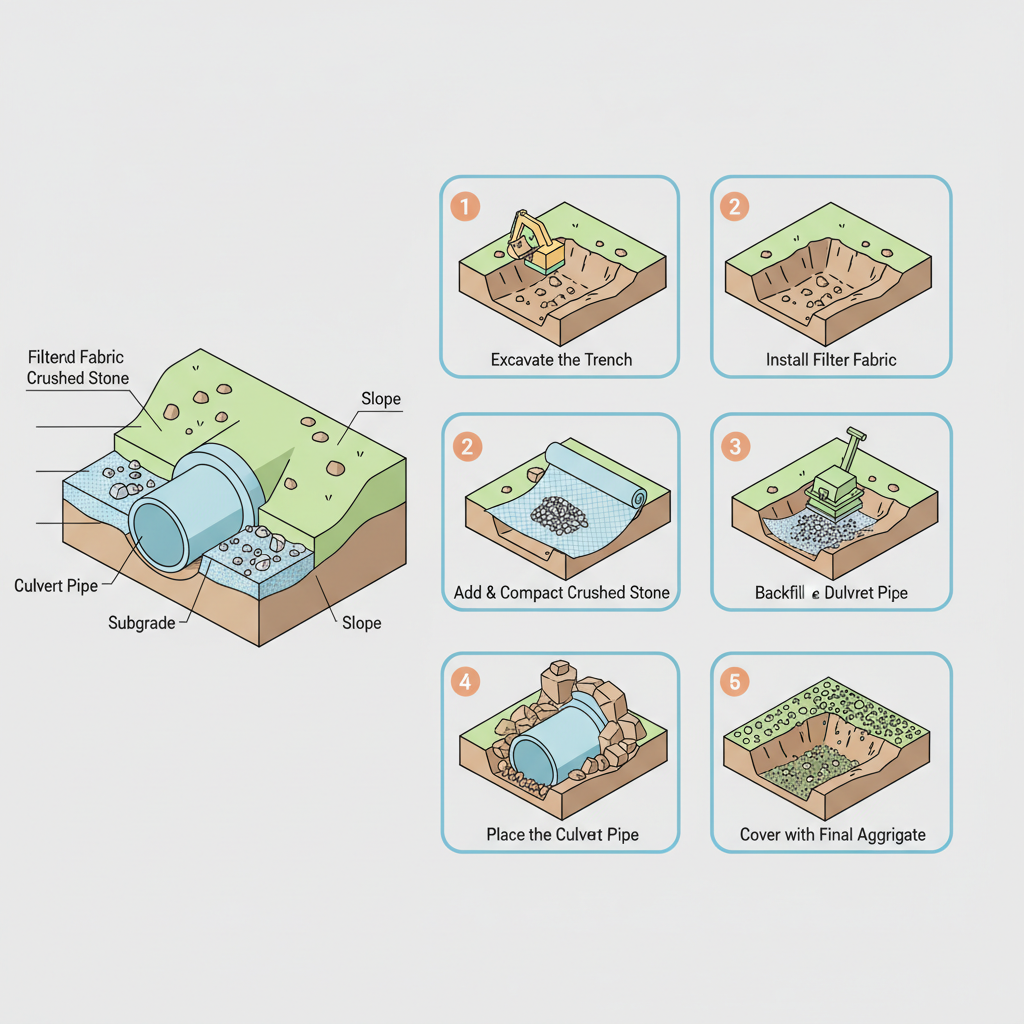
This visual guide illustrates the step-by-step sequence for installing a culvert, showing each critical phase from trench excavation to final backfill. It clarifies the layered structure—from subgrade to surface—to help you understand how each material contributes to proper drainage and stability. Seeing the numbered steps alongside the cross-section ensures you follow the correct order and achieve a long-lasting installation.
Gravel for Culverts: Best Materials, Depth, Slope & Installation Guide
A properly installed culvert ensures reliable water drainage under driveways and roads while maintaining structural integrity. We recommend 3/4 to 1 1/2 inch crushed stone for optimal drainage and compaction, installed at 6-12 inches total depth around the pipe. This size stone prevents soil migration while allowing water to flow freely through the system. Proper slope and filter fabric wrapping are essential for long-term performance and erosion prevention.
How This Culvert Is Built (Layer-by-Layer System)
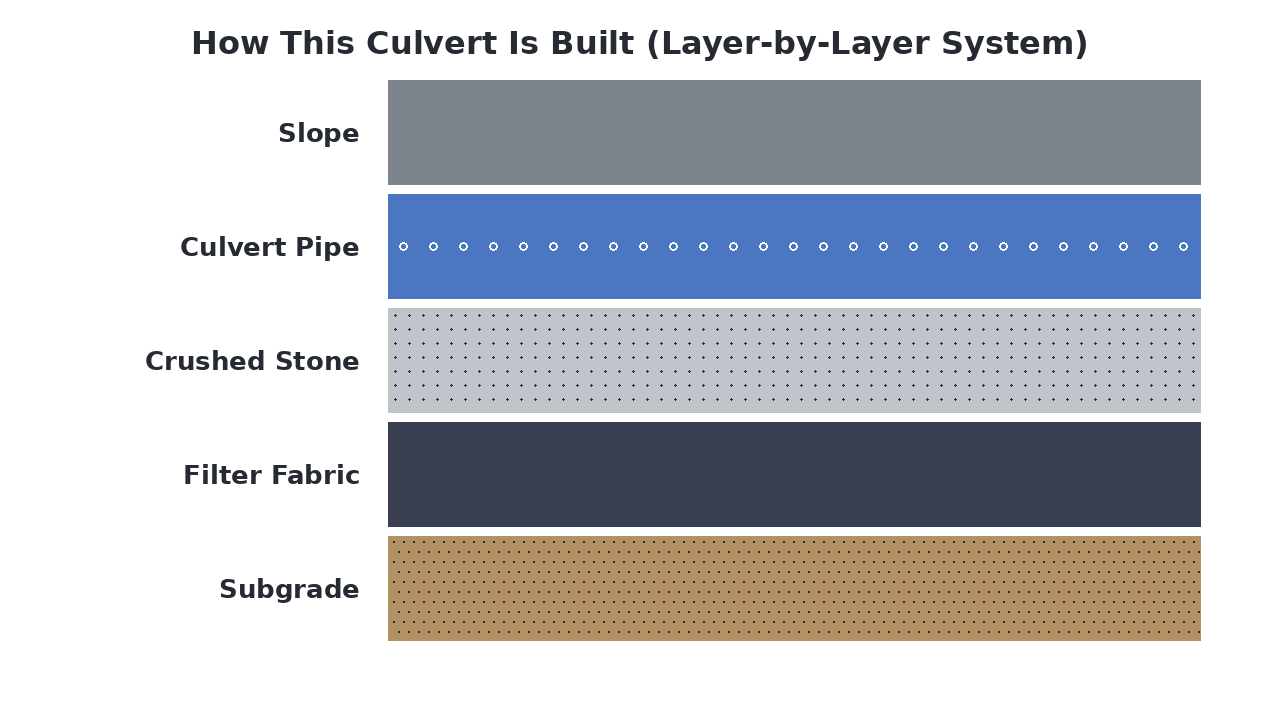
A culvert is a drainage structure that allows water to pass under a driveway, road, or other obstruction while maintaining structural integrity. The system consists of a pipe embedded in a compacted aggregate bedding and backfill, wrapped in filter fabric to prevent soil migration. Proper installation includes a stable subgrade, adequate slope for water flow, and appropriate end treatments to prevent erosion. The layered construction ensures load-bearing capacity and long-term drainage performance.
Materials Breakdown: What Each Layer Does
A culvert is constructed as a layered system where each material serves a distinct purpose in managing water flow and preventing erosion. The components work together to provide a stable foundation, filter out sediment, facilitate drainage, and direct water through the pipe. Choosing the right materials for each layer ensures long-term structural integrity and effective water management.
Compacted Subgrade
The compacted native soil that forms the foundation for the culvert, providing a stable base to support the pipe and overlying layers.
Geotextile Filter Fabric
A permeable fabric that separates soil from stone layers to prevent fine particles from clogging the drainage system while allowing water to pass through.
Crushed Stone
Angular stone that creates a stable, free-draining layer around the pipe, distributing loads and allowing water to flow toward the culvert.
View Crushed Stone →Culvert Pipe
The main conduit that carries water through the embankment, typically made of concrete, plastic, or metal to handle water flow and structural loads.
Surface Slope
The graded surface above the culvert that directs surface water toward the pipe inlet, ensuring efficient water collection and preventing pooling.
What Is a Culvert and Why Does It Matter?
A culvert is a drainage structure that allows water to pass under driveways, roads, or other obstructions while maintaining the surface's structural integrity. It matters because proper culvert installation prevents water accumulation, reduces erosion, and protects road foundations from damage. Unlike simple drainage ditches, culverts provide a controlled underground passage for water flow while supporting vehicular loads above. This makes them essential for maintaining safe, dry passageways in areas with natural water flow.
Common Types of Culvert Systems
Culvert systems come in several common types, each suited to different conditions. Pipe culverts, typically made of corrugated metal or plastic, are the most common and handle moderate water flow under driveways and roads. Arch culverts offer greater capacity for larger waterways and can be made from concrete or stone. Box culverts, usually concrete, are ideal for very heavy loads and high water volumes, while slab culverts are simpler but less durable for light-duty applications.
- Easy to install
- Cost-effective solution
- Handles moderate water flow
- Variety of material options
Best for:Standard driveway or road drainage
- Greater water capacity
- More natural appearance
- Suitable for larger waterways
- Often concrete or stone
Best for:Larger streams or aesthetic areas
- Handles heavy traffic loads
- High water volume capacity
- Extremely durable construction
- Typically concrete material
Best for:Heavy-duty road or highway use
- Excellent natural drainage
- Cost-effective installation
- Easy to maintain and repair
- Blends with landscape naturally
Best for:Residential driveways and rural roads
When a Culvert Is the Best Solution
A gravel-filled culvert is the best solution when you need effective drainage under a residential driveway or rural access road without breaking the bank. It's ideal for properties with moderate water flow where natural aesthetics matter and you want a solution that's easy to install and maintain. Choose this option when you need reliable water passage that won't require heavy machinery or complex engineering, making it perfect for DIY-friendly projects and budget-conscious homeowners.
Everything You Need to Build a Culvert
Constructing a culvert requires specific foundational, filtration, and drainage materials to create a stable, layered system. You'll need tools for excavation, compaction, and pipe handling to properly install each component. Sourcing the right supplies ensures the culvert effectively manages water flow and prevents erosion over the long term.
- Subgrade soil, Geotextile filter fabric, Crushed stone, Culvert pipe, Rip rap or drainage rock
- Shovel, Tamping compactor, Level, Tape measure, Utility knife
- Hello Gravel (materials), Equipment rental (compactor), A contractor supply store
What to Consider Before You Start
Before breaking ground, consider these key planning steps to ensure your culvert project is successful and compliant.
- Water flow and drainage
Determine the expected water volume and flow rate to size the pipe appropriately.
- Local regulations and permits
Check with your local municipality for any required permits or installation codes.
- Pipe size and slope
Calculate the necessary pipe diameter and ensure a minimum 1% slope for proper drainage.
- Soil conditions and stability
Assess the soil type and compaction at the installation site to prevent settling.
- Access and property lines
Verify the installation path does not cross utility lines or encroach on neighboring property.
How to Prepare the Ground for a Culvert
Begin by clearing the site of all vegetation, debris, and topsoil to expose a stable subgrade. Mark the precise alignment and slope of the culvert trench using string lines and grade stakes. Excavate the trench to the required depth and width, ensuring the bottom is level and follows the designed slope. Finally, compact the trench subgrade thoroughly with a plate compactor to create a firm, stable foundation that prevents future settling.
How a Culvert Works
A culvert functions as a subsurface drainage conduit that safely channels water beneath a driveway, road, or embankment. The layered system distributes the load from above, protecting the pipe from crushing, while the filter fabric prevents soil infiltration that could clog the drainage stone. Water enters the upstream end, flows freely through the pipe due to the installed slope, and exits downstream, preventing erosion and flooding by managing surface runoff effectively.
How to Install a Culvert
Excavate the Trench
⚠️ Licensed-trade notice: This project is code-regulated in most jurisdictions and typically requires a licensed contractor and local permits. The steps below are provided to help plan your aggregate order, not as a substitute for professional design, permits, or inspections. Dig a trench to the specified depth, width, and length, ensuring the bottom is level and follows the designed slope for water flow.
Install Filter Fabric
Line the entire excavated trench with a geotextile filter fabric to separate the soil from the aggregate and prevent clogging.
Add & Compact Crushed Stone
Place a layer of crushed stone in the trench, compacting it to create a stable, well-draining bed for the culvert pipe.
Place the Culvert Pipe
Set the culvert pipe onto the crushed stone bed, aligning it correctly along the trench and ensuring the proper slope is maintained.
Backfill with Drainage Rock
Carefully backfill around and over the pipe with clean drainage rock, compacting in layers to support the pipe and fill voids.
Cover with Final Aggregate
Add a final top layer of suitable gravel or crushed stone, compacting it to grade level to complete the surface and provide load distribution.
Alternative Gravel Options for Culverts
For culvert installation, several aggregate options can be used as backfill or bedding material around the pipe. Crushed stone provides excellent drainage and stability, while rip rap offers superior erosion protection for high-flow areas. Gravel is a versatile, cost-effective choice, but drainage rock may be too fine for structural support. Among these, crushed stone is often the best choice because its angular edges lock together to create a stable, non-shifting foundation that prevents pipe movement and maintains proper water flow.
Provides excellent drainage and stability with angular edges that lock together.
View Product →Large, durable stones ideal for high-velocity water flow and erosion control.
Clean, washed stone that prevents clogging and maintains water permeability.
Smooth, rounded stones that shift easily and provide poor structural support.
View Product →Compacted mixture of crushed stone and fines that creates a solid foundation.
View Product →Common Culvert Mistakes (And How to Avoid Them)
Proper culvert installation requires attention to detail to avoid costly failures. Common mistakes often stem from underestimating water flow or using inappropriate materials. Understanding these pitfalls can help ensure your culvert functions effectively for years.
- Insufficient pipe size
- Poor bedding material
- Inadequate compaction
- No erosion protection
- Incorrect slope
- Clogged inlet/outlet
How to Maintain a Culvert
Regular culvert maintenance is essential for preventing blockages and structural damage. Inspect the inlet and outlet after heavy rains to remove debris like leaves, branches, and sediment that could impede water flow. Check for erosion around the pipe ends and add additional rip rap or gravel as needed to maintain stability. Annually assess the pipe's alignment and slope to ensure proper drainage and address any settling or shifting promptly.
Calculate How Much Gravel You Need
Enter Your Dimensions
Measure your project area and we'll calculate how much material you need.