Retaining Wall Drain Rock: Backfill Depth & Quantities
A well-built retaining wall relies on proper sizing, materials, and drainage to hold back soil and create usable space. This guide explains what a retaining wall is, which materials you need, how to design and lay it out, how to install it step by step, and how to estimate the amount of gravel required. Whether you are constructing a small garden wall or a large structural barrier, use the sections below to navigate through the process.
See How to Build a Retaining Wall
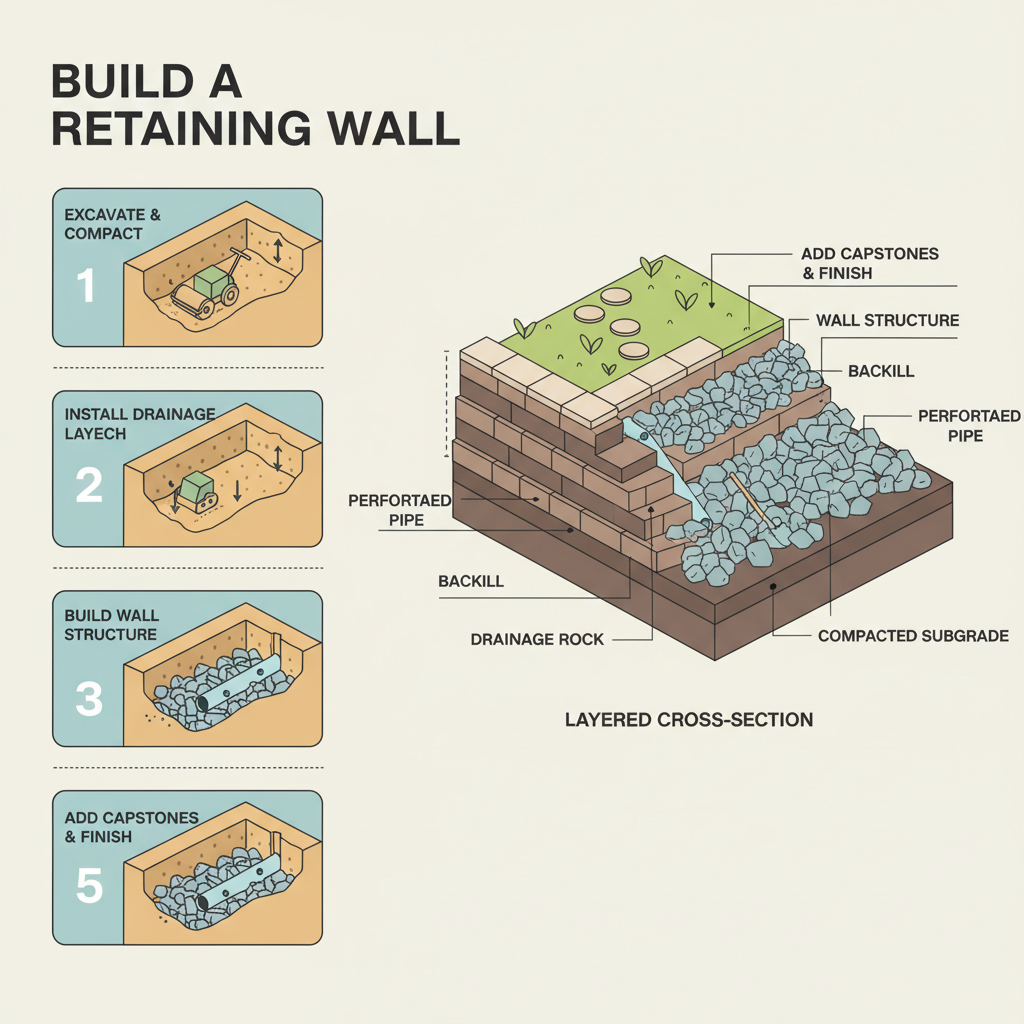
This visual guide shows the step-by-step sequence and layered structure for building a retaining wall. It clarifies the proper order of excavation, drainage installation, wall building, backfilling, and finishing. Seeing the numbered steps and labeled cross-section helps you plan materials and avoid common mistakes.
Gravel for Retaining Walls: Best Drainage Rock, Depth & Construction Guide
A retaining wall requires proper drainage behind the structure to prevent hydrostatic pressure that can lead to wall failure. We recommend using 3/4 to 1.5 inch clean drainage rock installed 12-18 inches deep behind the wall to ensure optimal water flow. This drainage layer channels water to a perforated pipe at the base, working with the compacted subgrade and proper wall batter to create a stable, long-lasting structure. The right materials and construction techniques are essential for preventing soil erosion and maintaining wall integrity over time.
How This Retaining Wall Is Built (Layer-by-Layer System)
A retaining wall is a layered system designed to hold back soil while allowing water to drain, preventing hydrostatic pressure buildup. It starts with a compacted subgrade and a drainage rock backfill layer behind the wall, which channels water to a perforated pipe at the base. The wall structure itself is built with proper footing and drainage components, ensuring stability against soil pressure. Proper construction includes a slight backward slope (batter) and effective drainage to prevent wall failure over time.
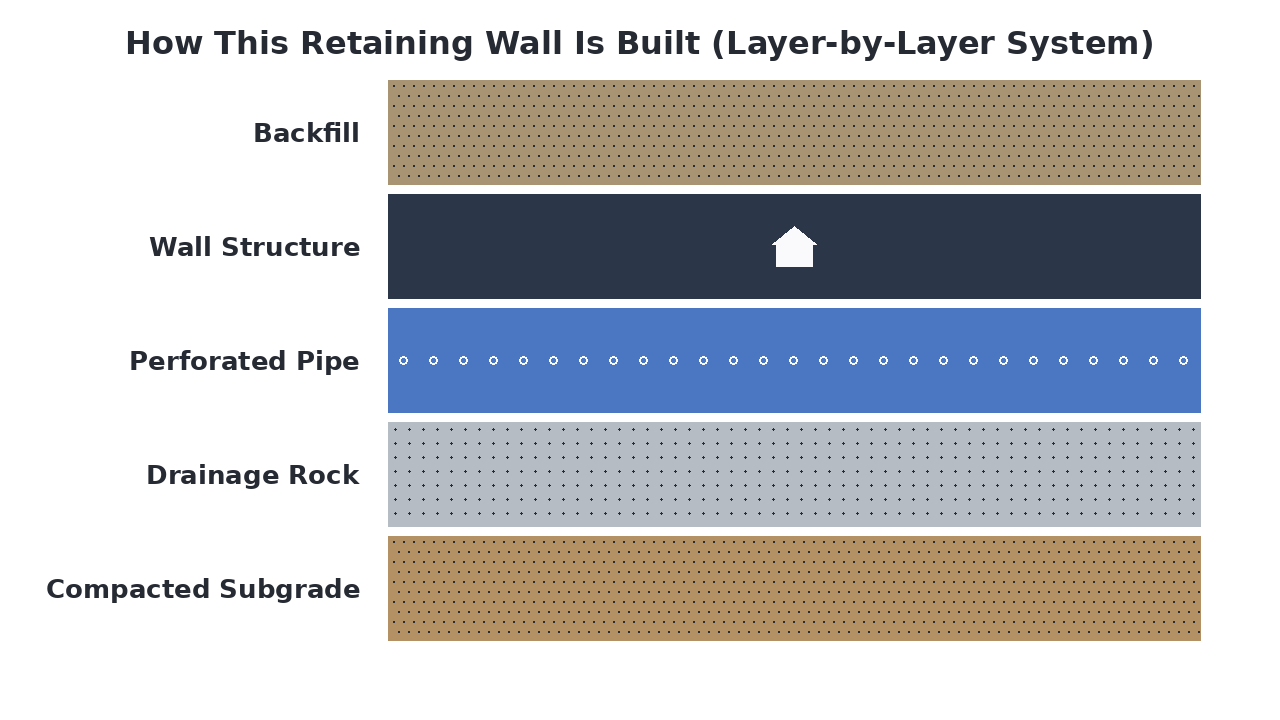
Materials Breakdown: What Each Layer Does
A retaining wall is a layered system where each material serves a specific structural and drainage purpose. The components work together to hold back soil, manage groundwater pressure, and prevent frost heave or wall failure. Choosing the right gravel, rock, and backfill for each layer ensures long-term stability and proper water flow away from the structure.
Compacted Subgrade
The firm, stable base layer of native soil that is compacted to provide a solid foundation for the wall and prevent settling.
Drainage Rock
Clean, angular crushed stone placed behind the wall to create a free-draining zone that relieves hydrostatic pressure and prevents water buildup.
Perforated Pipe
A slotted pipe installed at the base of the drainage rock to collect and channel water away from the wall, preventing saturation and frost damage.
Retaining Wall Block or Concrete
The primary structural component that holds back the soil; it must be strong, properly anchored, and designed to withstand lateral pressure.
Backfill Soil or Gravel
Material placed behind the drainage layer to fill the space and support the retained soil while allowing water to reach the drainage system.
What Is a Retaining Wall and Why Does It Matter?
A retaining wall is a structural system designed to hold back soil and prevent erosion on sloped landscapes. It matters because properly constructed retaining walls create usable flat spaces, prevent soil movement, and protect foundations from erosion damage. Unlike simple soil banks or temporary barriers, retaining walls use engineered drainage systems and structural components to withstand soil pressure over decades. This makes them essential for creating terraced gardens, leveling yards, and managing water runoff on sloped properties.
Common Types of Retaining Wall Systems
Retaining walls come in several common types, each with different construction methods and materials. Gravity walls rely on their own weight to hold back soil, while cantilevered walls use reinforced concrete for taller applications. Segmental retaining walls use interlocking concrete blocks that are easy to install, and timber walls offer a natural look for shorter slopes. The choice depends on height requirements, soil conditions, and desired appearance.
- Interlocking concrete blocks
- No mortar required
- Easy DIY installation
- Good drainage design
- Various colors/styles
Best for:Medium-height residential applications
- Uses gravel for drainage
- Relies on wall weight
- Cost-effective construction
- Good for moderate slopes
- Natural appearance options
Best for:Slopes needing drainage and stability
- Engineered structural strength
- Handles tall soil heights
- Long-term durability
- Professional installation needed
- Higher cost investment
Best for:Tall retaining walls with heavy loads
- Natural wood appearance
- Lower initial cost
- Shorter lifespan
- Limited height capacity
- Pressure-treated options
Best for:Short slopes with rustic aesthetic
When a Retaining Wall Is the Best Solution
A gravel-backed gravity retaining wall is ideal when you need to manage moderate slopes while ensuring proper drainage behind the structure. This solution works best for creating terraced gardens, leveling yard areas, or preventing erosion on residential properties. It's particularly suitable when you want a cost-effective option that combines structural support with excellent water management. Choose this approach when dealing with slopes up to 4-6 feet high that require both soil retention and drainage control.
Everything You Need to Build a Retaining Wall
A sturdy retaining wall requires specific materials for structural support and drainage. You'll need gravel or crushed stone for the compacted subgrade and drainage rock layer, plus a perforated pipe and backfill material like sand or gravel. The wall structure itself can be built from interlocking blocks, timbers, or poured concrete depending on your design.
- Compacted subgrade gravel, Drainage rock (e.g., #57 stone), Perforated pipe, Wall blocks/timbers/concrete, Backfill material (sand or gravel)
- Shovel, Level, Rubber mallet, Tamper/compactor, Measuring tape, Wheelbarrow
- Hello Gravel (materials), A contractor supply store
What to Consider Before You Start
Proper planning ensures your retaining wall is structurally sound and complies with local regulations. Consider these key factors before breaking ground.
- Local permit requirements
Check with your municipality about height restrictions and whether a building permit is needed for your wall.
- Soil conditions and drainage
Assess your soil type and water flow patterns to determine proper drainage needs for wall stability.
- Wall height and design
Decide on the wall's height and choose appropriate materials (blocks, timbers, or concrete) that match your project scale.
- Property line and utility locations
Verify property boundaries and call 811 to mark underground utilities before digging.
How to Prepare the Ground for a Retaining Wall
Start by clearing the area of all vegetation, debris, and large rocks to create a clean workspace. Mark the wall's footprint with stakes and string lines, then excavate to the required depth and length, ensuring the trench bottom is level. Grade the trench to achieve a slight slope away from the wall for drainage, and thoroughly compact the subgrade soil to create a stable, unyielding foundation.
How a Retaining Wall Works
The retaining wall functions as a gravity structure, transferring the lateral soil pressure downward through its mass and into the compacted subgrade. A perforated pipe embedded in drainage rock behind the wall collects groundwater, directing it away from the structure to prevent hydrostatic pressure buildup. The layered backfill and drainage materials work together to manage water flow, reducing frost heave and ensuring long-term stability against overturning or sliding.
How to Install a Retaining Wall
Excavate & Compact Trench
⚠️ Licensed-trade notice: This project is code-regulated in most jurisdictions and typically requires a licensed contractor and local permits. The steps below are provided to help plan your aggregate order, not as a substitute for professional design, permits, or inspections. Dig a trench to the required depth and width, then compact the bottom to create a firm subgrade.
Install Drainage Layer
Place a layer of drainage rock in the trench and embed a perforated pipe along the back for water collection.
Build Wall Structure
Lay the first course of wall blocks or timbers on a level bed of compacted sand or gravel.
Backfill with Drainage Material
Fill the space behind the wall with drainage rock, compacting it in layers as you build upward.
Add Capstones & Finish
Secure capstones to the top course and backfill the remaining area with soil or decorative gravel.
Alternative Gravel Options for Retaining Walls
Selecting the right aggregate for a retaining wall is crucial for drainage, stability, and longevity. While several gravel types can be used, each varies in angularity, size, and compaction properties, influencing how well they lock together and manage water pressure. For the primary drainage and backfill layers, a well-graded crushed stone is typically the best choice due to its excellent interlock and permeability, preventing hydrostatic buildup behind the wall.
The ideal choice for structural backfill and drainage layers due to its angular shape and excellent compaction.
View Product →A good option for dedicated drainage zones behind the wall to channel water away.
Suitable for large-scale walls or erosion control at the wall's base.
A poor choice for structural backfill as its smooth, round stones shift and offer little stability.
View Product →Common Retaining Wall Mistakes (And How to Avoid Them)
Even a well-built retaining wall can fail over time if common installation errors are made. Avoiding these key mistakes ensures your wall remains stable and functional for years.
- Inadequate drainage
- Poor compaction
- Wrong backfill material
- Insufficient base preparation
- Ignoring frost heave
- No geogrid for tall walls
How to Maintain a Retaining Wall
Regularly inspect your retaining wall for signs of bulging, cracking, or leaning, which indicate soil pressure issues. Clear drainage outlets and weep holes of debris annually to prevent water buildup. Replenish any washed-out gravel or soil at the wall's base to maintain proper drainage and support.
Calculate How Much Gravel You Need
Enter Your Dimensions
Measure your project area and we'll calculate how much material you need.