Raised Garden Bed Soil: Topsoil Depth & Cubic Yards
A successful raised garden bed begins with proper planning and the right materials. This guide explains what a raised garden bed is, which materials you need, how to choose the ideal location and size, how to build and install it step by step, and how to estimate the amount of gravel required. Whether you are a first-time gardener starting a vegetable patch or an experienced landscaper adding new beds, use the sections below to find what you need.
See How to Build a Raised Garden Bed
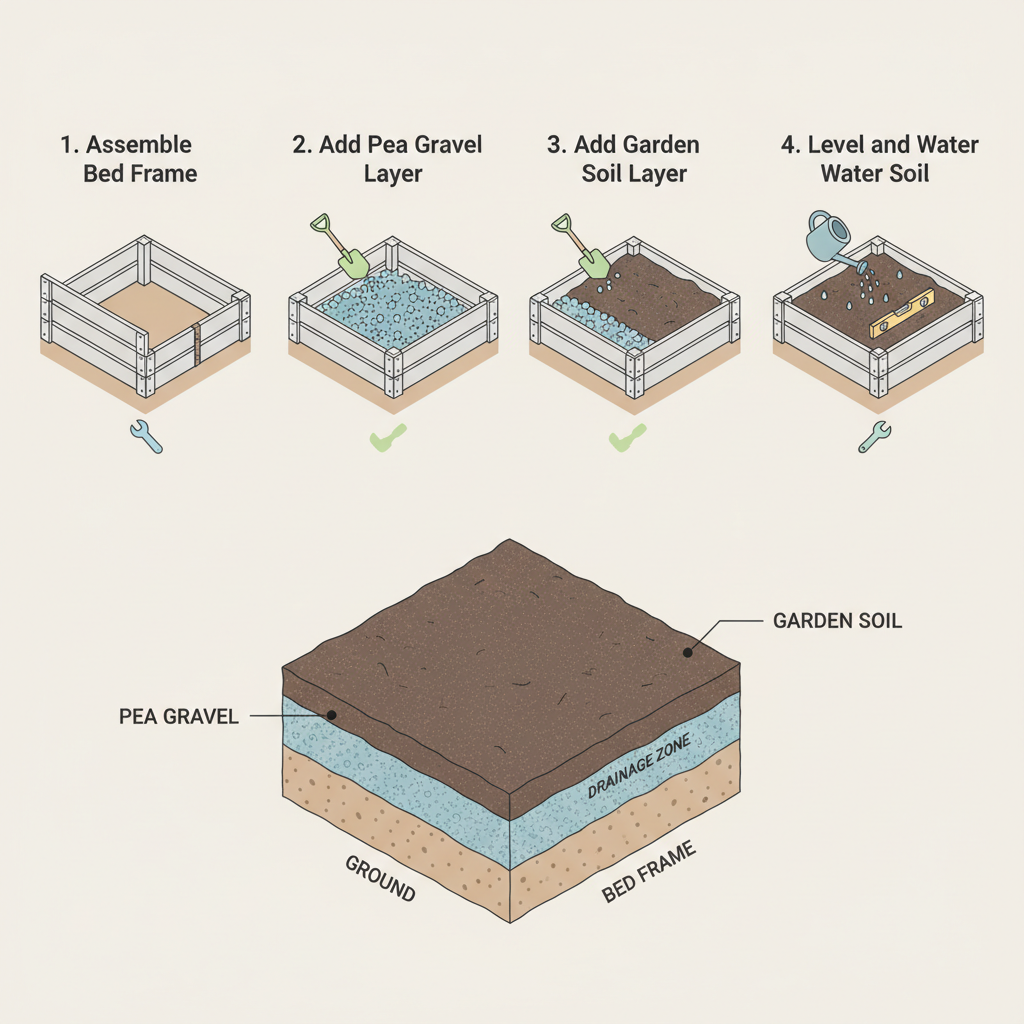
This visual guide breaks down the raised garden bed installation sequence into clear numbered steps, showing exactly how to layer pea gravel and garden soil for proper drainage. The cross-section diagram helps you visualize the crucial relationship between the bed frame, drainage zone, and soil layers before you start building.
Gravel for Raised Garden Beds: Best Materials, Depth, Cost & How to Build
A raised garden bed needs a 2–4 inch pea gravel drainage layer under the soil, especially over hard or clay-heavy ground. Use 3/8 to 5/8 inch pea gravel — small enough to settle firmly but with enough air space to drain. For a standard 4 ft × 8 ft bed, that's about 0.5–1.5 cubic yards of stone.
How This Raised Garden Bed Is Built (Layer-by-Layer System)
A raised garden bed is built as a layered system designed to support healthy plant growth while ensuring proper drainage. The system starts with a pea gravel layer at the bottom to provide a stable drainage zone that prevents waterlogging, topped by a deep layer of nutrient-rich garden soil. The pea gravel layer helps excess water drain away from plant roots, while the soil layer retains moisture and nutrients where they are needed. Proper layering creates an ideal environment for vegetables, flowers, and herbs to thrive.
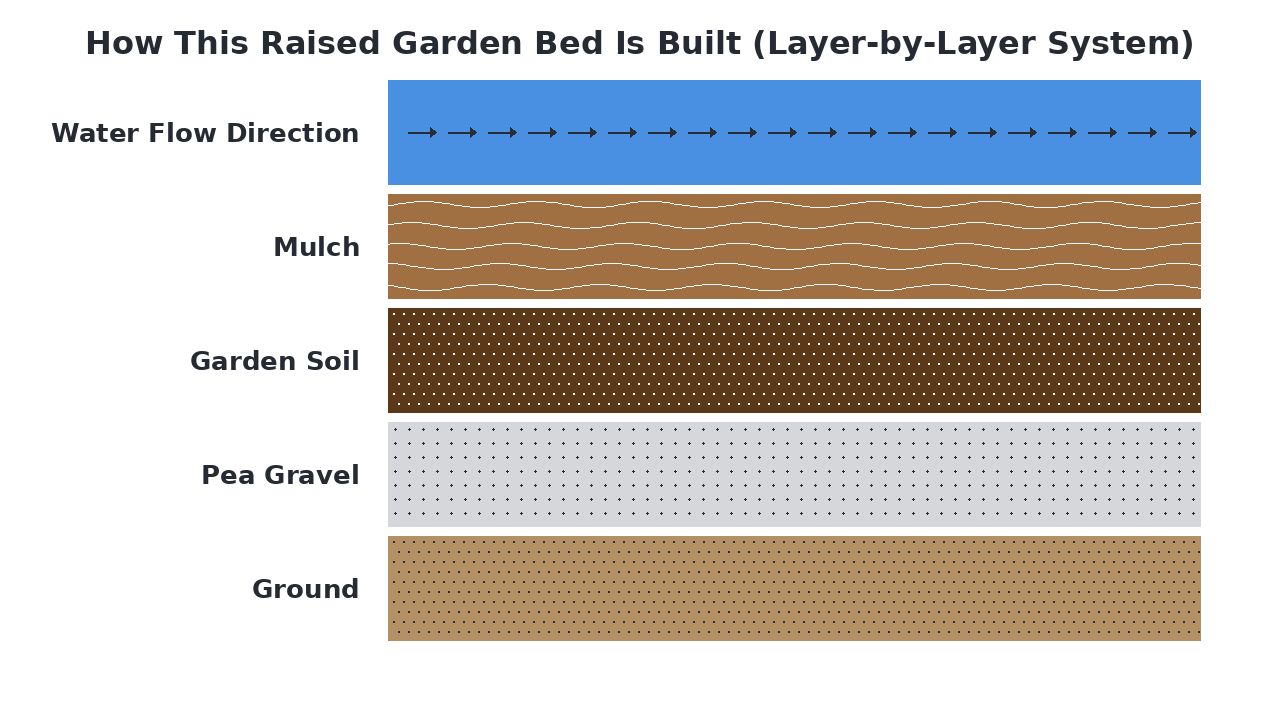
Materials Breakdown: What Each Layer Does
A raised garden bed is constructed as a layered system, with each material serving a distinct purpose to support plant health and proper drainage. The layers work together to prevent waterlogging, provide a stable foundation, and create an ideal growing environment for roots. Choosing the right products for each level ensures the bed remains productive and durable over time.
Native Soil
The existing earth beneath the bed that provides the base; it should be level and free of large obstructions to ensure stability.
Pea Gravel
A layer of small, rounded stones that creates a drainage zone to prevent water from pooling around plant roots and causing rot.
View Pea Gravel →Garden Soil Mix
A nutrient-rich blend of topsoil, compost, and organic matter that provides the primary growing medium for plants.
Raised Bed Frame
The structural enclosure, typically made of wood, stone, or composite, that contains the soil and defines the planting area.
Drainage Layer
The combined gravel and soil area that allows excess water to percolate away from roots while retaining adequate moisture.
What Is a Raised Garden Bed and Why Does It Matter?
A raised garden bed needs a 2–4 inch pea gravel drainage layer under the soil, especially if your bed is sitting on hard or clay-heavy ground. For a standard 4 ft × 8 ft bed that's about 0.5–1.5 cubic yards of 3/8 to 5/8 inch pea gravel. Without it, water pools at the bottom of the bed after every storm and roots sit in standing water — which is the fastest way to kill tomatoes and peppers.
Common Types of Raised Garden Bed Systems
Raised garden beds come in several common styles, each with its own advantages. Wooden framed beds are the most popular, offering affordability and easy customization. Stone or brick beds provide durability and a classic aesthetic but require more labor and cost. Metal beds, such as corrugated steel, offer a modern look and excellent longevity but can heat soil excessively in sunny climates.
- Affordable and widely available
- Easy to build and customize
- Good drainage and aeration
- Natural, rustic appearance
Best for:Budget-friendly DIY projects
- Extremely durable and long-lasting
- Classic, elegant garden aesthetic
- Excellent thermal mass for soil
- Heavy and permanent installation
Best for:Permanent, high-end landscape features
- Modern, sleek industrial look
- Resistant to rot and pests
- Quick assembly from kits
- Can overheat soil in sun
Best for:Contemporary garden designs
- Superior drainage and aeration
- Natural weed suppression layer
- Affordable and easy to install
- Excellent for root vegetables
- Low maintenance requirements
Best for:Gardens with poor drainage
When a Raised Garden Bed Is the Best Solution
A gravel-based raised garden bed is ideal when you need excellent drainage for moisture-sensitive plants like herbs and root vegetables. It's perfect for areas with heavy clay soil that retains too much water, as the gravel layer prevents root rot. This solution also works well for gardeners seeking low-maintenance beds with natural weed suppression. Choose this option when budget is a concern but you still want professional-looking results that last for years.
Everything You Need to Build a Raised Garden Bed
Building a raised garden bed requires a few key materials and basic tools to assemble the structure and fill it properly. You'll need lumber or another material to construct the bed frame, plus a layered mix of soil and drainage materials to create a healthy growing environment. Essential tools include those for cutting and fastening the frame, as well as for moving and spreading the fill materials.
- Pea gravel, Garden soil, Bed frame lumber, Compost, Mulch
- Circular saw or handsaw, Drill with screws, Shovel, Wheelbarrow, Rake
- Hello Gravel (materials), A contractor supply store (fasteners)
What to Consider Before You Start
Before you start building, take time to plan these key considerations to ensure your raised bed is successful and long-lasting.
- Location and sunlight
Choose a spot that receives at least 6-8 hours of direct sunlight daily and has good air circulation.
- Bed size and dimensions
Decide on the length, width, and height of your bed to ensure it's accessible and fits your space.
- Material selection
Select appropriate lumber (cedar, redwood, or pressure-treated) and calculate the volume of soil and gravel needed.
- Drainage planning
Ensure the site has proper drainage and plan for adequate gravel layer thickness to prevent waterlogging.
- Access and pathways
Plan for sufficient access space around the bed for maintenance and consider adding pathways if needed.
How to Prepare the Ground for a Raised Garden Bed
Begin by clearing the area of all vegetation, rocks, and debris. Mark the exact perimeter of the bed using stakes and string, then grade the ground to create a level surface. Lightly compact the soil to establish a firm, stable base that prevents settling under the weight of the bed and its soil layers.
How a Raised Garden Bed Works
The layered design creates a stable, well-drained environment for plant roots. The pea gravel layer at the bottom forms a drainage zone, allowing excess water to percolate away from the garden soil above. The bed frame contains the soil and gravel, distributing the load evenly across the prepared ground. This structure prevents waterlogging, promotes healthy root growth, and extends the bed's longevity.
How to Install a Raised Garden Bed
Assemble Bed Frame
Construct or place the raised bed frame on the prepared, level ground.
Add Pea Gravel Layer
Fill the bottom of the frame with a 2-3 inch layer of pea gravel to create the drainage zone.
Add Garden Soil Layer
Fill the remainder of the bed with a high-quality garden soil mix, leaving a few inches from the top.
Level and Water Soil
Smooth the soil surface, then water thoroughly to settle the layers before planting.
Alternative Gravel Options for Raised Garden Beds
When building a raised garden bed, homeowners have several aggregate options for the drainage layer beneath the soil. While decorative choices like pea gravel or river rock can be used, they are often more expensive and less effective at promoting drainage than crushed stone. For optimal performance, a coarse, angular aggregate like #57 stone is typically the best choice because it creates stable voids that prevent compaction and allow excess water to escape, protecting plant roots from rot.
The ideal drainage layer with angular pieces that lock together and resist compaction.
View Product →A smooth, rounded gravel suitable for decorative top layers or mild drainage needs.
View Product →A budget-friendly recycled aggregate that provides good drainage and stability.
View Product →Large, smooth stones that are purely decorative and impede proper drainage in garden beds.
View Product →A finely crushed stone that compacts firmly, better for pathways than drainage layers.
View Product →Common Raised Garden Bed Mistakes (And How to Avoid Them)
Even with careful planning, several common errors can undermine a raised garden bed's success. Avoiding these mistakes ensures better plant health, easier maintenance, and longer bed life.
- Insufficient drainage layer
- Poor soil mixture
- Overfilling with soil
- Neglecting weed barrier
- Using wrong aggregate size
How to Maintain a Raised Garden Bed
Regular maintenance keeps your raised garden bed productive and healthy. Each season, top up the soil as it settles and decomposes, and refresh mulch to retain moisture and suppress weeds. Check the drainage layer annually for compaction or clogging, and ensure the bed's structure remains sound, repairing any loose boards or corners to prevent soil loss.
Calculate How Much Gravel You Need
Enter Your Dimensions
Measure your project area and we'll calculate how much material you need.