Topsoil & Mulch for Flower Beds: Depth & Volume Guide
A beautiful flower bed relies on proper soil preparation and the right materials to thrive. This guide explains what a flower bed is, which materials you need, how to prepare the ground, how to install it step by step, and how to estimate the amount of gravel required. Whether you are creating a new garden feature or refreshing an existing border, use the sections below to find what you need.
See How to Build a Flower Bed
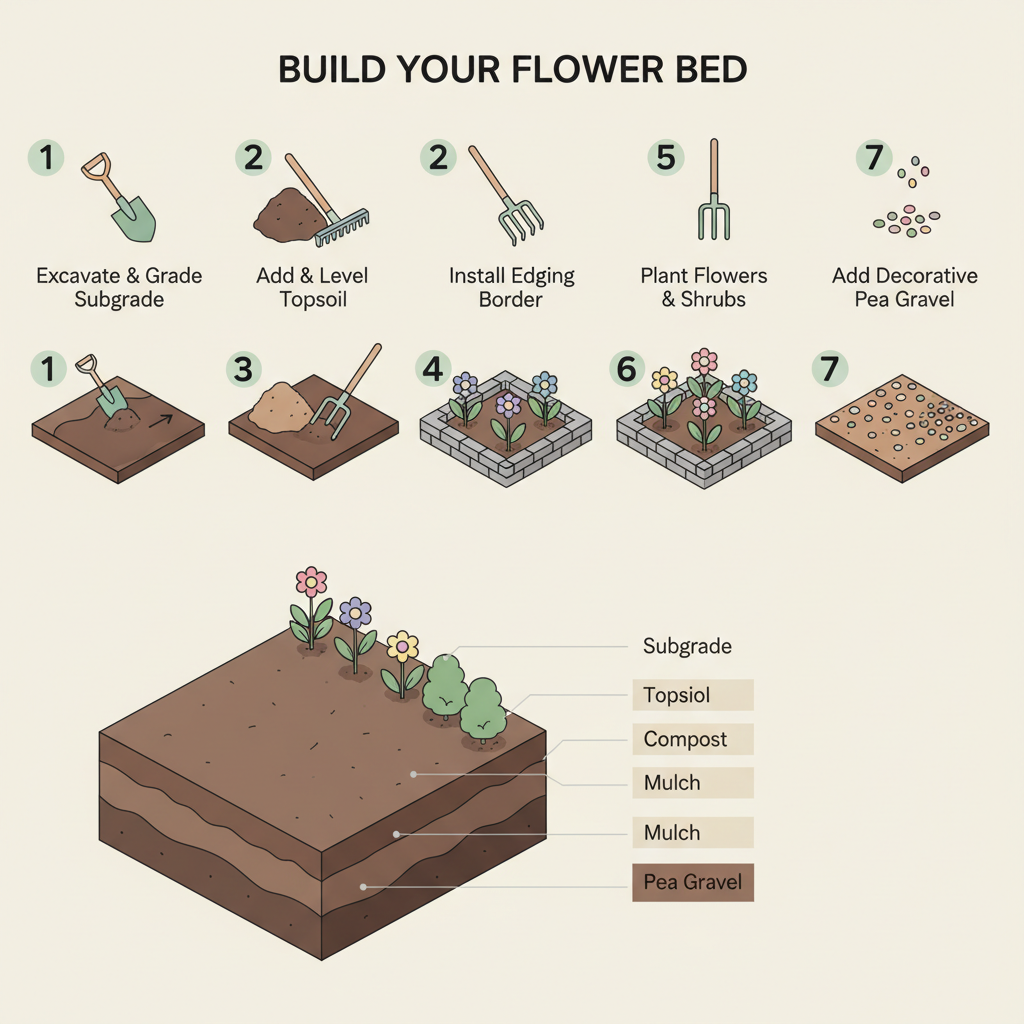
This visual guide shows the complete step-by-step process for building a flower bed, from excavation to finishing touches. It clarifies the proper installation sequence and illustrates the layered structure of materials, helping you understand how each component contributes to healthy plant growth and effective drainage.
Gravel for Flower Beds: Best Materials, Depth, Cost & How to Build
A flower bed gets 6–8 inches of screened topsoil plus 2–4 inches of compost on top — together that's the 8–12 inch root zone where flowers can actually thrive. For a 4 ft × 8 ft bed, plan on 2–4 cubic yards of soil and compost combined. Texture matters: fine to medium screened topsoil holds moisture without compacting like raw clay does.
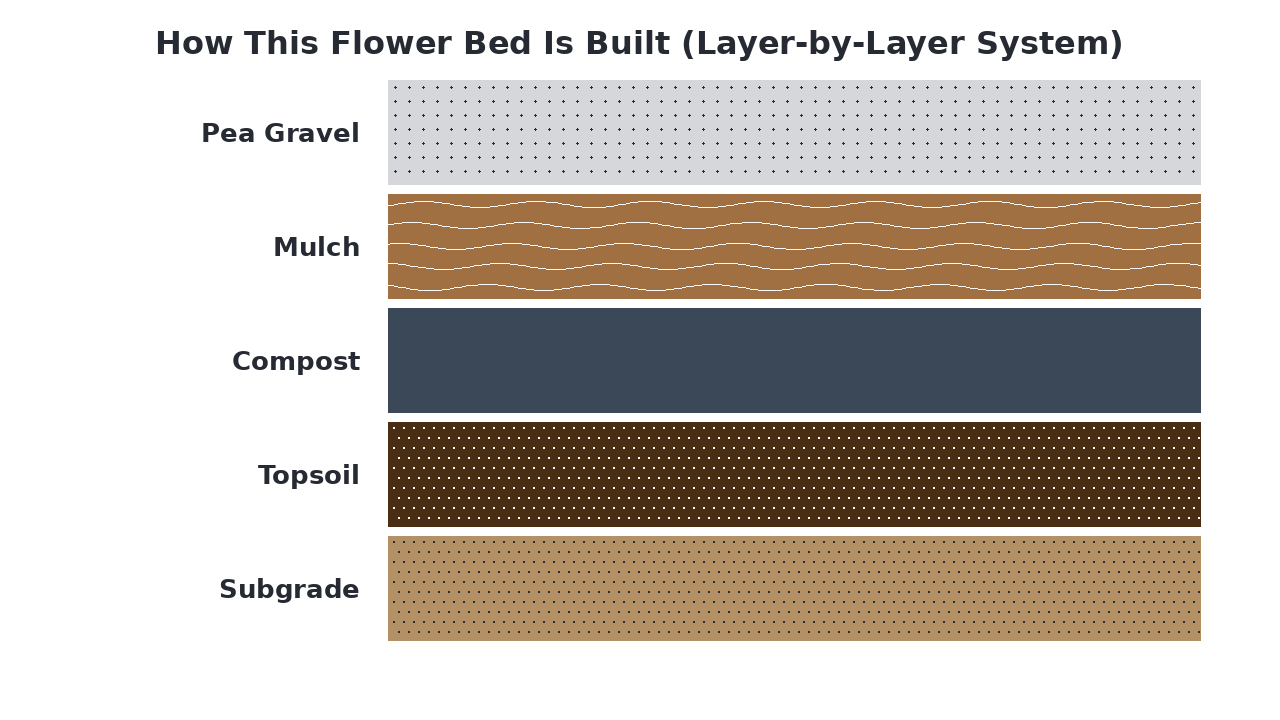
How This Flower Bed Is Built (Layer-by-Layer System)
This flower bed is built as a layered system that promotes healthy plant growth while ensuring proper drainage and moisture retention. The system starts with a prepared subgrade, followed by a topsoil layer for fertility and a compost layer for nutrients. A mulch layer is then added to retain moisture and suppress weeds, while pea gravel provides both decorative finishing and drainage at the base. The entire bed is contained with edging to prevent soil migration and maintain clean borders.
Materials Breakdown: What Each Layer Does
A successful flower bed is built as a layered system, with each material serving a specific purpose to support plant health and drainage. The components work together so that plants get proper nutrients, moisture is retained where needed, and excess water drains away from roots. Selecting the right product for each layer ensures the bed remains productive and attractive for seasons to come.
Native Soil
The existing ground that provides structural support and determines the bed's drainage characteristics.
Topsoil
Nutrient-rich soil that provides the primary growing medium for plant roots to establish and thrive.
View Topsoil →Compost
Organic matter that improves soil structure, adds beneficial microbes, and provides slow-release nutrients to plants.
View Compost →Mulch
A protective layer that conserves soil moisture, suppresses weeds, and moderates soil temperature.
View Mulch →Pea Gravel
Decorative stone that adds visual appeal while allowing water to drain through and preventing soil erosion.
View Pea Gravel →What Is a Flower Bed and Why Does It Matter?
A flower bed is a prepared patch of good soil — usually 6–8 inches of screened topsoil with 2–4 inches of compost on top — built where the existing dirt isn't good enough to grow what you want. For a 4 ft × 8 ft bed, that's about 2–4 cubic yards of soil and compost combined. Skipping this and planting straight into yard dirt is why most first-time flower beds underperform — the original soil is usually compacted clay or thin topsoil.
Common Types of Flower Bed Systems
Flower beds come in a few common types, each with different materials and purposes. Raised beds use contained soil above ground for better drainage and easier maintenance. In-ground beds are dug directly into native soil, which can be more cost-effective but may require more soil amendment. Container beds use pots or planters for maximum flexibility and mobility, while border beds are planted along edges to define landscape spaces. The main differences involve construction effort, soil control, and suitability for various plants and locations.
- Excellent drainage and soil control
- Reduces back strain from bending
- Warms faster in spring
- Can be built with various materials
Best for:Areas with poor native soil
- Lower initial cost and effort
- Blends seamlessly with landscape
- Larger planting area possible
- May require soil amendments
Best for:Established gardens with good soil
- Maximum flexibility and mobility
- Perfect for small spaces
- Complete soil control
- Easy to rearrange seasonally
Best for:Patios, decks, and rental properties
- Uses pea gravel for drainage
- Low maintenance weed suppression
- Clean, defined aesthetic edges
- Combines gravel with soil layers
Best for:Defining landscape edges with drainage
When a Flower Bed Is the Best Solution
A gravel-based flower bed is ideal when you need both aesthetic appeal and practical drainage solutions. It's perfect for homeowners who want low-maintenance landscaping that suppresses weeds while providing excellent drainage for plant roots. This approach works well for defining property borders, creating clean landscape transitions, or in areas with occasional water pooling. The gravel layer also helps regulate soil temperature and reduces erosion in sloped garden areas.
Everything You Need to Build a Flower Bed
Building a flower bed requires foundational materials for drainage and structure, as well as surface materials for plant health and aesthetics. You'll need tools for excavation, leveling, and material placement to create the layered system. Gathering these items beforehand ensures a smooth and efficient installation process.
- Edging, Topsoil, Compost, Mulch, Pea gravel
- Shovel, Rake, Wheelbarrow, Garden hose, Level
- Hello Gravel (materials), A contractor supply store (edging)
What to Consider Before You Start
Careful planning before digging ensures your flower bed thrives and avoids common pitfalls. Consider these key factors to set your project up for success.
- Sunlight and location
Assess the site's sun exposure throughout the day to match plant selection with light requirements.
- Soil drainage and grading
Check the area's natural drainage and plan for proper slope to prevent water pooling around plant roots.
- Bed size and shape
Decide on the bed's dimensions and outline to ensure it fits your space and design vision.
- Plant selection and spacing
Choose plants suited to your climate and plan their arrangement for mature growth and visual appeal.
- Edging and border installation
Determine the type of edging material and installation method to define the bed and contain materials.
How to Prepare the Ground for a Flower Bed
Begin by clearing the area of all existing vegetation, rocks, and debris to create a clean slate. Mark the desired shape and boundaries of the flower bed using spray paint or a garden hose, then grade the soil to ensure a slight slope away from any structures for proper drainage. Lightly compact the subgrade with a hand tamper or roller to create a stable, level base that prevents future settling and material shifting.
How a Flower Bed Works
The layered flower bed functions as an integrated system where each material performs a specific role to support plant health. The subgrade provides a stable foundation, while the topsoil and compost layers deliver essential nutrients and moisture retention directly to plant roots. A top layer of mulch suppresses weeds and conserves water, and a decorative border of pea gravel aids surface drainage and defines the bed's edge, preventing soil erosion.
How to Install a Flower Bed
Excavate & Grade Subgrade
Remove existing sod or soil to a depth of 6-8 inches and grade the area to create a slight slope for drainage.
Add & Level Topsoil
Spread a 4-6 inch layer of quality topsoil across the excavated area and rake it level.
Mix in Compost
Incorporate a 2-3 inch layer of compost into the topsoil to enrich the planting medium with nutrients.
Install Edging Border
Place landscape edging material around the perimeter of the bed to contain the soil and define the shape.
Plant Flowers & Shrubs
Dig holes in the prepared soil, place your chosen plants, and backfill gently, firming the soil around the roots.
Apply Mulch Layer
Spread a 2-3 inch layer of mulch over the entire soil surface, keeping it away from plant stems.
Add Decorative Pea Gravel
Place a thin, decorative layer of pea gravel along the bed's border or in designated pathways for aesthetics and drainage.
Alternative Gravel Options for Flower Beds
While pea gravel is often the go-to decorative top layer for flower beds, homeowners have several aggregate options depending on their goals. Pea gravel provides excellent drainage and a polished look, but crushed granite offers better stability and weed suppression. Decomposed granite is a top performer for drainage and aesthetics, while river rock is purely decorative and can hinder plant growth. For most flower beds, pea gravel strikes the best balance of function and beauty, making it the recommended choice.
Best for decorative top layers that provide good drainage and a polished appearance.
View Product →Excellent for drainage and stability while maintaining a natural aesthetic.
View Product →Provides superior weed suppression and stability for flower bed borders.
Purely decorative and can inhibit plant growth by preventing proper moisture retention.
View Product →Adds calcium to soil but decomposes slowly and may alter pH balance.
Common Flower Bed Mistakes (And How to Avoid Them)
Even well-planned flower beds can fail due to common oversights in construction and material selection. Avoiding these pitfalls ensures your plants thrive and your bed remains attractive year after year.
- Poor drainage planning
- Insufficient soil depth
- Wrong aggregate selection
- No weed barrier
- Improper edging installation
- Overcrowding plants
How to Maintain a Flower Bed
Regular maintenance keeps your flower bed healthy and attractive. Rake the gravel surface monthly to redistribute material and prevent compaction, while checking for weed growth that needs prompt removal. Top up gravel annually to maintain proper depth and appearance, and inspect edging for stability after heavy rains. Seasonal weeding and light raking will preserve both function and aesthetics of your flower bed.
Calculate How Much Gravel You Need
Enter Your Dimensions
Measure your project area and we'll calculate how much material you need.