Planter Box Soil & Drainage Gravel: Depth & Volume Guide
A well-built planter box elevates your garden's aesthetic while ensuring healthy plant growth. This guide explains what a planter box is, which materials you need, how to design and build it step by step, how to prepare the soil for planting, and how to estimate the amount of gravel required. Whether you are adding a single decorative feature or creating a multi-box vegetable garden, use the sections below to find what you need.
See How to Build a Planter Box
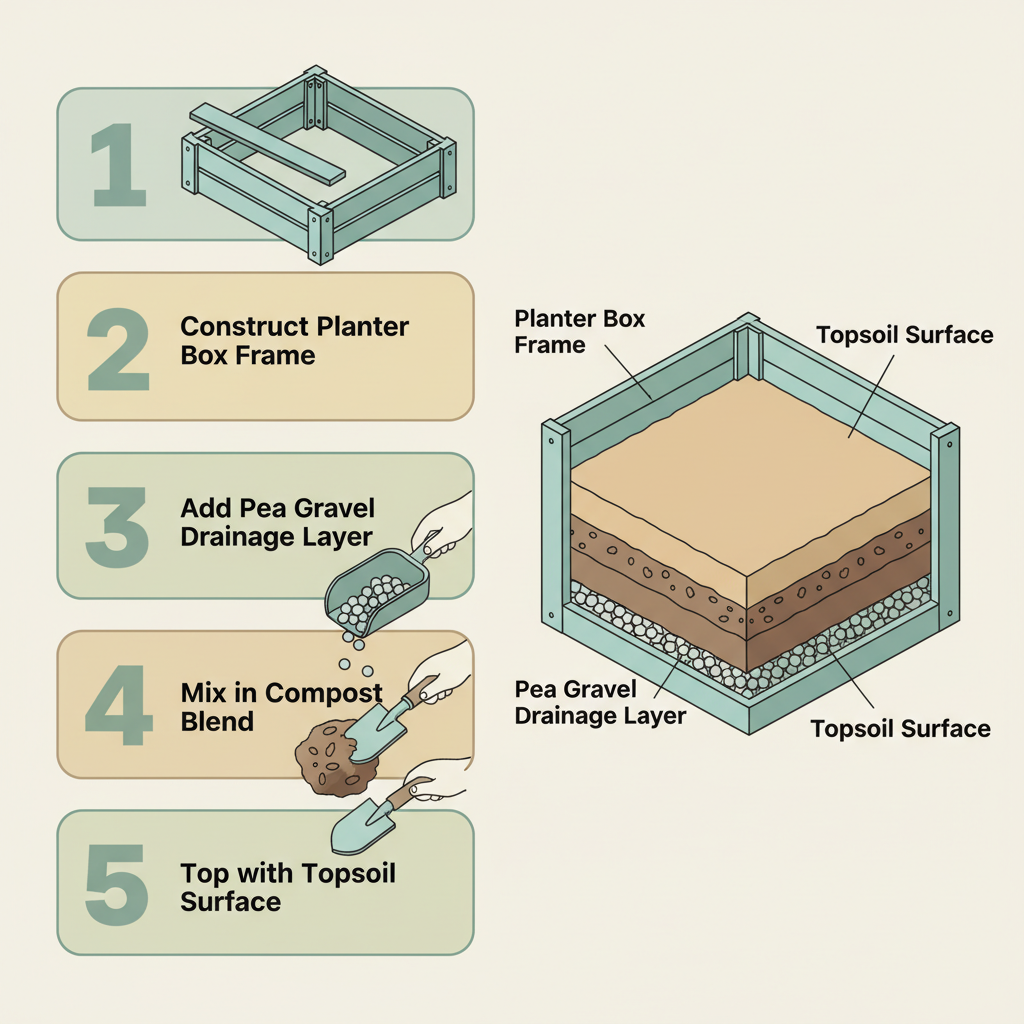
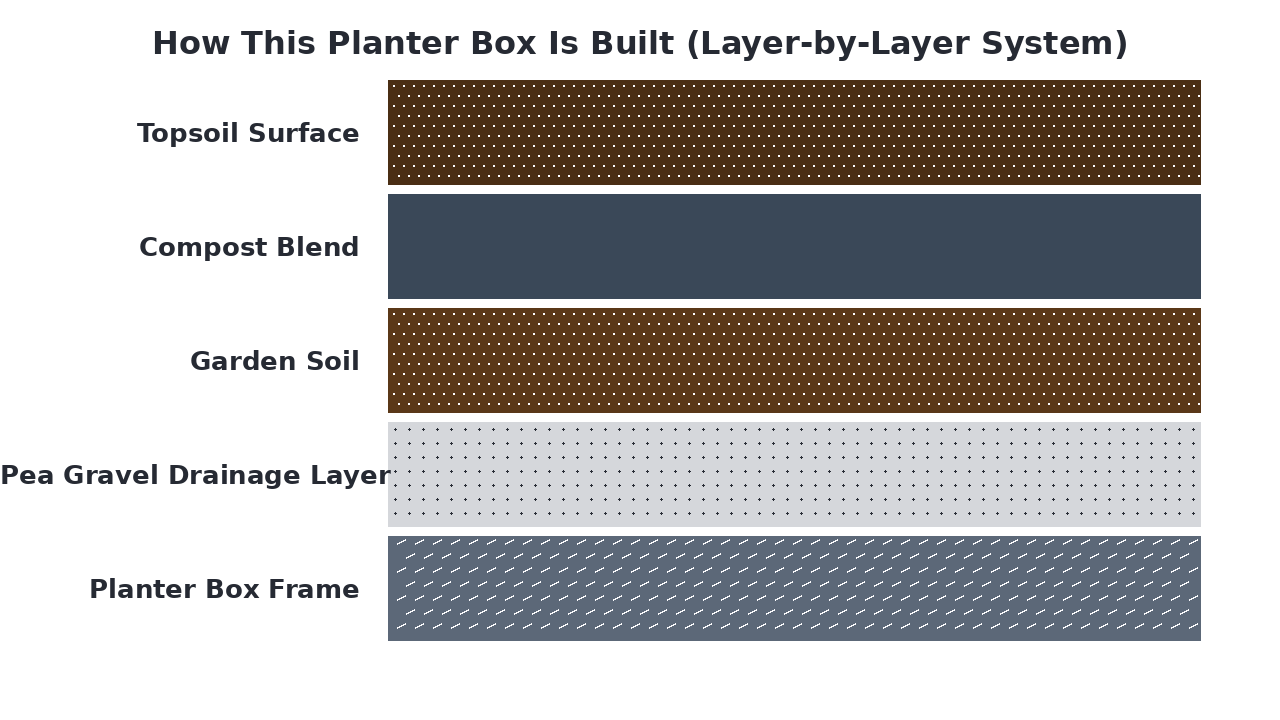
This visual guide illustrates the step-by-step construction sequence for building a planter box, showing exactly how each layer is installed from bottom to top. It clarifies the proper order of materials—starting with the frame, then pea gravel for drainage, followed by garden soil, compost blend, and finally topsoil—so you can build with confidence. Following this layered approach ensures optimal drainage and nutrient-rich soil for healthy plant growth.
Gravel for Planter Boxes: Best Materials, Depth, Cost & How to Build
A planter box drains properly when there's a 2–3 inch layer of 1/4 to 1/2 inch pea gravel at the bottom, beneath the soil. The gravel gives water somewhere to go instead of pooling around plant roots. For a 4 ft × 8 ft planter, you'll only need about 0.1–0.3 cubic yards of pea gravel.
How This Planter Box Is Built (Layer-by-Layer System)
A planter box is built as a layered system that promotes healthy plant growth while ensuring proper drainage and root aeration. The system starts with a drainage layer of pea gravel at the bottom to prevent waterlogging, followed by a layer of garden soil that provides nutrients and structure for root development. The top layers typically include a blend of compost and topsoil to enrich the growing medium and support vigorous plant growth. A small amount of sand can be mixed into the soil layers to improve texture and drainage, creating an optimal environment for your plants.
Materials Breakdown: What Each Layer Does
A planter box is built as a layered system, where each material has a specific job to support plant health and drainage. The bottom layer prevents soil compaction and allows excess water to escape, while the upper layers provide nutrients and a stable growing medium. Together, these materials create a balanced environment so plants can thrive without waterlogging or nutrient deficiencies.
Wooden Frame
The structural container that holds all the soil layers and provides a defined planting area.
Pea Gravel
A layer of small, rounded stones that creates air pockets and allows excess water to drain away from plant roots.
View Pea Gravel →Garden Soil
A balanced growing medium that provides structure and basic nutrients for plant root development.
View Garden Soil →Compost Blend
A nutrient-rich organic mixture that adds beneficial microbes and fertility to support plant growth.
Topsoil
The uppermost layer of fine soil that provides a stable surface for planting seeds or transplants.
View Topsoil →What Is a Planter Box and Why Does It Matter?
A planter box gets a 2–3 inch layer of 1/4 to 1/2 inch pea gravel at the very bottom, under the soil, so excess water has somewhere to go instead of drowning your roots. For a 4 ft × 8 ft planter you only need about 0.1–0.3 cubic yards of pea gravel. Without the drainage layer, soggy soil leads to root rot — the single most common reason planter-box plants die early.
Common Types of Planter Box Systems
Planter boxes come in several common types, each offering different benefits for home gardeners. A basic gravel-and-soil planter uses a simple gravel drainage layer topped with garden soil and compost, providing an affordable and effective raised bed. More advanced systems may incorporate built-in irrigation lines or self-watering reservoirs for lower maintenance, while decorative planters focus on aesthetic materials like stone or wood. The key difference lies in the balance between functionality, cost, and visual appeal.
- Excellent drainage with gravel base
- Simple layered construction
- Affordable materials
- Easy DIY installation
- Versatile for most plants
Best for:Home gardeners wanting effective drainage
- Built-in watering system
- Reduces maintenance time
- Consistent moisture control
- Higher initial cost
- Professional installation often needed
Best for:Busy gardeners or frequent travelers
- Premium aesthetic materials
- Custom designs available
- Higher cost
- May sacrifice some functionality
- Focus on visual appeal
Best for:Prioritizing outdoor aesthetics
When a Planter Box Is the Best Solution
A gravel-and-soil planter box is the best solution when you need superior drainage for healthy plant roots, especially in areas with poor native soil or heavy rainfall. It's ideal for gardeners working with limited space who want to maximize growing area while maintaining soil control. This approach works well for both vegetable gardens and ornamental plants, providing an affordable DIY option that delivers professional results without complex irrigation systems.
Everything You Need to Build a Planter Box
Building a planter box requires a few key materials and basic tools. You'll need lumber or pre-made planter box kits for the frame, along with layered soil amendments and drainage gravel. Essential tools include a saw, drill, and measuring tape to construct the box, plus a shovel and wheelbarrow for mixing and placing materials.
- Planter box frame (lumber or kit), Pea gravel, Garden soil, Compost blend, Topsoil
- Measuring tape, Saw, Drill, Shovel, Wheelbarrow, Level
- Hello Gravel (materials), Home Depot (lumber, tools), A contractor supply store
What to Consider Before You Start
Before you begin construction, consider these key factors to ensure your planter box is successful and long-lasting.
- Location and sunlight
Choose a spot that receives adequate sunlight for your plants and allows for proper drainage away from structures.
- Box size and design
Determine the dimensions and height of your planter box based on the plants you want to grow and available space.
- Material selection
Decide whether to use pressure-treated lumber, cedar, or composite materials for durability and plant safety.
- Drainage planning
Plan for adequate drainage holes in the box bottom and consider slope if placing on a hard surface.
- Soil volume calculation
Calculate how much soil, compost, and gravel you'll need based on your box dimensions to avoid shortages.
How to Prepare the Ground for a Planter Box
Start by clearing the site of any grass, weeds, or debris to create a clean, level surface. Mark the perimeter of your planter box using stakes and string, ensuring it's square and positioned where you want it. Grade the area within the perimeter so it's level or has a very slight slope for drainage, and then compact the soil with a hand tamper to create a stable, firm base that won't settle unevenly under the weight of the planter.
How a Planter Box Works
The planter box functions as a layered system where each material serves a specific structural and horticultural purpose. The pea gravel drainage layer at the bottom prevents soil compaction and allows excess water to escape, protecting roots from rot. Above it, layers of garden soil and compost blend provide nutrients and a stable growing medium, while the topsoil surface offers an ideal seedbed for planting.
How to Install a Planter Box
Construct Planter Box Frame
Assemble the wooden or composite frame according to your design, securing it with screws or brackets.
Add Pea Gravel Drainage Layer
Fill the bottom of the frame with a 2-3 inch layer of pea gravel to facilitate water drainage.
Layer Garden Soil
Add a thick layer of garden soil on top of the gravel to serve as the primary growing medium.
Mix in Compost Blend
Incorporate a compost blend into the garden soil to enrich it with nutrients for plant health.
Top with Topsoil Surface
Finish by adding a final layer of topsoil to create a smooth, plant-ready surface.
Alternative Gravel Options for Planter Boxs
For planter boxes, drainage and root support are key considerations when selecting bottom layer materials. While several aggregate options can work, pea gravel is often the top choice because its rounded shape creates excellent drainage channels without compacting over time. Other materials like sand or compost can serve specific purposes, but may not provide the same balance of aeration and stability that pea gravel offers.
Best overall for drainage and preventing soil compaction in planter boxes.
View Product →Poor drainage layer that decomposes and compacts, causing waterlogging.
View Product →Common Planter Box Mistakes (And How to Avoid Them)
Even with quality materials, planter boxes can fail due to common installation and maintenance errors. Avoiding these mistakes ensures proper drainage, plant health, and long-term success of your gardening project.
- Insufficient drainage layer
- Wrong soil mix
- Overfilling with soil
- Poor box construction
- Ignoring seasonal maintenance
How to Maintain a Planter Box
Regular planter box maintenance involves checking the drainage layer annually to ensure it hasn't compacted or clogged. Refresh the top few inches of soil each growing season to replenish nutrients, and monitor for proper drainage after heavy rains. Inspect the box structure for rot or damage, especially at corners and joints where water tends to collect.
Calculate How Much Gravel You Need
Enter Your Dimensions
Measure your project area and we'll calculate how much material you need.