Pier Foundation Road Base: Footing Stone Depth & Volume
A pier foundation provides critical stability for decks, sheds, and small structures, with its strength depending on proper material selection and installation. This guide explains what a pier foundation is, which materials you need, how to design and lay out the piers, how to install them step by step, and how to estimate the amount of gravel required. Whether you are building a new deck foundation or reinforcing an existing structure, use the sections below to navigate through the process.
See How to Build a Pier Foundation
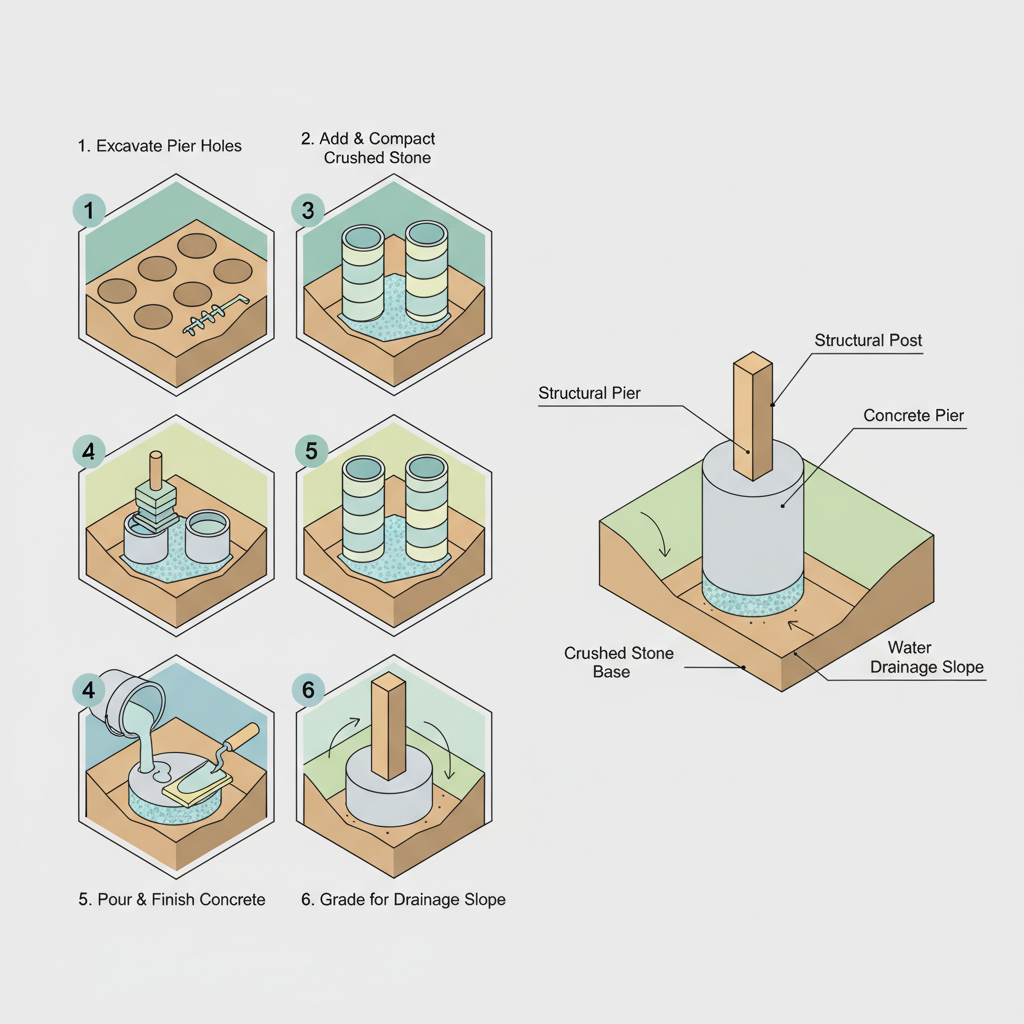
This visual guide shows the step-by-step installation sequence for building a pier foundation, helping you understand the proper order of operations from excavation to post installation. It also illustrates the layered cross-section structure from compacted soil to drainage slope, clarifying how each component contributes to a stable foundation system.
Pier Foundation Gravel: Best Base Materials, Depth, Installation & How to Build
A pier foundation uses a compacted gravel base to provide drainage and stability for concrete piers supporting structures like decks and sheds. We recommend crushed stone with 3/4 inch down to fines grading installed 4-6 inches deep to ensure proper compaction and frost protection. This layered system transfers structural loads to stable soil while directing water away from the foundation. Proper installation includes sloping the gravel base away from the structure to prevent moisture damage.
How This Pier Foundation Is Built (Layer-by-Layer System)
A pier foundation is built as a layered system that transfers structural loads from a building down to stable soil while preventing moisture damage. The system starts with a compacted gravel base that provides drainage and prevents frost heave, followed by concrete piers that support structural posts or beams. Proper construction includes ensuring the gravel layer is well-compacted and slopes slightly away from the foundation to direct water away from the structure. This layered approach creates a stable, durable foundation suitable for decks, sheds, and other outdoor structures.
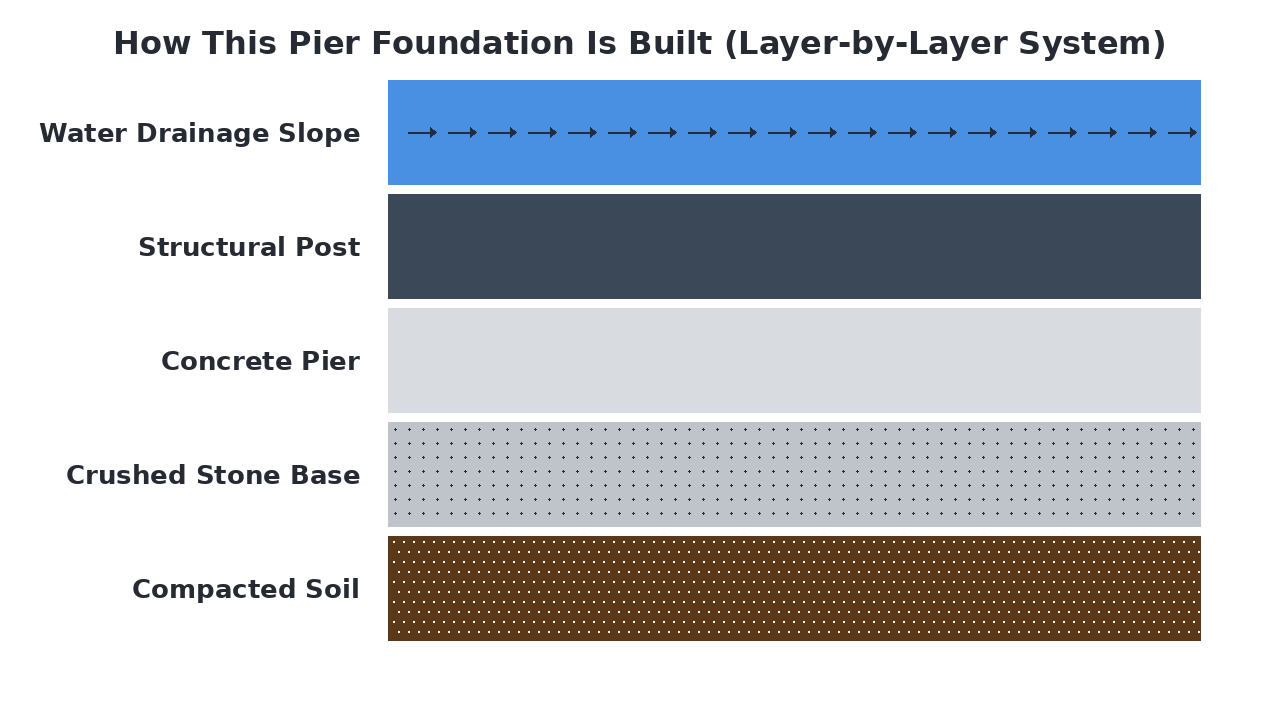
Materials Breakdown: What Each Layer Does
A pier foundation is constructed as a layered system where each material serves a specific structural purpose. The components work together to transfer building loads through the pier to stable soil while managing water drainage. Selecting appropriate materials for each layer ensures the foundation remains stable and prevents frost heave or soil erosion over time.
Compacted Soil
The stable native soil that has been properly compacted to provide a solid bearing surface for the foundation layers.
Crushed Stone Base
A layer of crushed stone that creates a level, well-draining platform and helps distribute loads evenly across the soil.
Concrete
The structural pier that transfers building loads from the post down through the stone base to the stable soil below.
View Concrete →Structural Post
The vertical support member that carries the building's weight and transfers it down to the concrete pier foundation.
Drainage Slope
The graded surface that directs water away from the foundation to prevent pooling and protect against frost damage.
What Is a Pier Foundation and Why Does It Matter?
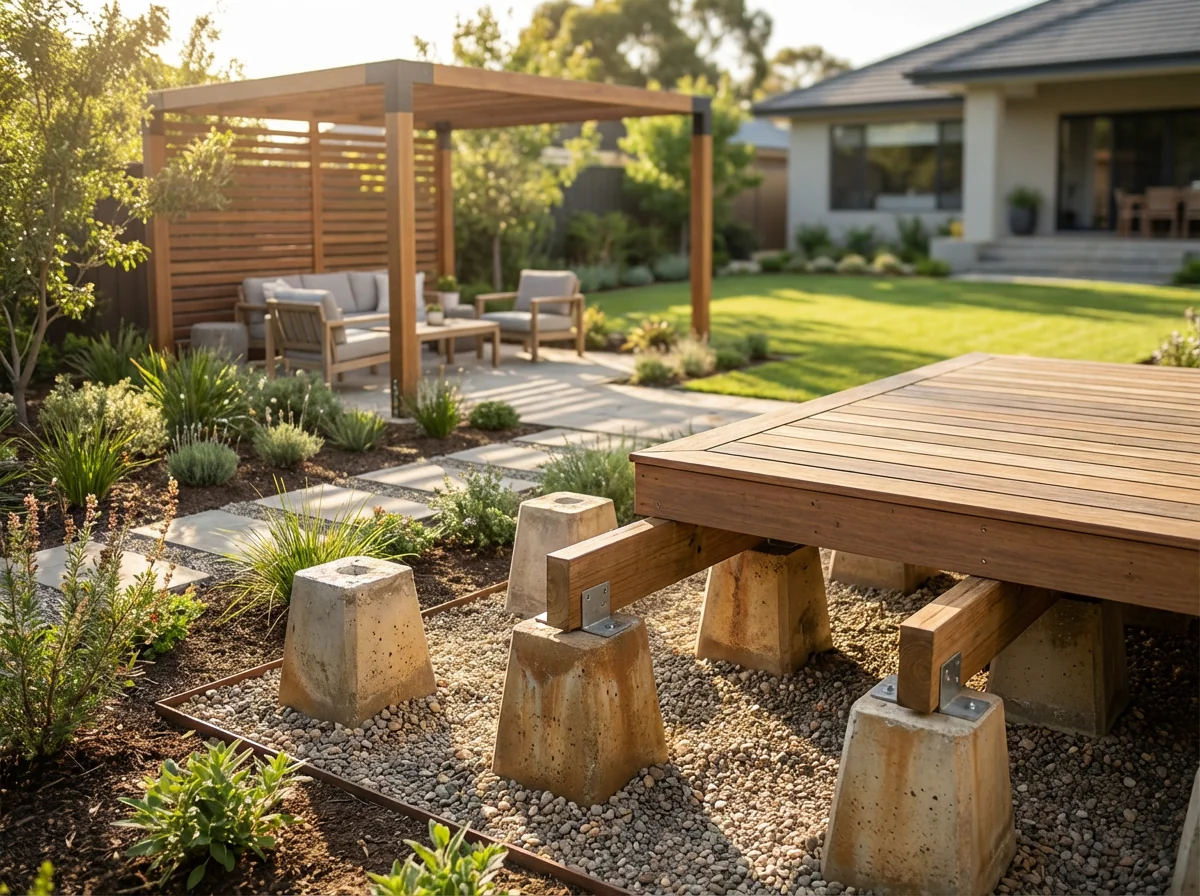
A pier foundation is a layered structural system that transfers building loads from posts or beams down to stable soil through concrete piers and a gravel base. This matters because it provides frost protection, drainage, and stability for outdoor structures while being more cost-effective than full concrete foundations. Unlike slab foundations, pier foundations allow for better drainage and are ideal for uneven terrain or structures requiring ventilation beneath. The gravel base layer prevents frost heave and directs water away, creating a durable foundation for sheds, decks, and other light structures.
Common Types of Pier Foundation Systems
Pier foundations typically use either concrete, gravel, or crushed stone as the primary material for the pier base and backfill. Concrete piers offer the highest structural strength and are permanent but require more labor and cost. Gravel bases provide excellent drainage and frost protection while being easier to install and adjust. Crushed stone offers similar drainage benefits with slightly better compaction than gravel.
- Maximum structural strength
- Permanent, long-lasting solution
- Requires professional installation
- Higher material and labor costs
- Limited drainage without additives
Best for:Heavy structures requiring maximum stability
- Excellent natural drainage
- Prevents frost heave effectively
- Easy to install and adjust
- Cost-effective material choice
- Allows for ventilation beneath
Best for:Light structures on uneven terrain
- Good drainage with better compaction
- Resists shifting and settling
- Moderate installation difficulty
- Mid-range cost option
- Works well with concrete piers
Best for:Moderate loads needing stability
- Easy to level and compact
- Lowest material cost
- Poor drainage retention
- Prone to washing out
- Minimal frost protection
Best for:Temporary or very light structures
When a Pier Foundation Is the Best Solution
A gravel-based pier foundation is ideal when you need cost-effective frost protection and drainage for light outdoor structures. Choose this system for sheds, decks, or pergolas on sloped or uneven terrain where ventilation beneath is beneficial. It's perfect for DIY projects with moderate budgets that require good drainage without the permanence of concrete. The gravel base prevents water pooling and frost heave while being easy to adjust if future modifications are needed.
Everything You Need to Build a Pier Foundation
A pier foundation requires specific materials for each structural layer, starting with a stable base of compacted soil and crushed stone. You'll need concrete for the piers, anchor hardware for the structural posts, and proper drainage materials to manage water. Having the right tools on hand—including excavation equipment, mixing tools, and measuring instruments—will ensure a precise and durable installation.
- Compacted soil, Crushed stone base, Concrete mix, Structural posts, Drainage gravel
- Post hole digger or auger, Shovel and rake, Concrete mixer or mixing tub, Level and measuring tape, Compactor
- Hello Gravel (concrete, gravel, posts), A contractor supply store (hardware), Equipment rental (auger, compactor)
What to Consider Before You Start
Before digging your first hole, take time to plan these key aspects to ensure your pier foundation is properly located, sized, and built to last.
- Soil conditions and load-bearing capacity
Test your soil type and compaction to determine if it can support the foundation loads without settling.
- Frost depth and local building codes
Check your local frost line depth and building regulations to determine proper pier depth and spacing.
- Pier layout and spacing
Plan the exact locations and spacing of piers based on your structure's load distribution and design.
- Drainage and water management
Evaluate the site slope and plan drainage to prevent water accumulation around the piers.
- Concrete mixing and curing conditions
Consider weather conditions and timing for proper concrete mixing, pouring, and curing periods.
How to Prepare the Ground for a Pier Foundation
Begin by clearing the site of all vegetation, debris, and topsoil to expose the stable subgrade. Mark the precise locations for each pier using stakes and string lines, then grade the area to establish a consistent slope away from the structure for water drainage. Finally, compact the exposed soil thoroughly with a plate compactor to create a firm, unyielding base that will support the subsequent layers without settling.
How a Pier Foundation Works
A pier foundation works by transferring structural loads from the building down through a concrete pier to a stable, compacted soil layer. The crushed stone base beneath the pier distributes the load over a wider area and provides a leveling bed, while the surrounding slope directs surface water away to prevent erosion and frost heave around the foundation elements. This layered system ensures long-term stability by isolating the structural post from moisture and soil movement.
How to Install a Pier Foundation
Excavate Pier Holes
⚠️ Licensed-trade notice: This project is code-regulated in most jurisdictions and typically requires a licensed contractor and local permits. The steps below are provided to help plan your aggregate order, not as a substitute for professional design, permits, or inspections. Dig holes at each marked location to the required depth and diameter, ensuring sides are straight and bottoms are level.
Add & Compact Crushed Stone
Fill the bottom of each hole with a layer of crushed stone, then compact it firmly to create a stable, load-distributing base.
Set Concrete Pier Forms
Place cylindrical concrete forms or sonotubes into each hole, ensuring they are plumb and extend to the desired height above grade.
Pour & Finish Concrete
Fill the forms with concrete, vibrating to remove air pockets, and finish the top surface smooth and level.
Install Structural Post
After the concrete has fully cured, secure the structural post (e.g., wood, steel) to the embedded anchor in the pier.
Grade for Drainage Slope
Shape and compact the soil around the finished piers to create a gentle slope that directs surface water away from the foundation.
Alternative Gravel Options for Pier Foundations
While concrete is the standard material for poured pier foundations, several gravel and stone alternatives can serve as effective structural fill or drainage layers. Crushed stone with angular edges provides superior compaction and load-bearing capacity, making it the best choice for the primary base layer. Softer, rounded aggregates like pea gravel are better suited for decorative top layers or non-structural drainage applications where stability is less critical. The winning option typically balances angularity for interlock with proper gradation for drainage.
Angular, well-graded stone that compacts tightly for maximum load-bearing capacity.
View Product →Standard poured concrete forms the most durable and permanent pier structure.
A blend of crushed stone and fines that creates a stable, compactable foundation layer.
View Product →Used as a leveling bed or drainage layer beneath the main structural fill.
Rounded stones that shift under load, unsuitable for structural foundation layers.
View Product →Common Pier Foundation Mistakes (And How to Avoid Them)
Proper pier foundation construction requires attention to both material selection and installation technique. Avoiding these common errors ensures long-term stability and prevents costly repairs.
- Insufficient depth
- Poor drainage planning
- Inadequate compaction
- Wrong aggregate type
- Improper pier spacing
How to Maintain a Pier Foundation
Regular inspection of pier foundations is essential for maintaining structural integrity. Check for signs of settling or erosion around the base each season, and clear any debris that could trap moisture against the piers. Replenish drainage gravel if washout occurs, and monitor for frost heave in colder climates. Address minor issues promptly to prevent more extensive foundation damage.
Calculate How Much Gravel You Need
Enter Your Dimensions
Measure your project area and we'll calculate how much material you need.