Hot Tub Pad Gravel: Stone Size, Depth & Tonnage Guide
A sturdy hot tub pad is essential for properly supporting your spa and preventing ground settling. This guide explains what a hot tub pad is, which materials you need, how to prepare the ground, how to build it step by step, and how to estimate the amount of gravel required. Whether you are installing a hot tub for the first time or replacing an existing foundation, use the sections below to navigate through the process.
See How to Build a Hot Tub Pad
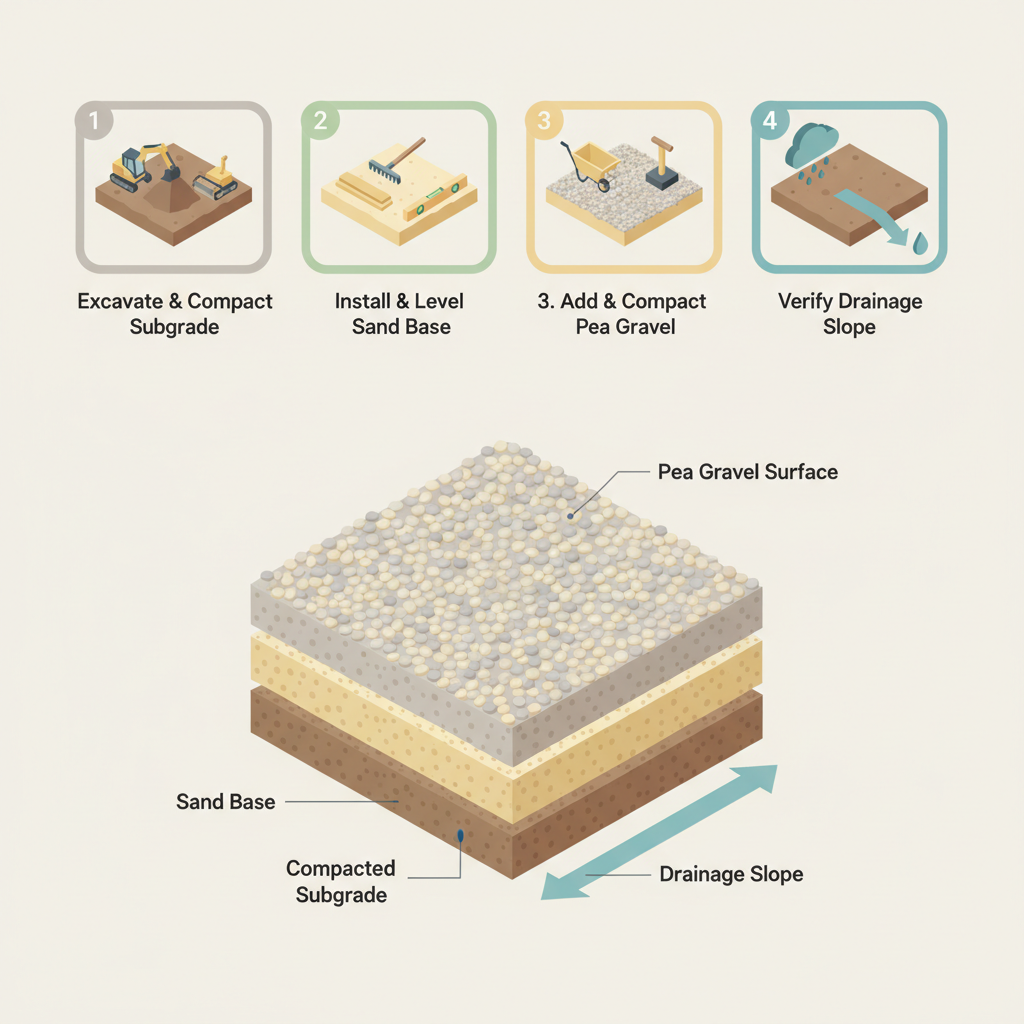
This visual guide illustrates the step-by-step installation sequence for building a stable hot tub pad, showing how each layer—from compacted subgrade to pea gravel surface—contributes to proper support and drainage. The numbered infographic clarifies the construction order while the cross-section diagram reveals the essential layered structure beneath the finished pad.
Gravel for Hot Tub Pads: Best Materials, Depth, Cost & How to Build
A hot tub pad is a stable foundation that prevents settling and ensures proper drainage for your spa. We recommend pea gravel as the surface layer, with 3/8-1/2 inch stones and a total depth of 4-6 inches including a sand base. This creates a load-bearing surface that won't shift while allowing water to drain efficiently. Proper compaction of each layer is essential for long-term durability.
How This Hot Tub Pad Is Built (Layer-by-Layer System)
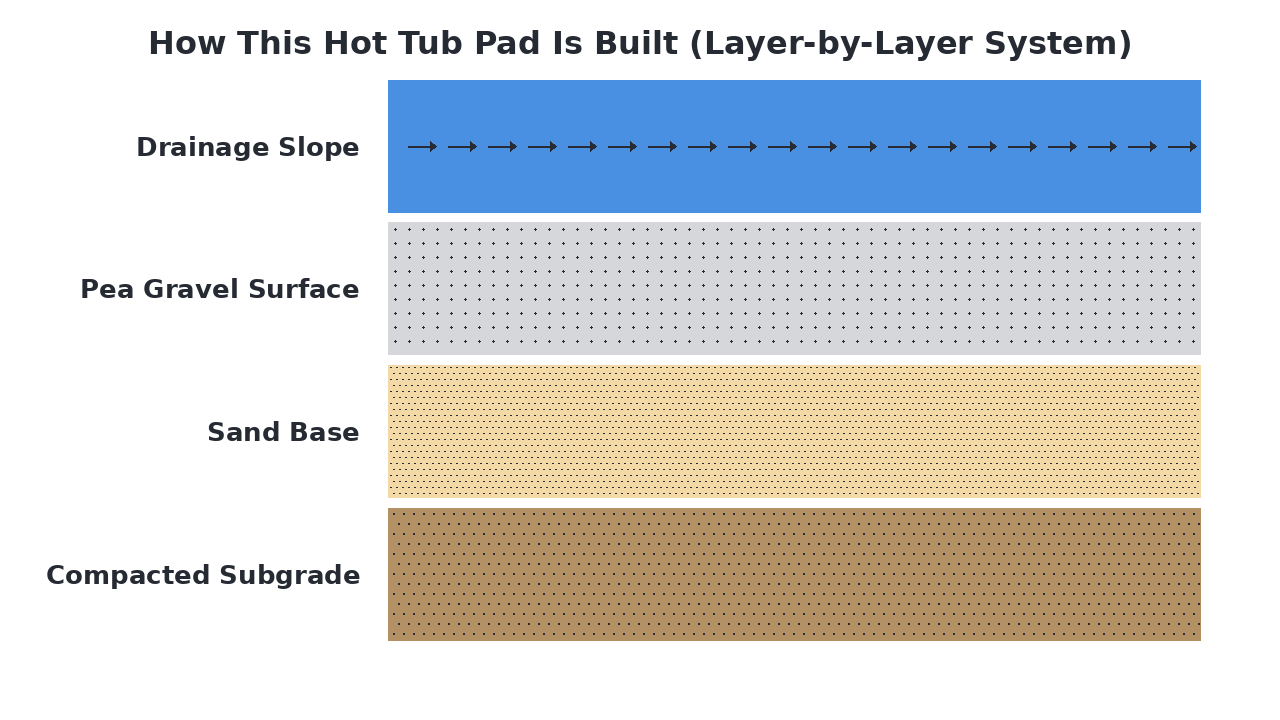
A hot tub pad is constructed as a stable, load-bearing foundation that prevents settling and ensures proper drainage. The system begins with a compacted subgrade, followed by a layer of sand that creates a level surface and enhances drainage. The top layer of pea gravel provides a firm yet permeable base that supports the hot tub's weight while allowing water to drain away efficiently. Proper compaction of each layer is essential to create a durable pad that won't shift or settle over time.
Materials Breakdown: What Each Layer Does
A hot tub pad is constructed as a layered foundation, with each material serving a distinct structural or drainage purpose. The layers work together to create a stable, level surface that supports the tub's weight while allowing water to drain away from the base. Choosing the correct product for each level ensures long-term stability and prevents settling or water damage.
Compacted Subgrade
The native soil that has been firmly compressed to create a solid, stable base for the entire pad, preventing future shifting or sinking.
Sand
A leveling layer that fills minor imperfections in the subgrade and provides a smooth, even surface for the gravel layers above.
View Sand →Pea Gravel
The top layer that provides a decorative, comfortable surface for the hot tub to rest on while allowing for drainage and easy leveling.
View Pea Gravel →Drainage Slope
A gentle grade built into the pad's surface that directs water runoff away from the hot tub, preventing pooling and potential damage.
What Is a Hot Tub Pad and Why Does It Matter?
A hot tub pad is a specialized foundation designed to support the significant weight of a hot tub while ensuring proper drainage to prevent water accumulation. It matters because an inadequate foundation can lead to settling, structural damage to the hot tub, and drainage issues that compromise safety and longevity. Unlike simple concrete slabs, a gravel-based pad allows for natural drainage and is more forgiving to ground movement, making it ideal for outdoor installations where water management is crucial.
Common Types of Hot Tub Pad Systems
Hot tub pads come in several forms, each balancing cost, durability, and drainage. The most common options include a simple gravel bed, a concrete slab, or a combination of gravel and pavers. Gravel pads excel at drainage and are easier to install, while concrete offers a more permanent and level surface but can be prone to cracking without proper preparation. Composite systems using gravel with a rigid top layer provide a compromise between stability and water management.
- Excellent natural drainage
- Cost-effective and DIY-friendly
- Forgiving to ground movement
- Easy to adjust or remove
Best for:Outdoor installations needing good drainage
- Extremely stable and permanent
- Provides perfectly level surface
- Requires professional installation
- Can crack without proper base
Best for:Permanent installations with heavy loads
- Good drainage with stable surface
- More attractive than plain gravel
- Moderate installation complexity
- Allows for some adjustability
Best for:Balancing aesthetics with functionality
- Quick interlocking installation
- Stabilizes gravel in place
- Allows grass to grow through
- Higher upfront material cost
Best for:Eco‑friendly, green‑looking foundations
When a Hot Tub Pad Is the Best Solution
A gravel hot tub pad is the best solution when you need effective drainage to prevent water pooling under the tub, especially in areas with heavy rainfall or poor soil drainage. It's ideal for DIY homeowners on a budget who want a forgiving foundation that accommodates minor ground settling without cracking. Choose this option when you prioritize natural water management over a perfectly rigid surface, and when you want the flexibility to adjust or relocate the pad in the future.
Everything You Need to Build a Hot Tub Pad
Building a hot tub pad requires several key materials to create a stable, layered foundation. You'll need foundational materials like sand and compacted subgrade, plus surface materials such as pea gravel for drainage. Essential tools for excavation, leveling, and compaction are also necessary to ensure a proper build.
- Compacted subgrade, Sand base, Pea gravel surface, Drainage slope
- Shovel, Rake, Hand tamper or plate compactor, Level, Tape measure
- A contractor supply store, Hello Gravel (materials), Local equipment rental (compactor)
What to Consider Before You Start
Before you begin construction, consider these key planning steps to ensure a successful and long-lasting hot tub pad.
- Site selection and preparation
Choose a level, well-drained location away from trees and overhead obstacles, and clear the area of vegetation and debris.
- Local building codes and permits
Check with your local municipality for any required permits or specific regulations regarding hot tub foundations.
- Hot tub specifications and weight
Confirm your hot tub's exact dimensions, filled weight, and any manufacturer-recommended foundation requirements.
- Drainage planning
Determine the direction and slope needed for proper water runoff away from the hot tub and surrounding structures.
- Material quantity calculation
Measure the pad area and calculate the required amounts of sand, gravel, and other materials before purchasing.
How to Prepare the Ground for a Hot Tub Pad
Begin by clearing the area of all vegetation, roots, and debris to expose bare soil. Mark the pad's outline with stakes and string, ensuring it's at least 6-12 inches larger than the hot tub's footprint on all sides. Use a shovel and rake to grade the soil, creating a slight slope of about 1/4 inch per foot away from any structures for drainage. Finally, thoroughly compact the subgrade with a plate compactor to create a firm, stable base that resists settling.
How a Hot Tub Pad Works
The layered pad distributes the hot tub's substantial weight evenly across the compacted subgrade, preventing concentrated loads that could cause sinking. A sand base provides a leveling bed and enhances drainage, while the pea gravel surface offers a stable, non-shifting finish that allows surface water to percolate down. The intentional drainage slope directs water away from the tub's base, protecting the structure from moisture damage and frost heave. Together, these materials create a durable, permeable foundation that maintains stability through freeze-thaw cycles and regular use.
How to Install a Hot Tub Pad
Excavate & Compact Subgrade
Dig out the marked area to a depth of 6-8 inches, then compact the exposed soil firmly with a plate compactor.
Install & Level Sand Base
Spread a 2-3 inch layer of coarse sand over the compacted subgrade, then level and lightly compact it to create a smooth, sloped bed.
Add & Compact Pea Gravel
Pour a 4-6 inch layer of pea gravel over the sand base, then compact it thoroughly to form a stable, load-bearing surface.
Verify Drainage Slope
Use a level to confirm the finished pad slopes away from nearby structures at a minimum rate of 1/4 inch per foot.
Alternative Gravel Options for Hot Tub Pads
Homeowners have several aggregate options for constructing a hot tub pad, each with different properties affecting stability, drainage, and ease of installation. Crushed stone is typically the best choice for the main load-bearing layer due to its excellent compaction and interlocking ability that prevents shifting under heavy weight. While alternatives like pea gravel offer good drainage and concrete provides maximum rigidity, they often lack the optimal balance of stability and permeability needed for long-term performance. The winning option combines reliable load support with effective water management to protect both the hot tub and the underlying ground.
The ideal primary base layer for its superior compaction and interlocking stability.
View Product →Provides maximum rigidity but requires professional installation and lacks natural drainage.
Offers excellent drainage but lacks the compaction needed for primary structural support.
View Product →A cost-effective option with good compaction but may require more maintenance over time.
View Product →Poor choice as it shifts easily under load and provides minimal structural integrity.
View Product →Common Hot Tub Pad Mistakes (And How to Avoid Them)
Even with the right materials, several common installation errors can compromise your hot tub pad's longevity and safety. These mistakes often lead to settling, drainage issues, or structural failure over time. Avoiding these pitfalls ensures your foundation remains stable and functional for years.
- Insufficient base depth
- Poor drainage planning
- Inadequate compaction
- Wrong aggregate selection
- No perimeter containment
- Ignoring ground slope
How to Maintain a Hot Tub Pad
Regular maintenance of your hot tub pad involves inspecting for settling or erosion, particularly after heavy rains or seasonal changes. Re-level the surface with additional crushed stone if depressions form, and ensure drainage channels remain clear of debris. Check the perimeter edging for stability and repair any washed-out areas promptly to prevent further deterioration. Annual visual inspections and minor adjustments will help maintain the pad's structural integrity and prevent costly repairs.
Calculate How Much Gravel You Need
Enter Your Dimensions
Measure your project area and we'll calculate how much material you need.