Generator Pad Gravel: Road Base Depth & Tons by Pad Size
A properly built generator pad provides critical stability and drainage for your backup power system. This guide explains what a generator pad is, which materials you need, how to prepare the ground, how to build a generator pad step by step, and how to estimate the amount of gravel required. Whether you are installing a permanent generator for your home or setting up a temporary pad for construction equipment, use the sections below to navigate through the process.
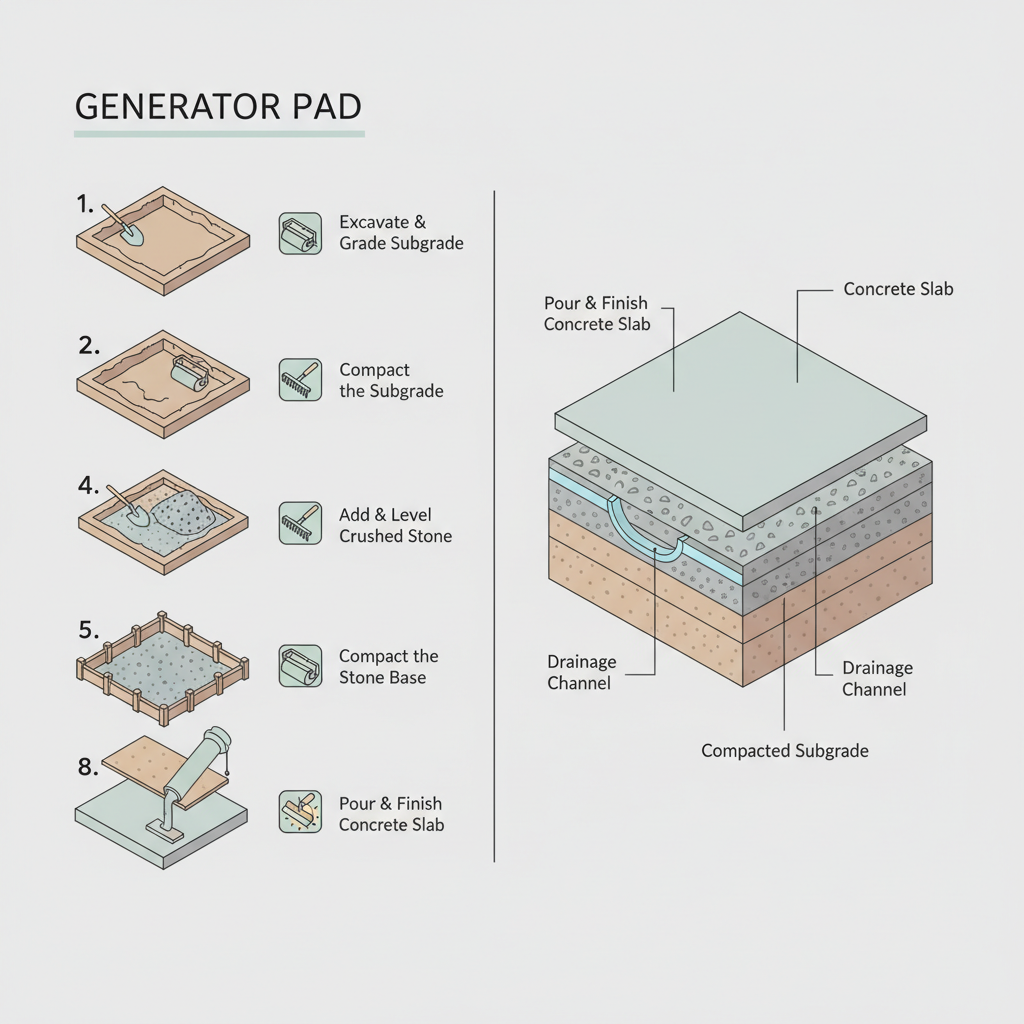
See How to Build a Generator Pad
This visual guide walks you through the step-by-step installation sequence for building a stable generator pad, from excavation to curing. It clearly illustrates each numbered step and the layered cross-section of compacted subgrade, crushed stone, concrete slab, and drainage channel, helping you understand the proper order and structural components for a durable, long-lasting installation.
Gravel for Generator Pads: Best Materials, Depth, Cost & How to Build
A generator pad requires a stable, well-draining foundation to support heavy equipment and prevent settling. We recommend using 3/4 inch crushed stone compacted to 4-6 inches as the base layer, which provides both structural integrity and proper drainage. This foundational layer is topped with a concrete slab for a durable, level surface. Proper installation ensures long-term stability and prevents water damage to your generator.
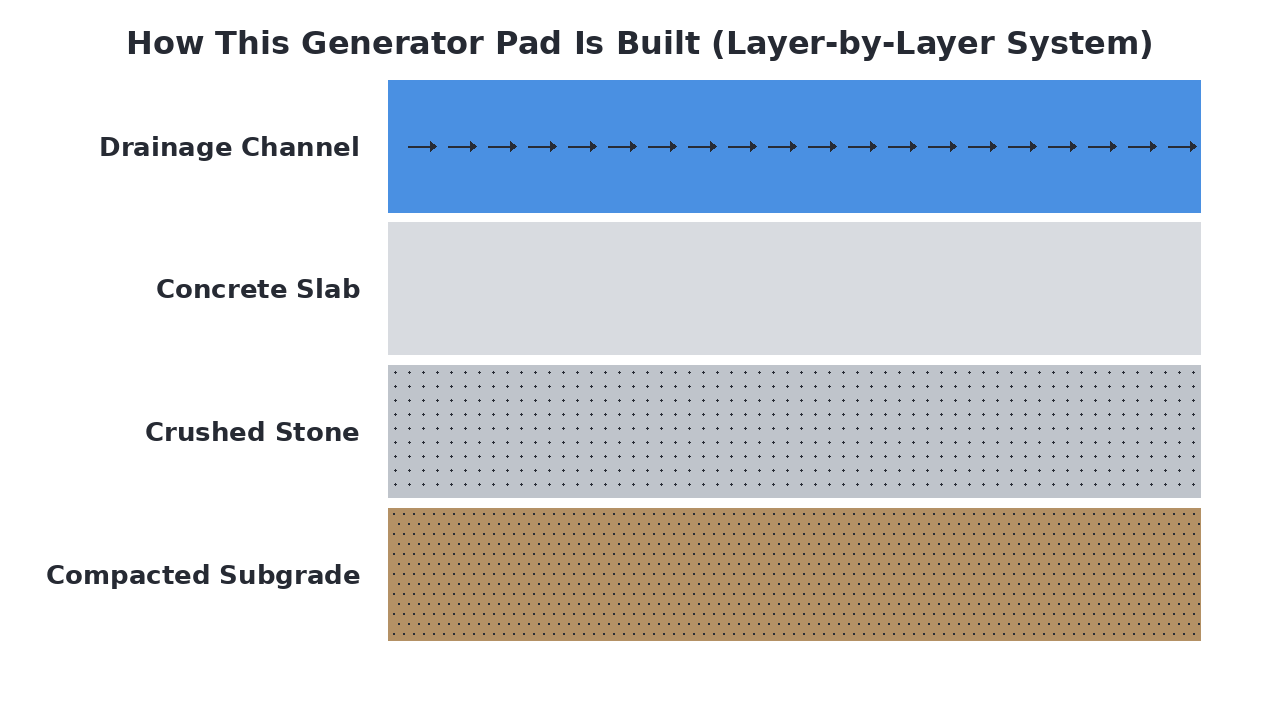
How This Generator Pad Is Built (Layer-by-Layer System)
A generator pad is built as a layered system designed to provide a stable, well-draining foundation for heavy equipment. The system starts with a compacted subgrade, followed by a layer of crushed stone for structural support and drainage, topped with a concrete slab for a durable surface. Proper compaction of each layer ensures stability while the crushed stone layer allows water to drain away from the pad, preventing erosion and settling that could compromise the generator's operation.
Materials Breakdown: What Each Layer Does
A generator pad is constructed as a layered system where each material serves a specific structural or drainage purpose. The layers work together to provide a stable, level surface that supports heavy equipment while managing water runoff to prevent erosion and settling. Selecting the right products ensures durability and proper performance over the pad's lifespan.
Native Soil
The existing ground that is excavated, leveled, and compacted to create a firm, stable base for the layers above.
Crushed Stone
A layer of angular crushed stone that provides drainage beneath the slab and helps distribute weight evenly.
View Crushed Stone →Concrete
The finished surface that supports the generator's weight and provides a durable, level platform for installation.
View Concrete →Drainage Channel
A trench or channel that directs water away from the pad to prevent pooling and protect the foundation from moisture damage.
What Is a Generator Pad and Why Does It Matter?
A generator pad is a layered foundation system designed to provide a stable, level surface for backup generators and other heavy equipment. It matters because improper foundations can lead to settling, vibration issues, and water damage that compromises generator operation. Unlike simple concrete slabs, a proper generator pad includes a crushed stone base layer for drainage and structural support, preventing erosion and ensuring long-term stability. This multi-layer approach differs from basic foundations by addressing both load-bearing requirements and water management simultaneously.
Common Types of Generator Pad Systems
Generator pads typically come in three main types: basic gravel pads, crushed stone pads with drainage layers, and full concrete slabs. Gravel pads are simple and affordable but can shift over time. Crushed stone pads offer better stability and drainage due to their interlocking angular pieces. Concrete pads provide the most permanent and level surface but require professional installation and proper drainage planning.
- Most affordable option
- Easy DIY installation
- Good drainage properties
- Can shift over time
- Needs regular maintenance
Best for:Temporary or budget installations
- Angular pieces interlock well
- Excellent drainage and stability
- Resists shifting and erosion
- Supports heavy equipment
- Long-lasting with minimal upkeep
Best for:Permanent generator installations
- Most permanent solution
- Perfectly level surface
- Professional installation required
- Expensive upfront cost
- Needs drainage planning
Best for:Commercial or high-end residential
When a Generator Pad Is the Best Solution
A crushed stone generator pad is ideal when you need a permanent, stable foundation for backup power equipment. It's perfect for areas with poor drainage since the angular crushed stone provides excellent water management while supporting heavy loads. This option balances durability with reasonable cost, making it suitable for most residential installations where you want reliable performance without the expense of concrete.
Everything You Need to Build a Generator Pad
Building a generator pad requires several key materials to create a stable, layered foundation that supports heavy equipment and manages water. You'll need compactable fill for the subgrade, crushed stone for the base layer, and concrete for the slab surface to ensure durability. Essential tools include excavation and grading equipment, a compactor to achieve proper density, and concrete finishing tools.
- Compacted subgrade fill (e.g., road base), Crushed stone (e.g., #57 stone), Concrete mix, Gravel (for optional drainage channel)
- Shovel and digging tools, Rake and grading tools, Plate compactor, Concrete mixing and finishing tools, Level and measuring tape
- Local equipment rental (compactor, mixer), Hello Gravel (materials), A contractor supply store (safety gear)
What to Consider Before You Start
Before breaking ground, consider these key factors to ensure your generator pad is properly located, sized, and compliant.
- Location and Clearance
Verify the pad site meets manufacturer clearance requirements for exhaust and maintenance access and is far enough from structures.
- Local Building Codes
Check with your local building department for any required permits, setbacks, or specific construction standards for permanent generator pads.
- Soil Assessment and Drainage
Evaluate the soil's load-bearing capacity and natural drainage patterns to determine if additional base preparation or a drainage channel is needed.
- Pad Size and Layout
Determine the final pad dimensions based on your generator's footprint, allowing extra space for maintenance and potential future equipment.
- Utility and Fuel Line Routing
Plan the path for electrical conduit and fuel supply lines from the generator to the house before the pad is poured to avoid costly modifications later.
How to Prepare the Ground for a Generator Pad
Begin by clearing the area of all vegetation, debris, and any large rocks or roots. Mark the pad's perimeter with stakes and string, ensuring it's level and properly sized for your generator. Excavate the marked area to the required depth, then grade the subgrade to create a slight slope for drainage. Finally, thoroughly compact the exposed soil to create a stable, solid foundation before adding any layers.
How a Generator Pad Works
The layered pad distributes the generator's weight through the concrete slab into the crushed stone base, which prevents settling. Water from rain or runoff is directed away by the slab's slight slope and collected by the perimeter drainage channel. This system keeps the pad stable, prevents water from pooling under the equipment, and protects the subgrade from erosion.
How to Install a Generator Pad
Excavate & Grade Subgrade
⚠️ Licensed-trade notice: This project is code-regulated in most jurisdictions and typically requires a licensed contractor and local permits. The steps below are provided to help plan your aggregate order, not as a substitute for professional design, permits, or inspections. Dig out the marked area to the required depth and grade the soil to create a stable, sloped base.
Compact the Subgrade
Use a plate compactor to thoroughly compact the excavated soil, creating a solid foundation layer.
Add & Level Crushed Stone
Spread a layer of crushed stone over the compacted subgrade and level it to the desired thickness.
Compact the Stone Base
Compact the crushed stone layer to create a dense, stable base for the concrete slab.
Install Drainage Channel
Place a perforated drainage pipe in a gravel-filled trench around the pad's perimeter to manage runoff.
Build Concrete Formwork
Construct wooden forms around the perimeter to contain the concrete pour and define the slab's edges.
Pour & Finish Concrete Slab
Pour concrete into the forms, level it, and finish the surface with a float and trowel for a smooth finish.
Alternative Gravel Options for Generator Pads
Homeowners have several aggregate options when building a generator pad, each with different strengths for stability, drainage, and cost. Crushed stone is often the top choice because it compacts solidly, resists shifting under heavy loads, and provides excellent drainage. While alternatives like concrete offer maximum rigidity and sand can be used as a leveling base, materials like pea gravel are too loose and unstable for this structural application.
The best overall choice for its excellent compaction, stability, and drainage.
View Product →Provides a permanent, rigid surface but is more expensive and requires professional installation.
View Product →Too loose and unstable for supporting heavy generator equipment.
View Product →Common Generator Pad Mistakes (And How to Avoid Them)
Even with the right materials, generator pads can fail if basic construction principles are overlooked. These common errors compromise stability, drainage, and safety over time.
- Insufficient base depth
- Poor drainage planning
- No perimeter containment
- Inadequate compaction
- Wrong aggregate choice
How to Maintain a Generator Pad
Regular maintenance keeps your generator pad functional and safe. Inspect the pad seasonally for settling, erosion, or weed growth, and add fresh aggregate as needed to maintain a level surface. Ensure drainage channels remain clear of debris, and promptly repair any potholes or washed-out areas to prevent further deterioration.
Calculate How Much Gravel You Need
Enter Your Dimensions
Measure your project area and we'll calculate how much material you need.