Flagpole Base Road Base Depth & Tons for a Stable Mount
A stable flagpole base is essential for proper display and safety in all weather conditions. This guide explains what a flagpole base is, which materials you need, how to prepare the ground, how to install it step by step, and how to estimate the amount of gravel required. Whether you are installing a residential flagpole or planning a commercial installation, use the sections below to find what you need.
See How to Build a Flagpole Base
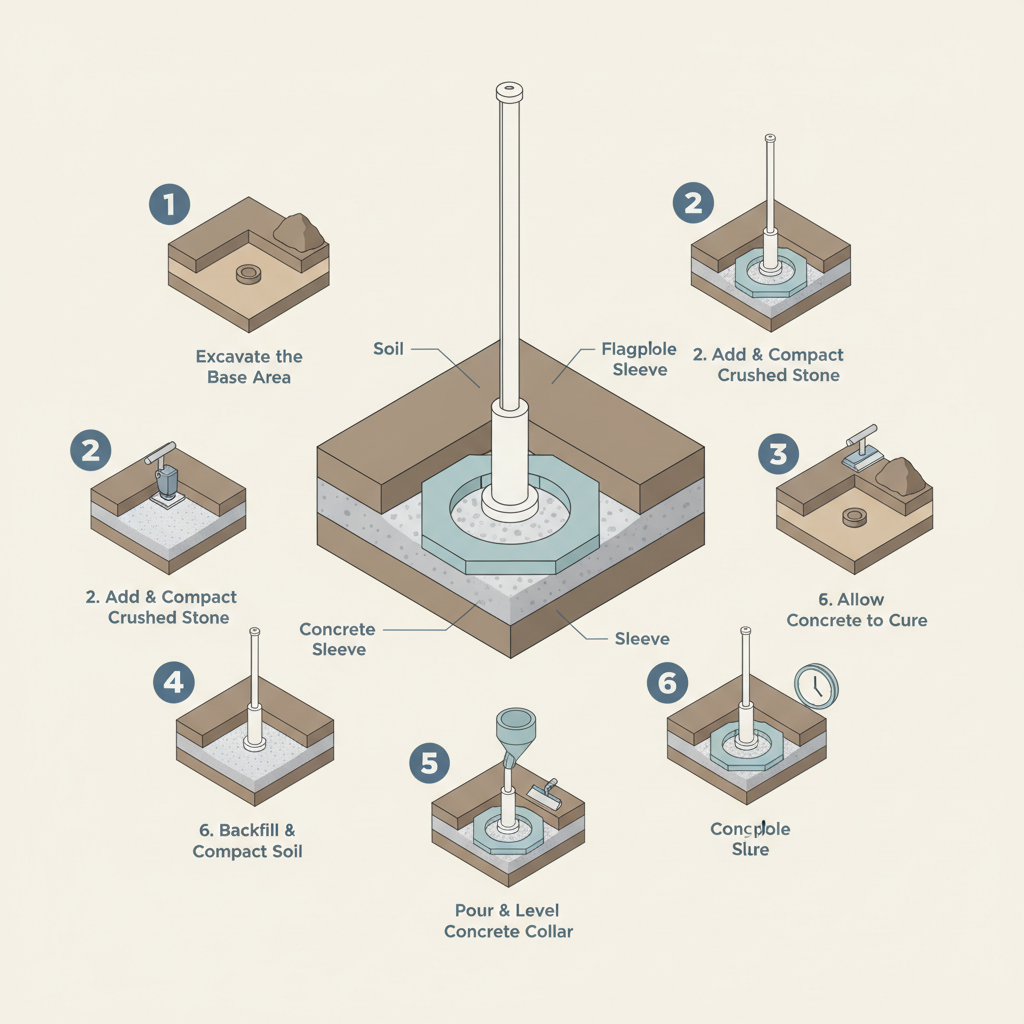
This visual guide shows the complete installation sequence for building a stable flagpole base, from excavation to final backfill. The numbered steps and labeled cross-section clarify both the proper workflow and the essential layered structure—crushed stone drainage, concrete collar, and sleeve placement—that ensures your flagpole stands tall and secure for years.
Gravel for Flagpole Bases: Best Materials, Depth, Cost & How to Build
A properly constructed flagpole base requires a stable gravel foundation to prevent settling and frost damage. We recommend using 3/4 inch crushed stone compacted to 6-8 inches depth beneath the concrete collar. This creates excellent drainage while providing the structural support needed to withstand wind loads. The gravel layer is essential for long-term stability and preventing water from pooling around the concrete.
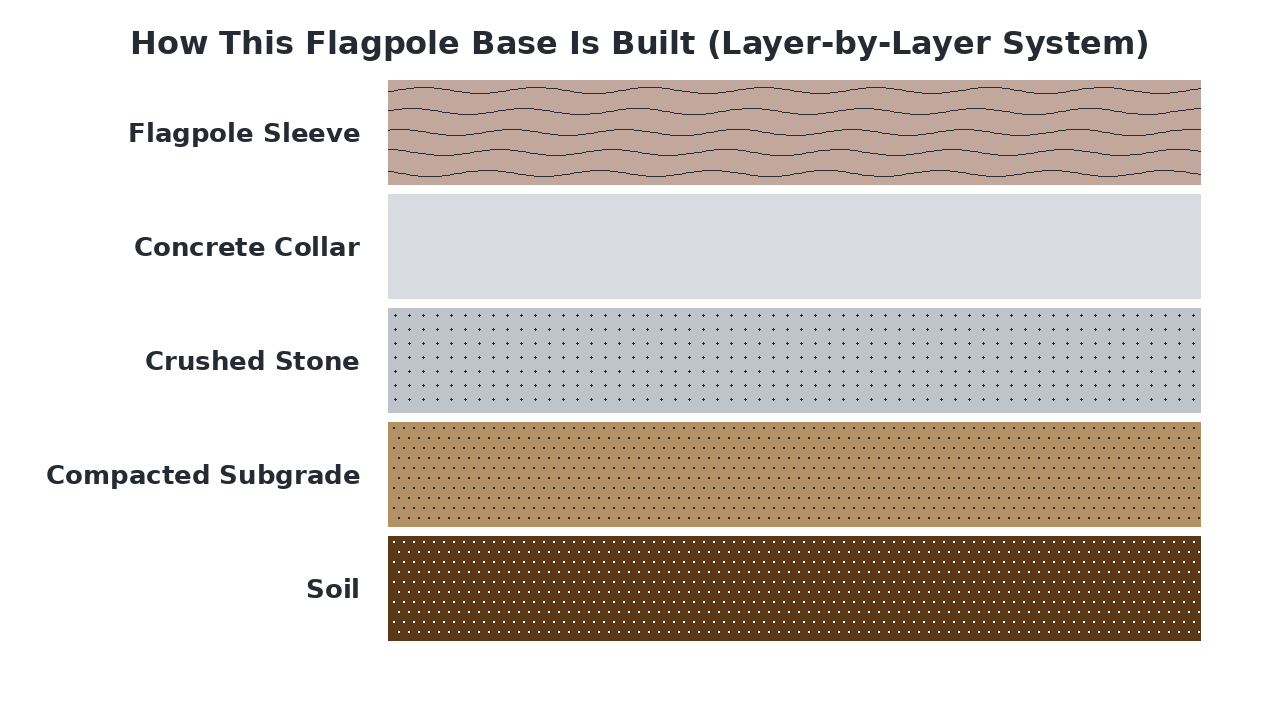
How This Flagpole Base Is Built (Layer-by-Layer System)
A flagpole base is constructed as a layered system designed to provide a stable, long-lasting foundation that resists frost heave and wind loads. The system begins with a compacted subgrade, followed by a gravel base layer that ensures proper drainage, and then a concrete collar that anchors the pole securely. Proper compaction of each layer is essential to prevent settling, while the gravel layer allows water to drain away from the concrete to avoid freeze-thaw damage.
Materials Breakdown: What Each Layer Does
A flagpole base is constructed as a layered system where each material serves a specific structural and drainage function. The layers work together to provide a stable, level foundation that resists settling, wind load, and frost heave. Choosing the correct product for each component ensures the flagpole remains upright and secure for years.
Native Soil
The existing ground where the base is installed; it must be stable and properly compacted to support the overlying layers.
Compacted Subgrade
A layer of compacted soil or aggregate that creates a firm, level platform to prevent uneven settling of the base.
Crushed Stone
A drainage layer that allows water to percolate away from the concrete, reducing the risk of frost heave and moisture damage.
View Crushed Stone →Concrete
A solid concrete mass that provides the primary structural support and anchorage for the flagpole sleeve.
View Concrete →Flagpole Sleeve
A PVC or metal sleeve set into the concrete that holds the flagpole upright and allows for easy installation and removal.
What Is a Flagpole Base and Why Does It Matter?
A flagpole base is a layered foundation system designed to provide permanent stability for flagpoles against wind forces and frost heave. It matters because improper foundations lead to leaning poles, concrete cracking, and eventual failure. Unlike simple concrete footings, this system incorporates a gravel drainage layer that prevents water accumulation and freeze-thaw damage, ensuring your flagpole remains upright for decades.
Common Types of Flagpole Base Systems
Flagpole base systems typically use either a full concrete footing, a hybrid gravel-and-concrete design, or a simpler direct-buried method. The full concrete option provides maximum stability but can crack without proper drainage, while direct burial is quick but less durable in harsh climates. The hybrid gravel-and-concrete approach balances drainage and strength, making it the most reliable long-term solution.
- Maximum rigidity
- Susceptible to frost heave
- Heavy, permanent installation
- Requires careful curing
Best for:High-wind areas with deep frost lines
- Superior drainage layer
- Prevents frost damage
- Long-term stability
- Reduces concrete cracking
- Easy to install correctly
Best for:Reliable, durable flagpole foundations anywhere
- Quick, low-cost installation
- Minimal materials needed
- Prone to leaning over time
- Poor frost resistance
Best for:Temporary or low-budget installations
When a Flagpole Base Is the Best Solution
A gravel-and-concrete hybrid flagpole base is ideal when you need a permanent, stable foundation that withstands freeze-thaw cycles and prevents water accumulation. It's the best choice for homeowners in regions with seasonal frost or heavy rainfall, where drainage prevents concrete cracking and frost heave. This system ensures your flagpole remains upright for decades without maintenance, making it worth the moderate additional effort over simpler methods.
Everything You Need to Build a Flagpole Base
A flagpole base requires foundational materials like crushed stone for drainage and concrete for structural support, along with a flagpole sleeve for proper installation. You'll need basic excavation tools and concrete finishing equipment to prepare the site and pour the collar. Having the right materials and tools ensures a stable, long-lasting foundation that withstands weather and wind loads.
- Crushed stone, Concrete mix, Flagpole sleeve
- Shovel, Wheelbarrow, Level, Concrete trowel, Compactor
- A contractor supply store, Hello Gravel (materials), Local Rental Yard (compactor)
What to Consider Before You Start
Before digging, consider these key planning factors to ensure your flagpole base is properly located and constructed.
- Location and clearance
Choose a spot with adequate clearance from overhead power lines and structures to allow the flag to fly freely.
- Local regulations and permits
Check with your municipality for any required permits or restrictions on flagpole height and placement.
- Soil type and drainage
Assess your soil composition and drainage patterns to determine if additional drainage measures are needed.
- Flagpole height and sleeve size
Confirm your flagpole height matches the sleeve dimensions and concrete collar requirements.
- Weather conditions for pouring
Plan your concrete pour for mild, dry weather to ensure proper curing and strength development.
How to Prepare the Ground for a Flagpole Base
Start by clearing the area of all vegetation, debris, and large rocks to create a clean workspace. Mark the exact location and perimeter of the base using stakes and string, then use a shovel and level to excavate to the required depth and create a flat, level subgrade. Finally, compact the exposed soil thoroughly with a hand tamper or plate compactor to create a firm, stable foundation that prevents future settling.
How a Flagpole Base Works
The layered system distributes the flagpole's weight and wind loads through a concrete collar into a crushed stone base, which provides stable load-bearing support. The crushed stone layer also acts as a drainage bed, allowing water to percolate down and away from the concrete to prevent frost heave and erosion. The flagpole sleeve embedded in the concrete allows for easy installation and future removal of the pole while maintaining a secure, plumb hold.
How to Install a Flagpole Base
Excavate the Base Area
Dig a hole to the specified depth and diameter, ensuring the sides are straight and the bottom is level.
Add & Compact Crushed Stone
Fill the bottom of the hole with a layer of crushed stone, then compact it thoroughly to create a stable, well-draining base.
Set the Flagpole Sleeve
Place the flagpole sleeve in the center of the hole, ensuring it is perfectly plumb and at the correct height above grade.
Pour & Level Concrete Collar
Mix and pour concrete around the sleeve to form the collar, leveling the surface smooth and ensuring the sleeve remains plumb.
Allow Concrete to Cure
Let the concrete cure fully according to manufacturer instructions, protecting it from disturbance and extreme weather.
Backfill & Compact Soil
Backfill the area around the concrete collar with soil, compacting it in layers to eliminate voids and ensure stability.
Alternative Gravel Options for Flagpole Bases
For a flagpole base, the primary layer requires a well-compacted, angular aggregate that interlocks to resist settling and lateral shifting. While several aggregates can provide drainage and stability, crushed angular stone like #57 crushed granite offers the best combination of mechanical lock, drainage, and resistance to frost heave. Decorative rounded gravels like pea gravel lack the interlocking properties needed for long-term structural integrity and are not suitable for the main load-bearing layer.
Angular, well-graded stone that compacts tightly for maximum stability and drainage.
View Product →A recycled, angular aggregate that provides good compaction and drainage at lower cost.
View Product →A dense, compactable mix of crushed stone and fines suitable for foundational support.
View Product →Provides excellent drainage and leveling but lacks the structural interlock of larger stone.
Rounded, decorative stones that shift easily and provide poor structural support for a base.
View Product →Common Flagpole Base Mistakes (And How to Avoid Them)
A stable flagpole base requires careful planning and execution. Avoiding these common installation errors will ensure your flagpole remains upright and secure through seasons and storms.
- Insufficient base depth
- Poor drainage planning
- Using rounded decorative gravel
- Inadequate compaction
- Ignoring frost line depth
How to Maintain a Flagpole Base
Regularly inspect the base for settling, erosion, or weed growth. Re-grade and top up the surface gravel layer as needed to maintain proper drainage away from the pole. Check for and repair any washouts or potholes, especially after heavy rain, to prevent water from pooling and undermining stability.
Calculate How Much Gravel You Need
Enter Your Dimensions
Measure your project area and we'll calculate how much material you need.