Carport Gravel Pad: Road Base Depth, Tons & Cost
A durable carport relies on a solid foundation and careful material selection to protect your vehicles and add value to your home. This guide explains what a carport is, which materials you need, how to design the layout, how to install it step by step, and how to estimate the amount of gravel required. Whether you are building a new carport from scratch or replacing an aging structure, use the sections below to find what you need.
See How to Build a Carport
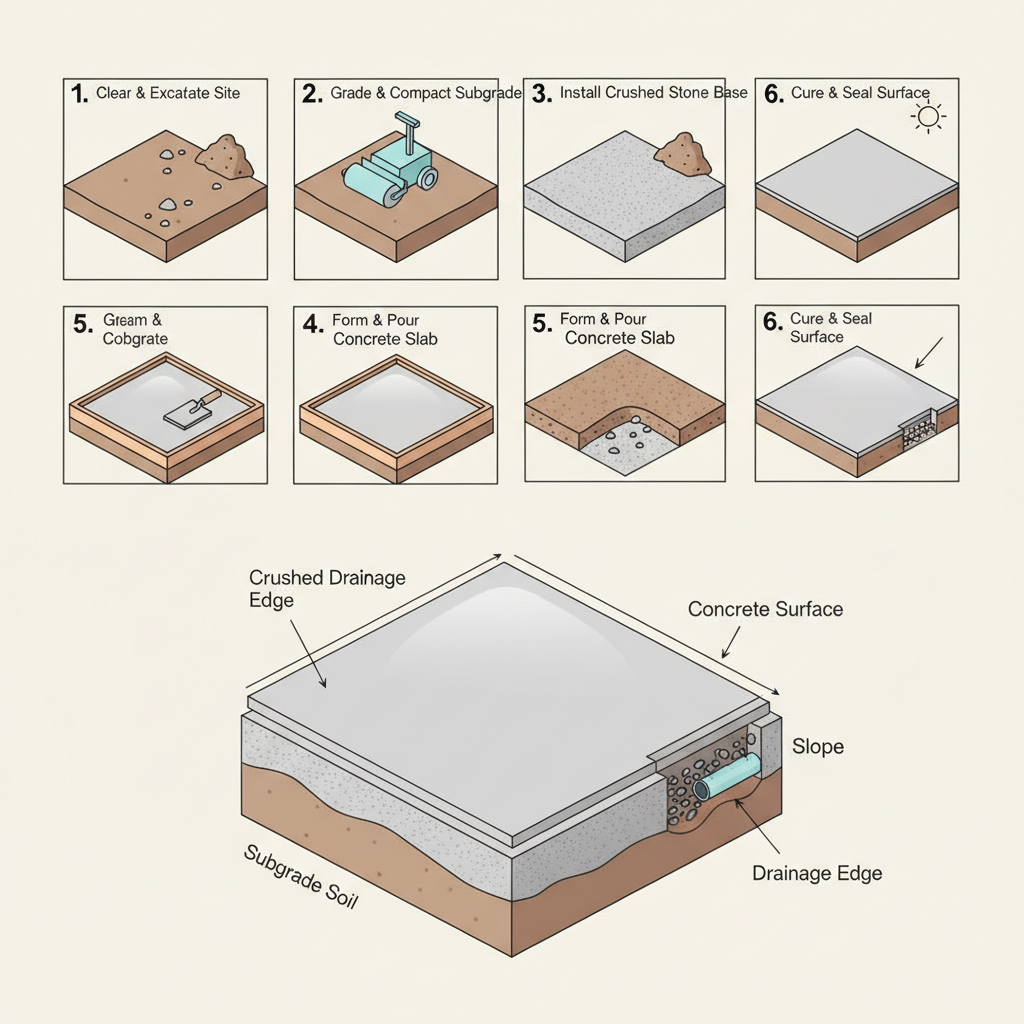
This visual guide illustrates the complete installation sequence for building a durable carport, showing each numbered step from site preparation to final sealing. The layered cross-section diagram clarifies how the subgrade, crushed stone base, and concrete surface work together to create a stable structure. Seeing the proper order and material layers helps homeowners plan their project correctly and understand why each stage matters.
Gravel for Carports: Best Materials, Base Depth, Cost & How to Build
A carport requires a durable, load-bearing foundation that can support vehicle weight and manage water runoff. We recommend crushed stone as the structural base, using 3/4 inch down to fines grading for optimal compaction, installed at 6-8 inches total depth. Properly compacted layers ensure long-term stability, while a slight slope directs water away to prevent pooling and erosion. This approach creates a reliable foundation that will withstand years of vehicle traffic and weather exposure.
How This Carport Is Built (Layer-by-Layer System)
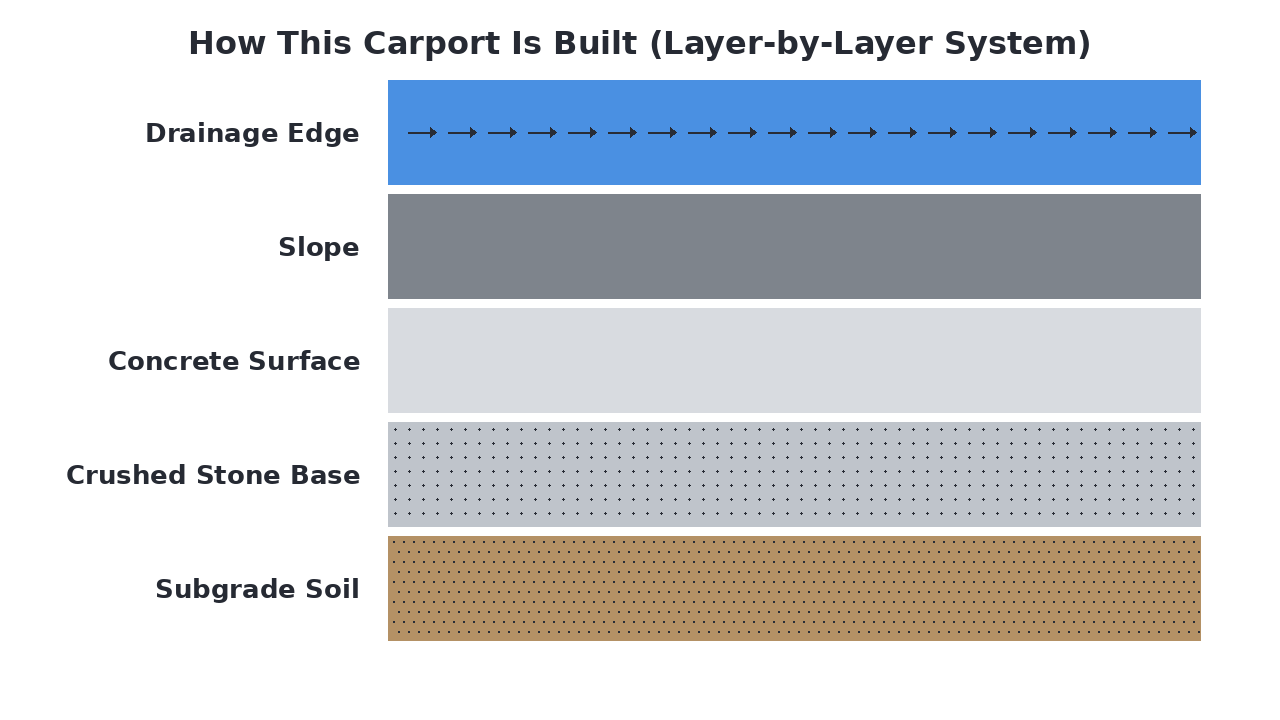
A carport is built on a layered foundation designed to provide a stable, load-bearing surface that supports vehicle weight and drainage. The system begins with compacted native soil as the subgrade, followed by a thick layer of crushed stone that serves as the structural base, and a top layer of concrete or asphalt that creates a smooth, durable driving surface. Proper compaction of each layer ensures long-term stability, while a slight slope directs water runoff away from the carport area to prevent pooling and erosion.
Materials Breakdown: What Each Layer Does
A carport surface is constructed as a layered system where each material serves a distinct structural or drainage purpose. The subgrade soil must be properly compacted to provide a stable foundation, while the crushed stone base distributes loads and prevents frost heave. The concrete surface offers a durable, smooth driving area, and the integrated slope and drainage edge work together to shed water away from the structure, preventing pooling and foundation damage.
Native Soil
The existing ground beneath the carport that must be compacted to create a firm, stable foundation for the layers above.
Crushed Stone
A layer of angular, compactable stone that provides load distribution, frost protection, and drainage for the surface layer.
View Crushed Stone →Concrete
The finished driving surface that is durable, smooth, and resistant to vehicle traffic and weather exposure.
View Concrete →Surface Slope
A gentle grade built into the concrete surface to direct rainwater and melting snow toward the drainage edge.
Drainage Edge
The perimeter of the carport where water runs off, typically directed into a swale or drainage system to protect the foundation.
What Is a Carport and Why Does It Matter?
A carport is a simple, cost-effective vehicle shelter that provides protection from sun, rain, and snow without the expense of a fully enclosed garage. It matters because it offers practical vehicle protection while increasing property value and functionality. Unlike a driveway, a carport requires a more substantial foundation to support concentrated vehicle weight, and unlike a garage, it allows for better ventilation and easier access at a lower construction cost.
Common Types of Carport Systems
Carports come in several foundation and material options, each with different trade-offs for cost, durability, and aesthetics. The most common choices include gravel, concrete, and asphalt bases, which determine the carport's stability, drainage, and maintenance needs. Gravel bases are affordable and provide excellent drainage, while concrete offers a permanent, smooth surface at higher cost, and asphalt provides a durable, weather-resistant option that requires professional installation.
- Lowest upfront cost
- Excellent natural drainage
- Easy DIY installation
- Flexible and permeable surface
- Can be upgraded later
Best for:Budget-conscious homeowners needing good drainage
- Most durable and permanent
- Smooth, level surface
- Requires professional installation
- Higher initial investment
- Low maintenance once cured
Best for:Permanent, high-traffic vehicle protection
- Weather-resistant and durable
- Flexible surface resists cracking
- Professional installation required
- Moderate cost option
- Needs periodic sealing
Best for:Regions with freeze-thaw cycles
- Attractive, customizable appearance
- Permeable drainage options
- Labor-intensive installation
- Higher material costs
- Can shift over time
Best for:Aesthetic-focused designs with good drainage
When a Carport Is the Best Solution
A gravel-based carport is ideal when you need an affordable, functional shelter that handles drainage well. It's perfect for temporary setups, rental properties, or situations where you want to test placement before committing to permanent materials. The permeable surface prevents water pooling and works well in areas with heavy rainfall or poor soil drainage, while the low cost makes it accessible for most budgets.
Everything You Need to Build a Carport
Constructing a carport requires a layered approach with specific materials for stability and drainage. You'll need foundational materials like compactable soil and crushed stone, followed by concrete for the durable surface layer. Essential tools include equipment for excavation, grading, and compaction to ensure a level and solid base.
- Compacted subgrade soil, Crushed stone base, Concrete mix, Drainage edge material
- Excavator or shovel, Laser level or string line, Plate compactor, Concrete finishing tools
- Hello Gravel (materials), Equipment rental store (compactor, concrete mixer)
What to Consider Before You Start
Before breaking ground, carefully consider these key factors to ensure your carport is structurally sound and compliant.
- Local building codes and permits
Check with your municipality for required permits, setback rules, and any specific construction requirements for carports.
- Site drainage and slope
Determine the necessary slope (typically 1-2%) and plan drainage to direct water away from the carport and surrounding structures.
- Soil composition and compaction
Assess the soil type at your site and plan for proper excavation and compaction to create a stable subgrade foundation.
- Material quantity calculations
Calculate the exact amounts of crushed stone and concrete needed based on your carport's dimensions and base depth requirements.
- Utility line locations
Contact your local utility locating service to identify and mark any underground lines before excavation begins.
How to Prepare the Ground for a Carport
Preparing the ground for a carport begins with clearing the site of all vegetation, debris, and topsoil to expose the stable subgrade. Next, you must mark the exact perimeter of the carport and establish the final grade, ensuring a consistent slope of at least 2% away from any adjacent structures for drainage. Finally, the exposed subgrade soil must be thoroughly compacted with a mechanical plate compactor to create a solid, unyielding foundation that will support the subsequent layers without settling.
How a Carport Works
A carport functions as a layered system where the compacted subgrade soil provides foundational stability, and the crushed stone base distributes vehicle loads evenly while mitigating frost heave. The durable concrete surface offers a smooth driving area that resists cracking under weight and weather. An integral slope, typically 2% or greater, directs rainwater and melting snow toward the drainage edge, which channels water away from the carport and surrounding foundation to prevent pooling and structural damage.
How to Install a Carport
Clear & Excavate Site
Remove all vegetation, topsoil, and debris from the marked carport area and excavate to the required depth for the base materials.
Grade & Compact Subgrade
Establish the final grade with a proper slope for drainage and compact the exposed subgrade soil to a firm, uniform density.
Install Crushed Stone Base
Spread and compact a layer of crushed stone to the specified thickness, creating a stable, load-distributing base for the surface.
Form & Pour Concrete Slab
Set up forms and reinforcement, then pour and finish the concrete slab to create the durable driving surface of the carport.
Create Drainage Edge
Install a gravel or channel drain along the low side of the slab to collect and redirect runoff water away from the area.
Cure & Seal Surface
Allow the concrete to cure properly, then apply a sealant to protect the surface from water, stains, and freeze-thaw cycles.
Alternative Gravel Options for Carports
While concrete and asphalt are popular for carport surfaces, several gravel and crushed stone alternatives can provide a functional, cost-effective solution. Crushed stone options like #57 Stone and #411 Limestone offer excellent drainage and stability, making them suitable for the base layer. However, decorative aggregates like pea gravel are not recommended for structural support, as they shift under vehicle weight and lack compaction. For most carport projects, a crushed stone base topped with a finer aggregate provides the best balance of durability, drainage, and ease of installation.
Ideal for the primary base layer due to its excellent drainage and compaction properties.
View Product →A well-graded mix that compacts well for a stable carport foundation.
A recycled, cost-effective option that provides good stability when properly compacted.
View Product →Decorative only; shifts too easily under vehicle weight and lacks structural integrity.
View Product →Common Carport Mistakes (And How to Avoid Them)
Proper carport construction requires attention to foundational details that homeowners often overlook. Avoiding these common mistakes ensures your carport remains stable, functional, and long-lasting.
- Insufficient base depth
- Poor drainage planning
- Wrong aggregate selection
- Inadequate compaction
- No edge restraint
How to Maintain a Carport
Regular maintenance keeps your gravel carport functional and extends its lifespan. Annually inspect for low spots or potholes and fill them with fresh aggregate, compacting thoroughly. Keep drainage edges clear of debris to prevent water pooling, and add a fresh layer of top aggregate every 2-3 years to maintain surface integrity. Address any weed growth promptly to prevent root damage to the base layers.
Calculate How Much Gravel You Need
Enter Your Dimensions
Measure your project area and we'll calculate how much material you need.