Zen Garden Gravel: White Stone Sizing & Tonnage Guide
Creating a tranquil zen garden requires thoughtful design and the right materials to achieve harmony and balance. This guide explains what a zen garden is, which materials you need, how to design and lay out your garden, how to install it step by step, and how to estimate the amount of gravel required. Whether you are planning a small meditative space in your backyard or designing a larger landscape feature, use the sections below to navigate through the process.
See How to Build a Zen Garden
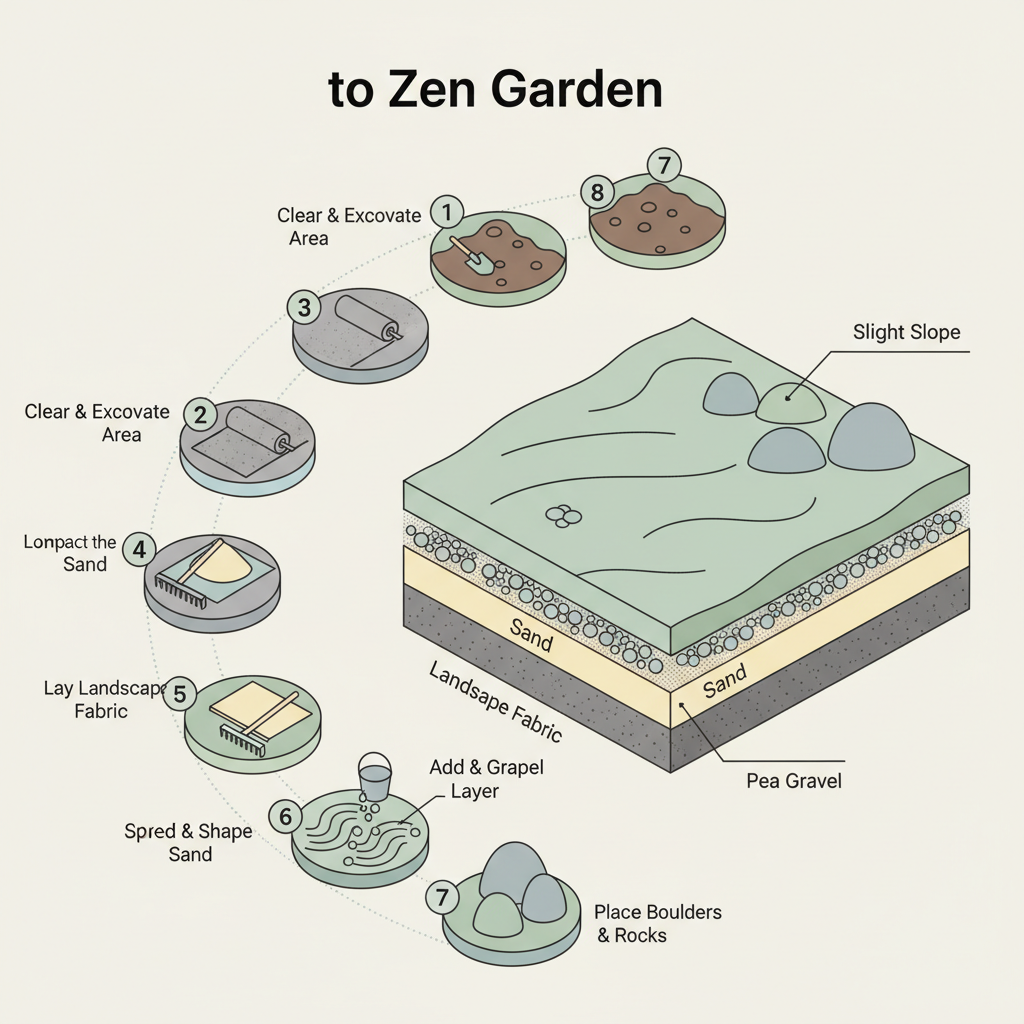
This visual guide illustrates the step-by-step installation sequence for creating a Zen garden, showing how each layer builds upon the next. The numbered steps and labeled cross-section clarify the proper order of operations and material placement, helping you visualize the process before you begin.
Gravel for Zen Gardens: Best Materials, Depth, Raking & How to Build
A Zen garden is a 2–3 inch total layer of smooth 3/8 inch pea gravel on top of fine sand, usually framed with a few placed boulders. For a standard 10 ft × 10 ft garden, plan on 1–2 tons of pea gravel. The pea gravel rakes into clean patterns and holds them; sand alone blows away in any wind, and rougher angular stone won't take a rake.
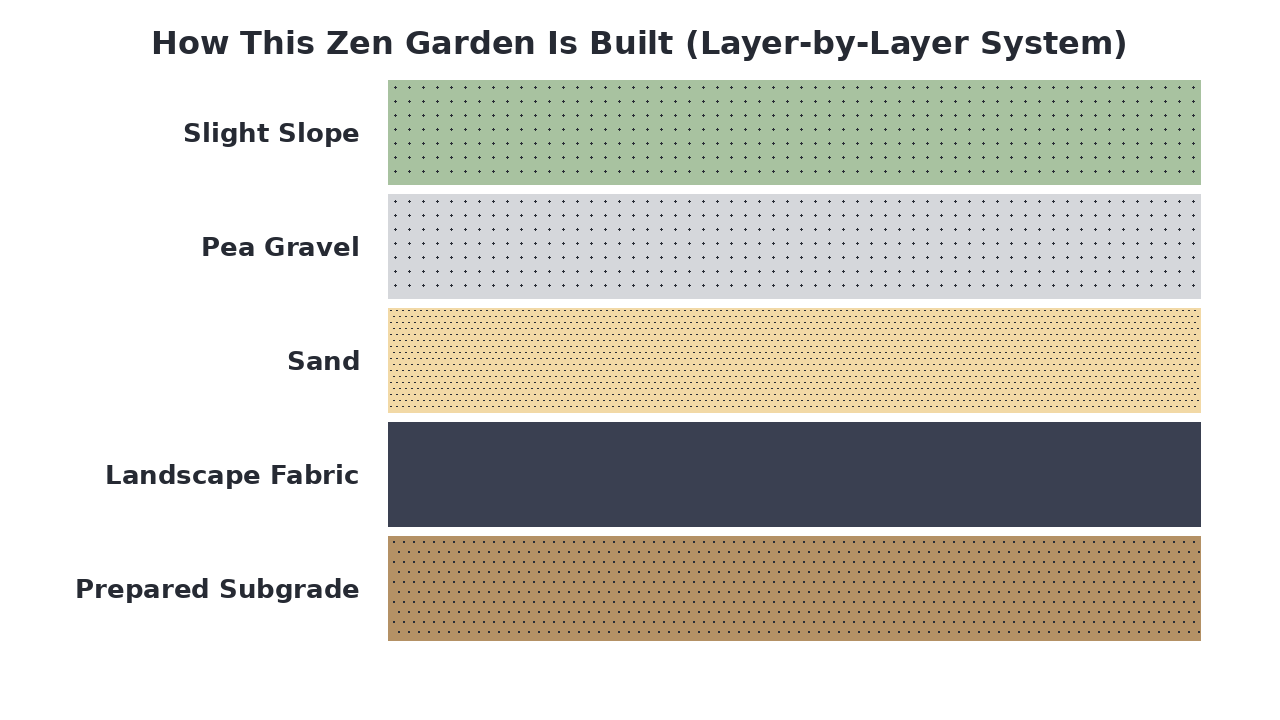
How This Zen Garden Is Built (Layer-by-Layer System)
A Zen garden is constructed as a layered system that creates a peaceful, low-maintenance landscape while ensuring proper drainage. The foundation begins with a prepared subgrade, followed by a fabric layer that prevents weed growth while allowing water to filter through. The surface consists of carefully raked sand and pea gravel that provides both aesthetic appeal and functional drainage. A slight slope directs water away from the garden area, maintaining the integrity of the design and preventing erosion or standing water.
Materials Breakdown: What Each Layer Does
A Zen garden is constructed as a layered system where each material serves a specific purpose in creating a stable, low-maintenance, and visually serene surface. The layers work together to ensure proper drainage, suppress weeds, and provide a smooth, raked finish that defines the garden's aesthetic. Selecting the right product for each layer ensures the garden remains functional and beautiful for years.
Compacted Subgrade
A stable, compacted soil base that provides a level and firm foundation for the entire garden, preventing settling and unevenness.
Landscape Fabric
A geotextile barrier that suppresses weed growth while allowing water to drain through, keeping the gravel layers clean and separated from the soil.
Coarse Sand
A leveling and drainage layer that creates a smooth, stable bed for the gravel and helps with water percolation.
Pea Gravel
The primary decorative and functional surface layer, providing a smooth, quiet, and easily raked texture that defines the Zen garden aesthetic.
View Pea Gravel →Surface Slope
A gentle, consistent grade across the garden surface that ensures rainwater drains away, preventing puddles and maintaining the dry, raked appearance.
What Is a Zen Garden and Why Does It Matter?
A Zen garden is a 2–3 inch total layer of smooth 3/8 inch pea gravel on top of fine sand, framed with a few placed boulders, in a contained area you can rake into patterns. For a 10 ft × 10 ft garden, plan on 1–2 tons of stone. The smooth pea gravel takes a rake well and holds the lines you draw; rougher angular stone won't, and bare sand alone blows away in any wind.
Common Types of Zen Garden Systems
Zen gardens typically focus on different materials and arrangements to create distinct atmospheres. The most traditional type uses fine sand or gravel raked into patterns around carefully placed rocks, representing water and islands. Some modern adaptations incorporate larger river rocks or boulders for a more dramatic, sculptural look, while others use decomposed granite for a natural, earthy texture. The choice depends on whether you prioritize authentic Japanese minimalism, low maintenance, or a blend with your existing landscape.
- Authentic Japanese aesthetic
- Fine texture for detailed raking
- Requires frequent maintenance
- Can blow away in wind
Best for:Traditionalists seeking authentic meditation spaces
- Natural rounded stones
- Good drainage and stability
- Easy to rake patterns
- Low maintenance and durable
- Soothing crunchy sound underfoot
Best for:Homeowners wanting balance of beauty and practicality
- Larger, dramatic stones
- Minimal raking required
- Excellent drainage
- Modern sculptural look
- More expensive material
Best for:Contemporary landscapes with bold visual impact
- Natural earthy appearance
- Compacts well for stability
- Minimal weeding needed
- Blends with desert landscapes
- Can become muddy when wet
Best for:Arid climates and rustic garden styles
When a Zen Garden Is the Best Solution
A pea gravel Zen garden is ideal when you want a peaceful retreat that balances authentic Japanese aesthetics with practical maintenance. It's perfect for small urban yards, meditation corners, or office courtyards where you need low upkeep but still want the therapeutic benefits of raking patterns. The natural drainage makes it suitable for areas with moderate rainfall, while the soothing texture and sound create a sensory experience that reduces stress without demanding constant care.
Everything You Need to Build a Zen Garden
A Zen garden requires a carefully selected set of materials to create its signature layered foundation and serene surface. You'll need foundational materials like sand for a smooth, stable base, and surface materials like pea gravel for the iconic raked finish. Essential tools include items for excavation, leveling, and raking to achieve the precise aesthetic.
- Landscape fabric, Sand, Pea gravel, River rock (optional accents), Boulders (optional focal points)
- Shovel, Rake (landscape and Zen garden rake), Tamper or compactor, Level, Wheelbarrow
- Hello Gravel (materials), A contractor supply store (specialty rakes), Local equipment rental (compactor)
What to Consider Before You Start
Before you begin excavating, take time to consider these key planning aspects to ensure your Zen garden is both beautiful and functional.
- Site selection and size
Decide on the garden's location and dimensions, ensuring it fits your space and allows for proper viewing and maintenance access.
- Drainage and slope
Plan for a slight slope (as indicated in the blueprint) to ensure water drains away and doesn't pool on the surface.
- Material quantity estimation
Calculate the amount of sand and pea gravel needed based on your garden's area and the desired depth of each layer.
- Aesthetic and symbolic elements
Consider the placement of optional elements like boulders or river rock to create focal points and embody traditional Zen symbolism.
How to Prepare the Ground for a Zen Garden
Begin by clearing the site of all vegetation, debris, and any large rocks to create a clean, level area. Mark the garden's perimeter with stakes and string, then excavate the soil to a uniform depth of about 4 to 6 inches, sloping it gently away from any structures to ensure proper drainage. Compact the exposed subgrade thoroughly with a plate compactor to create a firm, stable base that prevents future settling and material migration.
How a Zen Garden Works
A Zen garden functions as a layered system where each material serves a specific structural purpose. The compacted subgrade provides a stable foundation, while the landscape fabric suppresses weed growth and separates soil from the aggregate layers. A sand layer offers a smooth, leveling base for the pea gravel, which forms the visible, raked surface that promotes drainage and defines the garden's serene aesthetic through its texture and color.
How to Install a Zen Garden
Clear & Excavate Area
Remove all vegetation and debris, then excavate the marked area to a uniform depth of 4-6 inches, creating a slight slope for drainage.
Compact the Subgrade
Use a plate compactor to thoroughly compact the excavated soil, creating a firm and stable foundation for the layers above.
Lay Landscape Fabric
Roll out and cut a high-quality weed barrier fabric over the compacted subgrade, overlapping seams by several inches to prevent weed penetration.
Spread & Level Sand
Add a 1-2 inch layer of coarse sand over the fabric, then screed it level to create a smooth, stable base for the gravel.
Add Pea Gravel Layer
Pour and spread a 2-3 inch layer of pea gravel evenly across the sand bed, ensuring consistent depth and coverage throughout the garden.
Rake & Shape Gravel
Use a wooden or metal rake to create the characteristic patterns and shapes in the gravel, defining the garden's meditative aesthetic.
Place Boulders & Rocks
Arrange selected boulders and river rocks strategically within the gravel to represent islands or mountains, securing them partially buried for stability.
Alternative Gravel Options for Zen Gardens
Zen gardens typically use fine, smooth aggregates that can be raked into patterns while providing stable footing. Pea gravel is often the top choice because its small, rounded stones create a soft, uniform surface that's easy to maintain and rakes beautifully. Alternative options like sand, decomposed granite, river rock, and boulders each offer different aesthetic and functional trade-offs, with some better suited for decorative accents than the primary raking surface.
Ideal as the primary raking surface due to its smooth, uniform texture and ease of maintenance.
View Product →Provides a compact, stable surface but requires more effort to rake patterns.
View Product →Offers the finest texture for intricate patterns but can blow away or wash out easily.
View Product →Works well as decorative borders or accent features rather than the main raking area.
View Product →Only suitable as focal point elements, not for the main garden surface material.
View Product →Common Zen Garden Mistakes (And How to Avoid Them)
Creating a Zen garden requires careful planning to avoid common pitfalls that compromise both aesthetics and functionality. These mistakes can lead to poor drainage, weed problems, and maintenance headaches that detract from the garden's peaceful purpose.
- Insufficient base layer
- Poor drainage planning
- Wrong aggregate size
- No weed barrier
- Inadequate edge restraint
- Overcrowding with elements
How to Maintain a Zen Garden
Regular raking is essential to maintain patterns and prevent compaction, typically done weekly or after weather events. Periodically check and replenish the gravel surface as needed to maintain consistent depth and coverage. Remove any weeds promptly and ensure drainage paths remain clear to prevent water pooling that could disrupt the garden's foundation.
Calculate How Much Gravel You Need
Enter Your Dimensions
Measure your project area and we'll calculate how much material you need.