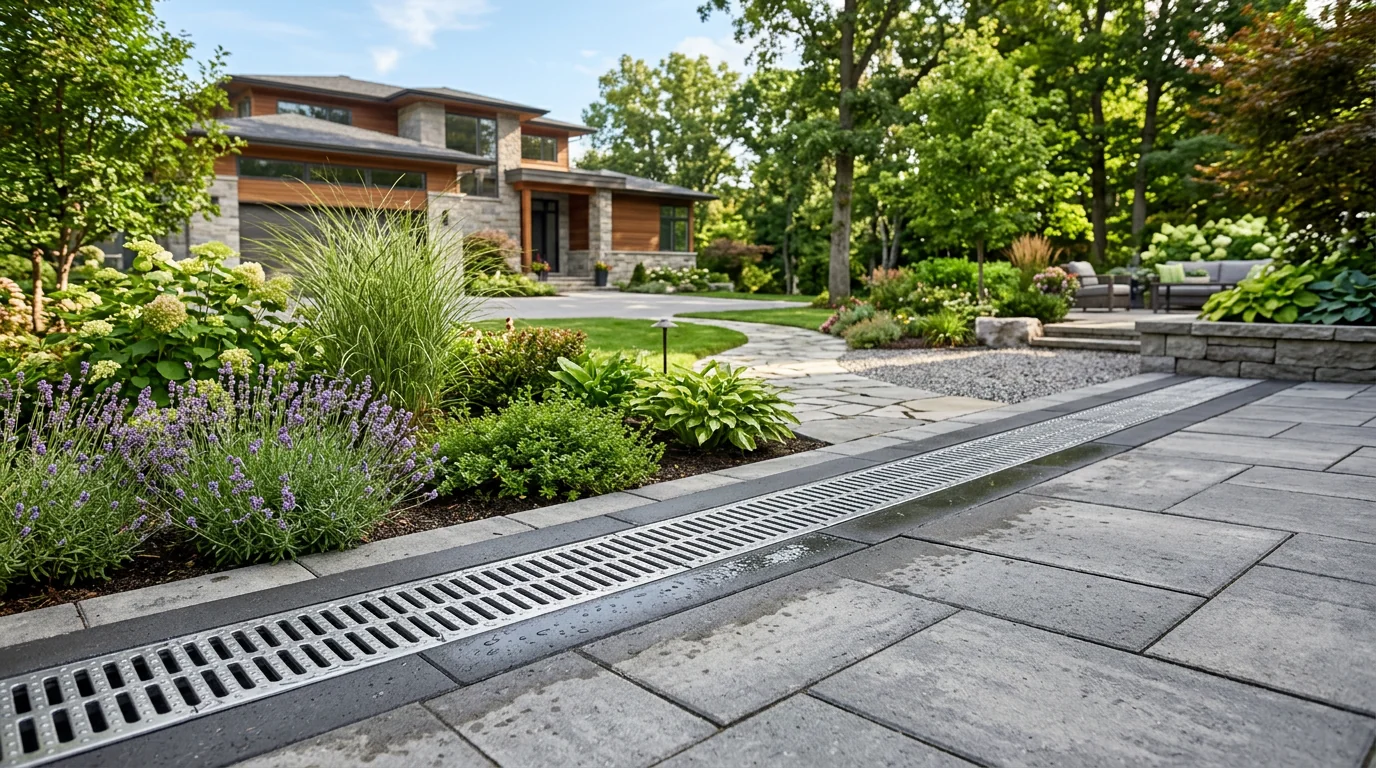
Trench Drain Drain Rock: Gravel Bed Size & Depth Specs
A well-planned trench drain is essential for effectively directing water away from your property. This guide explains what a trench drain is, which materials you need, how to design the ideal layout, how to install it step by step, and how to estimate the amount of gravel required. Whether you are preventing flooding around your home or improving drainage in a commercial area, use the sections below to find what you need.
See How to Build a Trench Drain
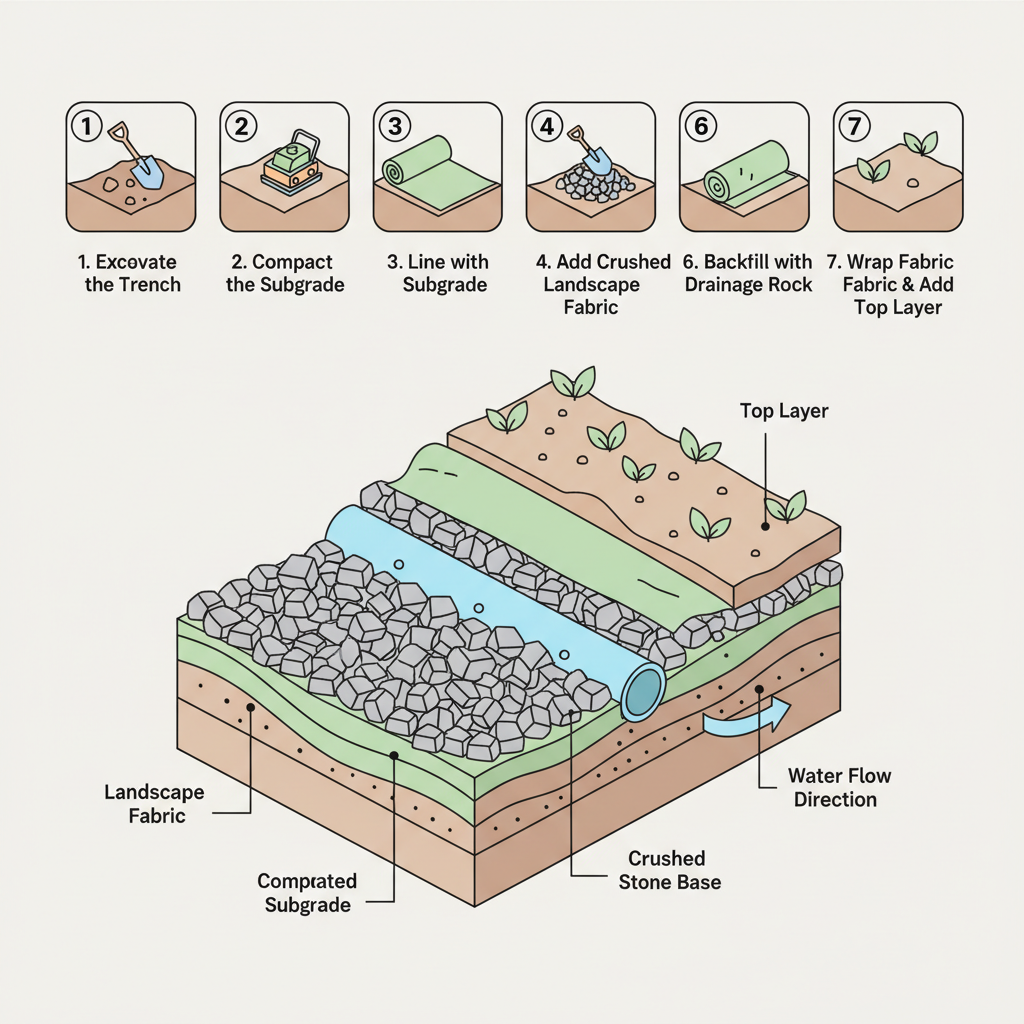
This visual guide breaks down the step-by-step sequence for installing a trench drain, clarifying the order of operations from excavation to final backfill. It also illustrates the essential layered structure—from compacted subgrade to drainage pipe and surface gravel—showing how each component contributes to effective water management. Seeing the process and cross-section together helps ensure proper slope, stability, and long-term drainage performance.
Gravel for Trench Drains: Best Drain Rock, Depth & Installation Guide
A trench drain is a surface drainage system that intercepts and redirects water runoff across driveways, patios, and walkways. We recommend using 3/4 inch clean crushed stone at a depth of 8-12 inches to ensure optimal water permeability and structural stability. The crushed stone bedding provides proper support for the perforated pipe while allowing efficient water flow toward the discharge point. This system prevents surface pooling and protects your landscape from water damage.
How This Trench Drain Works (Water Flow System)
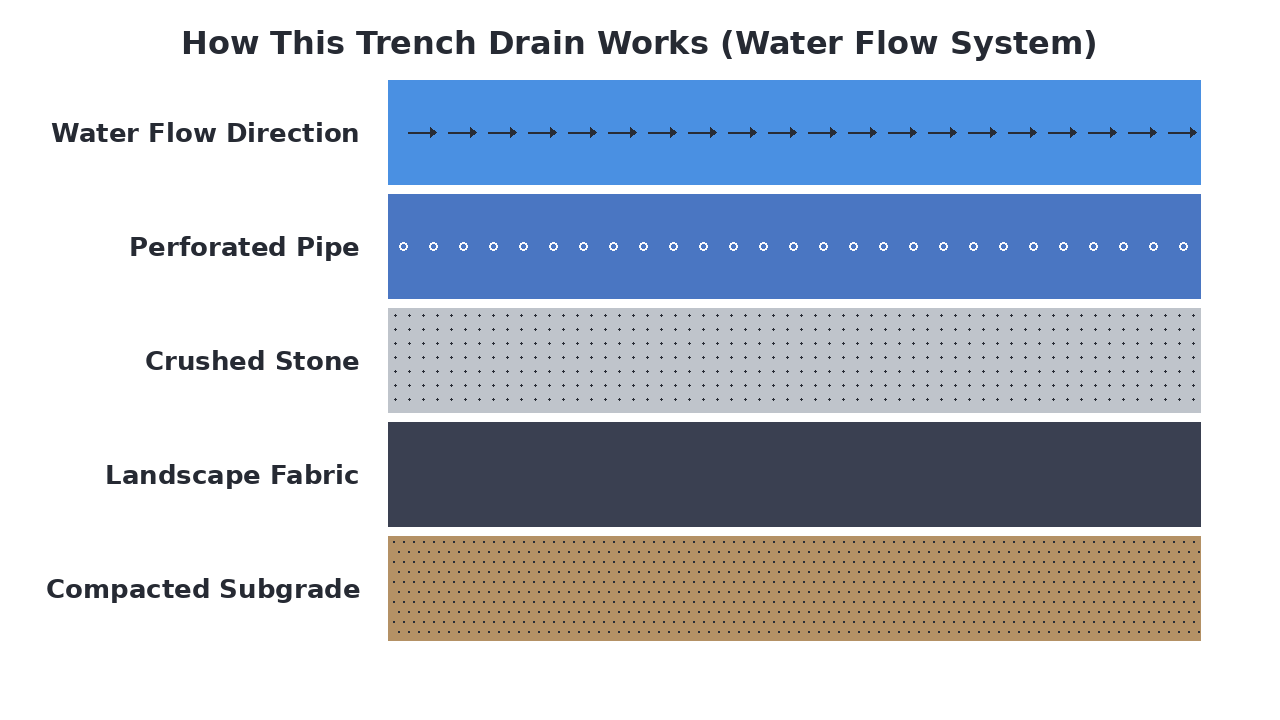
A trench drain is a surface drainage system that intercepts and redirects water runoff across driveways, patios, or walkways. It consists of a narrow channel lined with crushed stone and a perforated pipe to collect and convey water away from the surface. The system relies on a gentle slope along the trench to ensure water flows efficiently through the pipe toward a designated discharge point. Each layer — from the compacted subgrade and fabric liner to the crushed stone and pipe — works together to prevent surface pooling and protect the surrounding landscape.
Materials Breakdown: What Each Layer Does
A trench drain relies on a layered approach where each material serves a distinct purpose in moving water away from an area. The bottom layers provide a stable base and filtration, while the upper layers create a clear path for water to enter the pipe and flow out. Using the right products in the correct order prevents clogging and ensures long-term drainage performance.
Compacted Subgrade
The firmly packed native soil that forms a stable, solid foundation for the entire trench drain system.
Landscape Fabric
A geotextile barrier that prevents soil from migrating up into the crushed stone layer and clogging the system.
Crushed Stone
Clean, angular stone that provides a free-draining medium for water to percolate down to the perforated pipe.
View Crushed Stone →Perforated Pipe
A slotted pipe placed within the crushed stone that collects water and carries it away from the drained area.
Discharge Slope
The intentional downhill grade of the trench that ensures collected water flows out and away, preventing pooling.
What Is a Trench Drain and Why Does It Matter?
A trench drain is a surface drainage system that intercepts and redirects water runoff across paved surfaces like driveways and patios. It matters because it prevents water pooling, reduces erosion, and protects your property's foundation from moisture damage. Unlike simple surface channels, a trench drain uses a perforated pipe buried in crushed stone to collect and convey water underground to a safe discharge point. This makes it more effective than basic surface drainage while being less disruptive than full-scale French drain installations.
Common Types of Trench Drain Systems
Trench drain systems come in several common types, primarily distinguished by their construction materials and installation methods. The most basic version uses a simple gravel-filled trench to filter and direct water, while more permanent options incorporate concrete channels or plastic liners for durability. Each type varies in cost, longevity, and effectiveness at handling different water volumes and surface conditions.
- Uses drainage rock and pea gravel
- Easy DIY installation
- Natural filtration of runoff
- Cost-effective material choice
- Flexible for various layouts
Best for:Budget-friendly drainage for residential areas
- Pre-cast concrete sections
- High durability and load capacity
- Professional installation required
- Suitable for heavy traffic areas
- More expensive upfront cost
Best for:Driveways and commercial applications
- Lightweight plastic channel system
- Quick modular installation
- Limited load capacity
- Prone to UV degradation
- Lower material cost
Best for:Light residential walkways and patios
- Stainless steel or cast iron grates
- High strength for vehicles
- Professional installation needed
- Higher material and labor costs
- Modern industrial appearance
Best for:Heavy-duty commercial driveways
When a Trench Drain Is the Best Solution
A gravel trench drain is ideal when you need effective surface water management without breaking the bank. It works perfectly for residential driveways, patios, and walkways where water pooling is an issue but heavy vehicle traffic isn't a concern. The natural filtration of gravel makes it environmentally friendly, and its flexibility allows for custom layouts around existing landscaping features. This solution strikes the right balance between functionality, aesthetics, and cost for most homeowners.
Everything You Need to Build a Trench Drain
Building a trench drain requires a few key materials to create the layered drainage system and basic tools for excavation and installation. You'll need crushed stone for the base and surrounding pipe, landscape fabric to prevent soil migration, and a perforated pipe to carry water away. Essential tools include a shovel for digging the trench, a rake for leveling materials, and a compactor to ensure a stable base.
- Crushed stone, Landscape fabric, Perforated pipe, Gravel
- Shovel, Rake, Compactor, Level, Measuring tape
- Hello Gravel (materials), A contractor supply store (pipe), Equipment rental (compactor)
What to Consider Before You Start
Before digging in, consider these key planning points to ensure your trench drain is effective and long-lasting.
- Drainage path and outlet
Determine the exact path of the trench and identify a suitable, lower-elevation outlet point for the water to discharge.
- Soil type and stability
Assess the soil in the dig area to understand its drainage properties and stability, which affects trench depth and sidewall support.
- Local utility lines
Call 811 or your local utility locating service to mark any underground lines before you start digging to avoid damage and safety hazards.
- Trench depth and slope
Calculate the required trench depth and a consistent slope (typically 1% minimum) to ensure water flows effectively toward the outlet.
How to Prepare the Ground for a Trench Drain
Begin by clearing any vegetation, debris, or large rocks from the planned drain path. Mark the trench outline with spray paint or stakes, ensuring it slopes consistently away from the problem area at a minimum grade of 1% (1 inch per 8 feet). Excavate the trench to the required depth and width, then compact the exposed soil at the bottom to create a firm, stable subgrade. Finally, verify the slope with a level to guarantee positive water flow before adding any drainage materials.
How a Trench Drain Works
A trench drain works by capturing surface or subsurface water and channeling it away through a perforated pipe buried in a bed of crushed stone. Water enters the system through the gravel layer, filters through the landscape fabric to prevent soil clogging, and flows into the perforated pipe. The pipe then carries the water along the sloped trench to a designated discharge point, such as a storm drain or dry well. The layered structure provides load support, prevents pipe deformation, and ensures long-term, clog-free drainage.
How to Install a Trench Drain
Excavate the Trench
⚠️ Local stormwater rules apply: drainage and infiltration projects are subject to local rules about discharge location, setbacks, and (for larger systems) permits. The steps below are provided to help plan your aggregate order, not as a substitute for checking with your municipality and following local stormwater rules. Dig a trench along your marked path to the required depth and width, maintaining a consistent slope for water flow.
Compact the Subgrade
Firmly compact the soil at the bottom of the trench to create a stable, level base for the drainage layers.
Line with Landscape Fabric
Line the entire trench with a permeable landscape fabric to separate the soil from the gravel and prevent clogging.
Add Crushed Stone Base
Place and level a layer of crushed stone in the trench to provide a stable bed and initial drainage for the pipe.
Install Perforated Pipe
Lay the perforated pipe on the crushed stone base with holes facing down, ensuring it follows the trench slope.
Backfill with Drainage Rock
Surround the pipe with more crushed stone or drainage rock, covering it completely to protect and support the pipe.
Wrap Fabric & Add Top Layer
Fold the excess landscape fabric over the stone layer, then add a final layer of pea gravel or decorative stone to finish.
Alternative Gravel Options for Trench Drains
Homeowners have several aggregate options for trench drain construction, each with different drainage characteristics and durability. Crushed stone is often the top choice because its angular edges interlock to create a stable base that resists shifting while still allowing excellent water flow through the voids. Pea gravel and drainage rock provide good permeability but may require more frequent maintenance, while concrete offers maximum durability but can be more expensive and difficult to install properly.
Provides excellent stability and drainage with interlocking angular edges.
View Product →Large, clean rock that creates open channels for high-volume water flow.
Smooth, rounded stones that allow water to pass through but can shift over time.
View Product →Offers maximum durability and structural integrity for permanent installations.
View Product →Fine particles that compact tightly and severely restrict water drainage.
View Product →Common Trench Drain Mistakes (And How to Avoid Them)
Even well-designed trench drains can fail if basic installation principles are overlooked. These common errors often lead to poor drainage performance, clogging, or structural failure within the first few seasons.
- Insufficient depth
- Poor slope grading
- Missing filter fabric
- Wrong aggregate size
- Inadequate base preparation
- No overflow planning
How to Maintain a Trench Drain
Regular maintenance ensures your trench drain continues to function effectively for years. Inspect the drain after heavy rainfalls to check for standing water, which indicates potential clogging. Remove accumulated debris like leaves and sediment from the surface and consider adding a fresh layer of clean aggregate every 2-3 years to maintain proper drainage capacity. Periodically verify that the outlet pipe remains clear and water flows freely away from the protected area.
Calculate How Much Gravel You Need
Enter Your Dimensions
Measure your project area and we'll calculate how much material you need.