Tree Ring Mulch & Gravel: Depth Guide & Tonnage Per Tree
A well-planned tree ring enhances curb appeal and protects your trees from lawn equipment damage. This guide explains what a tree ring is, which materials you need, how to design the layout, how to build it step by step, and how to estimate the amount of gravel required. Whether you are creating a simple mulch border or a decorative gravel feature, use the sections below to find what you need.
See How to Build a Tree Ring
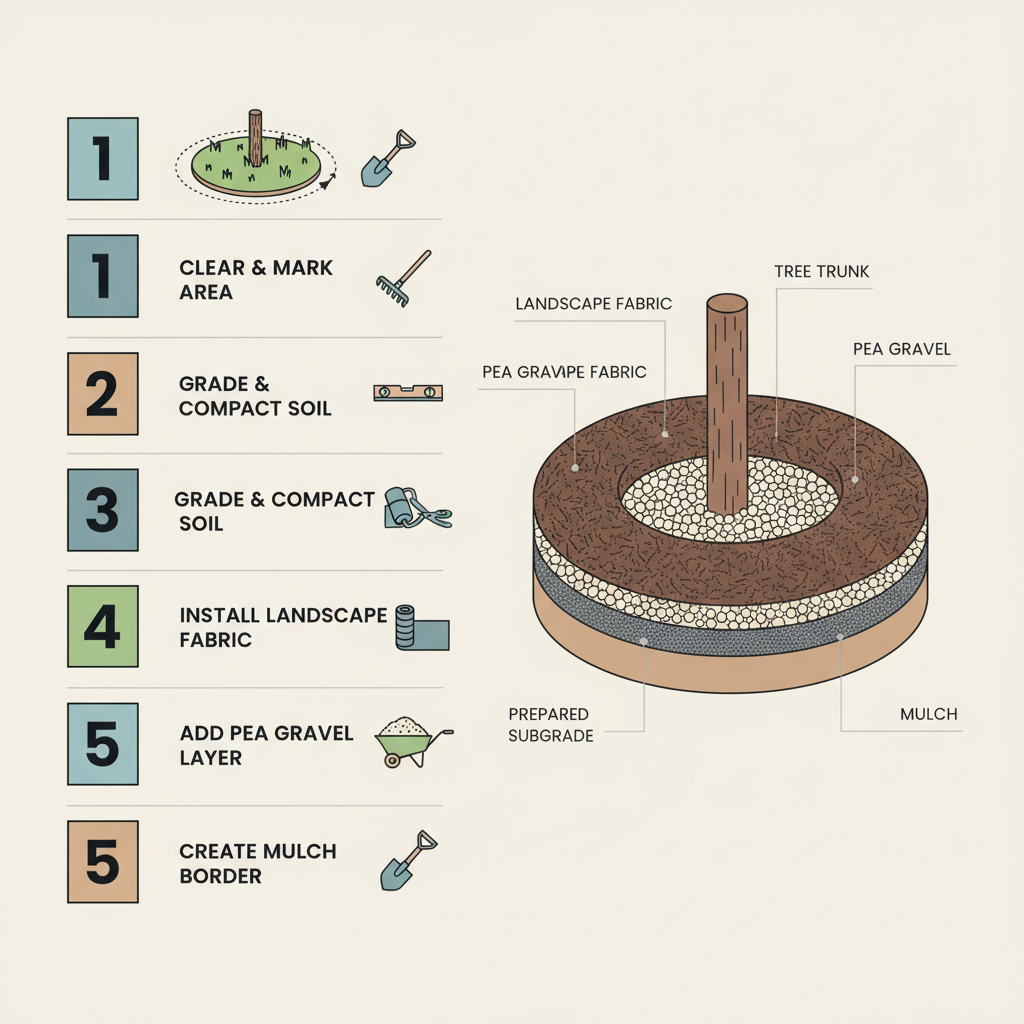
This visual guide walks you through the five key steps to build a clean, durable tree ring that protects your tree's roots and enhances your landscape. It clarifies the proper installation sequence, from site preparation to final mulching, and illustrates the essential layered structure of subgrade, fabric, gravel, and mulch. Seeing the process and layers diagrammed will help you plan materials and execute each phase correctly.
Gravel for Tree Rings: Best Materials, Depth, Cost & How to Build
A tree ring is a 2–3 inch layer of 3/8 to 5/8 inch pea gravel laid over landscape fabric around the base of a tree. The fabric blocks weeds and the gravel holds it in place — together they keep mulch from washing away and your mower at a safe distance from the trunk. For a 4–6 foot diameter ring, plan on roughly 0.5–1 cubic yard.
How This Tree Ring Is Built (Layer-by-Layer System)
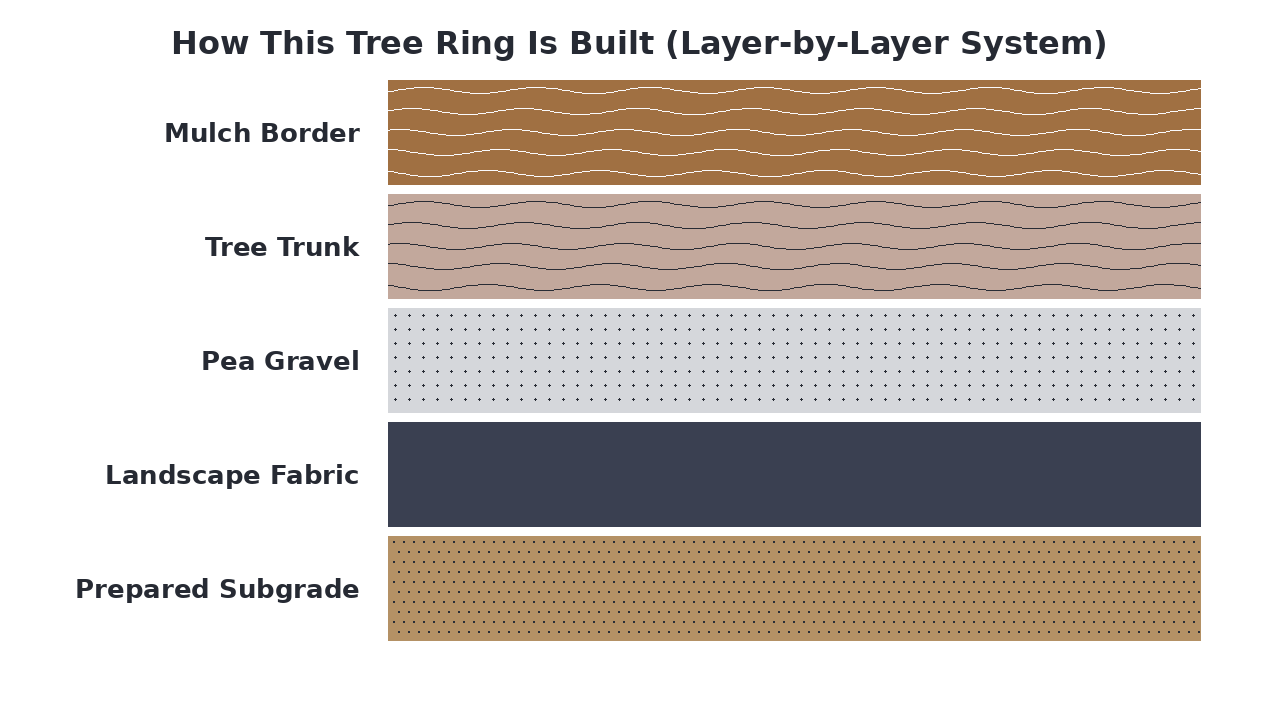
A tree ring is a layered system that protects tree roots while improving drainage and appearance around the base. The system starts with a prepared subgrade, followed by landscape fabric that prevents weed growth while allowing water to pass through. The top layer of pea gravel provides a decorative surface that allows air and water to reach the tree roots while creating a clean, finished look around the trunk. Proper installation includes leaving space near the trunk to prevent moisture buildup and potential rot.
Materials Breakdown: What Each Layer Does
A tree ring is constructed as a layered system that protects the tree's root zone while managing moisture and aesthetics. Each material serves a distinct purpose, from providing a stable base to preventing weeds and adding a finished look. When installed correctly, the layers work together to keep the tree healthy and the surrounding area neat.
Compacted Soil
The leveled and compacted soil base that provides a stable foundation for the layers above and ensures proper drainage away from the tree trunk.
Landscape Fabric
A permeable geotextile barrier that suppresses weed growth while allowing water and air to reach the soil below.
Pea Gravel
Small, smooth stones that create a drainage layer to prevent water from pooling around the tree roots and reduce soil compaction.
View Pea Gravel →Tree Trunk
The central tree itself, which the ring is designed to protect by keeping mulch and materials away from direct contact with the bark.
Wood Chip Mulch
A decorative and functional top layer that retains soil moisture, regulates temperature, and gives the tree ring a finished appearance.
What Is a Tree Ring and Why Does It Matter?
A tree ring is a 2–3 inch ring of 3/8 to 5/8 inch pea gravel laid over landscape fabric around the base of a tree. For a 4–6 foot diameter ring you'll need roughly 0.5–1 cubic yard of stone. The fabric blocks weeds, the gravel holds it in place, and together they keep your mower and trimmer away from the trunk — which is what slowly kills more landscape trees than any disease.
Common Types of Tree Ring Systems
Tree rings come in several common types based on their materials and construction. Simple mulch rings are the most basic, while gravel-based systems offer better drainage and longevity. More elaborate designs incorporate decorative edging or multiple layers for enhanced aesthetics and functionality.
- Lowest cost option
- Easy to install
- Provides basic weed control
- Needs annual refreshing
Best for:Budget-conscious temporary solutions
- Excellent drainage
- Long-lasting weed barrier
- Low maintenance
- Clean polished appearance
- Protects tree roots
Best for:Durable, low-maintenance tree protection
- Enhanced visual appeal
- Defined crisp border
- Prevents mulch spread
- Higher installation cost
Best for:Landscape focal points
- Maximum water management
- Root zone aeration
- Professional installation needed
- Highest material cost
Best for:Problematic drainage areas
When a Tree Ring Is the Best Solution
A gravel-based tree ring is ideal when you need a long-lasting, low-maintenance solution that protects tree roots while improving drainage. It's perfect for areas with heavy rainfall or clay soils where water management is crucial. This system works well for homeowners who want a clean, polished look without the annual maintenance of mulch refreshment. Choose this option when you're investing in permanent landscape improvements around mature trees.
Everything You Need to Build a Tree Ring
Building a tree ring requires a few key materials to create a stable, weed-free, and attractive border around your tree. You'll need foundational materials like landscape fabric and pea gravel for drainage and weed suppression, plus surface materials such as mulch or river rock for the finished look. Essential tools include basic digging and leveling equipment to prepare the area and install the layers properly.
- Landscape fabric, Pea gravel, Edging, Mulch or river rock
- Shovel, Rake, Garden hose or string, Wheelbarrow, Gloves
- Hello Gravel (materials), A contractor supply store
What to Consider Before You Start
Before you begin digging, take a moment to plan these key aspects to ensure your tree ring is both beautiful and beneficial for your tree's health.
- Tree root zone assessment
Check how far the tree's roots extend to avoid damaging them when digging the ring.
- Drainage and soil conditions
Evaluate the soil type and slope to ensure water will drain away from the tree trunk.
- Ring size and shape
Decide on the diameter and shape of the ring to complement your landscape design.
- Material selection
Choose between mulch, river rock, or pea gravel for the border based on aesthetics and maintenance.
- Edging installation plan
Determine whether you'll use flexible or rigid edging and how it will be secured.
How to Prepare the Ground for a Tree Ring
Start by clearing the area around the tree of all grass, weeds, and debris within your desired ring diameter. Mark the outer edge of the ring using spray paint or a garden hose to create a clean, circular shape. Use a shovel and rake to grade the soil so it slopes slightly away from the tree trunk, promoting drainage. Finally, compact the soil lightly with a tamper to create a stable, level base for the layers above.
How a Tree Ring Works
The tree ring functions as a multi-layered system that protects the tree's root zone while managing water and suppressing weeds. The compacted subgrade provides a stable foundation, while the landscape fabric acts as a permeable barrier that prevents weed growth but allows water and air to reach the soil. The pea gravel layer facilitates drainage, directing excess moisture away from the trunk to prevent rot, and the outer mulch border gives a finished look while helping retain soil moisture.
How to Install a Tree Ring
Clear & Mark Area
Remove all grass and debris from the designated ring area and mark its circular boundary.
Grade & Compact Soil
Slope the soil gently away from the tree trunk and tamp it down to create a firm, level base.
Install Landscape Fabric
Lay permeable landscape fabric over the prepared soil, cutting a hole for the trunk and securing edges.
Add Pea Gravel Layer
Spread a 2-3 inch layer of pea gravel evenly over the fabric, keeping it away from direct trunk contact.
Create Mulch Border
Form an outer ring of mulch around the pea gravel to define the edge and improve aesthetics.
Alternative Gravel Options for Tree Rings
For tree rings, homeowners have several aggregate options that balance aesthetics, functionality, and tree health. Pea gravel typically wins for its excellent drainage, clean appearance, and gentle texture that won't harm tree roots. Other alternatives like river rock or mulch offer different benefits but may not provide the same combination of practical advantages.
The ideal choice for excellent drainage and a clean, uniform appearance.
View Product →Compactable material that creates a stable surface with natural color.
Poor drainage and promotes weed growth, not suitable for surface layer.
View Product →Common Tree Ring Mistakes (And How to Avoid Them)
Even with the right materials, tree rings can fail if installed incorrectly. These common mistakes compromise tree health, drainage, and the ring's longevity.
- Too close to trunk
- Insufficient depth
- Poor drainage slope
- No weed barrier
- Wrong material selection
- Overfilling with mulch
How to Maintain a Tree Ring
Tree rings require regular upkeep to maintain their function and appearance. Rake the gravel periodically to prevent compaction and redistribute material evenly. Remove weeds as they appear through the surface, and add fresh gravel every 1-2 years to replace material that has settled or washed away. Check that the ring maintains a slight outward slope to ensure proper drainage away from the tree trunk.
Calculate How Much Gravel You Need
Enter Your Dimensions
Measure your project area and we'll calculate how much material you need.