Stepping Stone Gravel Base: Pea Gravel & Sand Depth
Laying stepping stones creates a durable and attractive path that depends on proper material choice and base preparation. This guide explains what stepping stones are, which materials you need, how to prepare the ground, how to install them step by step, and how to estimate the amount of gravel required. Whether you are creating a new garden path or refreshing an existing one, use the sections below to navigate through the process.
See How to Build a Stepping Stones
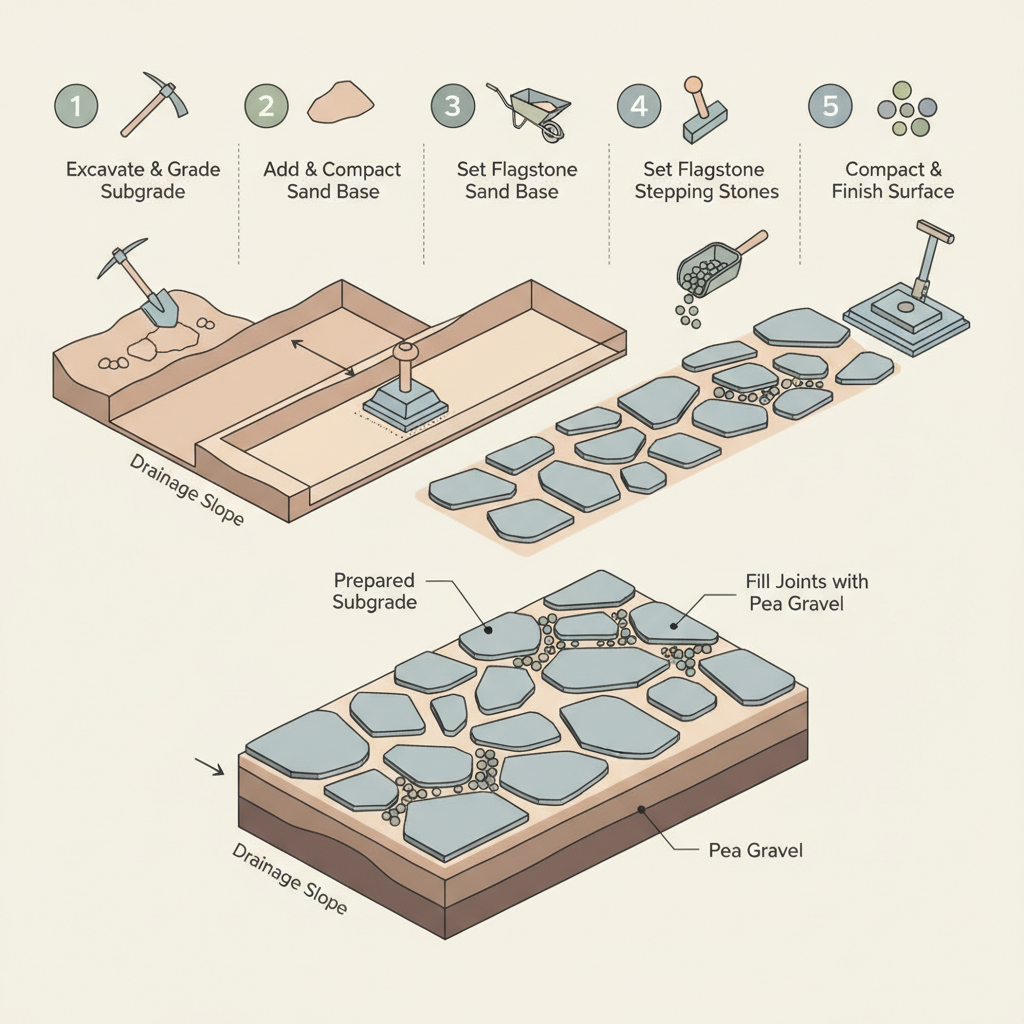
This visual guide walks you through the five key steps to install a durable stepping stone path, from excavation to final compaction. It clearly illustrates the numbered installation sequence and the layered cross-section—prepared subgrade, compacted sand base, flagstone, and pea gravel—so you can see exactly how each material contributes to a stable, well-draining walkway.
Stepping Stones: Best Materials, Depth, Installation & Design Guide
A stepping stone path is flagstones with 1/4 to 3/8 inch pea gravel filling the gaps — typically 2–3 inches of pea gravel set over a 1–2 inch sand base. For a 20–30 foot path, plan on 0.5–1.5 cubic yards of pea gravel. The sand levels each stone and the gravel keeps them from rocking under foot traffic.
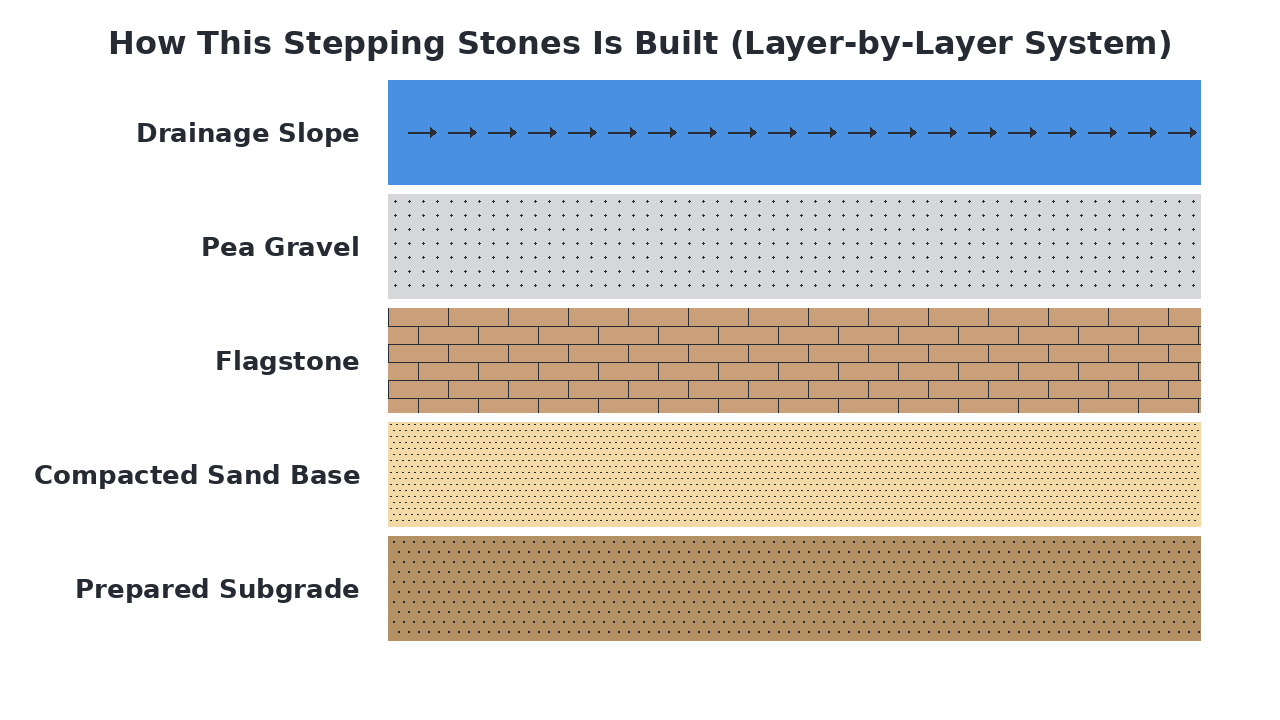
How This Stepping Stones Is Built (Layer-by-Layer System)
A stepping stone path is built as a layered system that provides a stable walking surface while allowing water to drain through. The system begins with a prepared subgrade, followed by a compacted sand base that creates a level bedding surface for the flagstones. Pea Gravel is used as the decorative fill material between the stones, providing drainage and preventing weed growth. The slight slope or crown of the path ensures water runs off the stones and filters through the gravel layer.
Materials Breakdown: What Each Layer Does
A stepping stone path is constructed as a series of layers, each serving a distinct purpose to create a stable, long-lasting surface. The materials work together to provide a firm base, secure the stones, allow for drainage, and create a finished look. Selecting the right product for each layer ensures the path remains level and functional through weather and use.
Excavated Native Soil
The existing ground that has been excavated and leveled to provide a stable, compacted foundation for the layers above.
Sharp Sand
A layer of sand that is compacted to create a firm, level bedding surface for the flagstones to rest upon.
Flagstone
Flat, natural stone pavers that form the visible walking surface of the path, providing durability and aesthetic appeal.
Pea Gravel
Small, rounded gravel used to fill the joints between flagstones, allowing for drainage while securing the stones in place.
View Pea Gravel →Surface Slope
A gentle grade built into the path's surface that directs rainwater runoff away, preventing pooling and erosion.
What Is a Stepping Stones and Why Does It Matter?
A stepping stone path is a row of flagstones with 1/4 to 3/8 inch pea gravel filling the spaces between and around them, on top of a 1–2 inch sand bedding. A 20–30 foot path takes about 0.5–1.5 cubic yards of pea gravel. The gravel stops the stones from rocking, drains water so you don't slip, and is far easier to redo than concrete when a stone settles unevenly a few years in.
Common Types of Stepping Stones Systems
Stepping stone systems typically vary based on the stone material and the fill used between them. Natural flagstone offers an organic, irregular look but can be more expensive and requires careful placement. Manufactured concrete stepping stones provide uniform shapes and colors at a lower cost, though they may lack the natural texture. The choice of fill—such as pea gravel, decomposed granite, or polymeric sand—affects drainage, stability, and maintenance.
- Natural, irregular stone shapes
- Excellent drainage with pea gravel
- Blends seamlessly with gardens
- Moderate installation effort
- Long-lasting and durable
Best for:Natural-looking garden paths with good drainage
- Uniform shapes and sizes
- Budget-friendly material cost
- Quick and easy installation
- Prone to shifting over time
- Limited natural aesthetic
Best for:Simple, cost-effective temporary paths
- Natural stone appearance
- Sand hardens for stability
- Weed and insect resistant
- More complex installation
- Higher material cost
Best for:Formal paths needing maximum stability
- Consistent color and texture
- Good drainage and compaction
- Modern, clean appearance
- Moderate maintenance required
- Mid-range pricing
Best for:Contemporary landscapes needing uniformity
When a Stepping Stones Is the Best Solution
A stepping stone path with gravel fill is ideal when you need a permeable surface that prevents water pooling and mud. It's perfect for garden areas with moderate foot traffic where you want an attractive, natural-looking path that complements plants and landscaping. This system works well for homeowners seeking a DIY-friendly project with good drainage and lower installation cost compared to solid pavers. Choose this option when you prioritize environmental benefits, aesthetic integration with nature, and long-term stability without extensive maintenance.
Everything You Need to Build a Stepping Stones
A stepping stone path requires foundational materials like sand and gravel for stability, plus surface materials like flagstone and pea gravel for the finished look. You'll need tools for excavation, leveling, and compaction to prepare the base and set the stones. Polymeric sand helps lock everything in place, while proper drainage materials prevent water pooling.
- Compacted sand base, Flagstone, Pea gravel, Polymeric sand, Drainage slope material
- Shovel, Rake, Hand tamper, Level, Rubber mallet, Garden hose
- Hello Gravel (materials), Your local hardware store
What to Consider Before You Start
Before digging, consider these key factors to ensure your stepping stone path is safe, functional, and long-lasting.
- Path layout and spacing
Plan the path's route, curve radius, and stone spacing to match your gait and yard traffic.
- Soil drainage assessment
Check if your soil drains well or if you need to add gravel or adjust the slope to prevent water issues.
- Stone thickness and size
Choose flagstone thickness (1.5-2 inches recommended) and size that fits your path width and stepping comfort.
- Local utility lines
Call 811 to have underground utilities marked before any excavation to avoid dangerous and costly strikes.
- Edging and containment
Decide if you need landscape edging to keep gravel in place and maintain clean path borders.
How to Prepare the Ground for a Stepping Stones
Start by clearing the area of all vegetation, debris, and large rocks to create a clean workspace. Mark the path's boundaries with stakes and string, then excavate to a uniform depth of 6-8 inches to accommodate the base layers. Grade the subsoil to create a gentle slope for drainage, away from structures, and compact the exposed earth thoroughly to prevent future settling.
How a Stepping Stones Works
The layered construction distributes foot traffic weight across the compacted sand base, preventing individual stones from shifting or sinking. Water drains through the pea gravel joints and the permeable sand layer, while the drainage slope directs runoff away from the path surface. This structure keeps the flagstones stable and level, even after repeated use and freeze-thaw cycles.
How to Install a Stepping Stones
Excavate & Grade Subgrade
Dig out the marked path area to the required depth and shape the subsoil with a slight cross-slope for drainage.
Add & Compact Sand Base
Spread a 2-3 inch layer of coarse sand over the subgrade, then compact it firmly to create a stable, level foundation.
Set Flagstone Stepping Stones
Place each flagstone onto the sand base, spacing them evenly for a comfortable stride and tapping them level.
Fill Joints with Pea Gravel
Pour pea gravel into the gaps between the flagstones, spreading it evenly to lock the stones in place.
Compact & Finish Surface
Use a plate compactor or hand tamper to settle the gravel and stones, then brush off any excess material.
Alternative Gravel Options for Stepping Stoness
When building stepping stone paths, homeowners have several aggregate options for the base and setting layers. Pea gravel provides good drainage but can shift underfoot, while decomposed granite compacts well but may erode over time. Polymeric sand offers superior joint stability for flagstone installations, making it the recommended choice for securing stones in place while preventing weed growth and insect intrusion.
A compactable material that creates a stable surface for stone placement.
View Product →The ideal joint filler that hardens to lock stones securely in place.
Basic setting material that washes away easily and lacks stability.
View Product →Angular aggregate that creates a solid foundation for stepping stones.
Common Stepping Stones Mistakes (And How to Avoid Them)
Stepping stone paths seem simple but common installation errors can lead to shifting, sinking, or uneven surfaces. These mistakes often result from skipping essential preparation steps or choosing the wrong materials. Avoiding these pitfalls ensures your path remains stable and attractive for years.
- Insufficient base preparation
- Poor drainage planning
- Incorrect stone spacing
- Wrong joint material
- Inadequate compaction
- Uneven leveling
How to Maintain a Stepping Stones
Regular maintenance keeps stepping stone paths looking their best and functioning properly. Check for settling stones each spring and add polymeric sand to joints that have washed away. Remove debris and weeds between stones, and ensure proper drainage to prevent water pooling around the path edges. A quick annual inspection and minor adjustments will extend the life of your stepping stone installation.
Calculate How Much Gravel You Need
Enter Your Dimensions
Measure your project area and we'll calculate how much material you need.