Mulch Bed Volume: Hardwood Mulch Depth & Yard Calculator
A well-planned mulch bed is the key to healthy plants and a tidy landscape. This guide explains what a mulch bed is, which materials you need, how to prepare the ground, how to install and maintain it step by step, and how to estimate the amount of gravel required. Whether you are creating a new garden bed or refreshing an existing one, use the sections below to find what you need.
See How to Build a Mulch Bed
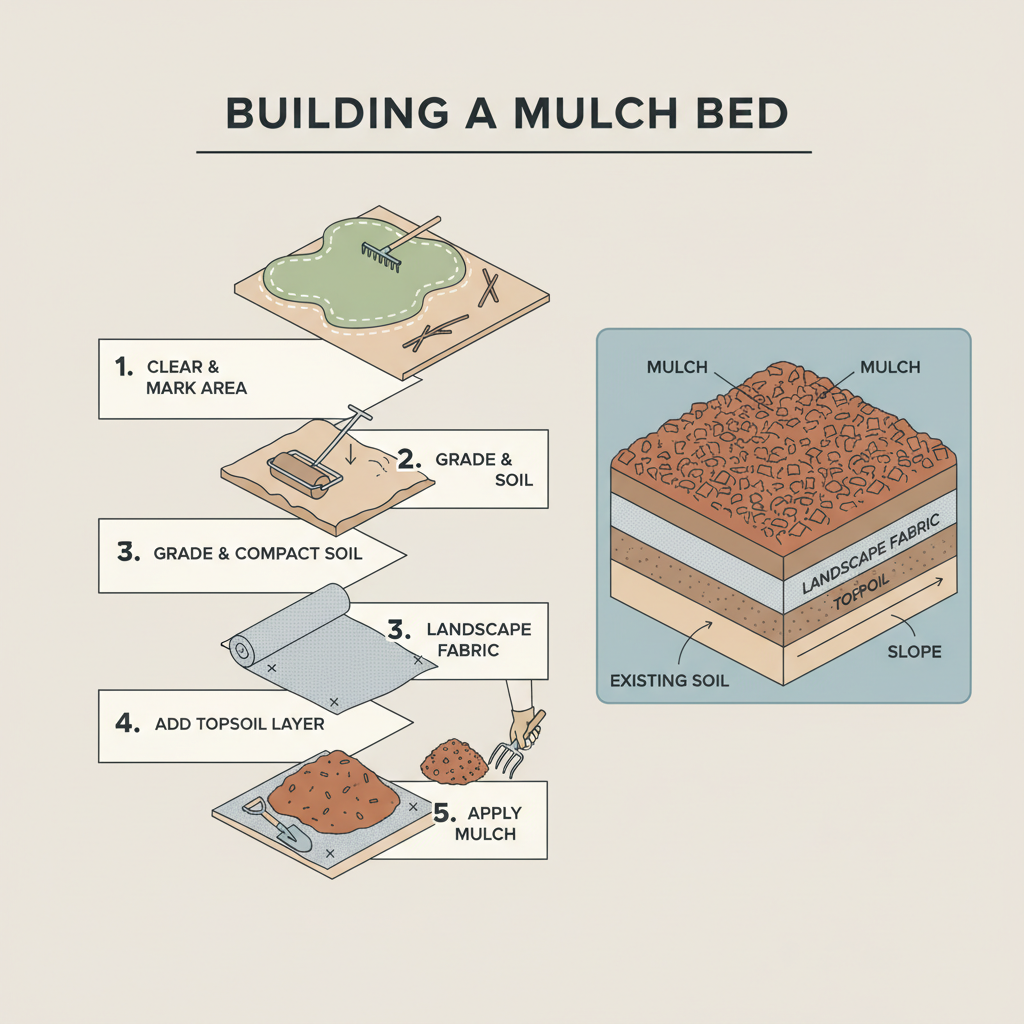
This visual guide breaks down the five-step installation sequence for building a mulch bed, showing exactly how each layer fits together. By illustrating both the step-by-step process and the cross-section of materials, it clarifies how proper grading, fabric placement, and soil-mulch layering work together to create an effective and attractive landscape feature.
Mulch for Garden Beds: Best Materials, Depth, Cost & How to Build
A mulch bed is a 3–4 inch layer of 2–4 inch shredded hardwood mulch over landscape fabric. For a 10 ft × 20 ft bed, plan on 2–3 cubic yards. The fabric blocks weed seeds from below, the mulch holds moisture above — the result is a planting area that looks tidy with almost no weekly maintenance.
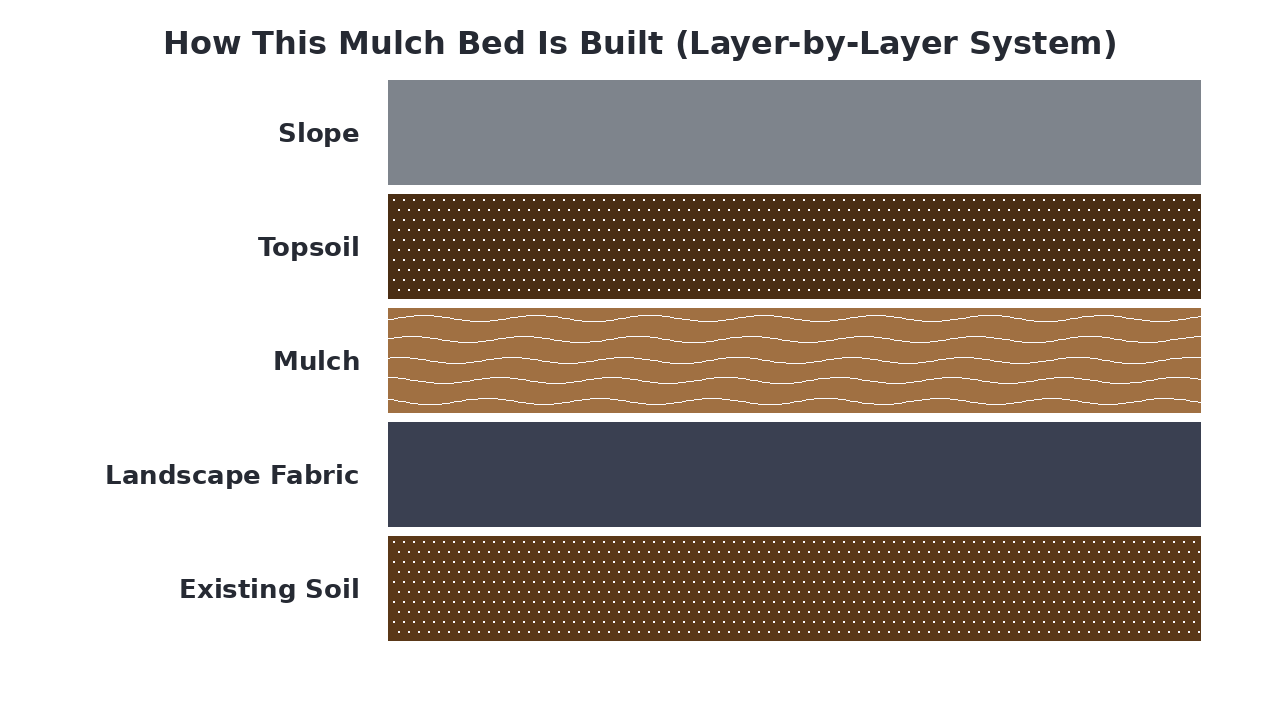
How This Mulch Bed Is Built (Layer-by-Layer System)
A mulch bed is constructed as a layered system that suppresses weeds while retaining moisture and improving soil health. The system starts with the existing soil, followed by a landscape fabric barrier that prevents weed growth from below, and a thick layer of mulch that creates the finished surface. Proper construction includes a slight slope or mounded shape to direct water away from plant stems and foundations, preventing rot and water damage. This layered approach creates an attractive, low-maintenance landscape feature that benefits both plants and soil structure.
Materials Breakdown: What Each Layer Does
A mulch bed is built as a layered system where each material serves a specific purpose in suppressing weeds, retaining moisture, and improving soil health. The components work together to create a stable, low-maintenance planting area that protects roots and enhances plant growth. Choosing the right products for each layer ensures the bed remains effective and attractive over time.
Native Soil
The original ground where the mulch bed is installed; provides the base foundation and determines the natural drainage and nutrient profile.
Landscape Fabric
A woven or non-woven geotextile barrier that suppresses weeds while allowing water and air to penetrate to the soil below.
Shredded Hardwood Mulch
A decorative organic layer that conserves soil moisture, regulates temperature, and gradually breaks down to add nutrients.
View Shredded Hardwood Mulch →Premium Topsoil
A nutrient-rich soil layer placed above the fabric to support plant roots and provide a growing medium for new plantings.
Surface Slope
A gentle grade away from structures that directs surface water runoff, preventing pooling and protecting the bed from erosion.
What Is a Mulch Bed and Why Does It Matter?
A mulch bed is a 3–4 inch layer of 2–4 inch shredded hardwood mulch over landscape fabric in the planting beds around your house. For a 10 ft × 20 ft bed, that's about 2–3 cubic yards of mulch. The fabric blocks weed seeds from below and the mulch holds moisture in the soil — meaning fewer weeds to pull and less watering all summer. Mulch laid straight on bare dirt without fabric works fine for one season, then weeds break through it from below.
Common Types of Mulch Bed Systems
Mulch beds come in a few common forms, primarily distinguished by the type of mulch material used and the underlying preparation. Organic mulches like wood chips and bark break down over time to enrich soil, while inorganic options like rubber or stone offer longer-lasting weed suppression with less maintenance. The choice often comes down to whether you want to improve soil health or prioritize durability and minimal upkeep.
- Improves soil health
- Retains moisture well
- Breaks down over time
- Natural appearance
- Affordable and accessible
Best for:Gardens where soil enrichment is a priority
- Long-lasting and durable
- Low maintenance
- Good for playgrounds
- Does not decompose
- Weed suppression
Best for:High-traffic areas needing durability
- Excellent weed suppression
- Very low maintenance
- Drains quickly
- Long-lasting appearance
- Variety of colors available
Best for:Landscaping where minimal upkeep is key
- Superior weed barrier
- Extends mulch life
- Easy to install
- Allows water penetration
- Reduces mulch settling
Best for:Areas with persistent weed problems
When a Mulch Bed Is the Best Solution
A stone mulch bed is ideal when you want a clean, low-maintenance landscape feature that lasts for years without breaking down. It's perfect for areas where weed control is a priority and you don't want to replenish mulch annually. This option works well around foundations, in dry climates, or where you want consistent drainage without soil enrichment. Choose stone mulch when you value durability over soil amendment and want minimal ongoing maintenance.
Everything You Need to Build a Mulch Bed
A mulch bed requires several foundational and surface materials to create a healthy, weed-suppressing planting area. You'll need tools for soil preparation, fabric installation, and mulch spreading. Sourcing the right products ensures each layer performs its function effectively.
- Landscape fabric, Topsoil, Compost, Mulch
- Shovel, Rake, Garden hose or string, Utility knife, Wheelbarrow
- A contractor supply store, Hello Gravel (materials), Local garden center (compost and mulch)
What to Consider Before You Start
Before digging in, consider these key planning steps to ensure your mulch bed is successful and long-lasting.
- Bed layout and size
Determine the shape, dimensions, and location of your mulch bed, considering sunlight exposure and plant spacing needs.
- Soil preparation and grading
Check the existing soil condition and plan for proper grading to ensure drainage away from structures.
- Material quantities and delivery
Calculate the amount of topsoil, compost, and mulch needed based on bed dimensions and desired layer thickness.
- Plant selection and placement
Choose appropriate plants for the bed's conditions and plan their arrangement before installing landscape fabric.
- Edge definition and containment
Decide on edging materials or natural borders to keep mulch contained and maintain a clean appearance.
How to Prepare the Ground for a Mulch Bed
Start by clearing the area of all existing vegetation, rocks, and debris to create a clean slate. Use a string line or garden hose to mark the desired shape and boundaries of the mulch bed. Grade the soil to create a gentle slope away from structures to ensure proper drainage, and lightly compact the soil to provide a stable foundation for the layers to come.
How a Mulch Bed Works
A mulch bed functions as a multi-layered system where each component serves a specific purpose. The landscape fabric suppresses weed growth while allowing water to penetrate, the topsoil provides nutrients and supports plant roots, and the mulch layer retains soil moisture, regulates temperature, and gives a finished appearance. Together, these layers create a stable, low-maintenance environment that enhances plant health and reduces erosion.
How to Install a Mulch Bed
Clear & Mark Area
Remove all vegetation and debris, then outline the bed shape with string or a garden hose.
Grade & Compact Soil
Create a gentle slope away from structures for drainage and lightly compact the existing soil.
Install Landscape Fabric
Lay landscape fabric over the prepared soil, overlapping edges and securing with pins.
Add Topsoil Layer
Spread a 2-3 inch layer of topsoil over the fabric to provide nutrients for plant roots.
Apply Mulch
Spread a 2-4 inch layer of mulch evenly over the topsoil, keeping it away from plant stems.
Alternative Gravel Options for Mulch Beds
While mulch is the traditional choice for mulch beds, several alternative aggregates can serve similar functions with different aesthetic and functional benefits. Pea gravel provides excellent drainage and a clean look but doesn't enrich soil like organic options. Crushed stone offers superior weed suppression and durability but lacks moisture retention properties. Decomposed granite creates a natural appearance and compacts well but can become muddy. Among these alternatives, organic mulch remains the best option because it actively improves soil health while retaining moisture and suppressing weeds.
The ideal choice for most mulch beds as it enriches soil while retaining moisture.
View Product →Good for decorative beds with established plants that need minimal soil improvement.
Best for permanent installations where maximum weed suppression is needed.
View Product →Not suitable as a standalone mulch layer since it doesn't provide any organic benefits.
Common Mulch Bed Mistakes (And How to Avoid Them)
Mulch beds seem simple but common installation errors can undermine their effectiveness and create ongoing maintenance headaches. Avoiding these pitfalls ensures your mulch bed performs optimally for years.
- Insufficient depth
- Volcano mulching
- No weed barrier
- Wrong material type
- Poor edge definition
- Ignoring soil prep
How to Maintain a Mulch Bed
Maintaining a mulch bed requires seasonal attention to keep it looking fresh and functioning properly. Each spring, rake the existing mulch to break up any matting and add a fresh 2-3 inch layer to replace decomposed material. Throughout the growing season, pull any emerging weeds promptly and check that mulch hasn't washed away in heavy rain. In the fall, consider adding a thin layer of compost before refreshing mulch to continuously improve soil health.
Calculate How Much Gravel You Need
Enter Your Dimensions
Measure your project area and we'll calculate how much material you need.