How Much Gravel Do You Need for a French Drain?
A French drain is a simple yet powerful solution for redirecting water away from your property. This guide explains what a French drain is, how it works, which materials you need, how to install it step by step, and how to estimate the amount of gravel required. Whether you are tackling a soggy yard or preventing basement flooding, use the sections below to find what you need.
See How to Build a French Drain
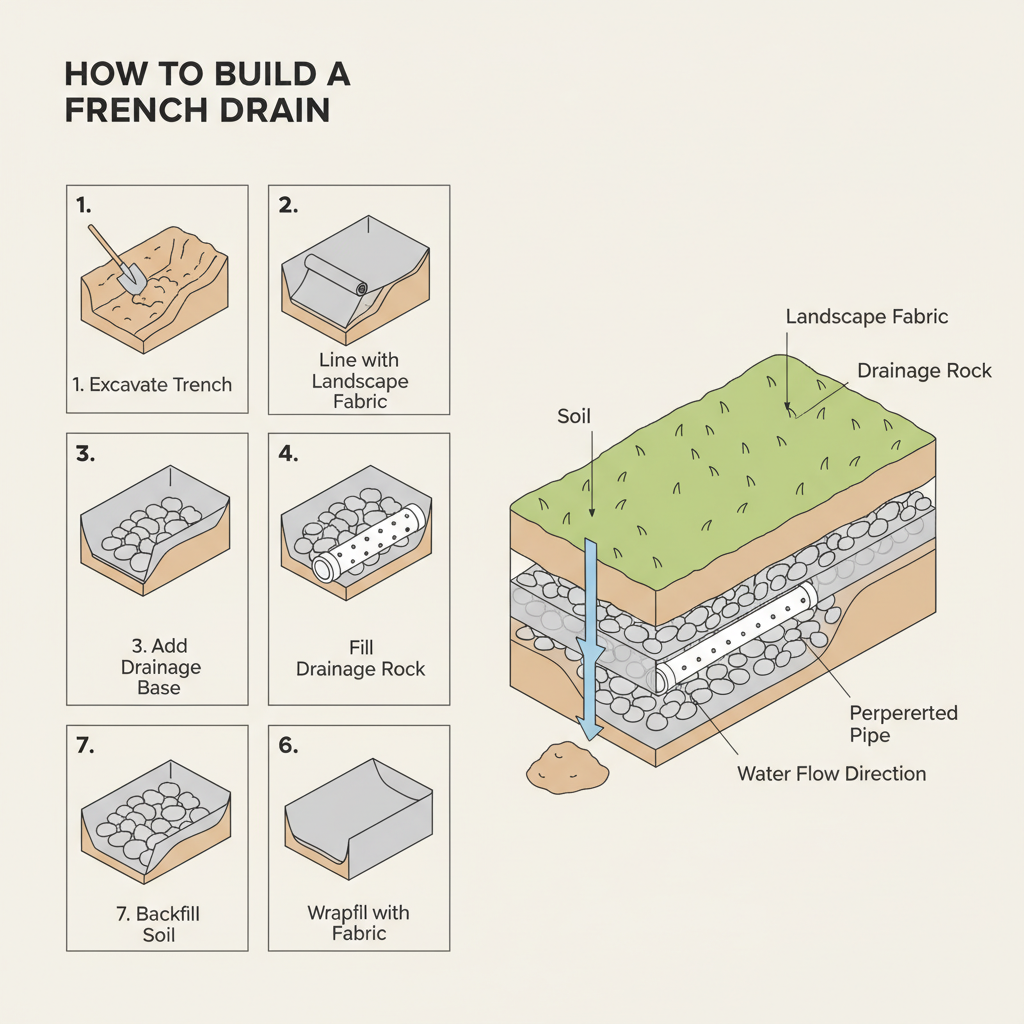
This visual guide shows the step-by-step installation sequence for building a French drain, from excavation to backfilling. It clearly illustrates how each layer - from the landscape fabric base to the perforated pipe and drainage rock - fits together to create an effective drainage system. Seeing the numbered steps alongside the labeled cross-section helps homeowners understand both the process and the proper layer structure.
Gravel for French Drains: Best Drain Rock, Pipe & Slope Guide
A French drain is a reliable solution for redirecting groundwater away from your property using a perforated pipe surrounded by drainage rock. We recommend 3/4 inch clean crushed stone drainage rock installed 6-8 inches deep around the pipe within a 12-18 inch trench. Proper installation includes landscape fabric to prevent soil infiltration and maintaining a consistent downward slope for effective water flow. This system provides long-term drainage performance and protects your foundation from water damage.
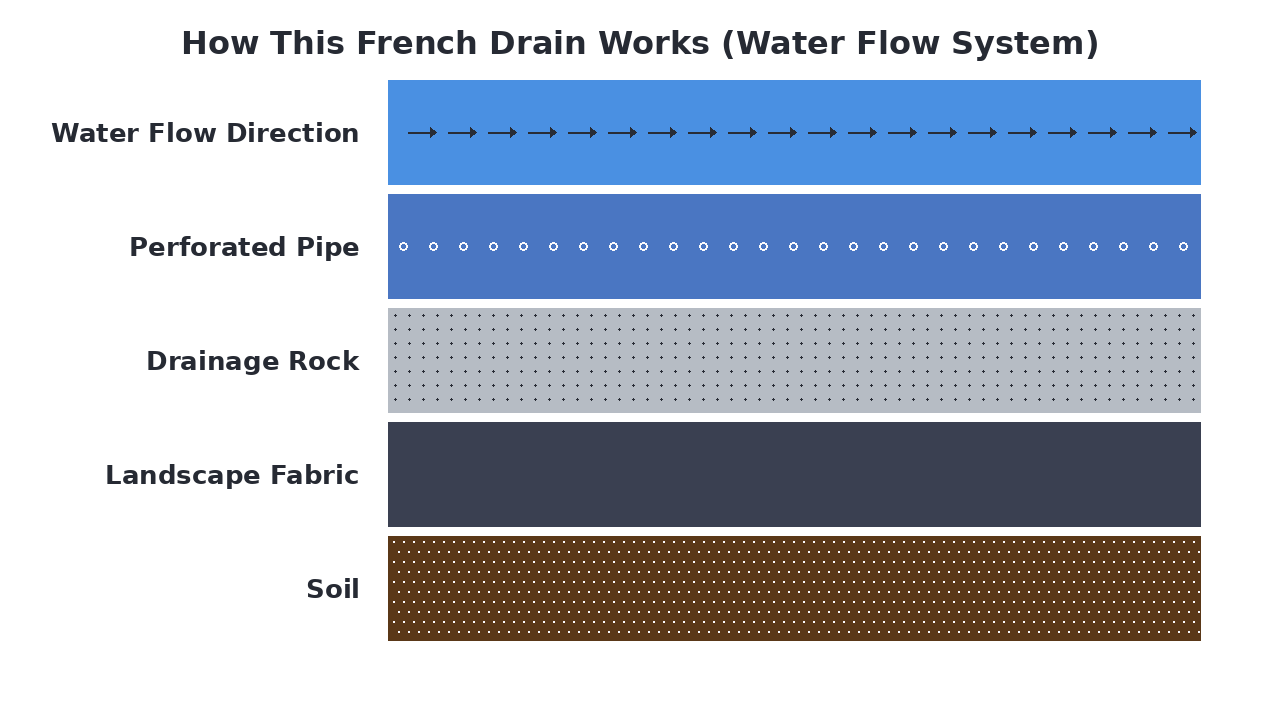
How This French Drain Works (Water Flow System)
A French drain uses a perforated pipe surrounded by drainage rock within a trench to intercept and redirect groundwater away from your property. Water from the surrounding soil seeps through the landscape fabric into the drainage rock, enters the pipe through perforations, and flows downhill via gravity. The landscape fabric prevents soil from clogging the drainage rock and pipe, maintaining long-term system performance. A continuous downward slope along the pipe's length is essential to ensure water moves efficiently to the discharge point.
Materials Breakdown: What Each Layer Does
A French drain functions as a layered assembly where each material has a distinct purpose in intercepting and channeling groundwater. The components are selected to work in sequence: water percolates through the soil, is filtered by fabric, flows through rock to the pipe, and is carried away. This deliberate layering prevents sediment buildup and ensures long-term drainage performance.
Native Soil
The existing ground into which the trench is dug; it holds the moisture that the drain is designed to collect and redirect.
Landscape Fabric
A permeable geotextile that wraps the trench to prevent soil particles from migrating into and clogging the drainage rock.
Drainage Rock
Clean, angular crushed stone that provides a high-void space for water to flow freely toward the perforated pipe.
Perforated Pipe
A slotted or perforated pipe placed at the bottom of the rock layer to collect incoming water and convey it to a safe outlet.
Discharge Slope
The consistent downward grade along the length of the trench that ensures water flows through the pipe and exits the system.
What Is a French Drain and Why Does It Matter?
A French drain is a subsurface drainage system that intercepts and redirects groundwater away from vulnerable areas of your property. It matters because it prevents water accumulation that can damage foundations, cause basement flooding, and create soggy yard conditions. Unlike surface drains that only handle surface runoff, French drains address subsurface water problems by collecting water before it reaches problematic areas. This makes them essential for properties with poor drainage, high water tables, or foundation protection needs.
Common Types of French Drain Systems
French drain systems vary based on their installation method and materials used. Traditional French drains use perforated pipe surrounded by gravel to collect and redirect groundwater. Modern variations include sock-wrapped pipes that prevent clogging and filter fabric-lined trenches for enhanced filtration. The choice depends on soil conditions, installation complexity, and long-term maintenance needs.
- Uses perforated PVC pipe
- Surrounded by drainage rock
- Classic subsurface installation
- Cost-effective solution
- Requires proper filter fabric
Best for:Most residential drainage problems
- Pre-wrapped filter fabric
- Reduces clogging risk
- Simpler installation process
- Higher initial cost
- Less gravel required
Best for:Sandy or silty soil conditions
- Open trench design
- Handles surface runoff
- Visible landscape feature
- Easy maintenance access
- Limited subsurface drainage
Best for:Heavy surface water runoff
- Collects water in pit
- Gradual groundwater recharge
- Large gravel reservoir
- Space-intensive installation
- Prevents runoff discharge
Best for:Properties with absorption space
When a French Drain Is the Best Solution
A traditional gravel French drain is ideal when you need to protect your foundation from subsurface water or address persistent yard flooding. It's the best solution for properties with poor soil drainage or high water tables that cause basement moisture issues. This system works well for redirecting groundwater away from vulnerable areas while being cost-effective compared to more complex drainage solutions. Choose this when you need reliable, long-term subsurface drainage without extensive maintenance requirements.
Everything You Need to Build a French Drain
A French drain requires specific materials and tools to ensure proper installation and long-term performance. You will need foundational materials like drainage rock and landscape fabric, along with a perforated pipe to carry water away. Essential tools include digging implements and a level to create the correct slope for effective water flow.
- Drainage rock, Landscape fabric, Perforated pipe, Sand, Pea gravel
- Shovel or trenching tool, Level or laser level, Tape measure, Utility knife, Wheelbarrow
- Hello Gravel (materials), A contractor supply store, Local equipment rental (trenching machines)
What to Consider Before You Start
Proper planning ensures your French drain functions correctly and avoids common installation mistakes. Consider these key factors before you begin digging.
- Drainage path and slope
Determine the exact route and ensure a consistent downward slope (typically 1% minimum) for water to flow toward the discharge point.
- Local utility locations
Call 811 or your local utility locating service to mark underground lines before any excavation.
- Soil type and percolation
Assess your soil composition to understand how quickly water will infiltrate and whether additional filtering layers are needed.
- Discharge point planning
Identify a suitable, legal outlet for the drained water, such as a storm drain, dry well, or lower elevation on your property.
- Trench depth and width
Calculate the necessary trench dimensions based on your drainage needs and the frost line in your region.
How to Prepare the Ground for a French Drain
Begin by clearing the area of all vegetation, roots, and large debris to create a clean work zone. Mark the drain's path with spray paint or stakes and string, then grade the trench to maintain a consistent downward slope (typically 1% minimum) away from the problem area. Finally, compact the trench bottom with a hand tamper to create a stable, level base that prevents future settling.
How a French Drain Works
A French drain works by creating a permeable channel that intercepts and redirects subsurface water. Groundwater percolates through the soil, is filtered by landscape fabric to prevent clogging, then flows through the drainage rock layer into a perforated pipe. The pipe collects and channels the water along the sloped trench, safely discharging it away from the foundation or saturated area.
How to Install a French Drain
Excavate Trench
⚠️ Local stormwater rules apply: drainage and infiltration projects are subject to local rules about discharge location, setbacks, and (for larger systems) permits. The steps below are provided to help plan your aggregate order, not as a substitute for checking with your municipality and following local stormwater rules. Dig a trench along the marked path, typically 12-18 inches wide and deep enough to accommodate all layers while maintaining proper slope.
Line with Landscape Fabric
Drape landscape fabric along the trench walls and bottom, leaving excess fabric on both sides to wrap over the top later.
Add Drainage Rock Base
Place a 2-3 inch layer of drainage rock in the bottom of the trench and compact it lightly to create a stable bed for the pipe.
Lay Perforated Pipe
Position the perforated pipe in the center of the trench with holes facing downward, ensuring it maintains the required slope for water flow.
Fill with Drainage Rock
Surround the pipe completely with additional drainage rock, filling the trench to within a few inches of the surface.
Wrap with Fabric
Fold the excess landscape fabric over the top of the rock layer to create a protective barrier against soil infiltration.
Backfill with Soil
Cover the wrapped fabric with the excavated soil, tamping it down to restore the ground level and prevent settling.
Alternative Gravel Options for French Drains
French drains require gravel that provides both high permeability and structural stability to prevent pipe collapse. While decorative options like pea gravel or river rock may be tempting, crushed stone with angular edges interlocks to create a stable channel that resists settling. For the primary drainage layer, angular crushed stone is the clear winner because its sharp edges lock together, maintaining void space for water flow and preventing the trench from shifting over time.
The best choice for French drains due to angular edges that interlock and maintain drainage voids.
View Product →Specifically designed for drainage applications with optimal size and permeability.
Poor choice as it clogs easily and lacks structural support for the drainage pipe.
View Product →Large, smooth stones that provide some drainage but are better for decorative applications.
View Product →Common French Drain Mistakes (And How to Avoid Them)
Even with quality materials, French drains can fail if installed incorrectly. These common errors compromise drainage efficiency and lead to costly repairs.
- Insufficient slope
- Missing filter fabric
- Wrong gravel size
- Poor pipe placement
- Inadequate trench depth
How to Maintain a French Drain
Regular maintenance ensures your French drain continues to function properly for years. Inspect the outlet periodically to ensure it's clear of debris and flowing freely. Check for surface settling around the drain line and add more gravel if needed to maintain proper grade. Annually flush the system with a garden hose to remove sediment buildup and verify water is being diverted away from your foundation.
Calculate How Much Gravel You Need
Enter Your Dimensions
Measure your project area and we'll calculate how much material you need.