Foundation Drain Gravel: Drain Rock Size, Depth & Tons
A foundation drain is crucial for protecting your home's structural integrity by managing water around the foundation. This guide explains what a foundation drain is, how it works, which materials you need, how to install it step by step, and how to estimate the amount of gravel required. Whether you are tackling a DIY installation or consulting with a contractor, use the sections below to navigate through the process.
See How to Build a Foundation Drain
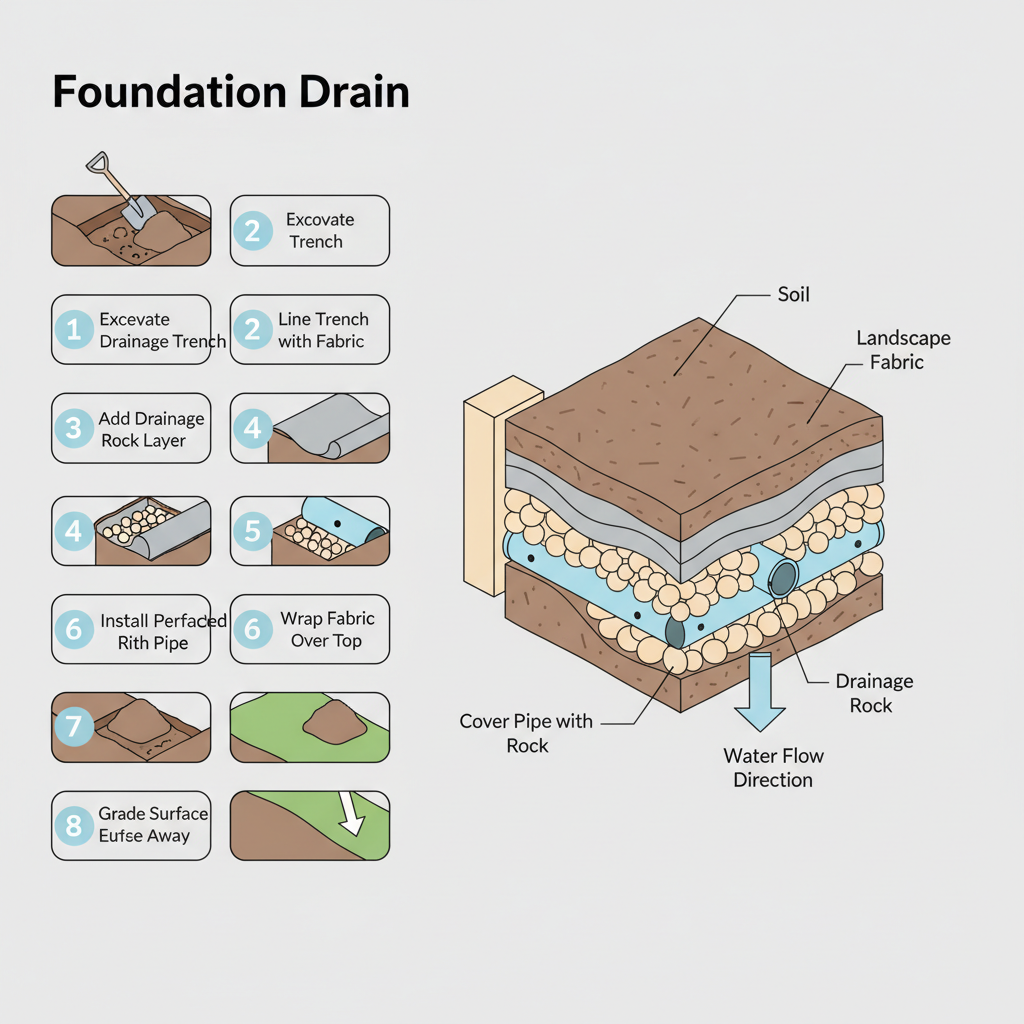
This visual guide shows the complete installation sequence for a foundation drain, from trench excavation to final grading. The numbered steps and labeled cross-section clarify how each layer—from drainage rock to perforated pipe—works together to protect your foundation from water damage.
Gravel for Foundation Drains: Best Drain Rock, Depth, Slope & Installation Guide
A foundation drain is a critical system that protects your home's foundation by redirecting groundwater away from the structure. For optimal performance, use clean 3/4 to 1-1/2 inch drainage rock, installed 12-18 inches deep around the foundation perimeter. The angular stone creates stable voids for maximum water flow into the perforated pipe below. Proper slope and landscape fabric are essential to prevent soil infiltration and ensure efficient water movement.
How This Foundation Drain Works (Water Flow System)
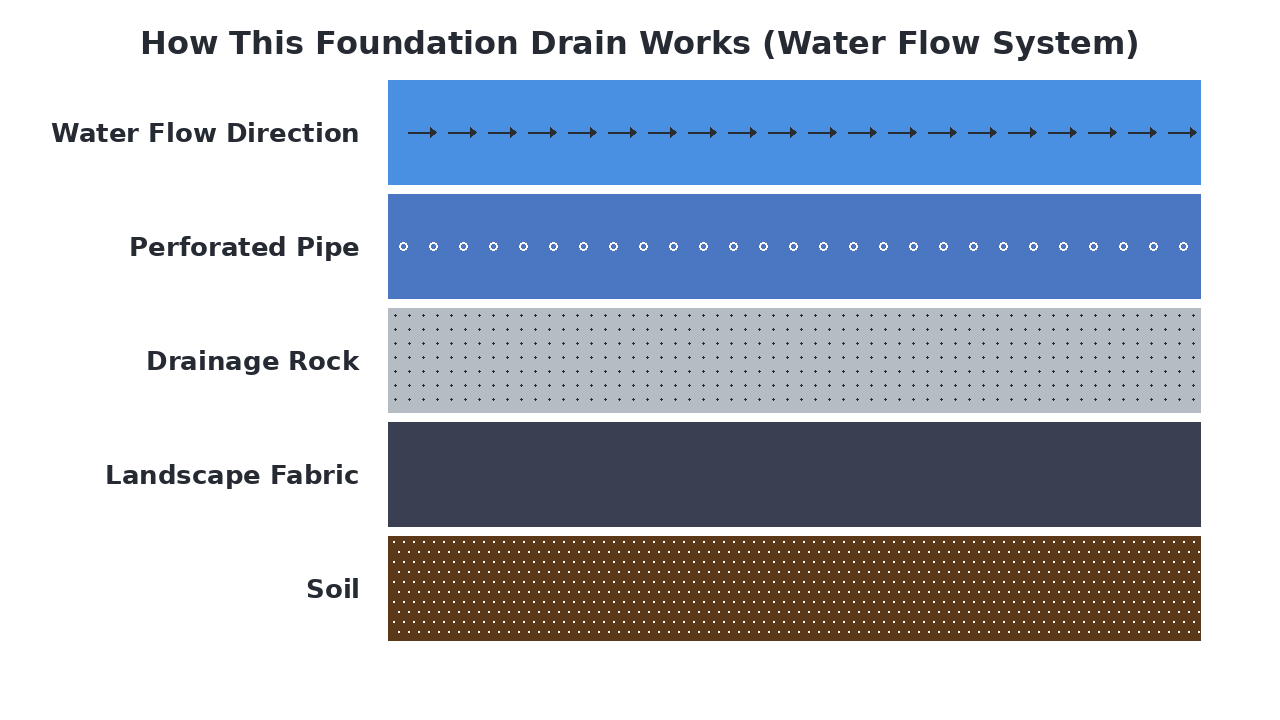
A foundation drain is a water flow system designed to protect your home's foundation by intercepting and redirecting groundwater. Water enters through the surrounding soil and flows into the gravel-filled trench, where it's collected by the perforated pipe beneath. The landscape fabric prevents soil from clogging the drainage rock, ensuring water can flow freely toward the discharge point. Proper slope in the pipe is essential to move water away from the foundation efficiently.
Materials Breakdown: What Each Layer Does
A foundation drain is constructed as a layered system that intercepts groundwater before it can damage your home's foundation. Each material serves a specific purpose in capturing water, filtering out soil particles, and directing flow away from the structure. The components work together to prevent hydrostatic pressure buildup and keep your foundation dry for years to come.
Native Soil
The surrounding earth that contains groundwater; this is what the foundation drain system is designed to intercept and redirect.
Landscape Fabric
A geotextile barrier that prevents soil from migrating into the drainage rock and clogging the system over time.
Drainage Rock
Clean, angular crushed stone that creates voids for water to flow freely toward the perforated pipe while providing structural support.
Perforated Pipe
A slotted pipe that collects water from the drainage rock layer and carries it away from the foundation to a safe discharge point.
Discharge Slope
The consistent downhill gradient that ensures collected water flows away from the foundation rather than pooling against it.
What Is a Foundation Drain and Why Does It Matter?
A foundation drain is a subsurface water management system designed to intercept and redirect groundwater away from your home's foundation to prevent structural damage. It matters because it protects against hydrostatic pressure, soil erosion, and moisture intrusion that can lead to costly foundation cracks and basement flooding. Unlike surface drainage solutions, a foundation drain addresses water at the source by collecting it through the soil before it reaches the foundation walls, providing long-term protection against water damage.
Common Types of Foundation Drain Systems
Foundation drain systems come in several common types, each with different approaches to managing groundwater. French drains use perforated pipes surrounded by gravel to collect and redirect water, while curtain drains are simpler trenches filled with gravel that intercept water flow. Swales are shallow surface channels that guide water away, and sump pump systems actively pump collected water out of the area. The choice depends on your soil type, water table level, and foundation construction.
- Perforated pipe collects water
- Gravel filter prevents clogging
- Redirects water away from foundation
- Long-lasting subsurface solution
- Handles moderate to heavy water
Best for:Most residential foundation drainage needs
- Simple gravel-filled trench
- Intercepts groundwater flow
- Lower installation cost
- No pipe maintenance needed
- Less effective for heavy water
Best for:Shallow water table situations
- Shallow surface channel
- Natural gravity drainage
- Landscaping integration possible
- Minimal subsurface work
- Visible water management
Best for:Surface runoff redirection only
- Active pumping mechanism
- Handles high water tables
- Requires electrical connection
- Regular maintenance needed
- Works with existing drains
Best for:Basements with frequent flooding
When a Foundation Drain Is the Best Solution
A foundation drain is the best solution when you need to protect your home's foundation from persistent groundwater issues. It's essential for homes built on clay soils that expand with moisture, properties with high water tables, or houses experiencing basement dampness. Foundation drains provide proactive protection against costly structural damage from hydrostatic pressure, making them a smart investment for any homeowner concerned about long-term foundation health and preventing basement flooding.
Everything You Need to Build a Foundation Drain
Building a foundation drain requires several key materials to create the layered drainage system and essential tools for excavation and installation. You'll need drainage rock for the primary drainage layer, landscape fabric to prevent soil intrusion, and perforated pipe to carry water away. Having the right tools on hand will make digging the trench, placing materials, and backfilling much more efficient.
- Drainage rock, Landscape fabric, Perforated pipe, Sand (optional bedding)
- Shovel, Trenching shovel, Rake, Tape measure, Level
- Your local hardware store, Hello Gravel (materials), Equipment rental (trenching tools)
What to Consider Before You Start
Proper planning is essential for an effective foundation drain installation. Consider these key factors before you begin digging.
- Local building codes
Check with your municipality for any required permits or specific regulations regarding drainage system installation near foundations.
- Soil type and drainage
Assess your soil composition to determine proper trench depth and whether additional drainage layers are needed.
- Water flow direction
Identify the natural slope of your property to ensure water will flow away from the foundation toward an appropriate discharge point.
- Utility line locations
Call 811 or your local utility locating service to mark underground lines before any excavation begins.
- Discharge point planning
Determine where the drained water will exit, such as a storm drain, dry well, or daylighted area away from the foundation.
How to Prepare the Ground for a Foundation Drain
Start by clearing the area around your foundation of all vegetation, debris, and any existing landscaping materials. Mark the exact location of the drain trench using spray paint or stakes and string, ensuring it follows the perimeter at the proper distance from the foundation wall. Grade the trench bottom to create a consistent slope away from the foundation, typically a minimum of 1% grade, and compact the soil to create a stable, undisturbed base for the drainage system.
How a Foundation Drain Works
A foundation drain functions as a subsurface drainage system that intercepts groundwater before it reaches your home's foundation. When water enters the trench, it passes through the drainage rock layer and flows into the perforated pipe, which collects and channels it away from the structure. The landscape fabric prevents soil particles from clogging the drainage rock and pipe, maintaining long-term system efficiency. This layered approach relieves hydrostatic pressure against foundation walls, preventing water intrusion and structural damage.
How to Install a Foundation Drain
Excavate Drainage Trench
⚠️ Licensed-trade notice: This project is code-regulated in most jurisdictions and typically requires a licensed contractor and local permits. The steps below are provided to help plan your aggregate order, not as a substitute for professional design, permits, or inspections. Dig a trench approximately 12-18 inches wide and deep along the marked perimeter, maintaining a consistent slope away from the foundation.
Line Trench with Fabric
Place landscape fabric along the bottom and sides of the trench, leaving enough excess to wrap over the top of the drainage materials.
Add Drainage Rock Layer
Pour a 2-3 inch layer of clean drainage rock into the fabric-lined trench and level it to create a stable base for the pipe.
Install Perforated Pipe
Place perforated drainage pipe on the rock bed with holes facing downward, ensuring it follows the trench slope for proper water flow.
Cover Pipe with Rock
Surround and cover the pipe with additional drainage rock until it's completely encased, maintaining the fabric separation from soil.
Wrap Fabric Over Top
Fold the excess landscape fabric over the top of the drainage rock to create a complete barrier against soil infiltration.
Backfill with Soil
Carefully fill the remaining trench with native soil, compacting it in layers to prevent settling while avoiding damage to the drainage system.
Alternative Gravel Options for Foundation Drains
When installing a foundation drain, the choice of aggregate material is critical for effective water management and long-term performance. While several gravel and stone options can be used, each offers different characteristics in terms of drainage capacity, filtration, and structural stability. For the primary drainage layer, washed drain rock is typically the best choice due to its optimal balance of void space for water flow and particle size that prevents soil infiltration. Other materials like pea gravel, crushed stone, and sand serve specific roles in the layered system or as alternatives in certain soil conditions.
Ideal for the primary drainage layer with excellent void space and clean surfaces.
View Product →Provides good drainage with angular edges that lock together for stability.
View Product →Used as a bedding or filter layer to prevent soil migration into the drain.
Too large and irregular for effective drainage; primarily aesthetic use only.
Common Foundation Drain Mistakes (And How to Avoid Them)
Foundation drain installation involves several critical steps where mistakes can compromise the entire system's effectiveness. Avoiding these common errors ensures your foundation remains protected from water damage for years to come.
- Insufficient slope
- Poor filter fabric installation
- Wrong aggregate size
- Inadequate depth
- Clogged outlet
- Missing cleanout access
How to Maintain a Foundation Drain
Regular maintenance of your foundation drain is essential to ensure continued protection against water intrusion. Annually inspect the drain outlet to ensure it's clear of debris and flowing freely away from the foundation. Check for soil erosion around the drain line and regrade as needed to maintain proper slope. Every few years, consider having a professional inspect the system with a camera to identify any blockages or damage before they cause foundation issues.
Calculate How Much Gravel You Need
Enter Your Dimensions
Measure your project area and we'll calculate how much material you need.