Fire Pit Ring Pea Gravel: Depth, Diameter & Tonnage
A properly constructed fire pit ring creates a durable and safe centerpiece for your outdoor living space. This guide explains what a fire pit ring is, which materials you need, how to prepare the ground, how to build a fire pit ring step by step, and how to estimate the amount of gravel required. Whether you are building a permanent fire feature in your backyard or creating a simple DIY gathering spot, use the sections below to navigate through the process.
See How to Build a Fire Pit Ring
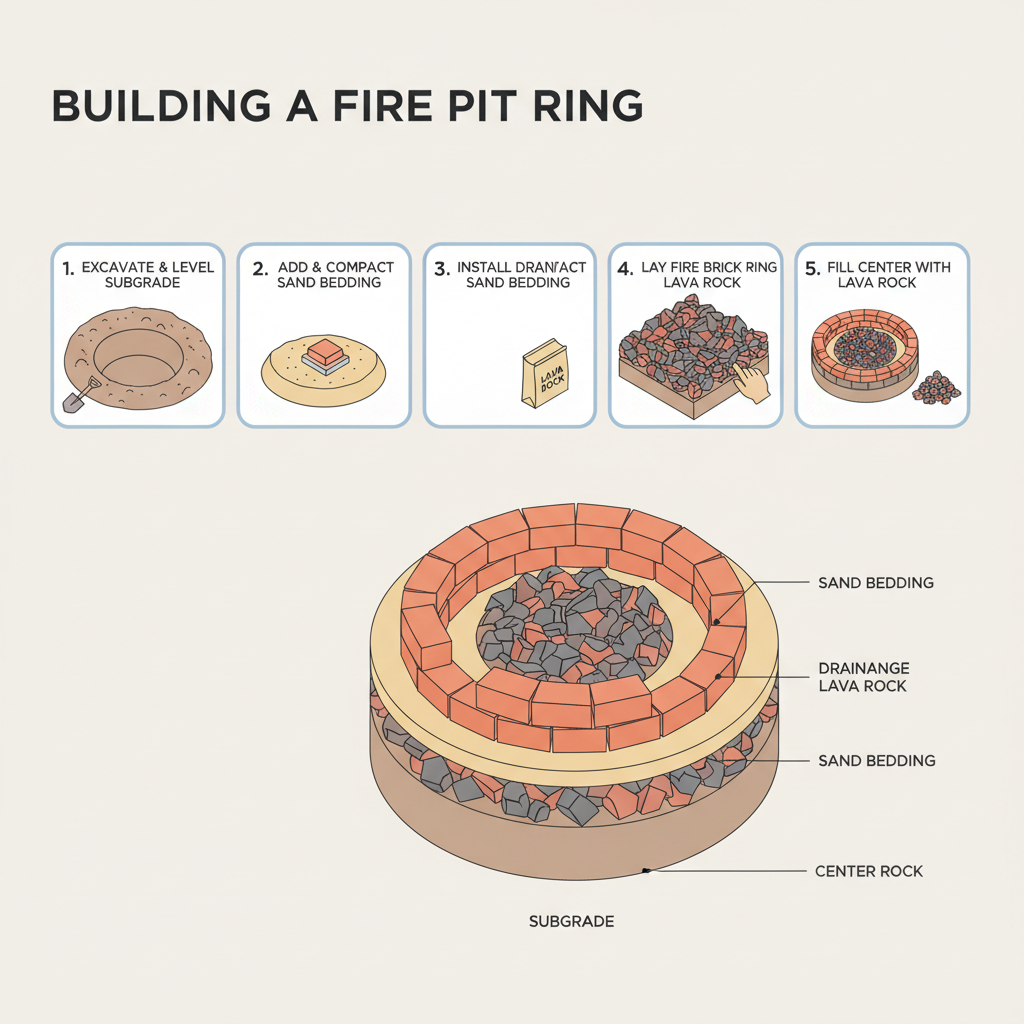
This visual guide shows the step-by-step installation sequence for building a fire pit ring, clearly illustrating each numbered phase from excavation to final assembly. The accompanying layered cross-section diagram helps you understand the proper base-to-surface structure, ensuring proper drainage and stability for your fire pit.
Fire Pit Ring Construction: Best Materials, Depth, Design & How to Build
A safe, durable fire pit ring is built in layers: a compacted base, a drainage layer of pea gravel beneath the ring, and a heat-resistant surface (crushed lava rock or fire-rated stone) inside the burn area. The drainage layer is what HG delivers — pea gravel sits under the fire bricks where it stays cool and helps water move away from the structure. The surface layer that contacts the fire should be lava rock or fire-rated material, sourced locally if not in HG's catalog.
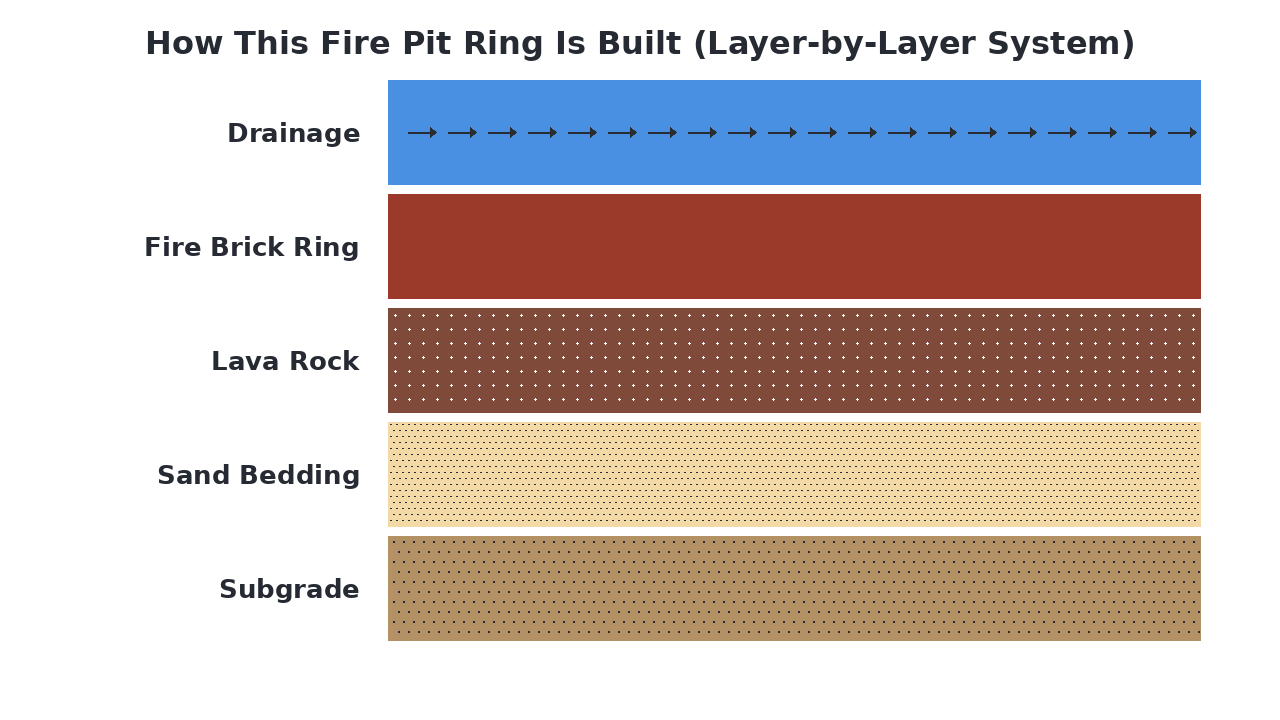
How This Fire Pit Ring Is Built (Layer-by-Layer System)
A fire pit ring is a layered system built to safely contain fire while managing heat and drainage. The structure starts with a prepared subgrade, followed by a heat-resistant rock layer that provides stability and fireproofing, and a decorative fire brick ring that contains the flames. A drainage layer underneath prevents water from pooling around the pit, ensuring the structure remains stable and durable through repeated use.
Materials Breakdown: What Each Layer Does
A fire pit ring is constructed as a layered system where each material serves a specific purpose in creating a safe, functional, and durable outdoor feature. The layers work together to provide proper drainage, protect the fire bricks from heat and moisture, and ensure the pit remains stable through repeated use. Selecting the right product for each layer prevents heat damage, maintains structural integrity, and allows for proper water management.
Compacted Subgrade
The native soil that has been excavated and compacted to provide a stable foundation for the fire pit structure.
Sand
A leveling and drainage layer that provides a stable base for the lava rock and helps prevent water from pooling under the fire pit.
View Sand →Lava Rock
A heat-resistant material that protects the sand layer from extreme temperatures and provides additional drainage around the fire bricks.
Fire Brick
Heat-resistant bricks that form the visible ring of the fire pit, containing the fire and protecting surrounding materials from direct heat.
Drainage System
The overall design feature that allows water to drain away from the fire pit area, preventing moisture buildup and freeze-thaw damage.
What Is a Fire Pit Ring and Why Does It Matter?
A fire pit ring is a carefully engineered system designed to safely contain fire while managing heat transfer and drainage. Unlike simple fire pits dug directly into the ground, a proper ring uses layered materials including heat-resistant rock and fire bricks to create a durable, long-lasting structure. This matters because it prevents ground damage from heat, ensures proper drainage to avoid water pooling, and creates a safer, more controlled fire containment area. The multi-layer approach differs from basic fire pits by providing structural integrity and thermal protection that extends the lifespan of your outdoor fire feature.
Common Types of Fire Pit Ring Systems
Fire pit ring systems typically come in three main approaches based on material choice and construction method. The simplest uses basic gravel or rock rings, while more engineered systems incorporate fire bricks and specialized drainage layers. The most durable option combines multiple materials in a carefully layered design for maximum safety and longevity.
- Lowest cost option
- Simple to install
- Limited heat resistance
- Poor drainage management
Best for:Temporary or budget setups
- Natural aesthetic appeal
- Better heat resistance
- Moderate drainage
- Heavy to transport
Best for:Natural landscape designs
- Excellent heat containment
- Professional durability
- Complex installation
- Higher material cost
Best for:Permanent high-use installations
- Optimal drainage layer
- Cost-effective gravel base
- Fire brick safety ring
- Balanced performance
Best for:Most residential applications
When a Fire Pit Ring Is the Best Solution
A pea gravel and fire brick hybrid fire pit ring is ideal when you need reliable drainage management with cost-effective materials. This system works best for homeowners wanting a permanent, safe fire feature without professional construction costs. It's perfect for moderate budgets where proper heat management and water drainage are priorities over pure aesthetics.
Everything You Need to Build a Fire Pit Ring
Building a fire pit ring requires specific materials for each layer to ensure safety and durability. You'll need foundational materials like sand for bedding and lava rock for drainage, plus surface materials such as fire bricks and pea gravel or river rock for finishing. Essential tools include a shovel, level, tamper, and safety gear to properly excavate and compact each layer.
- Sand, Fire bricks, Pea gravel or river rock
- Shovel, Level, Tamper, Safety gloves, Safety glasses, Tape measure
- A contractor supply store, Hello Gravel (materials), Local rental shop (compaction equipment)
What to Consider Before You Start
Before breaking ground, consider these key planning factors to ensure your fire pit is safe, compliant, and built to last.
- Local regulations and permits
Check with your local municipality about fire pit regulations, required permits, and any restrictions on size or location.
- Location and clearance
Choose a spot at least 10-15 feet from structures, trees, and flammable materials with proper overhead clearance.
- Soil type and drainage
Assess your soil composition and natural drainage patterns to determine if additional drainage measures are needed.
- Material quantities
Calculate the exact amounts of sand, lava rock, fire bricks, and surface gravel needed based on your pit dimensions.
- Safety equipment
Ensure you have proper safety gear including gloves, eye protection, and a fire extinguisher or water source nearby.
How to Prepare the Ground for a Fire Pit Ring
Start by clearing the area of all vegetation, debris, and large rocks to create a clean work site. Mark the desired outer diameter of the fire pit ring using spray paint or stakes and string. Excavate the marked area to a depth that accommodates all material layers, typically 12-18 inches, and grade the bottom to ensure a level base. Finally, compact the subgrade thoroughly with a hand tamper or plate compactor to create a stable foundation that prevents future settling.
How a Fire Pit Ring Works
The layered system functions by distributing heat and managing moisture to protect the structure. The compacted subgrade provides a stable base, while the sand bedding creates a level surface and accommodates minor settling. Lava rock acts as a drainage layer, allowing water to percolate away from the fire bricks, and the fire brick ring itself contains the fire while resisting high temperatures. This multi-layer approach ensures proper water flow, prevents frost heave, and maintains the ring's integrity over time.
How to Install a Fire Pit Ring
Excavate & Level Subgrade
Dig out the marked area to the required depth, ensuring the bottom is level and properly graded for drainage.
Add & Compact Sand Bedding
Spread a 2-inch layer of coarse sand over the subgrade and compact it firmly to create a stable, level base for the next layers.
Install Drainage Lava Rock
Place a 4-inch layer of lava rock over the sand bedding to provide essential drainage and prevent water accumulation under the fire bricks.
Lay Fire Brick Ring
Arrange fire bricks in a circular pattern on top of the lava rock layer, ensuring they are tightly fitted and level to form the pit's walls.
Fill Center with Lava Rock
Fill the interior of the fire brick ring with additional lava rock to improve drainage and provide a stable surface for the fire.
Alternative Gravel Options for Fire Pit Rings
When building a fire pit ring, homeowners can choose from several aggregate options for the drainage and protective layers beneath the fire bricks. Pea gravel offers excellent drainage but can shift under heat, while river rock provides stability but retains more moisture. Lava rock is highly heat-resistant and lightweight, making it a top choice for the base layer. Ultimately, lava rock often wins due to its superior insulation properties, ability to withstand extreme temperatures without degrading, and excellent drainage characteristics.
Poor choice as it retains heat poorly and can cause drainage problems.
View Product →Provides decent drainage but may compact over time with heat exposure.
Common Fire Pit Ring Mistakes (And How to Avoid Them)
Building a fire pit ring requires careful attention to material selection and construction techniques to ensure safety and longevity. Common mistakes often compromise the pit's structural integrity or create fire hazards. Understanding these pitfalls helps homeowners create a durable, safe outdoor feature.
- Insufficient drainage layer
- Wrong base material
- Poor fire brick protection
- Inadequate depth
- Ignoring heat expansion
How to Maintain a Fire Pit Ring
Regular maintenance of your fire pit ring ensures continued safety and functionality. After each use, remove ash and debris to prevent moisture retention and check for any shifting in the gravel layers. Periodically inspect the fire bricks for cracks and replenish the lava rock or pea gravel base if settling occurs. Before winter, cover the pit to protect it from water damage and freezing temperatures that could compromise the structure.
Calculate How Much Gravel You Need
Enter Your Dimensions
Measure your project area and we'll calculate how much material you need.