Egress Window Gravel: Drainage Stone Size & Quantity
Installing an egress window properly ensures safety and prevents water issues in your basement. This guide explains what an egress window is, which materials you need, how to design the layout, how to install it step by step, and how to estimate the amount of gravel required. Whether you are finishing a basement to code or replacing an old window for better drainage, use the sections below to find what you need.
See How to Build an Egress Window
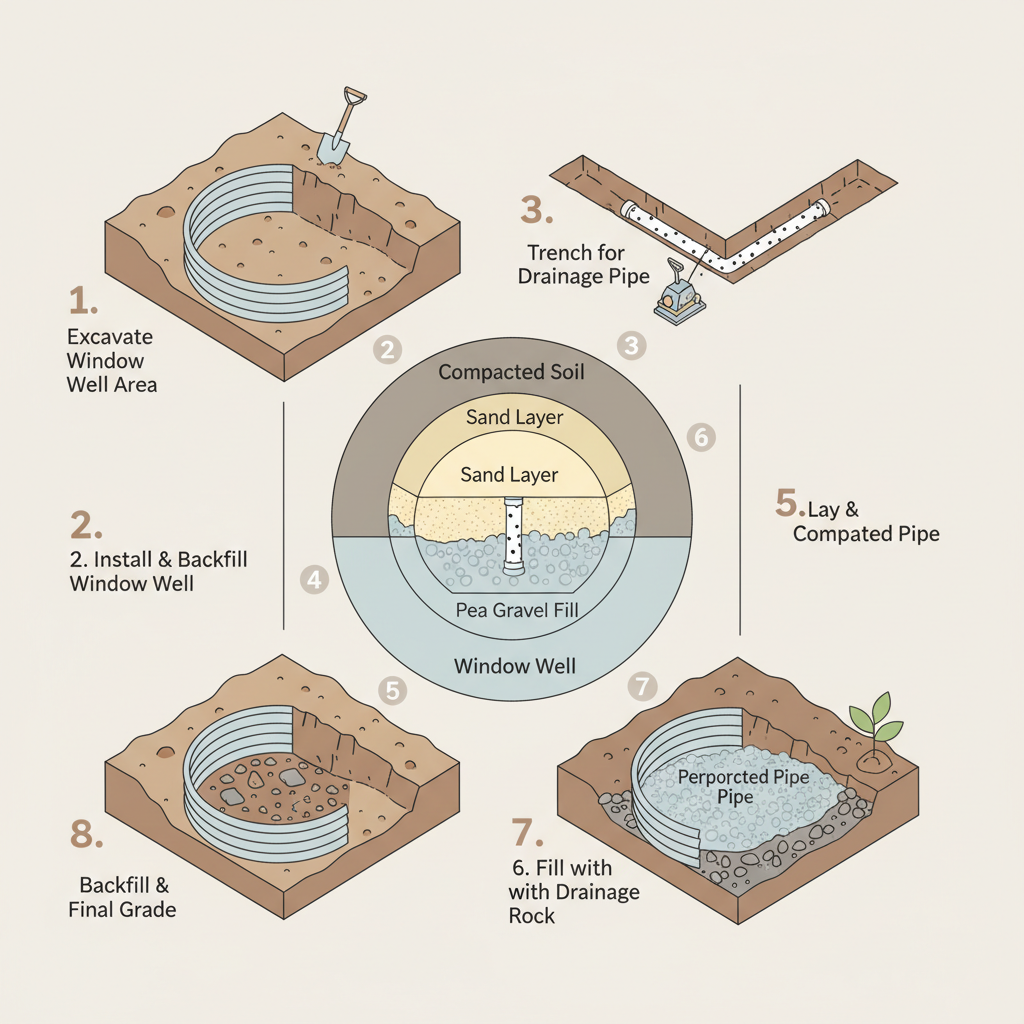
This visual guide shows the step-by-step installation sequence for an egress window, clarifying how each layer—from compacted soil and sand to pea gravel and drainage rock—is placed to ensure proper drainage and structural support. By illustrating the numbered steps and labeled cross-section, it helps homeowners understand the correct order and purpose of each material, preventing common mistakes and ensuring a watertight, code-compliant result.
Gravel for Egress Windows: Best Drainage Materials, Depth & Installation Guide
An egress window drainage system protects basement windows by directing water away from your foundation. We recommend pea gravel in 1/4 to 3/8 inch sizes for optimal water flow, installed at 6-8 inches depth around the window well. This layered approach with compacted soil, sand, and gravel prevents water accumulation while maintaining proper drainage. A perforated pipe at the base collects and redirects water efficiently away from your basement.
How This Egress Window Is Built (Layer-by-Layer System)
An egress window installation is built as a layered drainage system that protects basement windows while directing water away from the foundation. The system starts with compacted soil at the bottom, followed by a sand layer for leveling and drainage, and a pea gravel fill that allows water to flow freely toward the window well. A perforated pipe at the base collects and redirects water, preventing accumulation around the window opening. Proper slope ensures water flows efficiently away from the foundation rather than pooling against the basement wall.
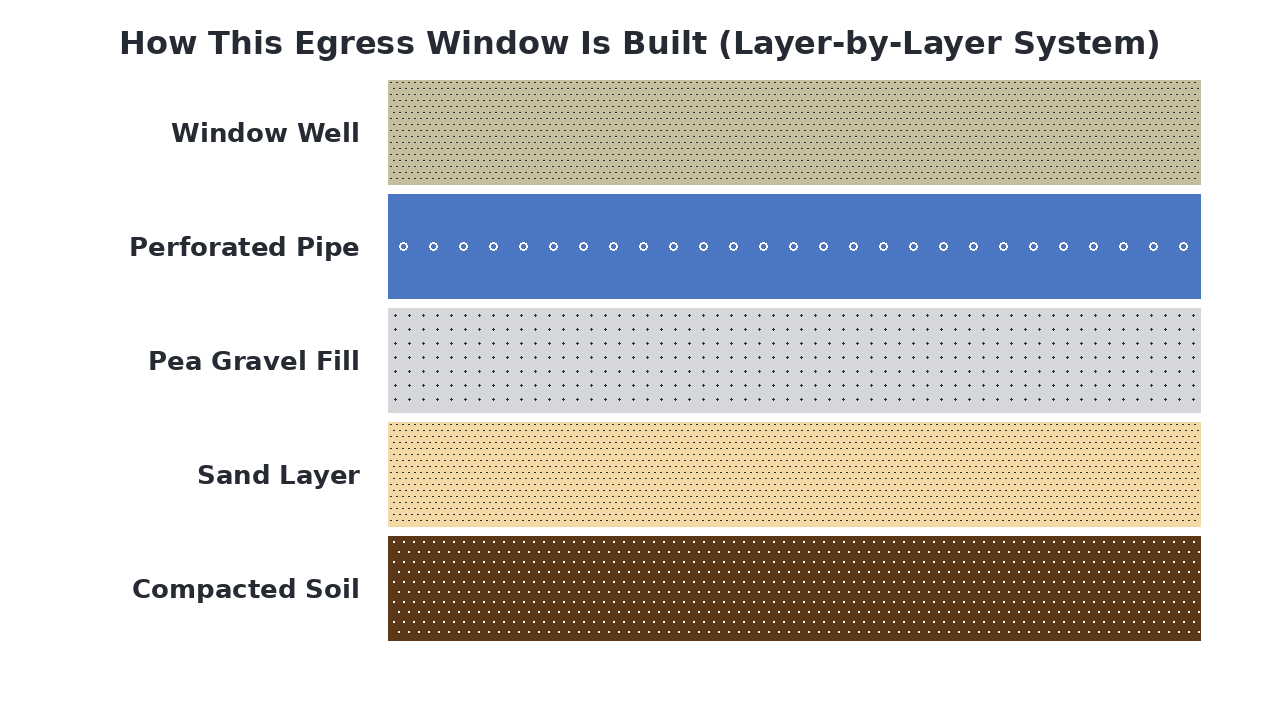
Materials Breakdown: What Each Layer Does
An egress window drainage system uses carefully selected layers to manage water around the window well and protect the foundation. Each material serves a distinct purpose, from creating a stable base to providing a clear path for water to drain away. Together, these layers prevent water buildup, reduce hydrostatic pressure, and keep the basement dry.
Compacted Soil
The native soil is compacted to create a solid, stable base for the drainage system and prevent settling.
Concrete Sand
A leveling layer that provides a smooth, even surface for the gravel and helps with initial water filtration.
View Concrete Sand →Pea Gravel
A free-draining aggregate that surrounds the pipe, allowing water to flow freely into it and preventing clogging.
View Pea Gravel →Perforated Drain Pipe
A slotted pipe installed at the base to collect water from the gravel and carry it away from the foundation.
Window Well
A protective metal or plastic structure that keeps soil away from the window and allows light and emergency egress.
What Is an Egress Window and Why Does It Matter?
An egress window is a basement window that serves as an emergency exit while also requiring proper drainage to prevent water damage. This matters because improper drainage can lead to foundation leaks, mold growth, and window well flooding during heavy rains. Unlike standard basement windows, egress windows require a layered drainage system with gravel, sand, and perforated pipe to manage water flow away from the foundation while maintaining emergency access compliance.
Common Types of Egress Window Systems
Egress window systems vary based on drainage approach and materials used. Basic systems use simple gravel beds for drainage, while more advanced systems incorporate perforated pipes and layered materials. The most effective systems combine gravel, sand, and drainage pipes to create a complete water management solution. Choosing the right system depends on local soil conditions, rainfall patterns, and budget considerations.
- Simple gravel bed only
- Lowest cost option
- Minimal installation complexity
- Limited drainage capacity
Best for:Low rainfall areas with good soil
- Gravel base layer
- Sand middle layer
- Perforated drainage pipe
- Complete water management
Best for:Most residential egress window installations
- Extended gravel trenches
- Multiple drainage pipes
- Professional installation required
- Highest water handling capacity
Best for:Heavy rainfall regions or clay soils
- Pre-fabricated window well
- Built-in drainage channels
- Easy to install
- Limited customization options
Best for:Quick installation with moderate drainage
When an Egress Window Is the Best Solution
A layered gravel and sand egress window system is ideal for most homeowners needing reliable basement drainage. This approach works best when you have moderate to heavy rainfall and want to prevent window well flooding. It's the right choice if you need a permanent solution that manages water away from your foundation while maintaining emergency exit compliance. Consider this system when you want balanced performance without the high cost of professional drainage channels.
Everything You Need to Build an Egress Window
Building an egress window drainage system requires specific materials to create effective layers for water management and foundation protection. You'll need foundational materials like compacted soil and sand, plus drainage rock and pea gravel to facilitate water flow away from the window well. Essential tools include excavation equipment, compaction tools, and basic hand tools for precise installation and leveling.
- Compacted soil, Sand, Drainage rock, Pea gravel, Perforated pipe
- Shovel, Wheelbarrow, Hand tamper or plate compactor, Level, Utility knife
- Hello Gravel (materials), Your local hardware store, Equipment rental store (compactor)
What to Consider Before You Start
Before starting your egress window project, consider these key planning factors to ensure proper installation and drainage performance.
- Local building codes and permits
Check with your local building department for required permits, setbacks, and egress window specifications before any excavation.
- Soil drainage assessment
Evaluate your soil type and drainage patterns to determine if additional drainage measures beyond the standard layers are needed.
- Window well size and placement
Plan the window well dimensions and location to meet egress requirements while ensuring proper drainage away from the foundation.
- Utility line identification
Call 811 or your local utility locating service to mark underground lines before digging to avoid dangerous and costly accidents.
- Drainage slope planning
Determine the necessary slope away from the foundation to ensure water flows properly through the drainage layers.
How to Prepare the Ground for an Egress Window
Start by clearing the excavation area of all vegetation, roots, and debris to ensure a clean workspace. Mark the perimeter of the window well and the trench for the drainage pipe according to your plan and local code requirements. Grade the soil to create a consistent slope away from the foundation, aiming for at least a 1-inch drop per foot to promote proper water runoff. Finally, compact the soil thoroughly to establish a stable, load-bearing base that will prevent future settling.
How an Egress Window Works
The system functions by creating a layered drainage path that directs water away from the foundation. A compacted soil base provides structural support, while a sand layer acts as a leveling and filtering bed. Pea gravel fill surrounds a perforated pipe, collecting water and channeling it to a safe discharge point, relieving hydrostatic pressure. The window well itself provides emergency egress while being protected from water infiltration by this drainage envelope.
How to Install an Egress Window
Excavate Window Well Area
⚠️ Licensed-trade notice: This project is code-regulated in most jurisdictions and typically requires a licensed contractor and local permits. The steps below are provided to help plan your aggregate order, not as a substitute for professional design, permits, or inspections. Dig a hole for the window well that extends below the window opening and is wide enough to accommodate the well and drainage layers.
Install & Backfill Window Well
Place the window well against the foundation, secure it, and backfill the exterior gap with soil, compacting in lifts to eliminate voids.
Trench for Drainage Pipe
Dig a sloped trench from the bottom of the window well to a suitable discharge point, such as a storm drain or dry well.
Lay & Connect Perforated Pipe
Place the perforated pipe in the trench with holes facing down, connect it to the window well drain, and ensure the slope is maintained.
Add & Compact Sand Layer
Pour and compact a 2- to 3-inch layer of sand over the compacted soil at the bottom of the window well to create a level, stable base.
Fill with Pea Gravel
Fill the window well cavity around the pipe with pea gravel, extending up to just below the window sill, to provide drainage and support.
Cover Pipe with Drainage Rock
Cover the perforated pipe in the trench with a layer of larger drainage rock to prevent clogging and facilitate water flow.
Alternative Gravel Options for Egress Windows
Homeowners have several aggregate options for constructing an egress window drainage system, each with different properties affecting drainage, stability, and ease of installation. Drainage rock is typically the top choice due to its angular shape that interlocks for stability while providing excellent water flow. Pea gravel offers good drainage but can shift more easily, while sand provides a leveling base but poor drainage on its own. Crushed stone and river rock serve as viable alternatives, balancing drainage with some decorative appeal.
Angular crushed stone that interlocks for stability while allowing optimal water flow.
Versatile angular aggregate that offers both drainage and structural support.
View Product →Large, smooth decorative stones that impede drainage and trap debris.
View Product →Common Egress Window Mistakes (And How to Avoid Them)
Proper egress window installation requires attention to detail to prevent water intrusion and structural issues. Avoid these common mistakes that can compromise your basement's protection and drainage system effectiveness.
- Insufficient drainage layer
- Wrong aggregate selection
- Poor window well grading
- Missing filter fabric
- Inadequate compaction
- Blocked drainage pipe
How to Maintain an Egress Window
Regular maintenance ensures your egress window continues to function properly. Inspect the drainage system seasonally, removing leaves and debris from the window well and checking that the drainage pipe remains clear. Top up the drainage gravel layer if settling occurs, and ensure the surrounding soil is properly graded away from the foundation. Address any erosion or pooling water immediately to prevent hydrostatic pressure buildup.
Calculate How Much Gravel You Need
Enter Your Dimensions
Measure your project area and we'll calculate how much material you need.