Backyard Patio Gravel Guide: Size, Depth & Tonnage Tips
A well-built backyard patio provides an inviting outdoor space for relaxation and entertaining. This guide explains what a backyard patio is, which materials you need, how to design the layout, how to install it step by step, and how to estimate the amount of gravel required. Whether you are creating a simple gravel patio or combining pavers with decorative stone, use the sections below to navigate through the process.
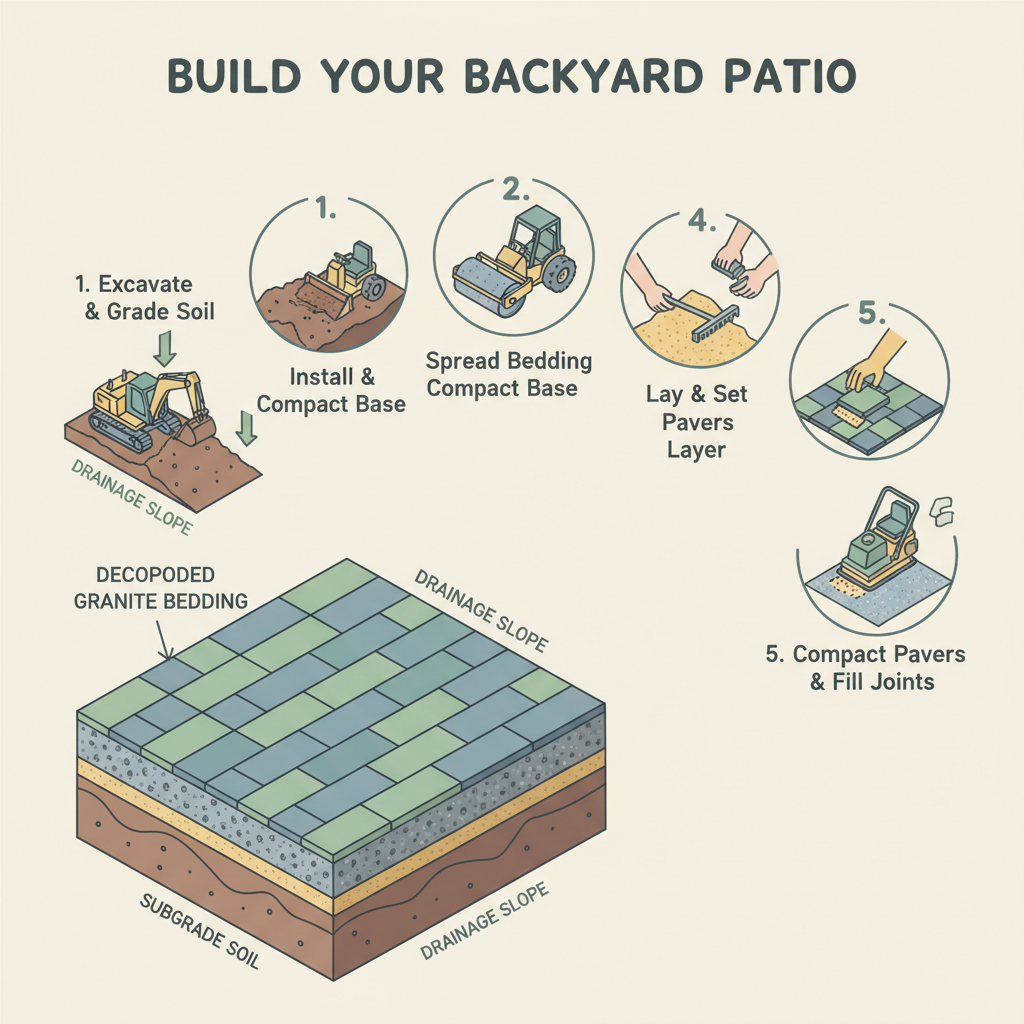
See How to Build a Backyard Patio
This visual guide illustrates the five key steps to building a stable backyard patio, showing how each layer—from compacted base to final pavers—fits together. The numbered sequence clarifies the proper installation order, while the cross-section diagram reveals the essential drainage slope and material layers that ensure long-lasting results.
Gravel for Backyard Patios: Best Materials, Depth, Cost & How to Build
A backyard patio creates a durable, level outdoor living space with proper drainage. For the bedding layer, use 2–3 inches of 1/4 inch minus decomposed granite, which compacts firmly to prevent paver shifting. Combined with a 4–6 inch compacted base layer, this system ensures long-term stability and proper water drainage away from your home. The total system prevents settling and water damage while providing a beautiful, functional patio surface.
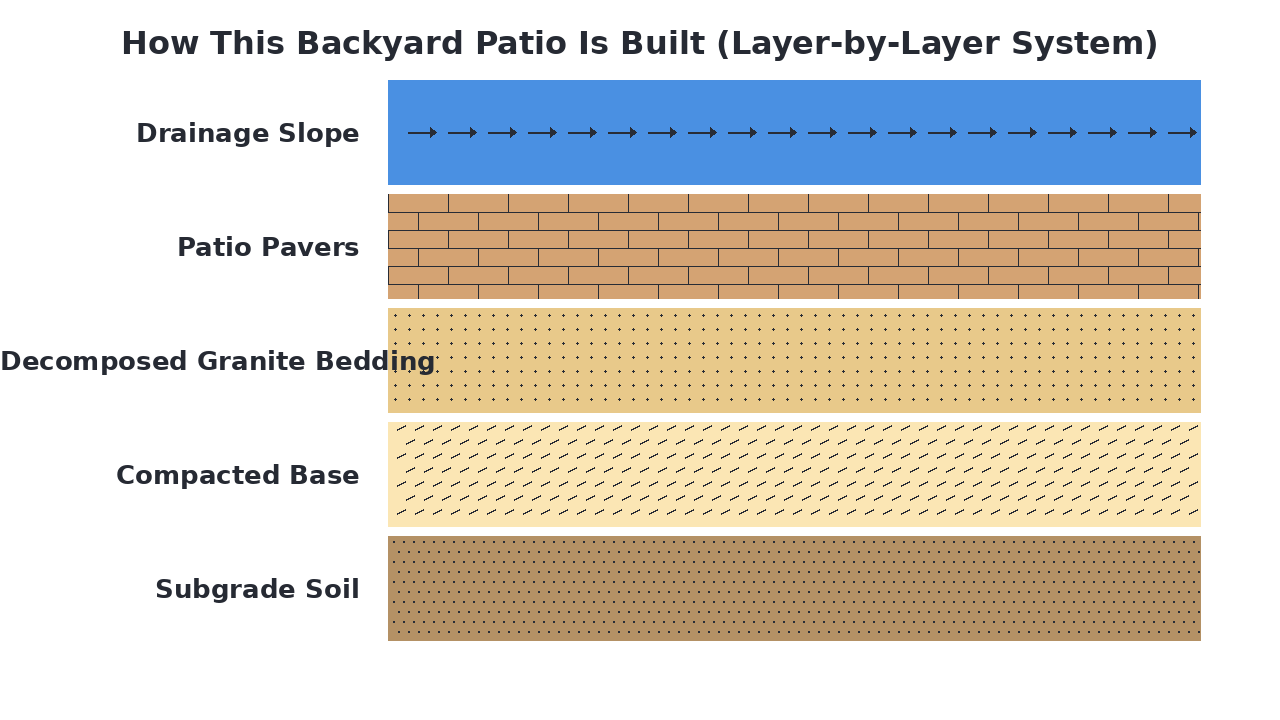
How This Backyard Patio Is Built (Layer-by-Layer System)
A backyard patio is built as a layered system that provides a stable, level surface for outdoor living while allowing proper drainage. The system starts with a prepared subgrade, followed by a compacted base layer for structural support, and a bedding layer that creates a smooth surface for the final paving material. The top layer of pavers or flagstone provides the finished walking surface, with proper slope ensuring water drains away from the house. Each layer works together to prevent settling, shifting, and water damage over time.
Materials Breakdown: What Each Layer Does
A patio is built as a layered system where each material serves a distinct structural and drainage purpose. The layers work together to create a stable, level surface that sheds water and resists settling over time. Choosing the right product for each layer ensures the patio remains durable and functional through seasons of use.
Native Soil
The existing ground that the patio is built upon; it must be stable and properly graded to provide a solid foundation.
Crushed Stone
A layer of compacted crushed stone that creates a firm, load-bearing base to support the patio and prevent shifting.
View Crushed Stone →Decomposed Granite
A fine, compactable material that provides a smooth, level bedding layer for the pavers and helps with drainage.
View Decomposed Granite →Patio Pavers
The surface layer of interlocking pavers that forms the visible patio floor and withstands foot traffic and weather.
Surface Slope
A slight grade built into the patio surface to direct rainwater runoff away from the house and prevent pooling.
What Is a Backyard Patio and Why Does It Matter?
A backyard patio is a layered outdoor surface system designed for dining, entertaining, and relaxation. It matters because it extends your living space, increases property value, and provides a durable, low-maintenance area compared to grass or bare ground. Unlike simple gravel surfaces, a properly built patio with pavers or flagstone offers a level, stable walking surface with integrated drainage that prevents erosion and water pooling. This makes it ideal for furniture placement and regular use in all weather conditions.
Common Types of Backyard Patio Systems
Backyard patios come in several common types, each with different materials and installation methods. Gravel patios are affordable and permeable but can shift under furniture, while pavers offer a stable, level surface with design flexibility. Flagstone provides a natural, rustic look but requires more skill to install, and concrete is durable but permanent and less permeable. The choice depends on budget, desired aesthetics, and how much maintenance you're willing to do.
- Affordable and quick to install
- Excellent natural drainage
- Easy to modify or expand
- Soft, natural appearance
Best for:Budget-friendly, permeable surfaces
- Stable, level walking surface
- Wide variety of design options
- Easy to repair individual units
- Professional installation recommended
Best for:Formal entertaining areas with furniture
- Natural stone aesthetic
- Irregular shapes create unique patterns
- Long-lasting and durable
- Requires skilled installation
Best for:Rustic, high-end landscape designs
- Firm, compactable surface
- Natural earth-tone colors
- Good drainage when properly installed
- Can require occasional topping up
Best for:Dry climates with minimal rainfall
When a Backyard Patio Is the Best Solution
A pea gravel patio is ideal when you need an affordable, permeable outdoor space that's easy to install yourself. It's perfect for casual seating areas, fire pit surrounds, or garden-adjacent spaces where natural drainage is important. Choose this option if you want a low-maintenance surface that can be easily modified or expanded later, and prefer a soft, natural aesthetic over formal paving. It works well in budget-conscious projects where you need quick results without professional installation.
Everything You Need to Build a Backyard Patio
Building a backyard patio requires several key materials to create a stable, layered foundation and a finished surface. You'll need foundational materials like compacted base and drainage-friendly bedding, plus surface materials such as patio pavers or flagstone. Essential tools for excavation, leveling, and compaction will ensure proper installation and long-term durability.
- Compacted base material, Decomposed granite bedding, Patio pavers or flagstone, Edge restraint, Joint sand
- Shovel and spade, Rake and grading tool, Plate compactor, Level and string lines, Rubber mallet
- Hello Gravel (materials), Your local hardware store, A contractor supply store, Local equipment rental (compactor)
What to Consider Before You Start
Before breaking ground on your patio project, consider these key planning steps to ensure success and avoid common pitfalls.
- Site drainage and slope
Verify that your patio location has adequate drainage and plan for a slight slope away from your house to prevent water pooling.
- Local utility lines
Call 811 or your local utility locating service to mark any underground lines before you start digging.
- Material quantities and delivery
Calculate the exact amounts of base material, bedding, and pavers needed, and arrange for delivery to your site.
- Patio size and layout
Finalize the patio dimensions and layout pattern, accounting for furniture placement and traffic flow.
- Edge restraint and border
Decide on the type of edge restraint system to keep pavers in place and plan for any decorative borders.
How to Prepare the Ground for a Backyard Patio
Begin by clearing the area of all vegetation, debris, and any existing surface materials to expose the subgrade soil. Mark the patio's perimeter with stakes and string, then grade the soil to create a slight slope away from the house for drainage. Finally, compact the exposed subgrade thoroughly with a plate compactor to create a firm, stable foundation for the base layers.
How a Backyard Patio Works
The patio functions as a multi-layered system where the compacted base distributes loads evenly to prevent settling. A decomposed granite bedding layer provides a level, stable surface for the pavers while allowing water to percolate downward. The pavers themselves interlock to create a durable, finished surface, and the entire assembly is sloped to direct surface water away from structures.
How to Install a Backyard Patio
Excavate & Grade Soil
Dig out the marked area to the required depth, ensuring the subgrade soil is graded with a consistent slope for drainage.
Install & Compact Base
Add a layer of compactable gravel or crushed stone base material and compact it thoroughly to create a stable foundation.
Spread Bedding Layer
Apply a layer of decomposed granite or coarse sand over the compacted base, screeding it level to create a smooth bedding surface for the pavers.
Lay & Set Pavers
Place patio pavers or flagstone onto the bedding layer, setting them tightly together in your chosen pattern.
Compact Pavers & Fill Joints
Use a plate compactor with a protective mat to settle the pavers into the bedding, then sweep polymeric sand into the joints to lock them in place.
Alternative Gravel Options for Backyard Patios
When building a backyard patio, homeowners have several aggregate options beyond traditional patio pavers or concrete slabs. Pea gravel offers a natural look but can shift underfoot, while decomposed granite compacts well for a stable surface. Crushed stone provides excellent drainage and stability for the base layer, making it the most reliable choice for long-term patio performance.
Provides excellent drainage and stability as a base layer for patios.
View Product →Creates a natural stone patio surface when set in a gravel base.
Requires precise installation and may shift without proper base preparation.
Common Backyard Patio Mistakes (And How to Avoid Them)
Even well-planned patio projects can fail due to avoidable installation errors. These common mistakes compromise durability and lead to costly repairs down the line.
- Insufficient base depth
- Poor drainage planning
- Inadequate compaction
- Wrong aggregate selection
- No edge restraint
How to Maintain a Backyard Patio
Regular maintenance keeps your backyard patio looking great and functioning properly. Sweep debris regularly and redistribute loose gravel to maintain an even surface. Check for erosion or settling annually, adding fresh gravel as needed to fill low spots. Keep drainage paths clear to prevent water pooling and ensure proper runoff from the patio area.
Calculate How Much Gravel You Need
Enter Your Dimensions
Measure your project area and we'll calculate how much material you need.